Hey folks and welcome back to The 5 For! The convenience store industry is always buzzing, and keeping up with the latest news is key to understanding where things are headed. From potential game-changing deals to shifts in consumer behavior and regulatory battles, there’s a lot happening.
Today, we’re diving into 5 recent stories that caught my eye. Let’s jump in and see what the convenience store world is talking about!
1. Potential Industry Shake-Up: 7 & i Holdings and Couche-Tard NDA
Okay, this is potentially massive news for the industry. We’re talking about the parent companies of two of the biggest names in the game, 7-Eleven (7 & i Holdings) and Circle K (Alimentation Couche-Tard), reportedly signing a non-disclosure agreement (NDA). While an NDA doesn’t guarantee a deal, it strongly signals that serious discussions about a potential acquisition or major partnership are happening.
This is a positive step in the engagement process and will allow the companies to share more information, facilitating transaction discussions and due diligence. It even includes a “standstill” provision, preventing Couche-Tard from pursuing a hostile takeover of Seven & i. Imagine the scale if these two powerhouses combined!
It’s worth noting that these advancements don’t guarantee a transaction. This move comes after both companies began signing NDAs with potential buyers for the roughly 2,000 stores they anticipate needing to divest if a deal were to occur. The initial takeover bid from Couche-Tard last August was turned down by Seven & i, who felt it undervalued the company, though Couche-Tard returned with a modified offer in October. Potential antitrust concerns are definitely looming, requiring a viable divestment plan that preserves competition and satisfies regulators. The Federal Trade Commission has already expressed concern around the transaction.
This could dramatically reshape the competitive landscape across North America and beyond. It’s definitely one to watch closely – the implications for real estate, market share, and even vendor relationships are huge.
2. EV Charging: Where C-Stores Stand Against Restaurants
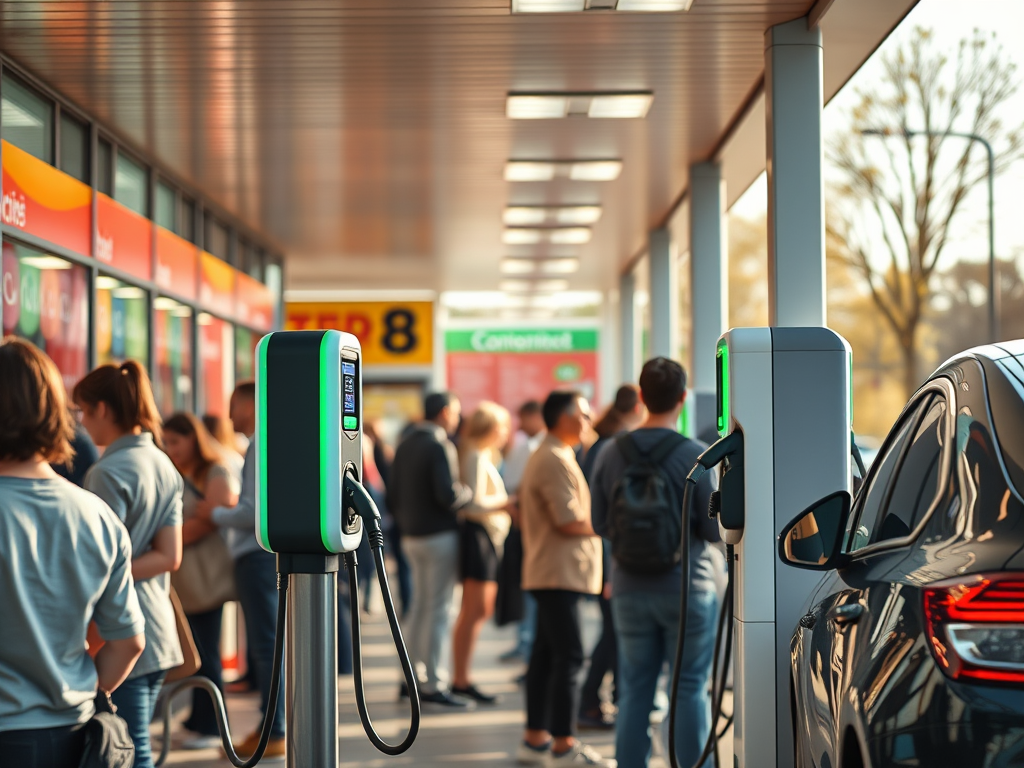
Here’s an update on the EV charging landscape based on a new report from the Transportation Energy Institute’s Charging Analytics Program. While convenience stores are indeed drawing in more electric vehicle drivers, they are currently falling behind restaurants in average monthly charging sessions.
Between September 2023 and December 2024, average monthly charging sessions at c-stores increased 21%, reaching 137 sessions per month. That’s good growth! However, restaurants saw a 22% surge during the same period, averaging 225 monthly sessions.
So, why the difference? The report found that chargers offering at least 300 kilowatts were the most popular, averaging 325 sessions per month. This is tough news for c-stores, as they are more often located near 100 kW-299 kW chargers, which saw an average of 168 sessions per month. Restaurants, on the other hand, are most often near the higher-power 300kW+ charging stations. Sites with more powerful chargers seem to be at an advantage.
Interestingly, having a liquid fuel offering appears to boost a site’s attraction for EV drivers. Fuel retailers consistently saw more average charges per month and higher utilization than chargers near convenience stores, though a site with both would count for both categories.
Utilization – the percentage of time plugs are in use – was up across the board, with c-stores leading the pack with a 36.5% improvement. However, the overall utilization for chargers at c-stores averaged out to just over 12%. Reliability also remains a concern, with nearly one out of five attempts to charge at c-stores failing to initiate (around 17% to 18% failure rate), despite a small decrease in failed charges.
While c-stores may not be “winning the race” just yet based on these numbers, the growth in sessions and utilization is positive. Location is also a major factor, with 70% of fast-charging sessions happening less than a mile from a highway ramp, which favors retailers often located at major exits. This reinforces the idea that strategically located c-stores remain a natural fit for EV charging infrastructure. It’s a space with significant opportunity but also challenges like charger power and reliability to address.

3. Circle K’s Fresh Food Push: Burrito Express
Foodservice continues to be a critical growth area for convenience stores, and Circle K (Alimentation Couche-Tard) is doubling down with a new concept called “Burrito Express”. Partnering with Arizona-based Burrito Express, Circle K is bringing the QSR chain’s menu to several Phoenix-area locations. Arizona is one of Couche-Tard’s largest U.S. markets, with over 150 Circle K locations in Metro Phoenix.
Tested in Phoenix, the “Burrito Express Fast and Fresh” format offers fresh, made-to-order burritos with an emphasis on speed. The first location opened earlier this year, with five more on the way. This partnership uses a “hub-and-spoke model,” where the kitchens inside Circle K stores will support the new Burrito Express restaurants. The menu includes eight options, like regular and breakfast Supreme, steak and eggs, and bean and cheese burritos.
This is a smart move. Consumers are increasingly looking for quality food options on the go, and direct competition with Quick Service Restaurants (QSRs) is key. Burrito Express is also the first Mexican restaurant QSR to join Circle K’s roster. Circle K has increasingly prioritized the broader restaurant space, with its Fresh Food, Fast program already available in nearly 5,900 global locations and competing with QSRs. By focusing on fresh ingredients and quick preparation, Circle K is trying to capture that lunch and dinner traffic. It’s another example of how c-stores are evolving beyond just fuel and packaged goods to become legitimate food destinations. Couche-Tard even recently named a new VP of North America foodservice and QSRs to support this growth.
4. Capitol Hill Weighs in on EV Mandates
While we just talked about the opportunity for C-stores in EV charging, this story highlights some of the regulatory hurdles. The U.S. House of Representatives recently voted to overturn California’s authority to set its own stricter tailpipe emission standards. These standards effectively act as a mandate for selling more EVs.
This is a significant development because California’s standards often influence other states. The mandates, approved by the EPA, would phase in an effective ban on the sale of internal combustion engines, requiring EVs to comprise 100% of new cars sold in California by 2035 and 100% of new trucks by 2036. At least a dozen other states have adopted these mandates.
The vote reflects the ongoing political debate around the pace and method of transitioning to electric vehicles. NACS has long opposed these mandates, favoring a technology-neutral approach that supports investment in all alternative fuel technologies. NACS is even litigating a challenge to an earlier version of California’s car mandate before the U.S. Supreme Court.
For C-store owners considering EV charging infrastructure, this regulatory uncertainty can impact the speed and scale of planning and investment. It underscores the need for clear, consistent policy. The House resolutions now head to the U.S. Senate for consideration.
5. Obey Your Third: Sprite Climbs the Ranks
Finally, let’s look at a major shift in a core C-store category: soft drinks. Sprite has officially become America’s third most popular soft drink, surpassing Pepsi for the first time. According to recent data from Beverage Digest, the lemon-lime beverage now holds 8.03% of the U.S. carbonated soft drink market, narrowly ahead of Pepsi’s 7.97%. This places only Coca-Cola and Dr Pepper above Sprite in the soft drink hierarchy, marking a notable shift.
Sprite’s ascent is linked to a strategic marketing revival implemented by its parent company, Coca-Cola. In April 2023, the brand brought back its iconic “Obey Your Thirst” tagline, first launched in 1994. The 2024 campaign retained the original spirit but was specifically aimed at Gen Z consumers. It features figures like NBA player Anthony Edwards and sprinter Sha’Carri Richardson, Sprite’s first woman athlete partner, across various channels including TV, packaging, sports sponsorships, and digital platforms. Josh Kroo, Coca-Cola’s VP of sparkling flavors, noted this approach has helped Sprite index higher with Gen Z, continuing Sprite’s history of recruiting the “next generation”.
Maintaining cultural relevance with younger audiences is a key focus, strategically placing the brand at the intersection of sports and culture. Following the tagline relaunch, Sprite had its first holiday promotion in three years, featuring its limited Sprite Winter Spiced Cranberry flavor starring Anthony Edwards as “Anta Claus”. This campaign incorporated a hip-hop version of “Carol of The Bells,” nodding to Sprite being one of the first mainstream brands to embrace hip-hop culture. Sprite is also a founding sponsor of Unrivaled, a new women’s three-on-three basketball league. According to Kroo, these efforts represent Sprite’s commitment to “push the boundaries and give back to the culture”. Duane Stanford of Beverage Digest suggests part of Sprite’s success comes from marketing itself as a way of life rather than just a superior soda. Sprite also has strong positioning with multicultural consumers.
Interestingly, Sprite’s rise occurred despite spending less on advertising than major competitors like Coca-Cola, Dr Pepper, and Pepsi. According to MediaRadar, Sprite was the smallest advertiser among them, even decreasing its ad spend slightly from an estimated $24 million in 2023 to $22 million in 2024. This suggests success from effective, targeted marketing rather than sheer spending, as the brand has rethought its media mix to engage specific audiences on platforms like TikTok and in major TV events. Despite the reduced spending in 2024, the Coca-Cola Company does plan to invest more in Sprite going forward, recognizing its potential for long-term growth across its portfolio.
Successful product innovations have also bolstered Sprite’s market share. The introduction of Sprite Chill, which claims to offer a unique cooling sensation, was particularly impactful. Initially a limited offer, its popularity led to it becoming a permanent product and the top-selling innovation in North America in 2024. According to Kroo, Sprite Chill generated $100 million in sales in the past 12 months and has served as a springboard for further flavors like cherry lime and strawberry kiwi. This focus is on creating a distinctive “experience” that connects with and recruits new consumers.
The shift is also influenced by the market context, including Pepsi’s gradual decline since 2004. Sprite’s market share has grown by 2.4 percentage points while Pepsi’s has decreased by nearly 3.5 points in that period. This happens as the overall U.S. soda industry volume is shrinking, down 27% in 2024 compared to 20 years prior. While regular Sprite outsold regular Pepsi in volume in 2024, the entire Pepsi product family (including Diet Pepsi, Pepsi Zero Sugar, etc.) still holds a larger category share (13.5%) than the Sprite family (8.9%).
This success highlights the power of targeted marketing, cultural relevance, product innovation focused on experience, and effective media strategy in a competitive, shrinking market. For convenience stores, understanding these dynamics is crucial for adjusting shelf space and promotions, as beverage sales are vital for profitability
The Bottom Line
That wraps up this edition of The 5 For! It’s clear the C-store industry is navigating big changes, from potential mergers and the evolving energy landscape with both challenges and opportunities in EV charging and regulatory debates to foodservice innovation and shifts in the beverage market. Staying informed on these trends is vital for owner/operators looking to make smart decisions for their businesses.
What do you think about these trends? Any stories you’ve seen that you think are particularly important? Let me know in the comments!

 The5For
Leave a comment