The New Battleground for C-Store Success
What if a small, strategic change to a space you already have could be the key to outperforming your competition? The convenience store industry is no longer just about fuel and a quick snack. Intense competition from larger chains and the pressure to innovate have shifted the core of the business inside the store. Today, the true profit center is foodservice, which accounts for an estimated 30% of sales and a massive 40% of gross profits for convenience stores.This isn’t a side hustle; it’s the main event.
Within this evolving landscape, the beverage and prepared food areas are high-margin spaces that are often underutilized. They can be cluttered, inefficient, and fail to live up to their full profit potential. The solution isn’t necessarily a massive renovation. It is not about more square footage. Rather, it is a strategic tool designed to tackle these specific challenges. The PanelRak modular organizing system can unlock the hidden profitability of these critical areas. It transforms them into organized, efficient, and visually appealing destinations.
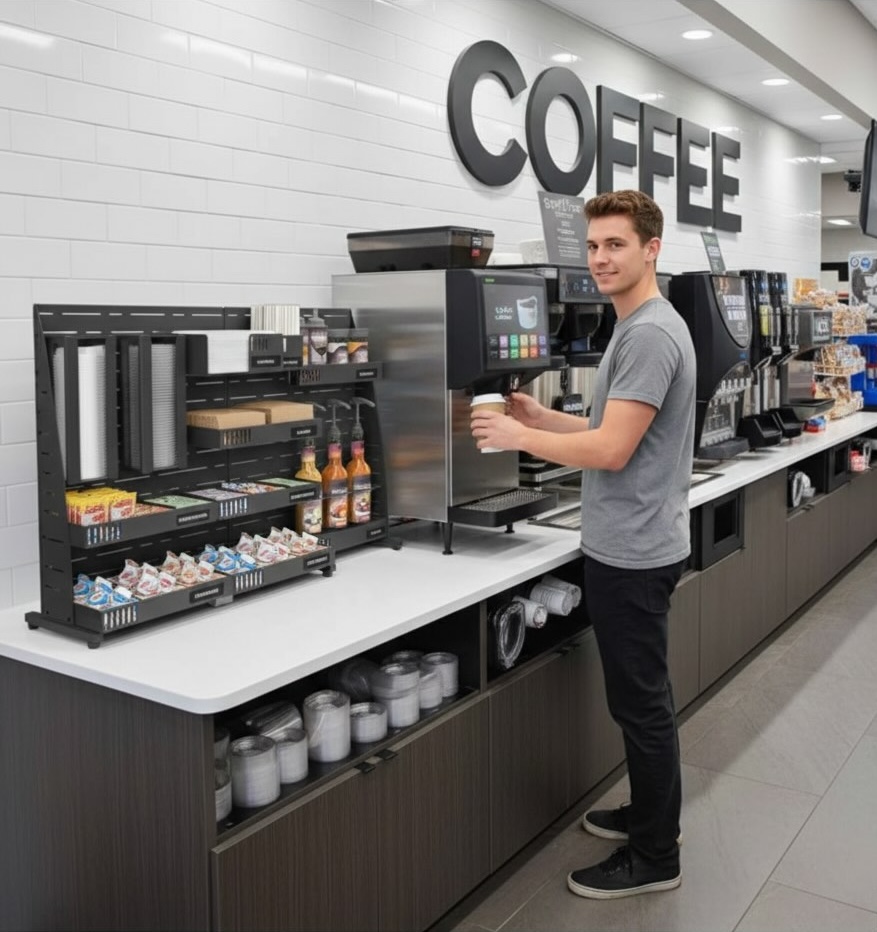
The First Impression is Everything: Elevating Aesthetics and Perception
For today’s consumer, a clean, organized, and professional-looking store is not a luxury; it is a non-negotiable expectation. The physical environment of a store has a direct psychological impact on a customer’s perception of value and their willingness to spend. Research indicates that the cleanliness and organization of a store directly influence consumer buying choices and perception, with a clean environment encouraging customers to stay longer, which in turn leads to more purchases. In fact, one study found that organized displays can increase customer dwell time by up to 25%, boosting sales potential. This creates a direct link between a store’s appearance and its financial performance.
This link is particularly important in the context of foodservice. Consumers are more willing to spend on food from a convenience store when it meets their standards for freshness and quality. A visually organized and clean display signals this quality, even for pre-packaged or self-serve items. Store layout and merchandise displays function as a “silent salesperson,” drawing customers in and influencing their purchase intentions. A sleek, professional system like PanelRak is not merely tidying up cups and lids; it is consciously creating a positive emotional response in the customer. This builds trust and justifies a higher price point for the products on display, making customers more likely to buy higher-margin items. The display itself becomes a visual brand statement, signaling that “this is a destination, not just a pit stop.”
A disorganized and cluttered counter can create a negative, stressful experience for customers. This can be explained by the “butt-brush rule,” which suggests that customers will avoid buying items if an aisle is too small and they feel they might brush against merchandise or other people. An inefficient, cluttered counter space forces customers to navigate awkwardly, creating a sense of stress that makes them want to leave quickly. PanelRak’s modular design allows for a cleaner flow, directly addressing this subconscious consumer pain point and encouraging a more relaxed, revenue-generating visit.
The Art of Space: Maximizing Every Inch for Profit
In a small-footprint business like a convenience store, space is a non-renewable resource that must be used efficiently to maximize profitability. Every inch of the counter and service area must be treated as valuable, revenue-generating real estate. A messy counter is a wasted asset. A modular system is a direct solution to the challenge of managing a small store footprint with a diverse, high-demand product mix. By utilizing vertical and stackable components, it allows an operator to merchandise a greater number of products in the same horizontal space.
Research highlights the importance of efficient planograms, which are visual diagrams detailing the optimal placement of products on shelves to maximize sales. A system like PanelRak, by providing a pre-configured or customizable structure, essentially gives an operator a “mini-planogram” for their most profitable items. It shifts the focus from “where do I put this stuff?” to “how can I best present this high-margin item?”. This transforms a disorganized area into a controlled, optimized selling zone.
The flexible configurations of PanelRak can be used on countertops. They can also be attached to walls or placed back-to-back on beverage islands. These configurations further enhance a store’s ability to optimize its space. By maximizing vertical space, an operator can create wider aisles. This improves traffic flow and reduces the negative “butt-brush” effect. It makes the entire store feel more open and comfortable. This encourages customers to linger and browse, further increasing sales potential.
Built for Change: The Power of Modularity & Adaptability
In an industry defined by fast-moving trends and evolving consumer preferences, a static store layout is a significant disadvantage. Retail environments require frequent changes to accommodate seasonal promotions, new product launches, and holidays. Modular display systems offer the flexibility needed to stay competitive. They allow for quick reconfigurations without costly construction or store downtime and can reduce replacement costs by up to 30%.
This adaptability is particularly critical in the beverage category, which has become a “snacking mega trend” and a “new battleground” for customer spending. This means operators must constantly introduce new flavors, brands, and options to stay competitive. A static, built-in display locks a store into a single merchandising strategy. When a new, high-margin coffee syrup or unique condiment brand emerges, an operator with a static system might have to forego that opportunity or commit to a costly renovation. PanelRak’s easy reconfigurability allows for an agile approach. An operator can swap out components, test a new layout, or introduce a limited-time offer overnight, without disrupting business. This ability to “move forward without going backward first” is a significant competitive advantage.
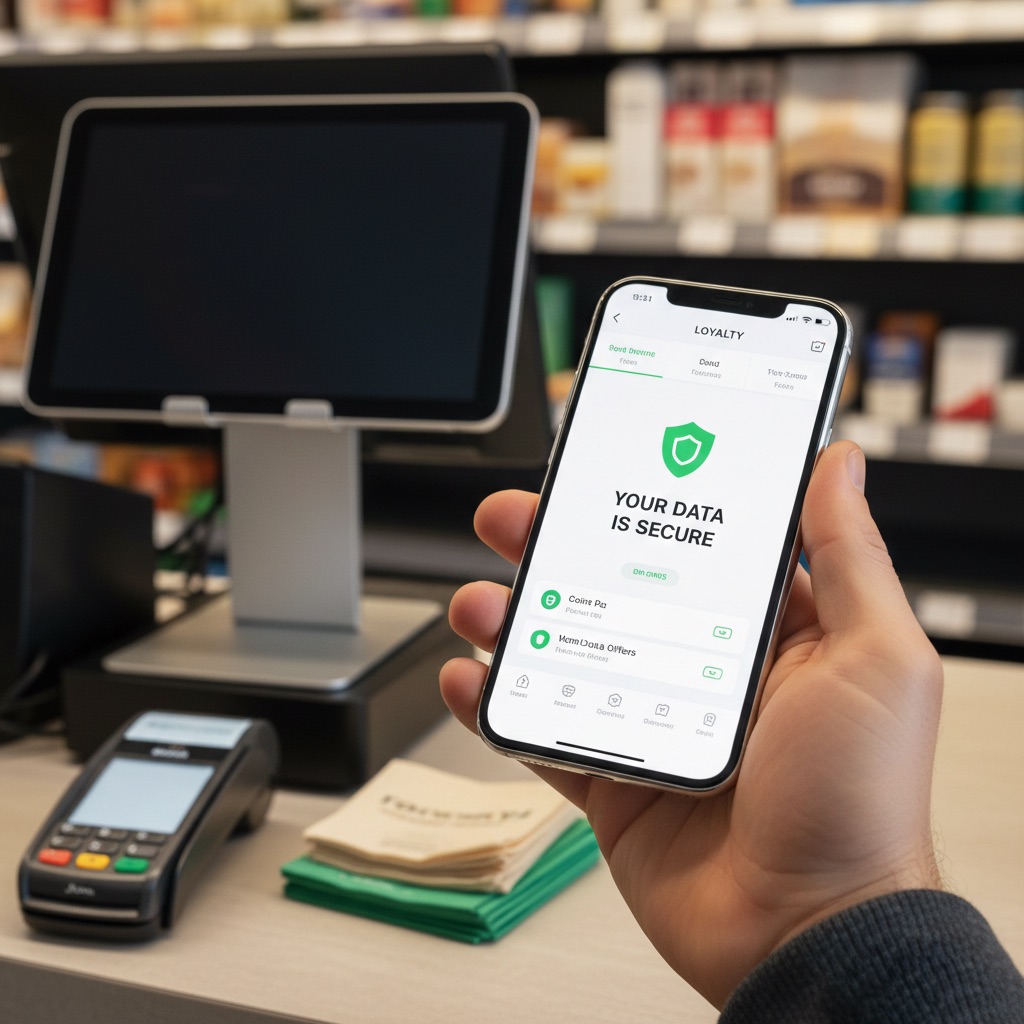
This concept extends beyond the physical layout and connects to a broader, forward-thinking business mindset. A modern retailer should be using a modular technology stack to adapt to new digital tools. Similarly, a smart operator should use a modular physical system. This system reflects the same adaptable approach. This shows a business that is resilient, proactive, and ready for whatever comes next, which resonates with a dynamic and changing consumer base.
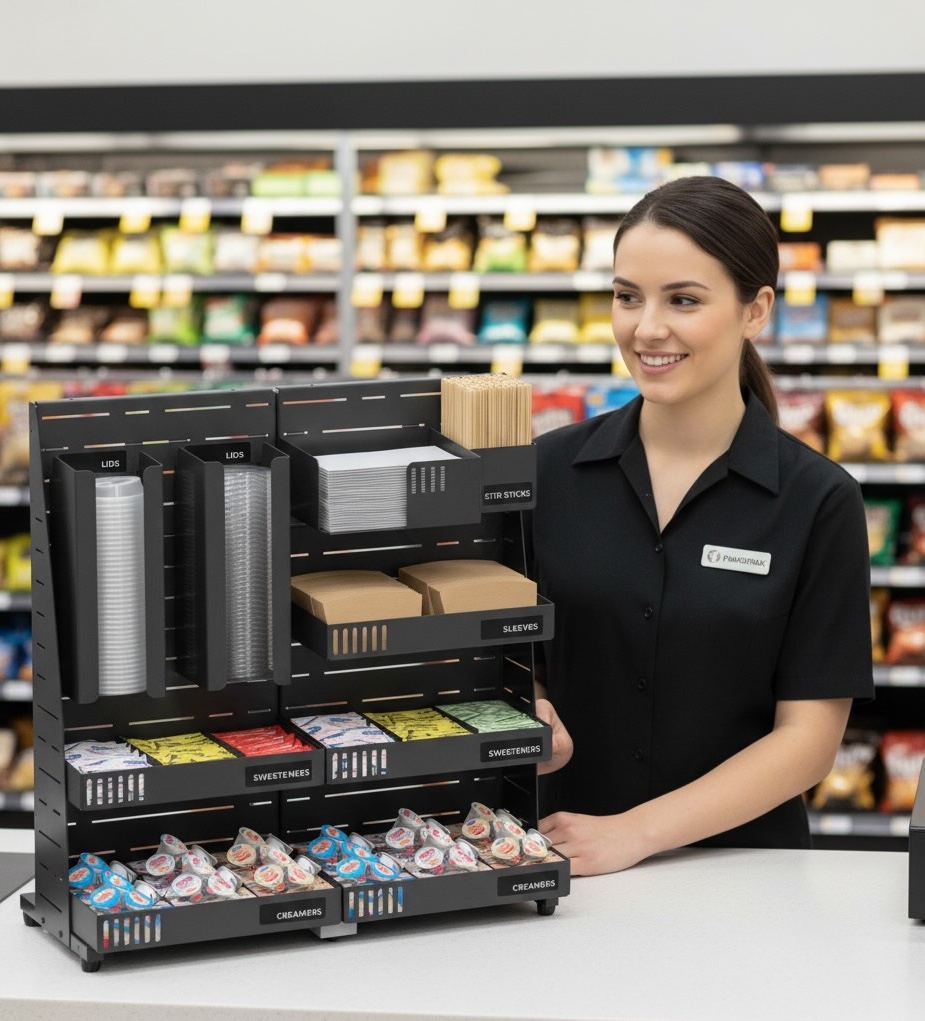
Behind the Counter: Streamlining Operations & Reducing Friction
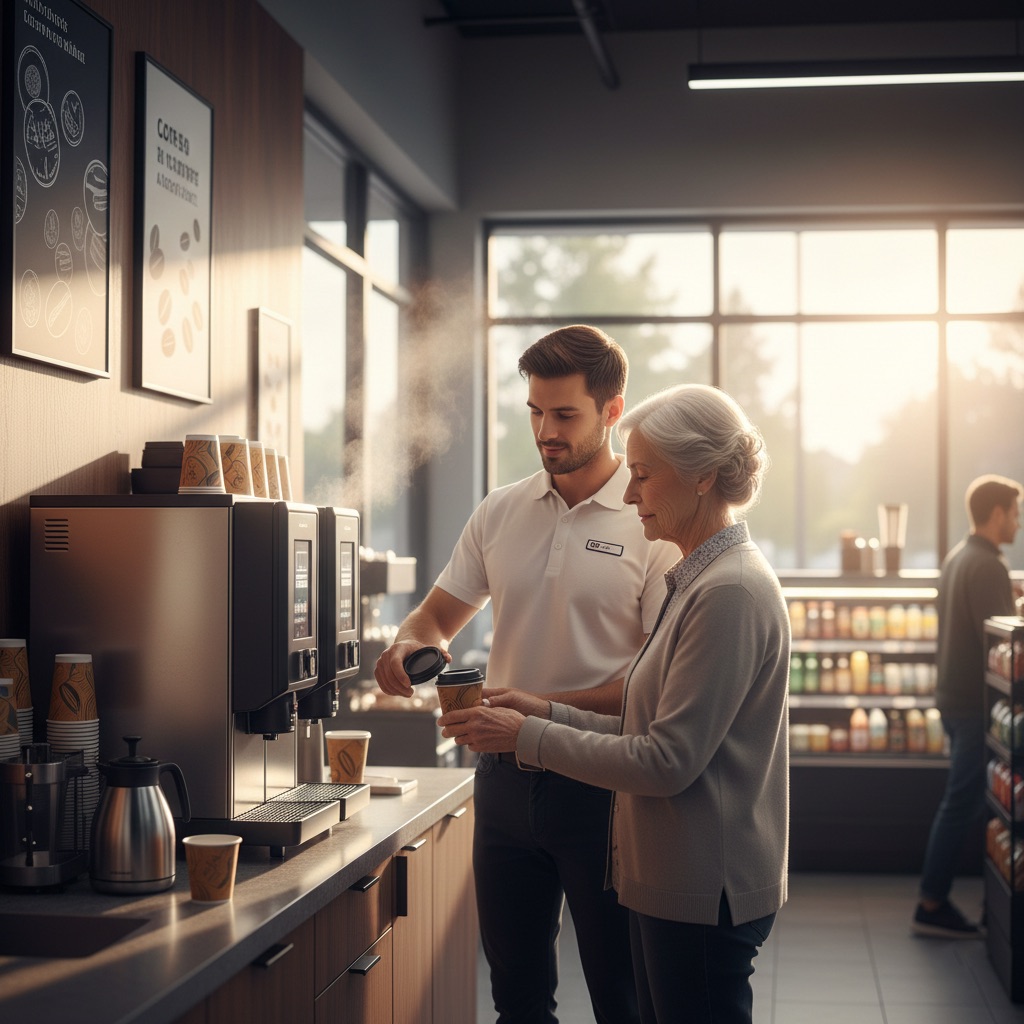
A clean, organized front-of-house is a direct reflection of a well-run operation. It is an investment in a store’s most valuable asset: its people. The convenience store industry is facing significant challenges with labor shortages and high employee turnover rates. A chaotic, disorganized work environment can contribute to employee frustration and burnout. By providing a clean, logical system, an operator can make the job easier, more efficient, and more enjoyable for their staff.
This principle is borrowed from the foodservice industry’s concept of “mise en place,” or “everything in its place”. This station-based workflow emphasizes having all ingredients and tools logically arranged and easily accessible. PanelRak’s pre-configured kits and specialized baskets for items like cup lids, syrup bottles, and condiments create this exact kind of logical, efficient workspace. By reducing “unnecessary movement” and “excessive reaching,” it improves service speed and reduces the risk of errors.
A well-organized work environment can lead to better employee morale and retention. A happier, more efficient employee provides better customer service, which in turn improves the customer experience and encourages repeat visits. This creates a powerful, self-reinforcing loop that benefits both the employee and the business. The efficiency gained from a logical setup is also a direct profit lever. When staff can serve customers faster, lines move quicker, and more transactions can be completed during peak hours. This small gain, compounded over a month or a year, can lead to a significant boost in sales.
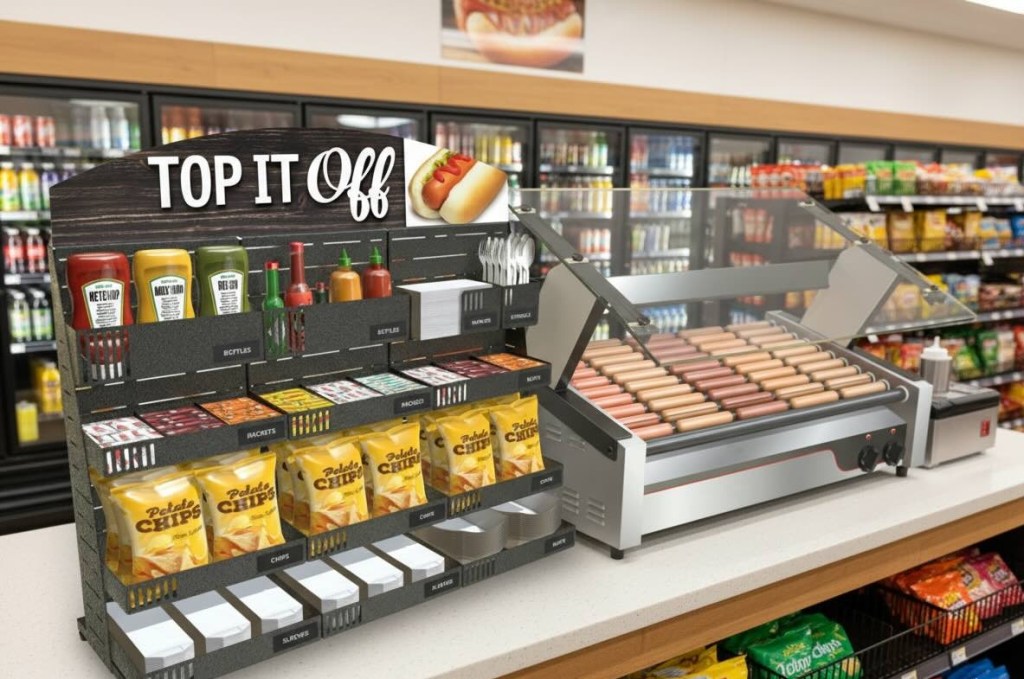
The Impulse Magnet: Driving High-Margin Sales
The beverage and food counter is a prime location for impulse purchases, and a strategic display system can act as a powerful upsell and cross-merchandising tool. Research has shown that countertop displays are a “game-changer” designed specifically to encourage high-margin impulse purchases. An organized display attracts customers and makes them more likely to buy.
The average convenience store customer is often in a hurry, making the counter their final decision point. A well-designed display, with its tiered and organized structure, has a purpose. It strategically places high-margin items like single-serve condiments, protein bars, or new snack bags right at eye level. This visual cue encourages customers to add one or two items to their main purchase. This method is a subtle but highly effective way to increase average ticket size. PanelRak can be used to “cross-merchandise your roller grill products for combos.” This encourages customers to build a more complete meal. It also helps create a more profitable meal.
The impulse-driving power of a modular system is the culmination of all its benefits. The display looks clean and professional, building customer trust. It is a space-optimized solution that places a wide variety of products in a small area. It is easily changeable to feature new promotions or seasonal items. And it is logical for the staff, ensuring smooth, quick transactions. The PanelRak system is not simply holding items; it is a cohesive marketing and sales engine working on all cylinders to turn the counter from a point of transaction into a point of profitable basket building.
What You Should Be Doing: Your Action Plan
Taking a proactive approach to your store’s most critical spaces can yield significant returns. It is not about a massive overhaul but a series of smart, focused changes. Here is an actionable plan to get started:
- Evaluate Your Current Space: Take a critical look at your current beverage and foodservice areas. Are they clean and organized? Do they create a premium feel? Observe customer flow and identify any bottlenecks or points of friction. Pay attention to whether customers have to search for a lid, a straw, or a specific condiment. This creates a negative experience. It may make them leave without a purchase.
- Start with a Single Area: Emphasize a low-risk, high-reward approach. Upgrade a single, high-traffic area, like your coffee station or hot food counter. This can help test the impact of a modular system like PanelRak. This will allow you to see the tangible benefits without committing to a full store redesign.
- Embrace Modularity: Once you have a system in place, think about how you will leverage its adaptability. Plan for using the system for seasonal promotions. For example, consider fall-themed coffee syrups. You can also use it to introduce new product launches. The ability to easily change your display will be a significant competitive advantage.
To learn more about how a simple change can drive significant results, check out the original source. I highly recommend this source on the PanelRak modular organizing system.
Source: https://www.foodpros.com/panelrak-modular-organizing-system/
The Bottom Line: A Small Change, a Big Future
The evolution of the convenience store is undeniable; the future of profitability lies within. Transform a seemingly simple space like the beverage and food area. This change provides a strategic advantage. It goes far beyond tidiness. An investment in a modular system leads to enhanced customer perception. It optimizes valuable space and allows real-time adaptation to trends. It also improves operational efficiency. Most importantly, it results in higher-margin sales. A modern, profitable store recognizes the importance of every detail. It understands that even a small, smart investment can position a business for long-term success.

 The5For
Leave a comment