Turning Speed into Satisfaction and Profit
Last week’s discussion centered on leveraging affordable technology, such as optimized Point-of-Sale systems and digital signage, to engineer transactional speed. But maximizing profit means more than just being fast. It means ensuring that the customer’s brief time inside the store is as profitable as possible. A fast transaction that moves a customer quickly through the store should still be a large transaction.
This week, the focus shifts to the physical environment. Strategic store layout and cross-merchandising techniques are low-cost, high-impact strategies. They utilize psychological cues to increase the time customers spend browsing (dwell time). These strategies also boost the number of unplanned, impulse purchases customers make. By adopting principles used by QSRs and high-end retailers, C-store operators can turn their floor plan into a dynamic revenue engine.
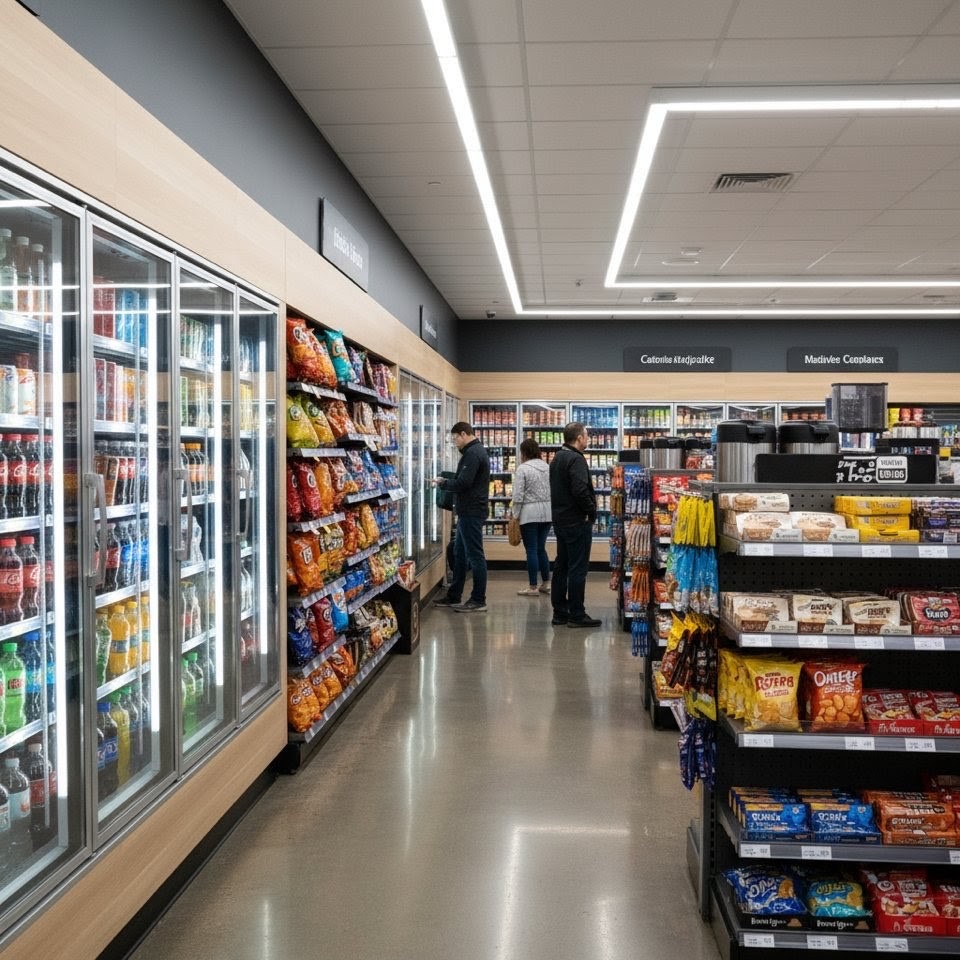
Mapping the Customer Journey: The Racetrack or Loop Layout
Retail research unequivocally demonstrates the Power of Dwell Time. The more time a customer spends in a store, the higher their likelihood of making an unplanned purchase. There are two primary psychological reasons for this: first, increased time spent equals more product discovery; second, the “sunk-cost fallacy” may kick in, where customers feel they cannot leave empty-handed after spending effort (time) browsing.
For C-stores, which often operate within smaller footprints, efficient layout is paramount. Utilizing loop or “racetrack” layouts is a crucial technique for maximizing value from minimal space. This design guides the flow of customer traffic through specific high-margin promotional areas before they reach the high-demand, low-margin destination (like the back-wall refrigerator or the checkout).
Operators should also focus on optimizing the store environment to encourage comfort. Clear signage and providing wayfinding direction can influence dwell time. Ensuring appropriate aisle width and incorporating small seating areas enhance the overall shopping experience. The decompression zone, the area immediately inside the entrance, should be utilized to provide a visually engaging preview of products, enticing the customer to shop deeper into the store.
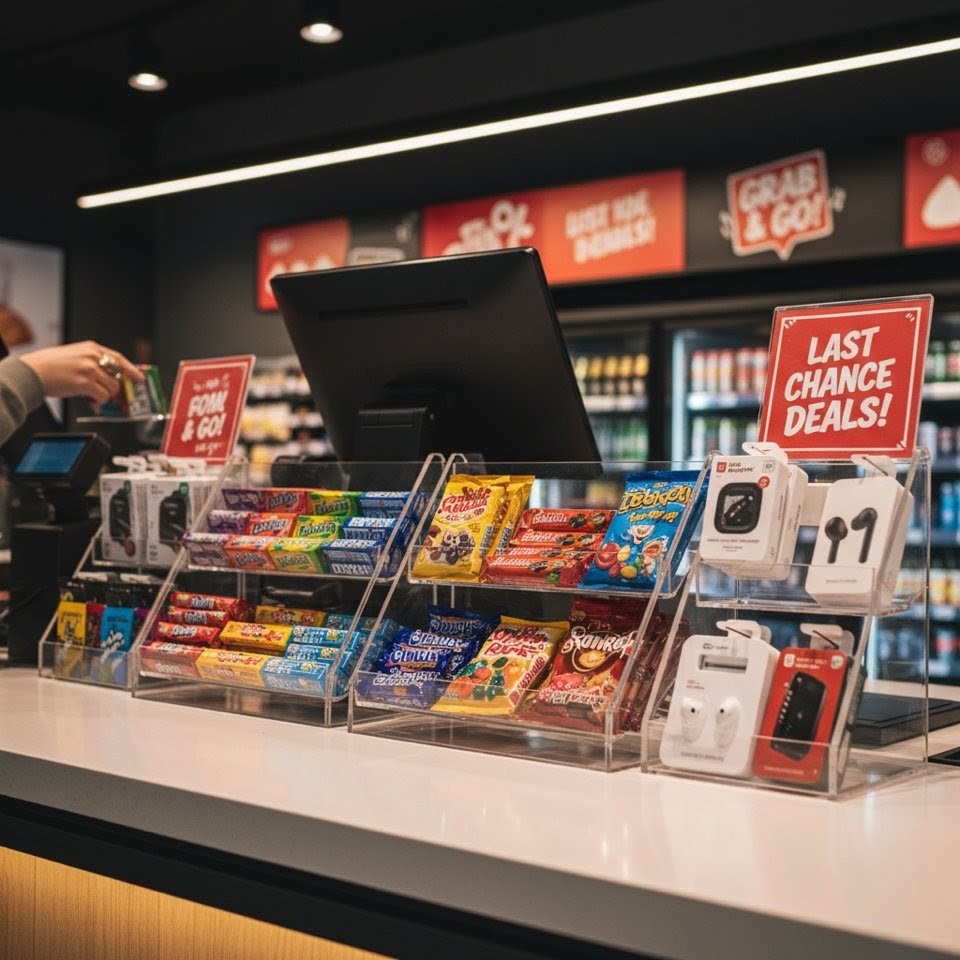
Mastering the Art of Cross-Merchandising
Cross-merchandising is the strategic placement of complementary impulse products alongside anchor items that customers actively seek out. This technique capitalizes on the attention and foot traffic that high-demand products draw.
The goal is to anticipate the customer’s needs and solve their consumption puzzles instantaneously. Some strategies involve placing popular snacks like chips right next to the soda cooler. Another method is displaying small grab-and-go dipping sauces or toppings near the roller grill. If the C-store sells frozen desserts, displaying waffle cones or specialized toppings immediately in front of the ice cream freezer dramatically increases the likelihood of an add-on purchase. This strategy not only increases sales but significantly enhances the customer experience by providing a seamless, one-stop shopping opportunity.
A deeper analytical benefit of strategic cross-merchandising lies in Inventory Efficiency and optimization. By selecting complementary products that make sense together, operators create a natural bundle. If item A (a high-demand, low-margin beverage) drives traffic to item B (a complementary, high-margin snack), the sales data can be analyzed based on the performance of the A+B bundle. This focused data tracking allows the C-store to optimize ordering quantities and placement efficacy for the pairing in real-time. This continuous optimization improves inventory turns and maximizes the total profit derived from each customer visit.
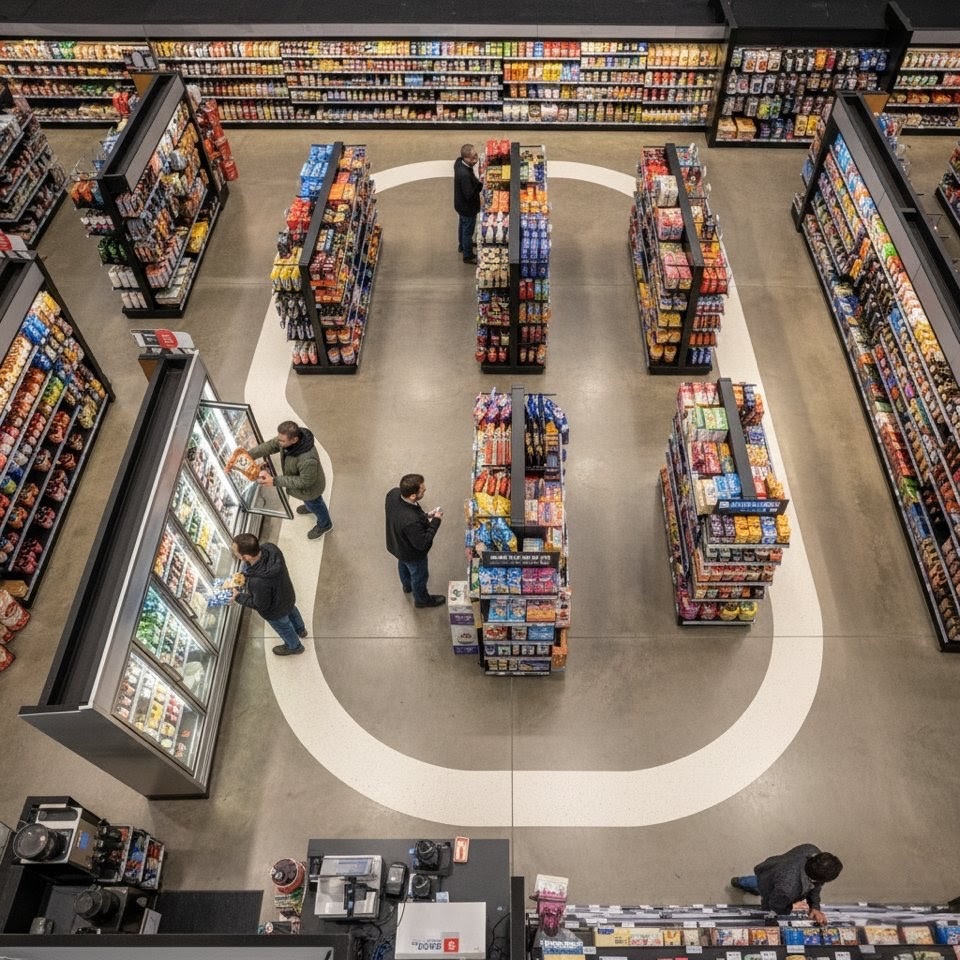
Checkout Zone and Display Psychology
The high-traffic areas are, by definition, the most valuable real estate in the store. These locations, which include the checkout counter, the end of aisles (endcaps), and the middle of heavily traveled zones, are prime spots for impulse displays. The products chosen for these areas must generally be low-priced impulse buys that customers can easily justify adding at the last second.
Beyond physical placement, operators must master the use of visual cues to grab attention, drawing on three main elements:
- Signage and Urgency: Use bold, professional signage on and around impulse displays. The language used should be direct and conversational, communicating a sense of urgency or temporary offer to prompt immediate action.
- Color: Bright, bold colors, particularly red, are psychologically powerful for drawing attention and signaling sales, promotions, or urgency.
- Lighting: Strategic, focused lighting can set a display apart. Using spotlighting, track lighting, or even specific colored lighting focuses the customer’s eye on the high-margin display, differentiating it from the general store environment.
The incorporation of seasonal items into these displays is highly effective. It capitalizes on predictable holiday behavior. This strategy ensures that the store environment always feels current and relevant.
The table below summarizes high-impact, low-cost layout tweaks that immediately enhance impulse sales:
Low-Cost Layout Tweaks for Impulse Sales
| Tweak Strategy | Actionable C-Store Example | Psychological/Operational Goal |
| Implement Loop Layouts | Guide path from coffee station past seasonal snack displays before reaching the register. | Increase product discovery and sight lines; maximize dwell time. |
| Strategic Cross-Merchandising | Place small phone accessories and inexpensive earbuds near the tech/charger rack. | Capture related impulse purchases; enhance one-stop shopping experience. |
| Spotlight Displays | Use focused LED track lighting or colored spotlights on the limited-time offer (LTO) beverage chiller. | Draw immediate attention and create a sense of urgency. |
The Bottom Line: Engineering the Purchase
C-store operators can transform their existing space into a highly effective impulse revenue engine. This is achieved by mapping the customer journey using a racetrack layout. It is also achieved by strategically cross-merchandising complementary products and leveraging visual psychology at the point of sale. These physical adjustments ensure that while the customer’s transaction is fast, their basket size is maximized, thereby increasing profitability per minute.
However, even the most strategically planned layout needs the right stage of lighting. In our next post, we will delve into the often-overlooked environmental factors. It will cover safety, brightness, and ambiance. The focus will be on how low-cost lighting upgrades can attract customers, reduce liability, and subtly highlight those high-margin product areas.

 The5For
Leave a comment