Protecting the 4X Revenue Advantage
In our last post, we established the exciting case for Micro Markets (MMs). They generate up to four times the sales of traditional vending. They solve the critical 24/7 labor problem. They finally let you deploy your high-margin fresh food program off-site. The potential for profit growth is real, measurable, and highly compelling.
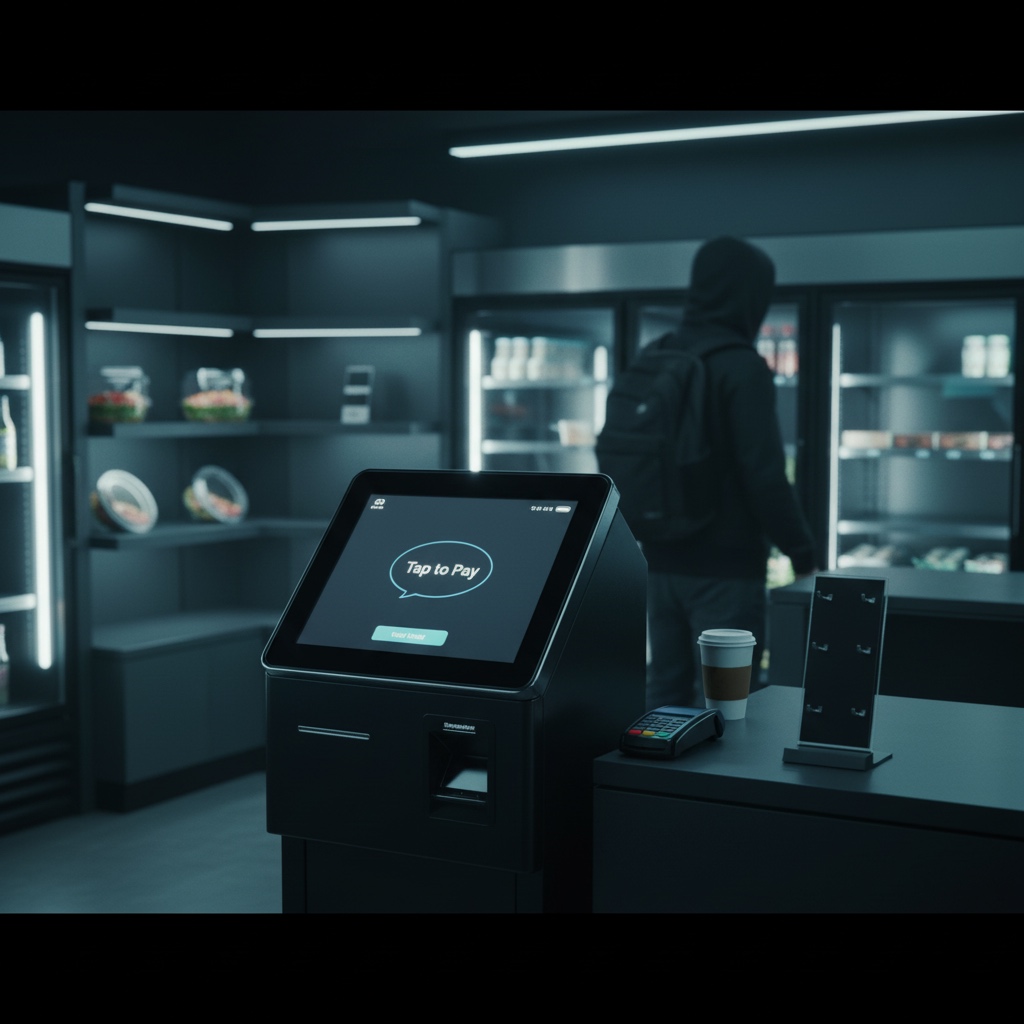
But here is where the rubber meets the road: all that potential profit can vanish overnight if you operate on wishful thinking rather than strict controls.
The open-shelf, self-service nature of a Micro Market drives the high sales. However, it introduces a massive, structural vulnerability. The traditional Micro Market model is often predicated on an “honor rule” system. Let’s be honest: relying on the honor of 100% of the public is not a viable business strategy. The single biggest threat to your MM success is shrinkage.
For C-store owner-operators, you must look at Micro Market security as the investment that protects your ROI. This is not an optional cost; it is mandatory insurance for your profits. We’re talking about reported shrinkage rates that can climb as high as 10% in uncontrolled environments. When you’re managing tight margins, losing one out of every ten items sold is catastrophic; it instantly vaporizes the advantage you gained by switching from vending. Experienced operators can manage this down to a tolerable 2% to 5%, but only by deploying a multi-layered security strategy.
As your combined expert team, we are here to tell you that this must be a “zero tolerance” operation. You need to pivot your thinking from a low-security “breakroom amenity” to a high-security, autonomous retail location. The strategy involves not just deterring theft but also using technology to manage operational waste. If you skip this step, you are not expanding your business; you are funding other people’s shopping habits.
In this post, we present five non-negotiable security measures. These measures will transform your exposed “honor box” into a highly secure, profitable retail extension of your C-store brand.
The Non-Negotiable 5: Strategies to Secure Your Micro Market Profits
Shrinkage, in the context of an MM, is not just outright theft. It also includes “operational shrink”, losses due to spoilage, poor inventory rotation, and mismanagement. Since your highest-margin items are your fresh, perishable foods, operational shrink is often just as damaging as theft. True loss prevention requires tackling both.
1. The Power of Visible Deterrence: Maximize Surveillance and Signage
The first and cheapest layer of security is making it utterly clear that the market is monitored, and consequences exist. Deterrence often works better than apprehension, especially in environments where staff accountability is ambiguous.
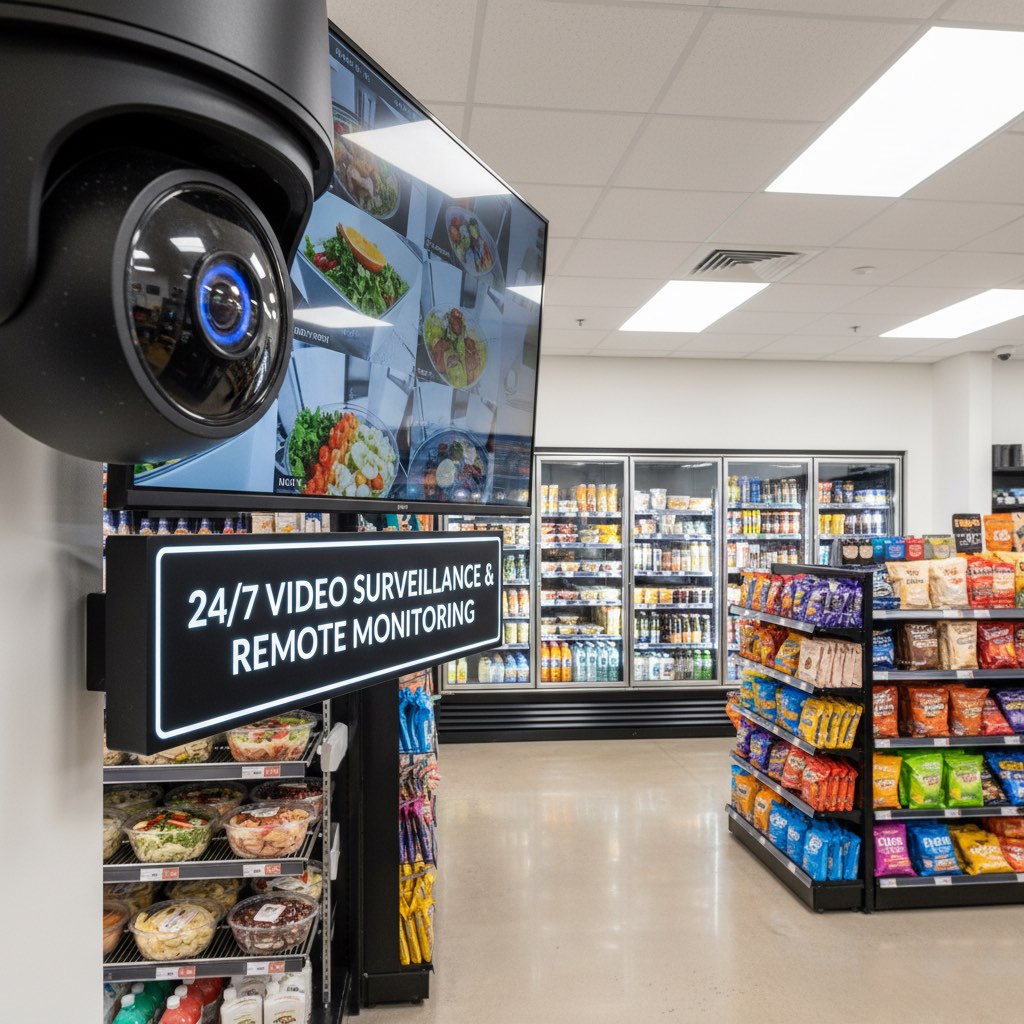
- Install High-Visibility Security Cameras and Alarms: This is the baseline. Security cameras should be positioned to clearly monitor the entrance, the self-checkout kiosk, and the high-value merchandise (like the fresh food coolers and electronics shelves). They must be high-resolution enough to capture clear facial images and activity. For public or semi-public locations, an alarm system is also a non-negotiable asset to deter unauthorized after-hours access.
- Deploy Live Video Feeds: A highly effective, low-cost deterrent is placing a visible monitor in the market that displays the live stream of the security cameras. This is a psychological power move: it immediately signals to everyone that they are being watched in real-time. It transforms the market from an anonymous space into an accountable one.
- Use Explicit, Professional Signage: Don’t rely on subtlety. Place clear, professionally designed signs indicating, “This Market is Under 24/7 Video Surveillance and Remote Monitoring”. This simple, direct communication puts potential thieves on notice. Furthermore, for locations where the MM replaces a staffed store (like late-night hospital service), signage is a core part of maintaining the “closed-loop” environment accountability.
2. Go 100% Cashless: Eliminate Transaction Risk and Improve Auditability
Cash is a liability for unattended retail. It creates an unnecessary cash-handling risk, introduces the possibility of internal theft, and is prone to vandalism (coin mechanisms and cash recyclers).
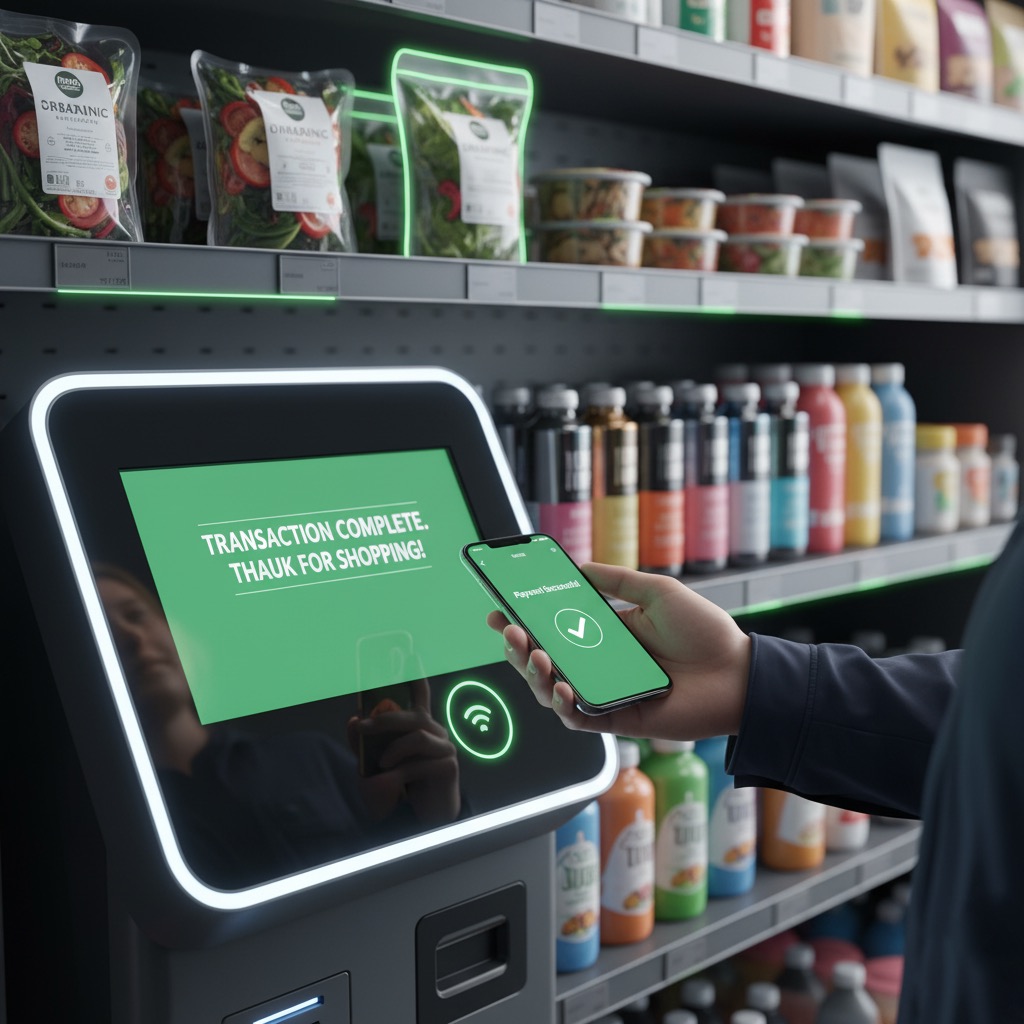
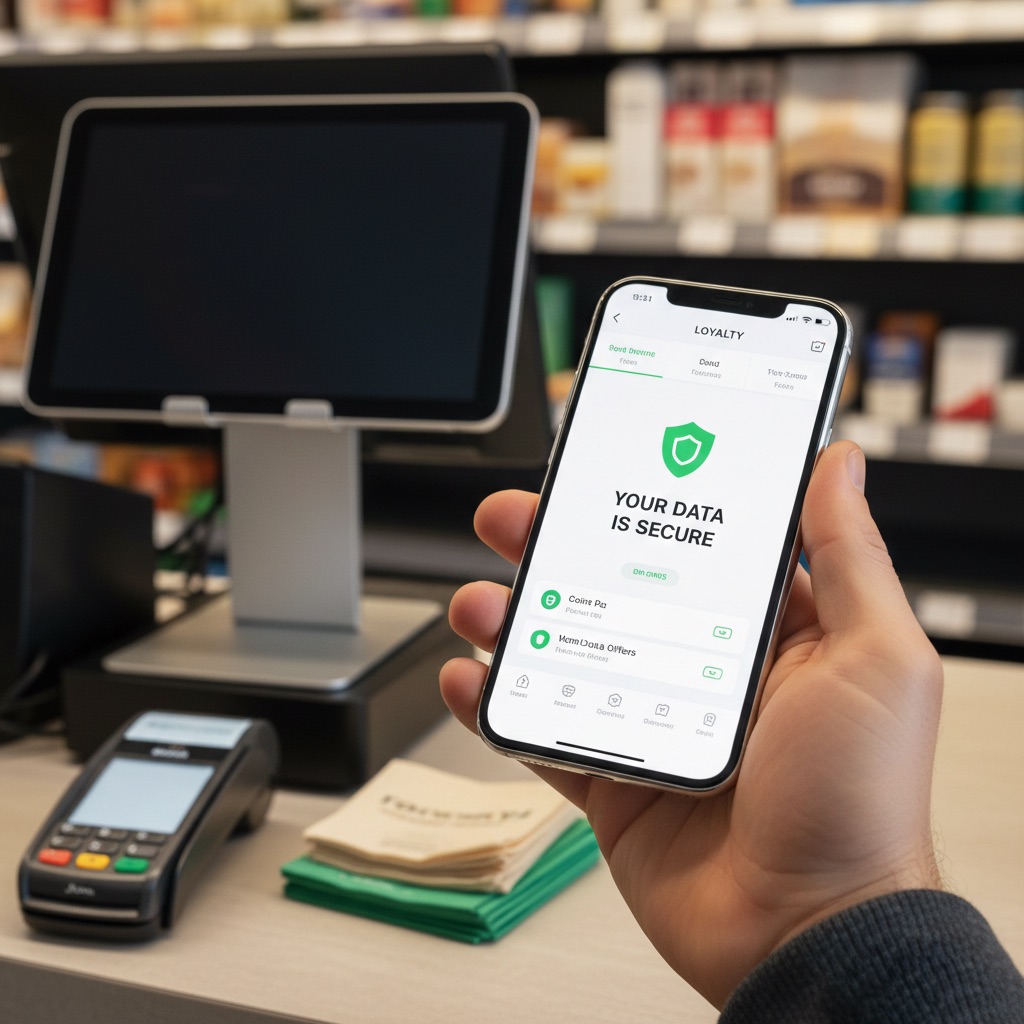
- Zero-Cash Policy: Adopt a 100% cashless payment strategy. This focuses transactions exclusively on cards, mobile payments (Apple Pay, Google Pay, NFC), and digital loyalty accounts. Modern consumers already prefer these frictionless payment methods, so this move aligns with demand while significantly boosting security.
- Comprehensive Digital Records: Every transaction is instantly recorded and auditable, creating a perfect digital ledger for loss prevention. You can immediately reconcile inventory against sales data, simplifying the calculation of true shrinkage, and making it easier to identify patterns of loss.
- Vandalism-Proof Hardware: Ensure your self-checkout kiosks are equipped with vandalism-proof card readers and components. By focusing on digital payments, you eliminate the risk associated with physical cash storage and collection.
3. Invest in Smart Store Technology for High-Risk Locations
Micro Markets are increasingly moving outside the low-risk office breakroom. Now 60% of MMs are in more public or semi-public venues like hospitals, residential buildings, and transportation hubs. This shift requires a corresponding increase in security technology.
- Autonomous Micro-Retail (Smart Stores): For locations with high foot traffic and low staff accountability (e.g., urban non-fuel sites, transit centers), the open-shelf MM may be too vulnerable. The solution is the Autonomous Smart Store model. These use Artificial Intelligence (AI), sensors, and embedded scales to track every product movement.
- How it Works: Customers must tap or dip a payment method before entry, which creates a link to the transaction. The system then uses AI and cameras to identify and charge for products removed, mitigating shrinkage risk far beyond a standard MM. This high initial investment is justified by the elimination of expensive cashier labor. It is also justified by superior shrink mitigation in high-risk, premium locations.
- Access Controls for Accountability: In semi-public, closed-loop environments like apartment complexes or university dormitories, utilize access control technologies. These include biometric or proximity readers. This limits market entry only to registered users (residents, staff, students), creating a defined community of accountability that acts as a strong deterrent.
4. Integrate POS Data for Real-Time Shrink Management
The best security system is also your best inventory system. A sophisticated Point-of-Sale (POS) system does more than process payments. It is a powerful data collection engine. This engine allows you to fight operational shrink (spoilage) and quickly identify theft patterns.
- Real-Time Inventory Tracking: Your MM POS must link directly to your central inventory system (like a Global Market Account, which we’ll cover in a later post). This allows you to track inventory in real-time, identifying discrepancies between what was sold and what is physically missing.
- Data-Driven Planogram Adjustments: Use buying trend data to refine your product mix, or “planograms,” based on the specific location’s demographic. If the data shows that a certain salad or sandwich line has a high spoilage rate at Location A, reduce the volume or frequency for that item immediately. This eliminates operational waste and preserves margin. This moves you beyond standardized offerings to tailored, localized assortments.
5. Employee and Partner Education: The Human Firewall
You need to treat your corporate partners (the businesses hosting your MMs) as allies in loss prevention. Theft often occurs because employees or tenants do not understand the negative impact.
- Educate the Location’s Management: Work closely with the decision-makers at the location to help them understand that theft from the Micro Market is a reflection of poor on-site integrity. Emphasize that if employees are stealing products, they are likely stealing company time or resources. Encourage the client to enforce the rules and use the MM as a tool to improve their internal employee accountability.
- Train Your Restocking Team: The team managing the inventory and restocking routes requires specialized training. MM inventory management is different from the highly controlled environment of vending machines. It demands more attention and discipline to track losses accurately. Frequent, sometimes daily, inventory checks are necessary, especially for high-turnover fresh items.
What You Should Be Doing: Your Security Action Plan
To secure your Micro Market investments and protect your 4x revenue potential, implement these actions now:
- Classify All Potential Locations by Security Risk: Categorize sites as “Closed-Loop/High Accountability” (e.g., internal corporate offices) or “Public/Semi-Public/Low Accountability” (e.g., hospitals, transit).
- Mandate Advanced Security for Public Sites: Budget for AI-powered monitoring, access control, and advanced security cameras in any public-facing MM deployment. Do not deploy a basic open-shelf system in a low-accountability location.
- Implement a 100% Cashless Policy: Update all MM kiosks to be card/mobile only, eliminating the cost and risk associated with cash handling and providing a clean digital audit trail.
- Integrate POS and Inventory Tracking: Ensure your MM software provides real-time inventory visibility. Use this data weekly to adjust product orders and minimize spoilage of high-margin fresh items.
- Make Security Highly Visible: Install highly noticeable security cameras and monitors in every market to maximize the deterrent effect.
The Bottom Line: Security is Profit Preservation
The integration of Micro Markets offers a clear path to high-margin growth. However, success requires data, security, and smart technology. Treat loss prevention as a necessity. This approach ensures that the massive revenue potential of this unattended model translates directly into a healthy bottom line. The old “honor system” is dead; the modern C-store operator must leverage technology to enforce accountability and maintain profitability.
Now that we’ve established how to secure the Micro Market, the next step is determining where and who should deploy them. Not every C-store chain is equally equipped for success, and not every location is a good fit. In our next post, we will dissect the four main C-Store Archetypes. These range from the regional super-chain to the independent operator. We will map out the optimal Micro Market strategy for each, ensuring you deploy your capital with surgical precision.



 The5For
Leave a comment