Shifting Focus from Physical to Psychological Retention
In our first installment, we established a crucial truth: Emotional Safety (ES) is not a “soft” benefit; it is the strategic, financial foundation for modern C-store operations. We saw the undeniable link between an emotionally safe environment and measurable business outcomes, including the stunning $8.13:1 return on investment observed by major retailers who prioritize employee support and retention. If you want to increase your revenue, you must start by addressing the hidden costs of stress and fear among your team.
Now, we move from justification to implementation.
As an HR specialist, I can tell you that in the high-turnover environment of convenience retail, retention isn’t fixed with better wages alone. It’s fixed by the culture created by the store manager. C-stores often rely on entry-level or first-time workers. Employees remain not because of the job itself. They stay because they feel respected, valued, and safe enough to grow.
This post is your blueprint for building that inner cultural sanctuary, the employee experience. Psychological safety is about creating an environment where employees feel safe to take interpersonal risks. It also encourages them to share feedback and be their authentic selves.
We’re going to break down the three crucial pillars of the employee experience:
- Managerial Vulnerability
- Psychosocial Risk Management
- Consistent HR Policy
These are the levers you can pull right now. Use them to transform your store from a high-stress transactional zone into a stable, high-performing team.
Pillar 1: Leading with Vulnerability and Grace

The foundation of emotional safety isn’t built from the bottom up; it’s modeled from the top down. Everything hinges on your immediate store leadership.
The Manager as Cultural Architect
Psychological safety exists when team members believe they will not be rejected. They also feel safe from being humiliated for asking for help. This includes taking a risk or admitting an error. For a C-store manager, this means moving beyond the traditional role of “task enforcer” to becoming the Cultural Architect of the store.
This culture requires leaders to embrace humility, vulnerability, and curiosity. It means actively inviting associates to share their perspectives, similarities, and differences without judgment. Leaders must “give grace,” acknowledging the high emotional demands and inherent difficulty of frontline retail work.
Retention is Manager-Driven: Why it Matters to You
This managerial mindset shift is the most cost-effective retention strategy available.
- Employees stay when they feel their unique skills are valued. They are not rejected for being different. They feel safe to ask colleagues for assistance or admit an error.
- When something goes wrong, a till is short, a spill is missed, or a process fails. A psychologically safe leader focuses on finding the systemic cause. They do not punish the individual.
This commitment to systemic improvement over individual blame signals to the entire team that they are valued as human beings. It makes the store a desirable place to work. This dramatically cuts turnover costs.
Model the Behavior: What You Should Be Doing
Train your managers to proactively model vulnerability and curiosity to build team trust.
- Implement a Vulnerability Rule: Encourage managers to admit their own mistakes first and ask the team for advice on how to avoid recurrence. This gives staff permission to also be imperfect.
- Ask for Feedback, Then Listen: Managers should actively ask associates for feedback on processes and even on their own leadership style and be open to receiving that feedback without defensiveness.
- Hold Systemic After-Action Reviews: Instead of punitive meetings when a mistake occurs, hold an “After-Action Review” asking, “What about our process failed?” not “Who is to blame?”.
- Celebrate Differences: Encourage associates to consider their similarities and reflect on their differences without judgment. Acknowledge that everyone wants to be respected and valued for who they are.
Pillar 2: Formalizing Psychosocial Risk Management

Emotional safety requires the same rigor as physical safety. You cannot fix what you haven’t measured.
Managing Hidden Hazards
Psychosocial risks are the conditions of the work environment that can lead to psychological distress, stress, and burnout. Common hazards in the C-store setting include:
- High Job Demands: The pressure to serve high volumes quickly and accurately.
- Low Job Control: Minimal ability to influence scheduling or work processes.
- Violence and Aggression: Frequent exposure to conflict, theft, or abusive customers.
The goal of management is to minimize these hazards using objective, analytical processes, just as you would for a physical hazard like a wet floor.
Reducing Operational Friction: Why it Matters to You
Managing these hazards is a direct investment in efficiency. The concept of improving the Customer Experience of HR (CxHR) involves deliberately removing friction from transactional processes. This helps safeguard employee productivity and engagement.
A classic C-store example of high friction is manual cash handling. If employees face time-consuming reconciliation delays, they feel stressed and demotivated. This stress affects morale and service consistency. Ultimately, it drives high turnover.
By investing in solutions that reduce this daily friction, like automated cash management, you are simultaneously improving efficiency and mitigating a key psychosocial hazard.
Systemic Process Redesign: What You Should Be Doing
Map your known stress points to modern operational solutions.
- Conduct a Psychosocial Survey: Use a free or low-cost risk assessment tool. Identify the specific hazards impacting your unique store environment. These include demands, control, and support. Don’t guess, measure it.
- Invest in Dual-Purpose Technology: Prioritize technology that streamlines operations and reduces employee stress. Automated cash management is a prime example of a tool that reduces high-stakes emotional labor.
- Ensure Adequate Support: For any worker engaged in isolated work (like night shifts), ensure there are strong internal communication systems (e.g., headsets) and clear safety protocols to mitigate the hazard of remote work.
Pillar 3: Transforming HR Processes and Policy Enforcement

A foundation of emotional safety requires clear, consistently enforced human resources policies.
Non-Retaliation and Consistent Discipline
Trust cannot exist if policies are applied arbitrarily. Psychological safety relies on managers having the courage to make difficult decisions consistently. The most critical elements here are your policies on harassment and retaliation.
- Anti-harassment policies must be in place, promptly and impartially investigated, and enforced consistently.
- Crucially, employees must be assured that they are protected against retaliation when reporting potential harassment or problems.
The goal of corrective action is always to stop the harassment and prevent future occurrences, whether that means counseling or termination.
Protecting Trust and the Law: Why it Matters to You
Inconsistent policy enforcement is a fast track to eroding trust and psychological safety.
- If staff sees a preferred employee get away with behavior that a less-favored employee was disciplined for, the entire structure of fairness breaks down. This completely undermines the system. This immediately signals that speaking up is dangerous.
- A prompt, impartial, and thorough investigation protects the business from significant legal liability. You fulfill your duty to promote a safe, fair, and productive work environment. Act decisively to ensure employees feel comfortable coming forward.
Enforce and Protect: What You Should Be Doing
Review your policies to ensure they are clear, accessible, and consistently applied.
- Mandate Non-Retaliation Training: Ensure every manager and supervisor understands the prohibition of retaliation under federal law. This law applies to employees who report potential harassment or safety concerns.
- Investigate Promptly and Impartially: When a complaint is filed, begin the investigation immediately. Conduct a thorough investigation. Document steps and evidence impartially. The investigation must always focus on the facts.
- Promote Respect Proactively: Actively cultivate a culture of respect and inclusivity. This environment encourages all employees to treat each other with dignity. They should respect each other regardless of background or status. This proactive measure builds safety before an incident occurs.
The Bottom Line: Next Step, External Impact
If you commit to this level of internal rigor, you will lead with vulnerability. You’ll mitigate psychosocial hazards and enforce HR policies consistently. As a result, you will stabilize your team. You will reduce your turnover and begin to capture that impressive ROI that leaders in retail are seeing. You will transform your C-store into a place where people choose to work, allowing you to stop constantly training new staff and start focusing on growth.
However, the benefits of internal emotional safety don’t stay locked inside the break room. Your staff are the ambassadors of your brand, and the moment they feel safe and supported, the customer experience transforms.
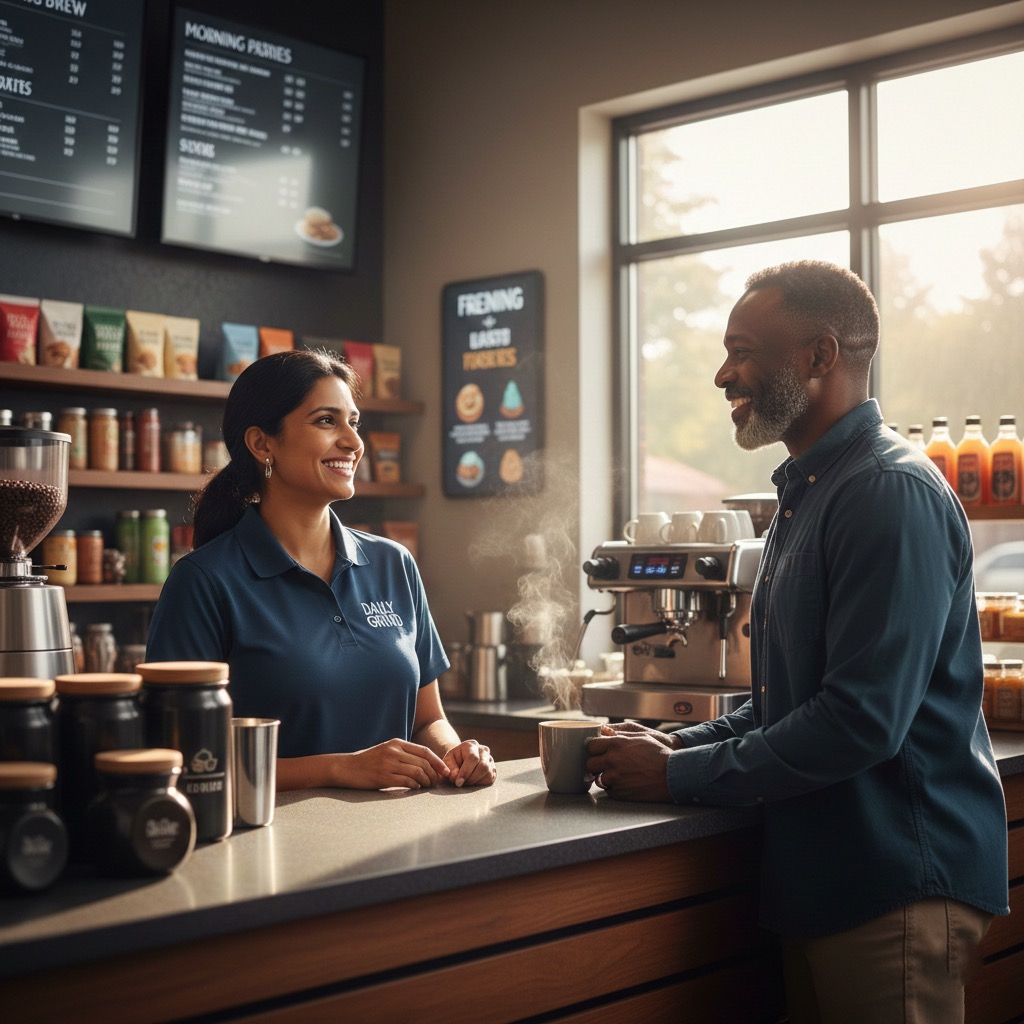
An employee who experiences reduced stress due to automated cash handling can genuinely smile. They can fully focus on the customer.
This connection is critical for converting one-time shoppers into loyal, repeat customers.
In our next post, we will bridge this gap. We will focus entirely on: The Customer Impact: How a Safe Team Delivers Better Service and Drives Loyalty. We will look at how high employee morale directly influences customer perception. We will explore how to use security measures to build trust. Additionally, we will examine why emotional connection drives 60% higher profitability. Stay tuned, this is where your investment in ES starts paying dividends on the sales floor.





 The5For
Leave a comment