(IMPORTANT: This seven-part series offers operational strategy and professional insights. It is provided for informational and educational purposes only and is not legal or regulatory advice.
Age-restricted sales regulations are constantly changing and vary significantly by locality (city, county, and state).
Before implementing any strategy or technology discussed here, you must verify all requirements with your local and state regulatory agencies and consult with legal counsel. Compliance remains your sole responsibility.)
In Post 3, we addressed the crippling financial threat of unauthorized vaping products. Now, let’s discuss the category many operators view as the next massive margin opportunity. This category includes hemp-derived cannabinoids such as CBD, Delta-8, and low-dose THC beverages. This market offers explosive growth potential, but it is a legal and regulatory minefield created by the gaping contradiction between federal and state law.
You need to recognize the severe liabilities this product line introduces. It poses a risk of product seizure. Additionally, there is a threat of reputational destruction.
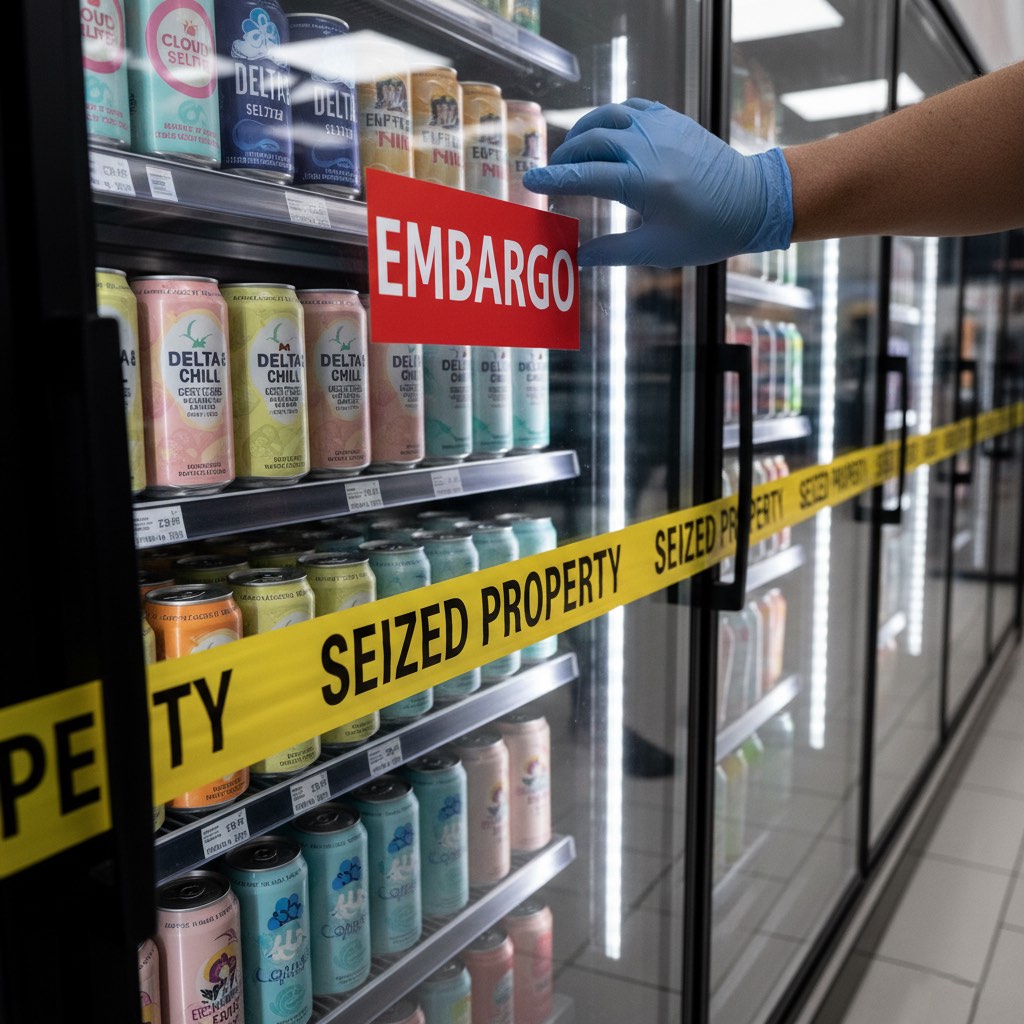
The Federal vs. Food Safety Conflict
The legal ambiguity stems from the 2018 Farm Bill, which legalized hemp defined as cannabis with less than 0.3% Delta-9 THC by dry weight. This “dry-weight loophole” allows manufacturers to create products, like Delta-8 edibles or THC beverages, that are intoxicating, yet technically compliant under federal hemp law.
Here’s the danger: The FDA has explicitly stated their position on CBD and other hemp-derived cannabinoids. This includes Delta-8 and Delta-9. They are prohibited from being marketed in interstate commerce as food, beverages, or dietary supplements. Raw hemp may be federally legal. However, the THC-infused sparkling water or the Delta-8 gummy on your shelf is considered non-compliant with food safety regulations.
This interpretation is not passive. FDA officials have confirmed they can and will seize intoxicating hemp edibles and drinks from retailers, classifying them as “unapproved food additives”. This broadens your enforcement exposure significantly. Local health departments and food safety inspectors can instantly embargo and seize inventory. This action freezes your cash flow and leads to costly, store-level legal battles.
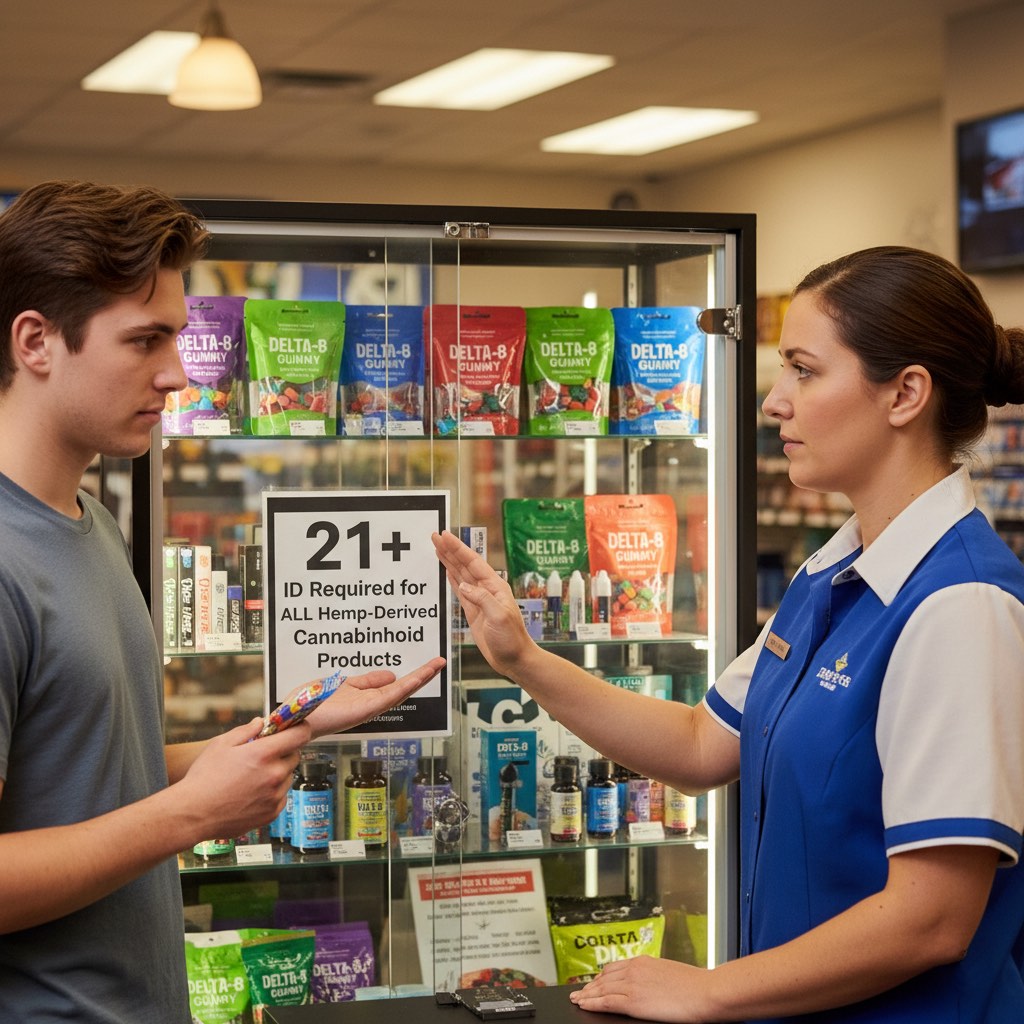
The Age-Gating Disaster and Public Crisis
The volatility is compounded by the lack of any federal mandate for age restrictions on hemp-derived products.Unlike alcohol or tobacco, there is no blanket federal T21 equivalent. This regulatory void creates massive liability where intoxicating products are often accessible to minors.
The consequences of this accessibility are real and immediate. In jurisdictions lacking statewide regulation, local incidents force the hands of city and county officials. Regulatory action in Milwaukee occurred after two children were hospitalized. They got sick after consuming high-dose THC gummies purchased from a C-store. Such events don’t just result in fines; they lead to:

What You Should Be Doing
Your primary goal in this category is risk mitigation through proactive policy and vetting.
- Establish a Proactive Age Policy: Do not wait for your state or locality to impose a rule. For all intoxicating hemp-derived products (Delta-8, Delta-9, and high-dose CBD), immediately enforce a mandatory 21+ sales age at the POS.
- Mandate Secured Product Placement: Require all intoxicating hemp products to be kept behind the counter or in locked, secure displays. This is a non-negotiable operational best practice to ensure minors cannot access them.
- Prepare for Regulatory Seizure: Understand that your inventory is vulnerable to an immediate embargo by food safety or health inspectors. This holds true regardless of its legal status under the 2018 Farm Bill. Have a clear chain of communication for management if an inspector requests to see or seize product.
- Require a Certificate of Analysis (COA): This is your due diligence shield. Never purchase an intoxicating hemp product without a detailed, third-party COA. This is the only way to confirm that the THC content is compliant, and the product is safe from contaminants.
The Bottom Line: Local Compliance
The complexity of the hemp market is defined by regional variation. What is legal in one county can be illegal 30 minutes away. To survive this category, you need hyper-local compliance intelligence.
In Post 5, we will create a State-Specific Compliance Checklist for High-Risk Hemp Products. I will show you how to use regulated markets like Minnesota and Illinois as benchmarks to protect your store, especially if you operate in an unregulated state like Wisconsin.





 The5For
Leave a comment