(IMPORTANT: This seven-part series offers operational strategy and professional insights. It is provided for informational and educational purposes only and is not legal or regulatory advice.
Age-restricted sales regulations are constantly changing and vary significantly by locality (city, county, and state).
Before implementing any strategy or technology discussed here, you must verify all requirements with your local and state regulatory agencies and consult with legal counsel. Compliance remains your sole responsibility.)
We’ve now covered the high-stakes inventory risks (vaping and hemp) and established the policies needed to mitigate them. But policy is only half the battle. When faced with an enforcement audit, the question is always: did the sale actually happen? And increasingly, we can’t rely on human eyes to give us the right answer.
As an operator, you must realize that visual ID checks are fundamentally inadequate in today’s environment. Modern fraudulent identification is expertly crafted, replicating physical features with precision that is designed to fool a distracted cashier. Relying on an employee’s quick visual check exposes your business to enormous regulatory and financial penalties. Given that the penalty for a single unauthorized vaping sale can reach a maximum of $21,348, the vulnerability of manual checking is simply unaffordable.
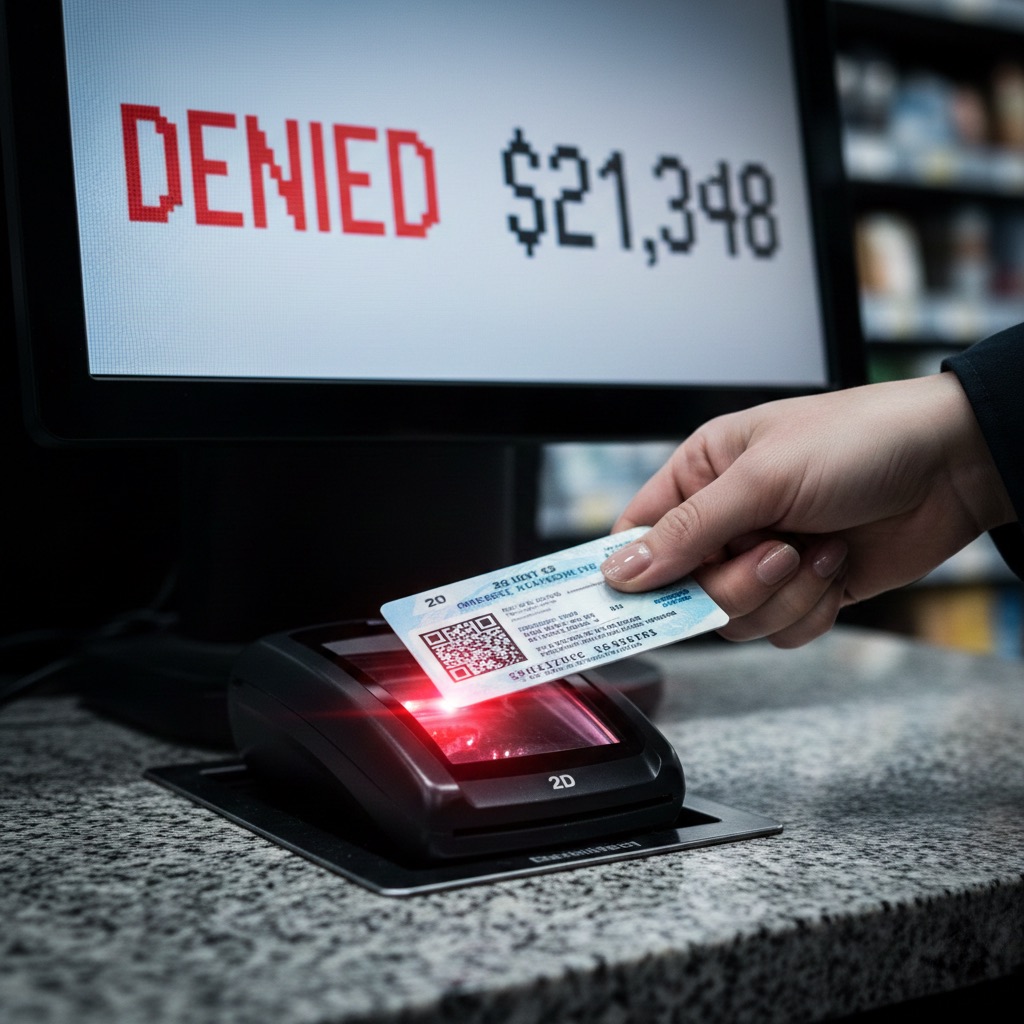
The ROI of Integrated ID Scanning
Investing in POS-integrated 2D ID scanners is not a discretionary capital expense; it is essential, non-negotiable license insurance. The functionality of these devices completely removes human error and subjectivity from the age verification process.
How it works: The system instantly reads the secure, encrypted 2D barcodes on state-issued IDs. This data contains the verified date of birth. The system compares that embedded birthdate against the required minimum age (T21 or 21+), providing an objective approval or denial.
The ROI is immediate and extreme:
- Elimination of Error: The system instantly reads the secure data. It flags formatting errors or inconsistencies that are invisible to the human eye. This ensures maximum accuracy.
- Automated Compliance Documentation: The system automatically captures, verifies, and logs the customer’s birthdate during the transaction. This creates a crucial paper trail. It ensures compliance with local regulations.
- Preventing Fines: Preventing a single Civil Money Penalty (CMP) fine of up to $21,348 can provide a significant return. This return is over 100 times the cost of the hardware itself. Retail-ready 2D scanners often cost between approximately $139 and $245.
The implementation of ID scanners is the shift from subjective visual inspection to objective data analysis. This is the necessary technological defense against the increasing sophistication of fraud and the increasing severity of fines.
The Human Defense: Challenge 25/27
Technology, however, must be paired with human protocol. Before the ID even hits the scanner, your employees need clear, robust training. This is where the Challenge 25/27 policy comes into play.
Challenge 27 is the FDA-recommended standard for tobacco and vaping products. This training mandates that staff must request ID from anyone who appears to be under 27 years of age. This policy builds a vital safety margin. It accounts for human error in judging age. It ensures that even a momentary distraction doesn’t lead to a violation.
What You Should Be Doing
Make the commitment to operational security by implementing a technology-first approach to age verification.
- Budget for 2D Scanners Now: Treat the POS-integrated 2D scanner as mandatory security hardware, not an optional convenience. Given the cost of fines, waiting to install this technology is simply subsidizing future regulatory penalties.
- Integrate and Automate: Ensure your POS system is configured to automatically flag all age-restricted products. It should also require a manual date-of-birth entry or a 2D scan before allowing the transaction to proceed. This removes the decision-making from a potentially distracted cashier.
- Implement Challenge 27 Training: Institute a policy that mandates ID checks for anyone who appears to be under 27. This applies to all tobacco, vaping, and intoxicating hemp products. Use prominent “Challenge 27” signage at the point of sale to remind both staff and customers of the policy.
- Train for Fraud Detection: While the scanner handles the hard data, train staff to spot visual indicators of a fraudulent ID before scanning (e.g., ID holder doesn’t resemble the picture, hesitation, second-party purchase).

The Bottom Line: Technology
The final piece of the compliance shield is documentation. A robust training program and excellent technology mean nothing if you can’t prove their existence to an auditor.
In Post 7, we will assemble the final, complete compliance shield: The Proactive Operator: Your Complete Checklist for Compliance, Profit, and Store Security. We will focus on the two non-negotiable paper trails: the Refusal Log and the Certificate of Analysis (COA).






 The5For
Leave a comment