(IMPORTANT: This seven-part series offers operational strategy and professional insights. It is provided for informational and educational purposes only and is not legal or regulatory advice.
Age-restricted sales regulations are constantly changing and vary significantly by locality (city, county, and state).
Before implementing any strategy or technology discussed here, you must verify all requirements with your local and state regulatory agencies and consult with legal counsel. Compliance remains your sole responsibility.)
Welcome to the final post in our seven-part series on navigating the age-restricted sales crisis. We started with the harsh reality of the T21 Profit Pivot (Post 2), identified the crippling financial threats of Vaping Enforcement (Post 3), navigated the complex Hemp Liability Trap (Post 4), established the need for State-Specific Compliance (Post 5), and committed to the life-saving investment of 2D ID Scanners (Post 6).
Now, we bring the entire series full circle. Your proactive compliance shield is the ultimate defense for your license, cash flow, and reputation. It relies on three pillars: Technology, Training, and Documentation.
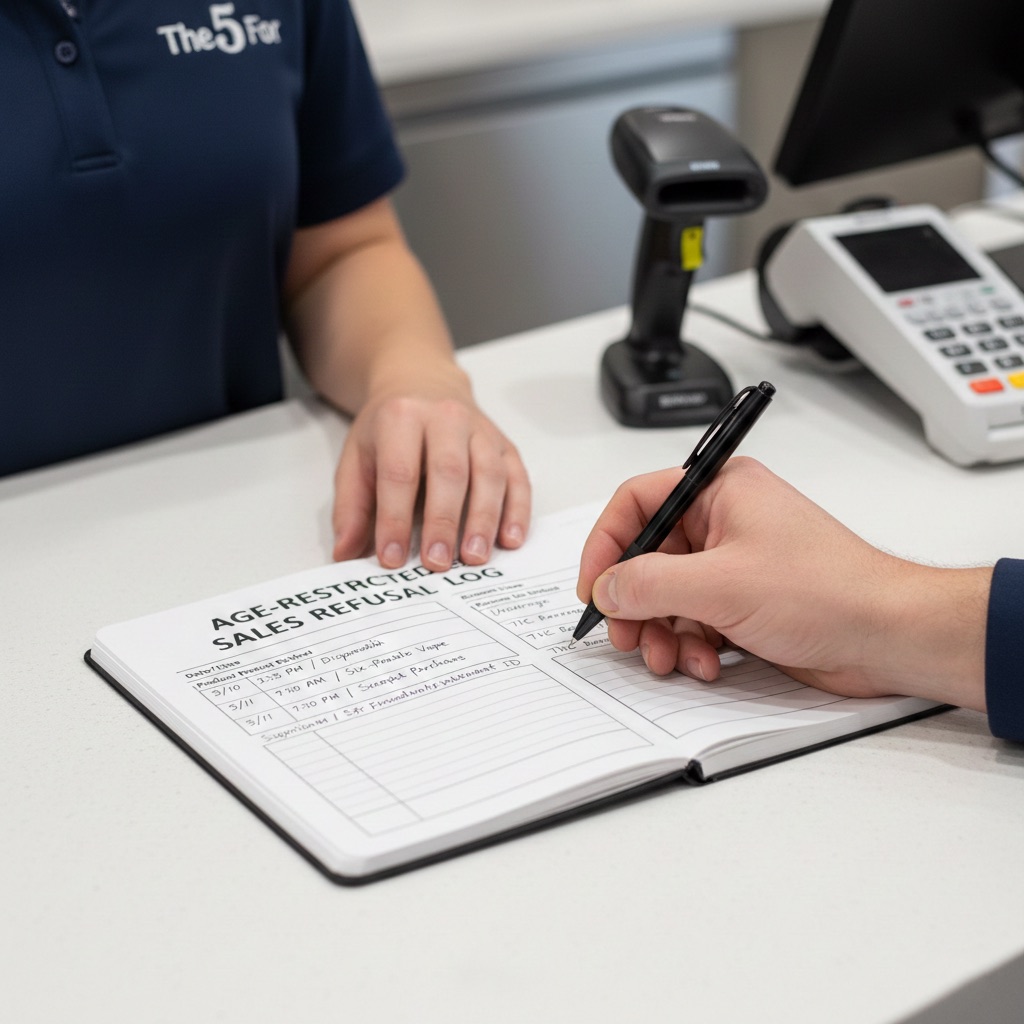
1. The Operational Defense: The Refusal Log
A policy is a plan. A refusal log is proof of execution. This simple, physical log is your most effective legal defense at the point of sale.
The Refusal Log (or register) documents every instance where an employee requested ID and subsequently refused the sale of an age-restricted product. This record demonstrates to auditors, enforcement agents, and local authorities that your store has a “robust, consistently applied compliance protocol.” This documentation can be vital for mitigating penalties if an accidental violation ever occurs.
What needs to be recorded every single time?
- Date and Time: Of the attempted purchase.
- Product: Specifically name the product that was refused (e.g., disposable vape, six-pack of beer, THC beverage).
- Reason for Refusal: (e.g., Underage, Suspected Second-Party Purchase, Suspicion of Fraudulent ID).
- Staff Initials: The signature of the employee who made the refusal.
- Managers Initials/Comments: Optional but highly recommended for management oversight.

2. The Supply Chain Defense: The Certificate of Analysis (COA)
The Refusal Log protects you from violations selling the product. The Certificate of Analysis (COA) protects you from liability related to what’s inside the product. This is especially important in the volatile hemp category.
In Post 5, we detailed the necessity of the COA. It is your due diligence document. Insist that your suppliers provide this for every batch of cannabinoid product, and you must review it using this final checklist:
- Verification of Testing: The COA must be issued by an ISO-accredited, third-party laboratory, not the manufacturer.
- Potency Compliance: Confirms Delta-9 THC content is below 0.3% dry weight, and the product adheres to your internal 5 mg/serving limit.
- Contaminant Clearance: Test results must show zero or allowable levels of heavy metals, pesticides, and residual solvents.
- Product Traceability: Must include the manufacturer’s name, contact info, and clear batch details.
What You Should Be Doing: Your Final Master Checklist
This seven-part series has provided you with the necessary framework to navigate the new reality of age-restricted sales. Use this final checklist to audit your store’s readiness:
- Profit Pivot: Have you fully audited your cigarette margins? Have you redirected shelf space and marketing dollars toward high-margin coffee, specialty beverages, and grab-and-go foods?
- Vaping Risk: Have you cross-referenced every vaping SKU against the FDA’s PMTA list? Have you removed all unauthorized, flavored disposables to eliminate the $21,348 fine risk?
- Hemp Policy: Have you mandated a store-wide 21+ age limit for all intoxicating hemp products? Have you also secured them behind the counter?
- Hemp Product Safety: Do you enforce a 5 mg THC per serving limit on all cannabinoid edibles/drinks? Do you ensure you vet every supplier COA with a third-party checklist?
- Technology: Is a budget and implementation plan prepared for POS-integrated 2D ID scanners? These scanners can eliminate human error. They also secure the required transaction data.
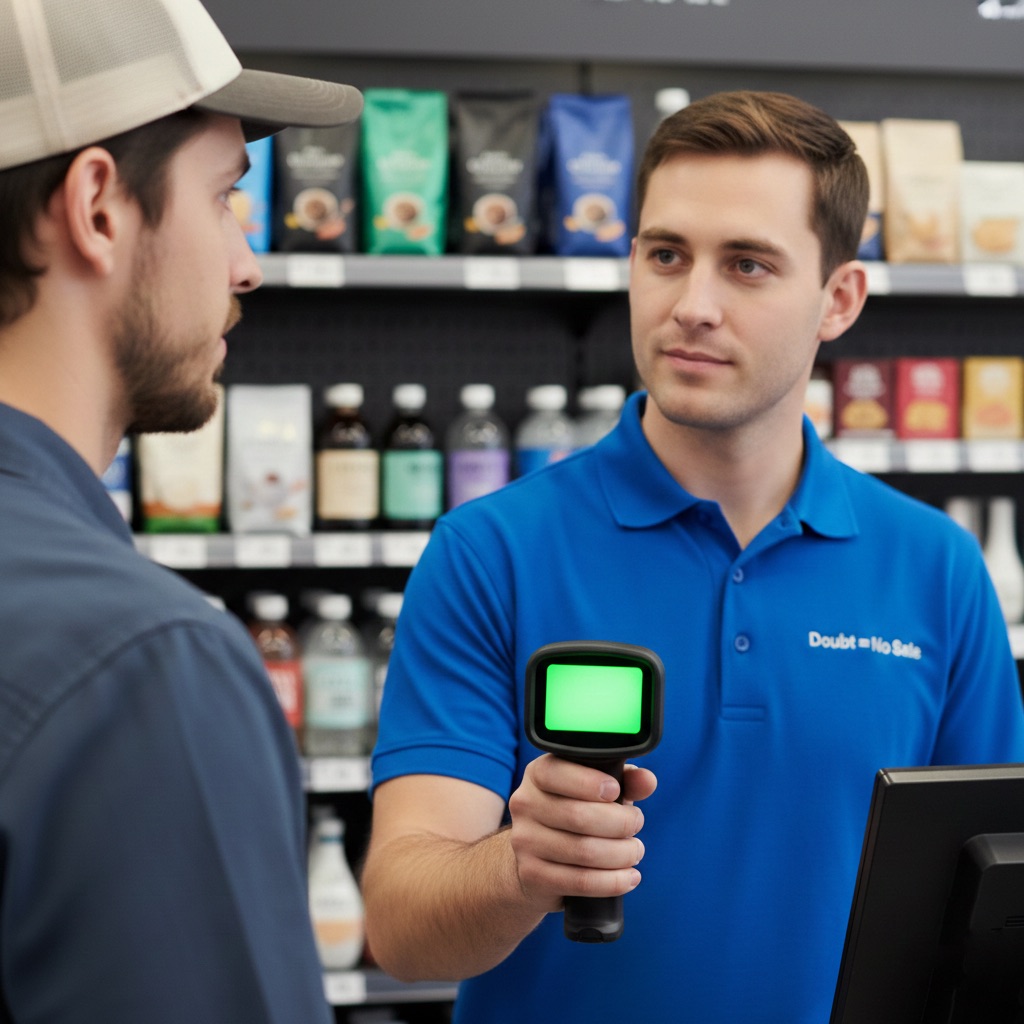
- Training Protocol: Is the Challenge 27 policy standard for all age-restricted sales? Are staff trained not just how to check an ID, but also when to refuse the sale (Doubt = No Sale)?
- Documentation: Is a physical, easily accessible Refusal Log present at every register? Are all staff trained on its mandatory, consistent use?
The Bottom Line: Compliance Is Cost Effective
Compliance is no longer a burden; it is your ultimate competitive advantage. It is the cheapest insurance policy against catastrophic fines and the most direct path to sustainable profit. The proactive operator who adapts now will not just survive this pivot; they will thrive, leaving competitors drowning in fines and out-of-date inventory.
Your Call to Action: Now is the time to transform this knowledge into immediate, tangible action. Schedule a mandatory, store-wide staff meeting to review and implement all seven steps of this strategy. Your license and your legacy depend on it.






 The5For
Leave a comment