The True Cost of Cheap Materials
In the first part of this series, I established a critical truth. Your convenience store’s condiment station is not an afterthought. It is the “last mile” of profit and experience for your high-margin beverage program. We agreed that a messy, unorganized station can instantly reduce the value of a high-quality product. It can drive customers to a competitor.
Now, we need to address the root cause of the mess: the fundamental, built-in failure points of the materials you’re currently using.
Many operators default to traditional acrylic or plastic displays because the initial purchase price is low. However, what looks like a cost-saving measure is, in reality, a high-risk liability. These materials are engineered for aesthetics, not for the rigors of a high-volume, quick-service environment. This means they are destined to fail quickly, aesthetically, structurally, and most critically, hygienically.
In this post, I will meticulously break down the three central failure points of conventional plastic and acrylic displays. You’ll learn:
- Why these materials are prone to rapid aesthetic decay, contributing to a “neglected” store perception.
- The scientific link between surface scratches in plastic and the serious risk of bacteria harborage, compromising cleanability.
- How the structural limits of plastic force cluttered, inefficient counter layouts.
The goal here is simple: to prove that by choosing low-cost plastic, you are incurring a massive, ongoing, and hidden cost in labor, replacement frequency, and elevated operational risk. Let’s eliminate the guessing game and look at the hard facts about material failure.
The Material Vulnerability That Guarantees Aesthetic Failure
When a retail fixture looks tired, your entire store looks tired. Unfortunately, traditional acrylic displays are fundamentally vulnerable to the daily abuse of a busy convenience store, guaranteeing a rapid decline in visual appeal.
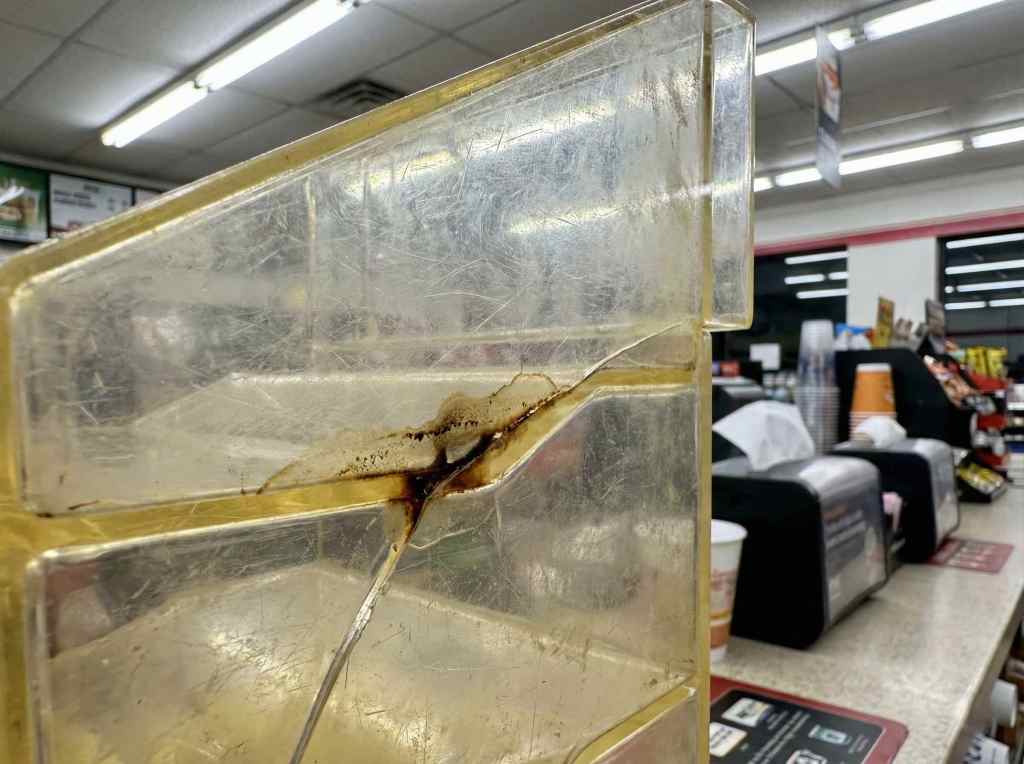
Acrylic’s advantages, it’s lightweight and shatter-resistant, are quickly overshadowed by its major drawback in a commercial setting: it is extremely prone to scratching. Unlike harder materials, plastic scratches easily with routine use, including frequent customer interaction and even standard cleaning.
This rapid degradation leads to severe aesthetic consequences. Those small surface flaws catch light, making the plastic appear hazy or worn. Compounding the issue, acrylic may also yellow over time. This aesthetic decline creates a sense of neglect or age, which customers immediately pick up on. When 99% of customers report that poor cleanliness negatively affects their opinion of a store, those scratched, yellowed dispensers create a powerful negative impression. They act as a visual deterrent. They are eroding the customer trust you work so hard to build.
What You Should Be Doing
To prevent aesthetic decay from becoming a sales obstacle, you must proactively manage the visual lifespan of your fixtures:
- Conduct a Surface Integrity Audit: Immediately inspect every plastic condiment holder under bright light. Look for hazing, micro-scratches, and any signs of yellowing. Use these visual markers to determine which units are failing your aesthetic standard.
- Set a Hard Replacement Schedule: Recognize that plastic fixtures have a finite aesthetic lifecycle, typically necessitating replacement every 3 to 5 years. Budget for this recurring capital expenditure rather than letting fixtures decay past the point of no return.
- Train Staff on “Visual Cleanliness”: Ensure your team understands that visual appeal is a key performance indicator (KPI). A clean counter is essential but scratched; opaque plastic suggests deep-seated grime, even if the surface was just wiped down.
The Critical Hygienic Flaw: Bacteria Harborage in Scratches
This is the most critical failure point and one that directly elevates your food safety risk. When a C-store operator chooses low-durability plastic, they inadvertently compromise their ability to maintain compliance.
Operational analysis of quick-service environments consistently shows that facility cleanliness, especially the condition of nonfood-contact surfaces, is the number one challenge, particularly during the busy breakfast daypart.
The intrinsic lack of scratch resistance in plastic directly shortens its effective hygienic lifecycle. Here’s why: Scientific research confirms a critical correlation between surface durability and food safety, when surfaces are scratched, these imperfections can effectively retain bacteria.
If the size of the bacterial cells is comparable to the size of the scratch, the pathogens can become embedded. Once bacteria are harbored in these surface flaws, they are significantly more difficult to remove during standard cleaning procedures. This means that while your staff may be diligently cleaning, the surface itself has become compromised, turning a manageable preventative maintenance task into a potential food safety failure risk.
What You Should Be Doing
You need to address this hygienic vulnerability head-on to protect your customers and your brand:
- Review Sanitation Protocols: Confirm whether your current cleaning procedures (chemicals, dwell time, wiping materials) are sufficient to penetrate micro-scratches in plastic surfaces. In many cases, they are not requiring more specialized, and expensive labor.
- Prioritize Scratch Resistance in Procurement: Moving forward, treat scratch resistance as a non-negotiable food safety requirement, not a bonus feature. This trait directly influences the longevity of a fixture’s cleanability.
- Link Fixture Condition to Audits: Incorporate a material condition check into your regular facility audits. If a condiment dispenser is heavily scratched, categorize it as a hygienic risk requiring replacement, not just an aesthetic failure.
Structural Weakness and the “Clutter Tax”
Beyond hygiene and aesthetics, plastics generally lack the structural integrity required for demanding retail applications. They are not optimal weight-bearing materials, which leads to two major operational drawbacks:
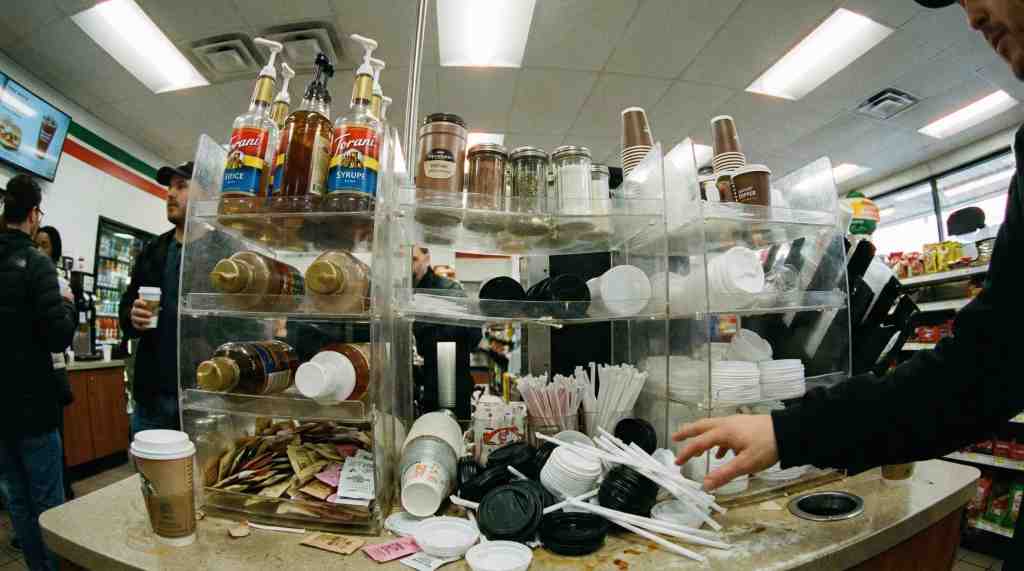
- Limited Merchandising: The structural weakness restricts the size and stability of displays. You can’t easily integrate robust signage, heavy specialized dispensing units (like syrup racks), or complex, multi-tiered organization schemes. This limitation forces you to rely on smaller, unstable containers.
- Increased Clutter: When fixtures lack the stability to properly merchandise bulk items (lids, shakers, syrup bottles), items spill. They stack poorly and quickly devolve into clutter. This clutter creates decision fatigue for the customer. It also increases the time your staff spends simply re-sorting instead of cleaning. This is what I call the “Clutter Tax”, the hidden labor cost of using insufficient organizational tools.
The Labor Tax: When “Careful Cleaning” Drives Up OpEx
The final, hidden financial failure point of acrylic displays is the high labor tax they impose.
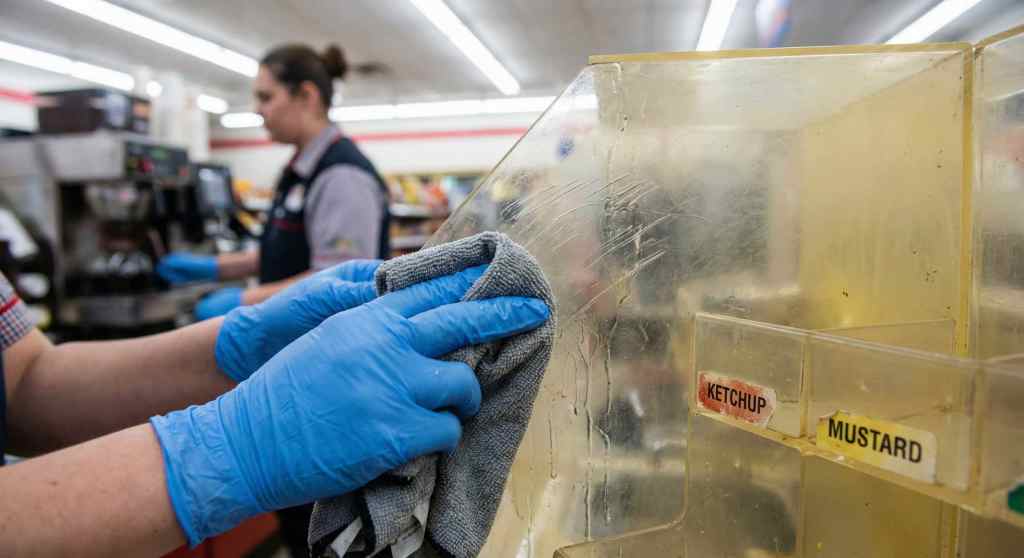
Because acrylic is prone to scratching and hazing, it requires careful cleaning, often avoiding harsh chemicals or abrasive materials. This need for meticulous, specialized care drives up your operational expenses (OpEx). Commercial cleaning costs are heavily dictated by the job intensiveness. When your staff has to clean gingerly, rather than quickly and effectively, the time spent per shift increases.
This increase in labor time, even if it’s just five extra minutes per station per day, compounds across your entire store fleet and over the course of a year. The initial savings on the cheap acrylic display are quickly swallowed by the high, recurring cost of intensive labor.
What You Should Be Doing
Take control of your cleaning OpEx by demanding materials designed for efficiency:
- Benchmark Cleaning Time: Time your staff cleaning a plastic display versus cleaning a standard metal or porcelain surface. Use this benchmark to highlight the time premium you are paying for fragile, low-durability materials.
- Demand Non-Specialized Cleaning: In future fixture purchases, mandate that the surface must be durable enough to withstand standard, commercial-grade, non-specialized cleaning without being damaged. This is a direct investment in labor efficiency.
Next Up: Eliminating Risk with Engineered Solutions
Traditional acrylic and plastic displays are aesthetically compromised. They are structurally weak. They pose hygienic risks and are financially burdensome. This is due to their short lifespan and high labor requirements. The core problem is the material itself.
So, how do you eliminate these risks and transform your high-profit area? The answer lies in making a strategic shift to materials engineered for endurance and hygiene.
In Post 3: Engineering for Endurance: Why Modular Steel is Your Condiment Station’s Most Hygienic and Durable Material, we will dive into the material science of powder-coated steel. I’ll show you how a system built from durable metal, like the PanelRak Modular Organizing System, solves the scratch/bacteria problem, delivers a 10+ year lifespan, and provides the structural stability needed for premium merchandising.






 The5For
Leave a comment