Why “Swicy” and Botanical Flavors Are the Future of C-Store Beverages
Welcome back.
In our last conversation, we tackled the “fuel” aspect of the beverage revolution. We discussed how turning your coffee program into a protein powerhouse can drive morning traffic and increase basket size. Hopefully, you’ve already started looking into collagen boosters and whey-infused creamers.
But fuel is only half the battle. Now, we need to talk about flavor.
If your current flavor strategy revolves exclusively around Hazelnut, French Vanilla, and maybe a seasonal Pumpkin Spice, you are effectively operating in 2015. While those classics have a place, they are no longer the drivers of new traffic. The consumer palate of 2026 is adventurous, global, and craving complexity.
We are witnessing the death of mono-dimensional sugary sweetness. The modern consumer, driven largely by Gen Z and younger Millennials, is looking for “sensory experiences.” They don’t just want a drink; they want a moment. They want “Newstalgia,” a trend that remixes the comfort of the past with the novelty of the future.
In this post, we are going to explore two massive shifts redefining the beverage landscape. One is the explosion of “Swicy” (Sweet + Spicy) profiles. The other is the rise of sophisticated Botanicals.
You might be thinking, “Spicy coffee? In a gas station?”
The answer is a resounding yes. We will explore the science behind why heat works in beverages, why “Pine” is actually delicious, and how technology can help you execute these complex recipes without turning your counter into a sticky nightmare.
By the end of this post, you will have a roadmap for waking up your customers’ taste buds, and your profit margins.
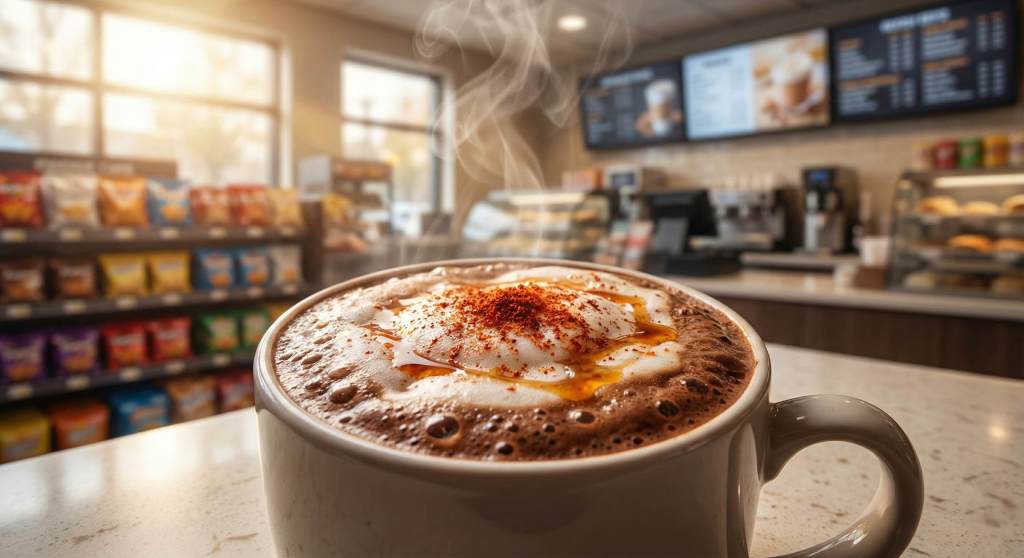
The “Swicy” Phenomenon: Why Heat is the New Sweet
The “Swicy” trend didn’t start in beverages; it conquered the food world first. Think about the meteoric rise of “hot honey” on pizza or spicy chicken sandwiches. But as we move toward 2026, this trend has firmly planted its flag in the beverage aisle.
This isn’t just a gimmick. It is a fundamental shift in sensory preferences.
Analysis and Synthesis
Major QSRs and retailers are already capitalizing on this. 7-Eleven’s partnership with Mike’s Hot Honey was a bellwether moment for the convenience industry. It signaled that the c-store demographic is ready for heat.
But why does this work? It comes down to biological science.
The heat in spicy foods comes from capsaicin. When you consume capsaicin, your body perceives a mild “threat” (heat) and responds by releasing endorphins, the body’s natural feel-good chemicals. When you pair that endorphin rush with the dopamine hit provided by sugar, you create a biochemical “one-two punch.”
It transforms a standard morning coffee into a stimulating, memorable event. By 2026, expect Hot Honey Lattes, Chili Mochas, and Mango Habanero Teas to transition from niche experiments to standard Limited Time Offers (LTOs).
What You Should Be Doing
- Launch a Winter “Swicy” LTO: Do not wait for 2026. Test the waters this winter. A “Mexican Chili Hot Chocolate” or a “Hot Honey Vanilla Latte” are accessible entry points that aren’t too intimidating for the average consumer.
- Audit Your Syrups: Contact your distributors (Monin, Torani, DaVinci) immediately. Ask specifically for spicy variants. If you can’t get a spicy syrup, source a high-quality spicy topping (like a chili-sugar dust) to garnish the foam.
- Train Your Staff on the “Why”: Your employees need to know how to sell this. Teach them to describe the flavor not as “hot,” but as “warming” or “complex.” The goal is a pleasant tingle, not a burn.
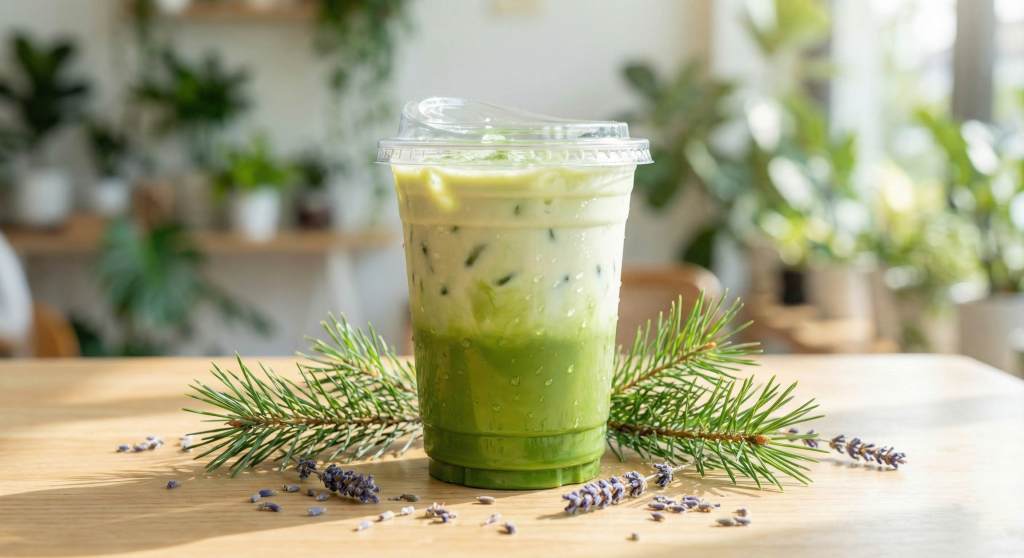
The Botanical Frontier: Connecting with Nature
Simultaneously, we are seeing a “biophilic” shift in consumer behavior. This is a fancy way of saying people have a deep desire to connect with nature, and they are doing it through their diet.
This trend is moving away from artificial “Blue Raspberry” flavors toward earthy, floral, and herbal notes.
Analysis and Synthesis
Torani naming “Forest Pine” their Flavor of the Year for 2026 is not a joke; it is a signal.
While “Pine” might sound intense for a gas station coffee, consider the flavor profile of gin. It is crisp, refreshing, and terpene-rich. When paired with the right sweeteners, botanical flavors cut through the heaviness of dairy and sugar, offering a cleaner finish.
We are also seeing the massive rise of Pandan. Often referred to as “Asian Vanilla,” Pandan offers a sweet, grassy, coconut-like note. Crucially, it provides a vibrant green color naturally. In an era where “the camera eats first,” the visual appeal of a bright green Pandan latte can drive significant organic marketing on social media for your store.
Lavender, Elder flower, and Hibiscus are no longer just for high-end cocktail bars. They are premium cues that allow you to charge an extra $0.50 to $1.00 per cup.
What You Should Be Doing
- Go Botanical for Spring 2026: Plan your Spring campaign now. Skip the usual Easter themes and build a campaign around “Floral & Earthy” notes.
- Start with Lavender: If “Pine” feels too risky for your demographic, start with Lavender. A “Lavender Vanilla Cold Brew” is a safe, proven entry point that bridges the gap between familiar and exotic.
- Leverage Visuals: If you use Pandan or Matcha blends, buy clear cups. The visual green is a major selling point. Ensure your POP (Point of Purchase) marketing highlights the natural color.
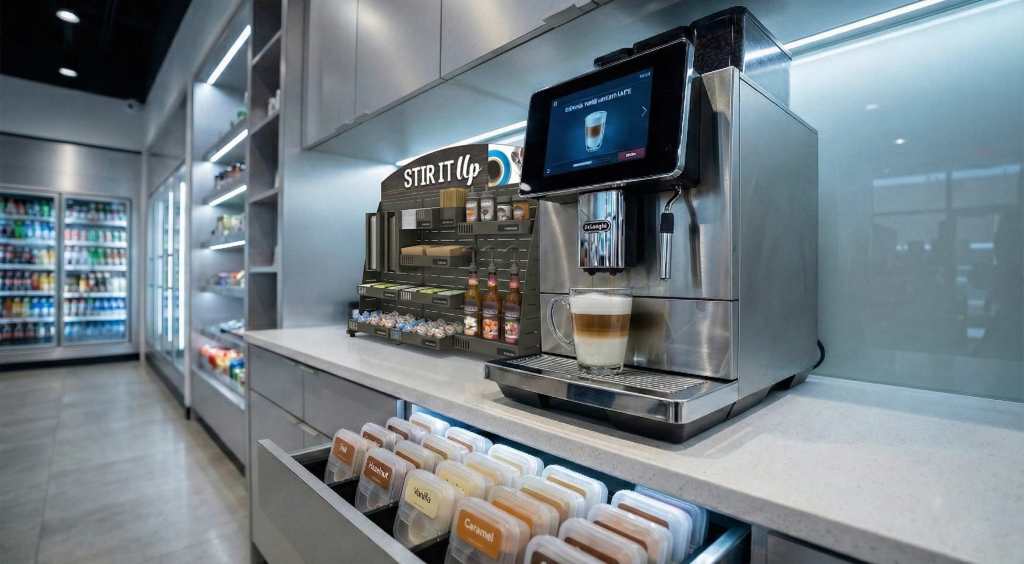
Managing Complexity with Technology
The biggest pushback I hear from operators regarding these trends is operational complexity.
“I don’t have room for 20 different syrup bottles,” or “My staff can barely make a regular coffee; how are they going to mix a Chili Mocha?”
These are valid concerns. Fortunately, equipment manufacturers have solved this problem.
Analysis and Synthesis
Offering complex flavors used to be a nightmare of sticky syrup bottles, wasted product, and cluttered countertops. However, the new generation of super-automatic machines, like the Franke A1000 or the Eversys Legacy, has changed the game.
These machines utilize Digital Flavor Stations.
Instead of a row of bottles on the counter, these machines store concentrated flavor cartridges under the counter. The machine is programmed to dose the flavor precisely into the cup at the touch of a button.
This creates consistency. A “Spicy Mango Latte” tastes the same at 6:00 AM as it does at 8:00 PM, regardless of who is working the shift. It allows you to expand your menu to 50+ drink combinations without adding a single inch of counter clutter.
Furthermore, you can utilize Cold Foam capabilities. Modern machines can inject flavor into the milk foam rather than the coffee itself. A “Pistachio Cold Foam” on top of a regular cheap coffee instantly transforms it into a premium $4.00 beverage.
What You Should Be Doing
- Leverage Digital Dosing: If you are in the market for new equipment, do not buy a standard brewer. Prioritize super-automatics with under-counter flavor cartridge systems. The ROI on labor savings and waste reduction is substantial.
- Embrace Cold Foam Flavors: If your current machine creates cold foam, stop serving it plain. Create a “Foam of the Month” flavor. This is a high margin upsell that requires zero extra steps for the customer.
- Simplify the Menu Board: Even if the machine can make 100 drinks, don’t list them all. Highlight 3 “Signature Drinks” (like a Swicy special and a Botanical special) to guide the customer’s choice, while keeping the rest as “secret menu” options.
The Bottom Line: Flavor is Your Differentiator
We are operating in a crowded marketplace. Your customer drives past a McDonald’s, a Dunkin’, and a Starbucks to get to you.
If your coffee bar looks and tastes exactly like it did ten years ago, you are losing the battle for the morning commute.
Flavor is the easiest, most cost-effective way to differentiate your store. By offering “Swicy” and Botanical options, you signal that your brand is current, premium, and fun. You give the customer a reason to walk through your doors: to try something they can’t make at home.
You are moving from selling a commodity (caffeine) to selling an experience (discovery).
But what about the customers who are moving away from coffee entirely? The ones who want the caffeine and the ritual, but without the jitters or the bean water taste?
There is a massive movement brewing in that space as well.
In our next post, we are tackling Trend #3: The Tea Revolution. We will explain why a roasted green tea called “Hojicha” is about to become your new best seller and how to capitalize on the functional tea market.
See you then.

 The5For
Leave a comment