The Extinction of the Glass Pot and the Rise of the AI Barista
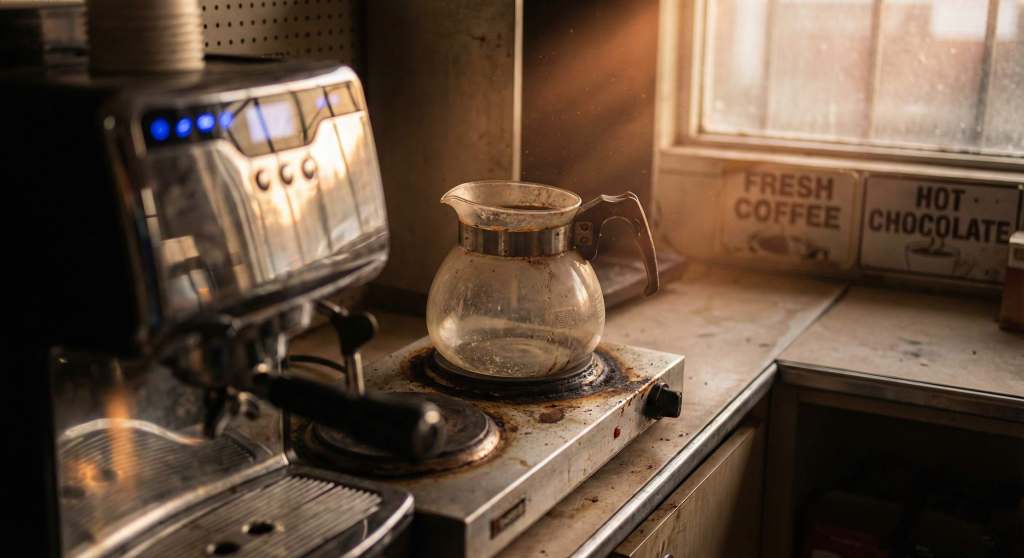
Are you still pouring coffee from a tired glass pot that has been sitting on a burner for hours? If so, you are not only losing money on wasted product but also actively damaging your brand’s reputation. The simple truth is this: the days of the traditional coffee urn are over. In the ultra-competitive convenience store landscape of 2026, the labor market is too tight. Consumer standards for quality are too high. The expectation for customization is non-negotiable.
This is the fourth post in our series on future-proofing your c-store beverage program. It dives into one area that enables all other trends we’ve discussed: protein integration, spicy flavors, and roasted teas. This area is Hyper-Automation. Automation isn’t a luxury; it’s the critical foundation for survival and consistency in the modern convenience store.
- What you will learn: You will discover how leading c-store chains are updating their brewing technology. They are replacing traditional methods with cutting-edge, super-automatic bean-to-cup (BtC) machines.
- What you will gain: By the end of this article, you will have a clear, actionable roadmap. It will include specific equipment requirements and ROI calculations. You will be able to implement a fully autonomous, high-quality coffee program. This program delights customers and drastically cuts your most expensive operational cost: labor.
We will explain what hyper-automation is in the context of your business. We will show why adopting this technology is an immediate priority for both food safety and profit. We will discuss how you can adapt these powerful concepts to your locations to create a premium, consistent, and profitable coffee destination. This shift will allow you to offer the complex, on-trend drinks consumers’ demand without introducing chaos or overwhelming your staff.
The Super-Automatic Standard: Consistency is Cash
The equipment landscape has fundamentally shifted from machines that merely dispense “push button, receive black water” to high-fidelity engineering marvels. Today’s super-automatic machines are not just faster; they are built for quality, complexity, and hands-off operation. This high-level consistency is what separates the winners from the losers in the fresh-brewed coffee category.
Why does this matter to a convenience store operator? Your biggest challenge is ensuring that a customer’s latte tastes exactly the same at 6:00 AM in store A as it does at 4:00 PM in store B. Traditional methods rely on staff training, which is inconsistent and costly. Hyper-automation removes the human variable from the equation.
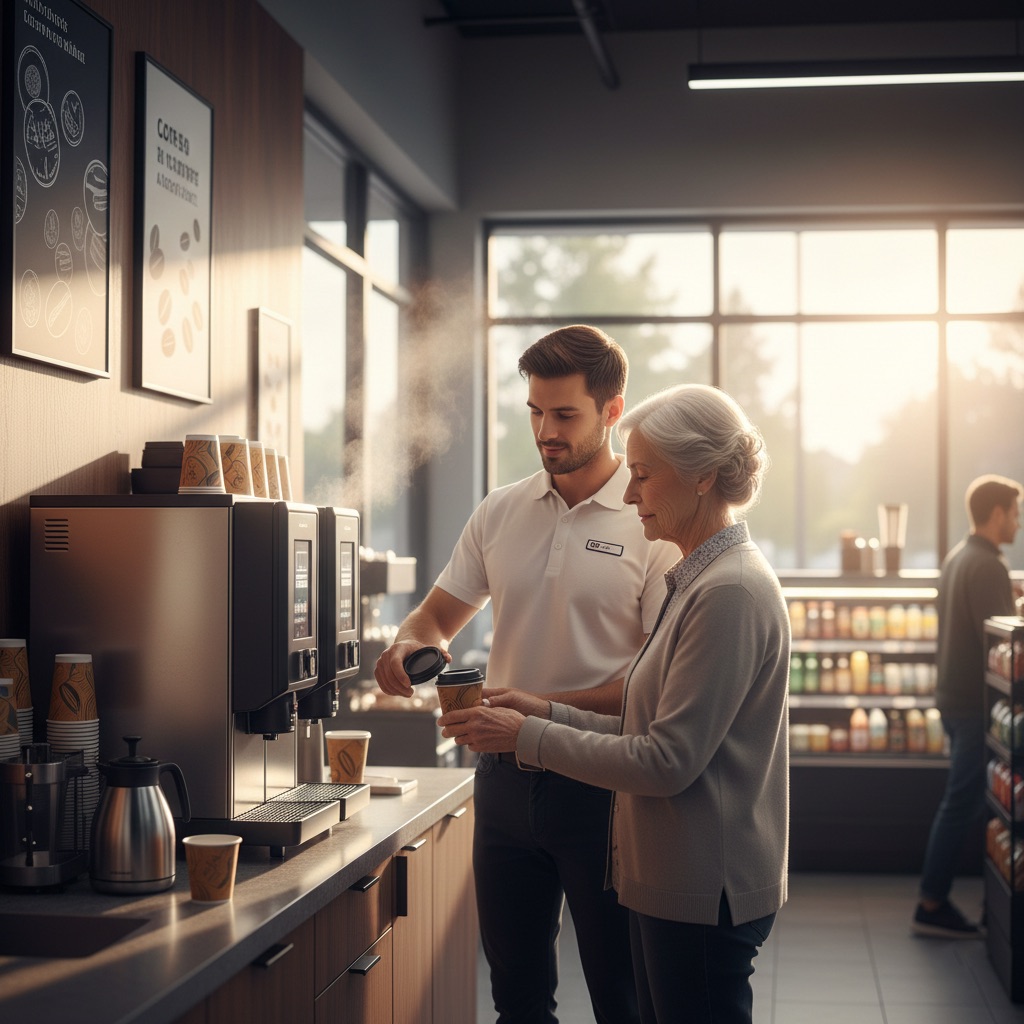
Modern manufacturers like Eversys, Franke, and Schaerer are building machines that are, quite literally, autonomous baristas. They grind whole beans on demand. The machines manage dual milk systems with dairy and plant-based options. They do this without cross-contamination. The machines also use sophisticated telemetry to monitor performance. This move transforms a labor-intensive, high-error process into a high-margin, consistent product offering.
What You Should Be Doing
- Audit Your Current System: Calculate the daily waste from your current glass pot system (product and time spent monitoring). This is your baseline loss.
- Establish a Quality Benchmark: Determine the maximum hold time for brewed coffee in your chain (it should be no more than 30 minutes). Use this to measure the failure rate of your current system.
- Require Dual Milk Lines: When upgrading, insist on a machine that handles both dairy and a plant-based alternative (Oat is the 2026 standard) separately. This is a food safety and customer experience necessity.
- Factor in Bean-to-Cup Waste Reduction: Understand that BtC eliminates the waste of dumping stale pots, immediately improving your ingredient cost percentage.
AI Personalization: Your Digital Barista
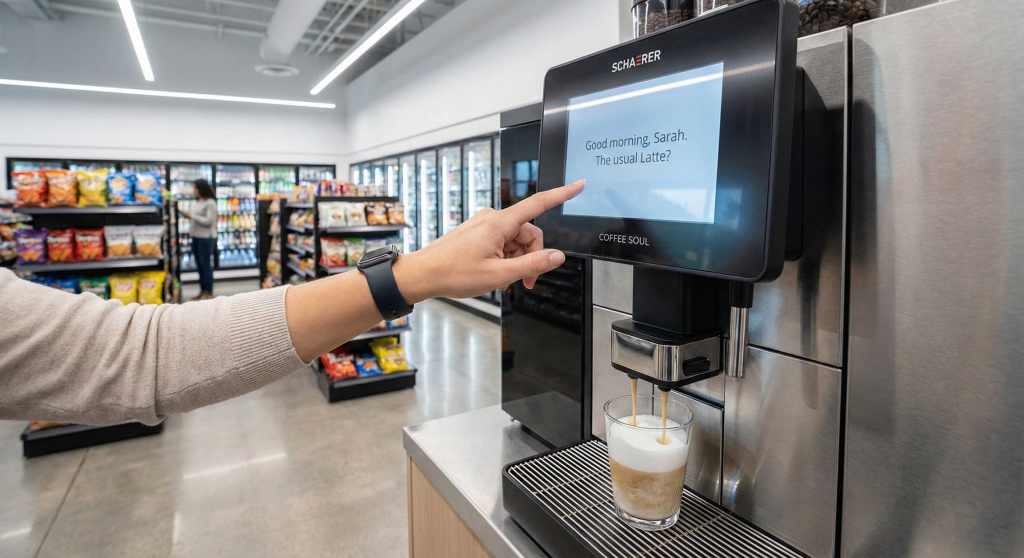
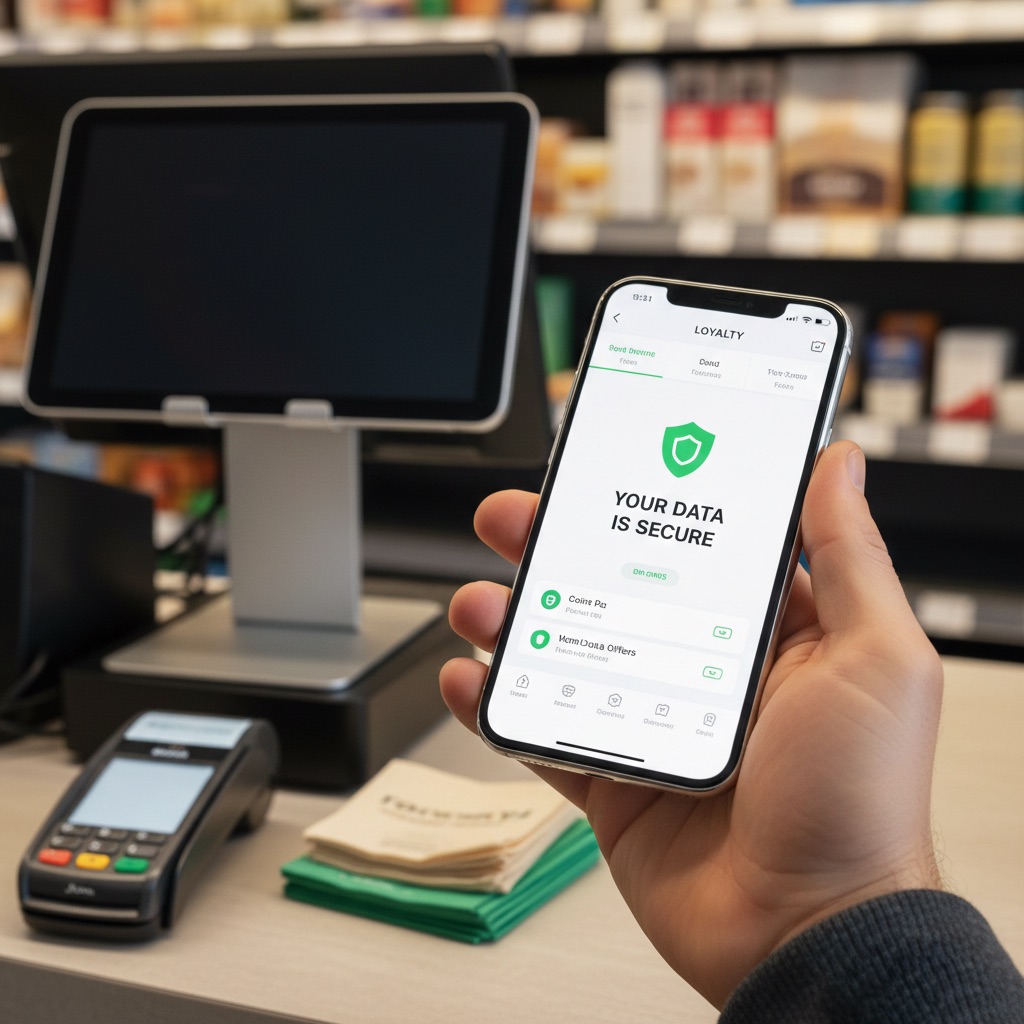
This is where the technology moves from a functional tool to a true, digital team member. We are rapidly approaching the era of AI Personalization at the point of dispensing. Chains like Casey’s have already introduced AI personalities (like “Darn-ell”) to interact with customers. By 2026, we expect machines to recognize customers via their loyalty app or a simple Bluetooth connection upon approach.
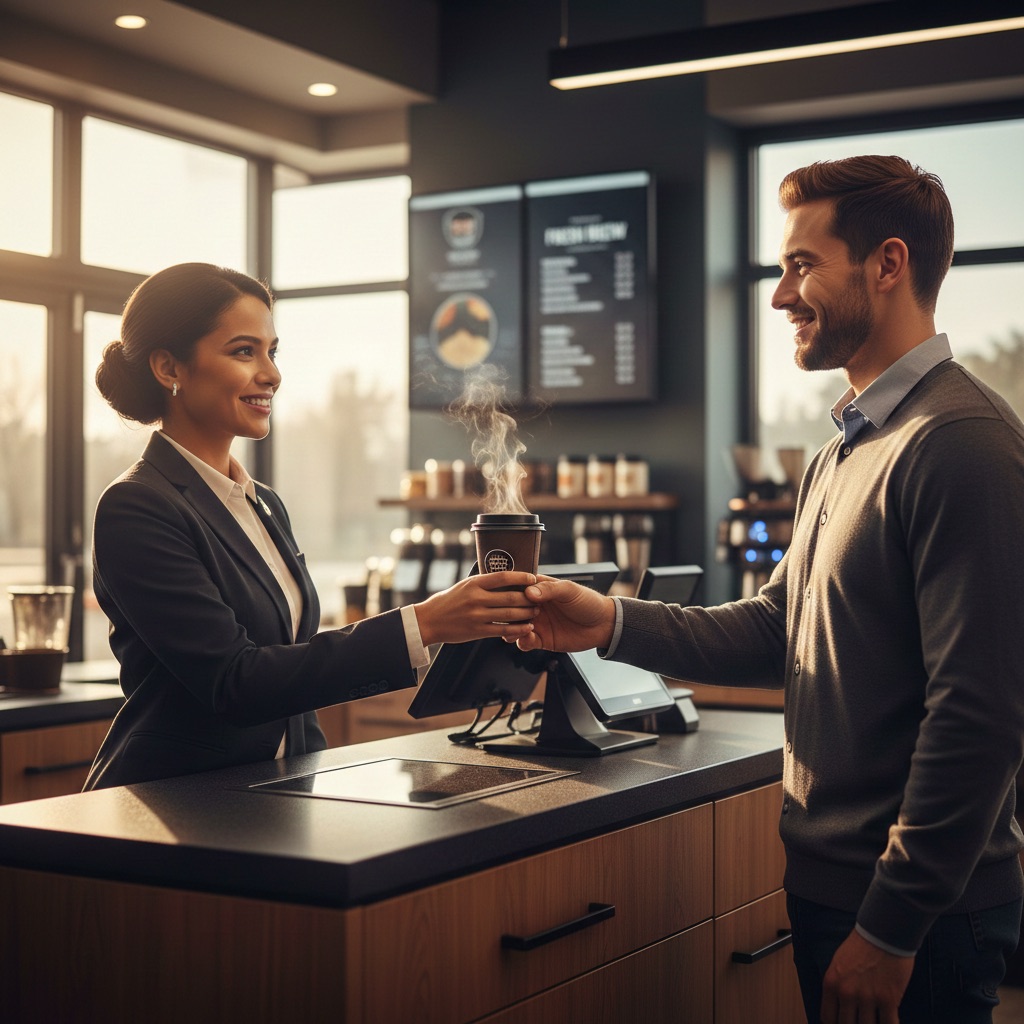
Imagine a loyal customer walking up to the coffee station. The machine’s screen instantly changes to say, “Good morning, Sarah. The usual Large Oat Milk Hojicha Latte with an extra shot?” This is not a futuristic fantasy; it is the immediate next step in loyalty program integration.
Why It Matters to You
Friction is the enemy of speed, and speed is the essence of a convenience store. By pre-empting the ordering process, this AI recognition dramatically reduces the time spent at the machine. It increases the speed of service, which allows your high-value beverage area to process more transactions during peak rush hour. Furthermore, this personalized experience deepens customer loyalty; people return where they feel recognized and valued.
What You Should Be Doing
- Invest in Cold Foam: Ensure your selected machine has an active cooling unit and an air-pump system capable of producing hot and cold foam. This is the number one texture preference for Gen Z and a critical upsell component.
- Enable Telemetry: Connect your machines to the internet. Use the data to track peak times. Monitor empty hopper alerts. Check cleaning cycle compliance. Most importantly, identify your most popular customizations.
- Develop a Personalized Greeting Strategy: Work with your vendor to ensure the machine’s interface can integrate with your existing loyalty app for personalized greetings and drink suggestions based on purchase history.
- Analyze Customization Data: Use the telemetry data to refine your ingredient inventory. Stock only the most popular syrups, powders, and milk alternatives. Focus on your highest-performing locations.
Self-Cleaning Technology: Reclaiming Valuable Labor
Labor is, without question, your single most expensive asset. Every minute a staff member spends on a non-value-added task is a minute of lost profit. Cleaning, while vital, is the ultimate non-value-added task for your staff.
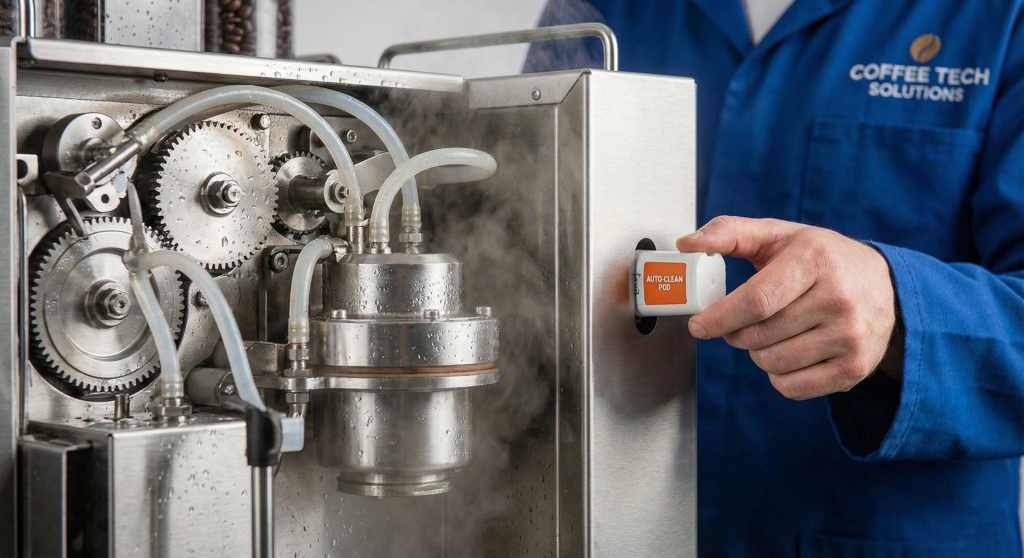
Modern automation systems directly address this challenge. Systems like Franke’s CleanMaster allow a staff member to insert a simple cartridge and walk away, turning a tedious, 45-minute scrubbing job into a hands-off cycle. The machine manages the precise mixture of water and cleaning agent, eliminating the error and inconsistency associated with manual cleaning.
Why It Matters to You
This is critical for two reasons: Food Safety and Labor Allocation.
- Food Safety: When dealing with high-protein ingredients, like the protein powders and plant-based milks we previously discussed, bacterial buildup is a major risk. Automated sanitation cycles are precise, reliable, and produce auditable cleaning logs, which are invaluable for health inspections.
- Labor Allocation: By automating a 45-minute cleaning task, you are giving that time back to your staff. They can focus on high-value activities, such as stocking shelves, preparing fresh food, or providing direct customer service. This is the core of the ROI calculation.
What You Should Be Doing
- Prioritize Sanitation Certifications: Require proof of advanced cleaning systems that meet stringent food safety standards, particularly for machines handling milk and cold foam.
- Calculate ROI on Labor: Do not just look at the machine price. Factor in the labor hours saved by automated cleaning (e.g., 45 minutes a day, 365 days a year). This saved labor hour is the true financial justification for the upgrade.
- Implement Remote Compliance Checks: Use the machine’s telemetry to verify that cleaning cycles are run on schedule. This can be done remotely at every location. It ensures chain-wide compliance without needing a manager’s physical presence.
- Standardize Cleaning Supplies: Only use cartridges and solutions approved by the machine manufacturer. This ensures warranty validity and guarantees optimal cleaning performance.
The Bottom Line: Complexity Doesn’t Mean Chaos
The convenience store beverage program of tomorrow is defined by its ability to offer complexity without introducing operational chaos. The trends, protein, spicy, specialty tea, and high-quality foam, are all consumer demands that require precision and consistency. Hyper-Automation is the essential enabler of all these trends.
By investing in super-automatic, bean-to-cup technology, you are not just buying a piece of equipment; you are making an infrastructure investment in four critical areas of your business:
- Profitability: By eliminating stale product waste and dramatically reducing labor costs associated with manual brewing and cleaning.
- Consistency: By ensuring every drink, in every store, meets the exact same high-quality standard, bolstering your brand reputation.
- Food Safety: By implementing automated, auditable, and reliable sanitation cycles, especially crucial for plant-based and dairy products.
- Customer Loyalty: By using AI and telemetry to personalize the experience, making customers feel recognized and speeding up their transaction time.
The glass pot on the burner is not a quaint relic; it is an immediate liability threatening your market share and profits. The time to transition your coffee station into an autonomous, high-profit center is now. This foundational shift to automation will allow you to capitalize on the next critical movement in the industry, how to handle all the waste these new drinks generate.
In our final post of the series, we will tackle that critical piece of the puzzle: Trend #5: Circular Sustainability, and why the single-use paper cup might be disappearing from your counter by the end of the decade.

 The5For
Leave a comment