In the previous three posts, we have completely overhauled your inventory. We’ve introduced “Adult Lunchables” to your deli case. We also swapped empty-calorie chips for high-fiber mushroom jerky. Additionally, we stocked your coolers with prebiotic sodas and functional hydration.
But here is the hard truth: Inventory is not sales.
You can stock the best high-protein, gut-healthy products in the world. However, if they are hidden on the bottom shelf, they won’t sell. If they are lost in a sea of neon-colored sugar packaging, they will expire before they sell.
The traditional convenience store layout was designed for the “old” consumer, someone driven by sugar cravings and immediate gratification. The GLP-1 user is different. Their “food noise” (obsessive thoughts about food) has been quieted. They aren’t wandering your aisles looking for a dopamine hit; they are on a mission for fuel and relief.
In this post, we are going to redesign your customer’s journey. We will look at how to interrupt their pattern, redefine the “impulse buy” at the checkout counter, and use signage that speaks their language.
Redefining the “Impulse Buy”: The Side-Effect Strategy
For decades, the checkout counter was the home of the “guilt” purchase, a last-minute candy bar or sugary gum. But recent data suggests that for GLP-1 users, the impulse isn’t about indulgence; it’s about symptom management.
GLP-1 medications come with specific side effects: dry mouth (halitosis) and nausea are among the most common. Furthermore, because these users are eating less, they are hyper-aware of dehydration.
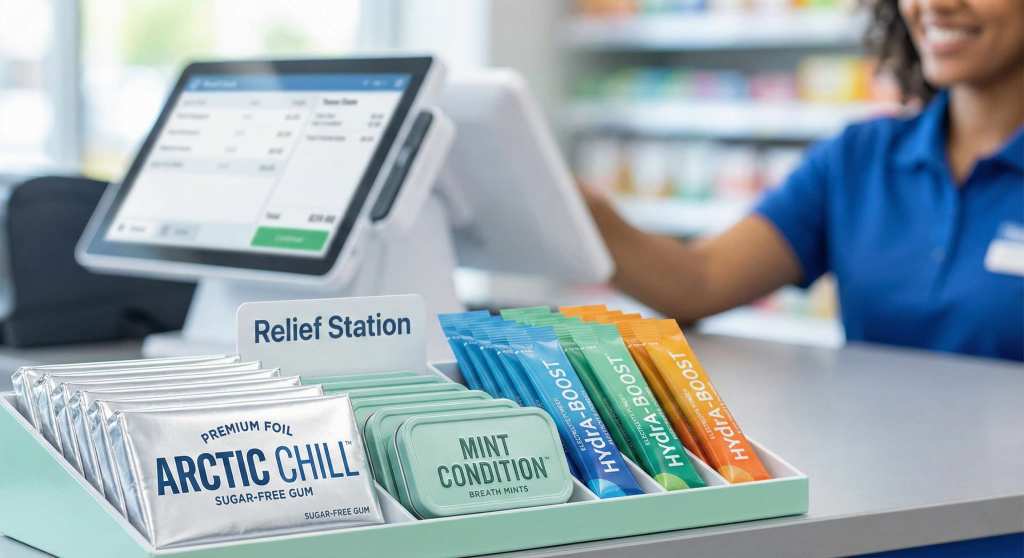
Transform your checkout counter into a “Relief Station.”
- Gum & Mints: Sales of gum and breath mints are surging among this demographic to combat dry mouth. Move premium, sugar-free gum, and high-quality mints to your “Prime 1” zone right next to the register.
- Anti-Nausea Solutions: Consider adding single-serve ginger chews or small packs of ginger tea near the register. It’s a functional impulse buy that solves an immediate problem.
- Hydration Multipliers: Stick-packs of electrolyte powders (like Liquid I.V. or your private label equivalent) are the perfect upsell. They are small, high-margin, and directly address the dehydration risk associated with these medications.
Signage: Speak in “Benefits,” Not “Categories”
The traditional shopper scans for categories: “Chips,” “Soda,” “Candy.” The health-conscious shopper scans for benefits.
If a customer is walking down the aisle looking for a snack that won’t spike their blood sugar, a sign that says “Salty Snacks” helps them zero percent. However, a “shelf talker” (a small sign sticking out from the shelf) that says, “High Protein” or “Gut Friendly” acts as a beacon.
The Strategy:
- Disrupt the Aisle: Use bright, color-coded shelf strips to break up the visual monotony of the aisle. Use green for “Plant-Based/Fiber” and red for “High Protein.”
- Educational Signage: Remember, many customers are new to this lifestyle. A simple sign under your prebiotic sodas can educate the consumer. It reads “Low Sugar, High Fiber: Good for Your Gut” and justifies the higher price point in seconds.
The “Functional Fuel” Endcap
Do not force your new healthy products to fight for attention inside the inline aisles immediately. They will lose the war against the major Frito-Lay and Mars/Hershey planograms.
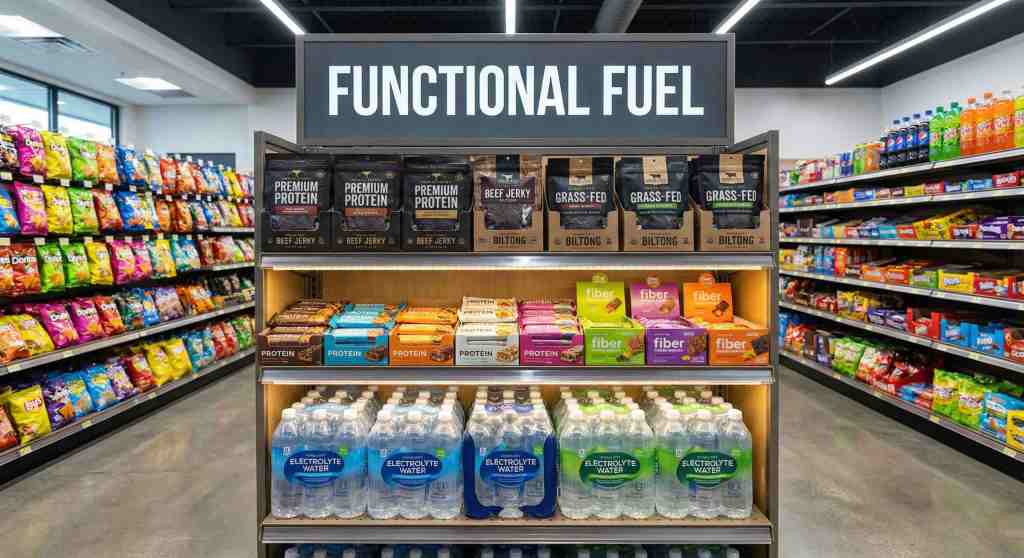
Instead, create a dedicated “Functional Fuel” destination. Use a high-traffic endcap to group these items together.
- Top Shelf: Premium beef, biltong, and mushroom jerky.
- Middle Shelf: Protein bars (Quest, One, etc.) and high-fiber popcorn.
- Bottom Shelf: Bulk packs of electrolyte water or protein shakes.
This creates a “Safe Harbor” zone. The customer knows that anything they grab from this rack fits their diet, reducing decision fatigue and increasing basket size.

Cross-Merchandising: The “Bundle” Effect
We discussed “Fuel Deals” in Post 2, but how do you execute that visually?
- Clip Strips are Your Friend: Hang strips of protein-rich nuts or beef sticks on the cooler doors. These doors contain water and functional beverages. Remind the hydration shopper that they need to eat, too.
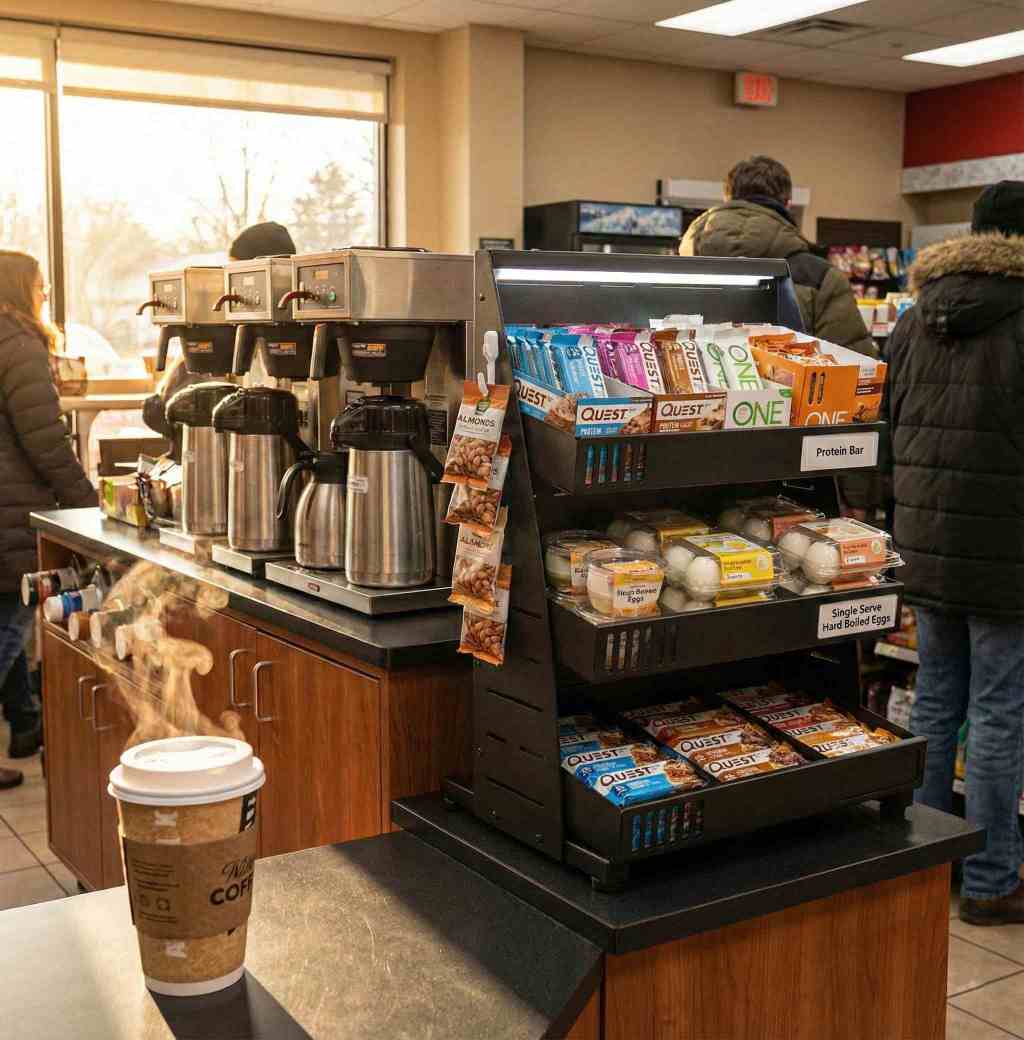
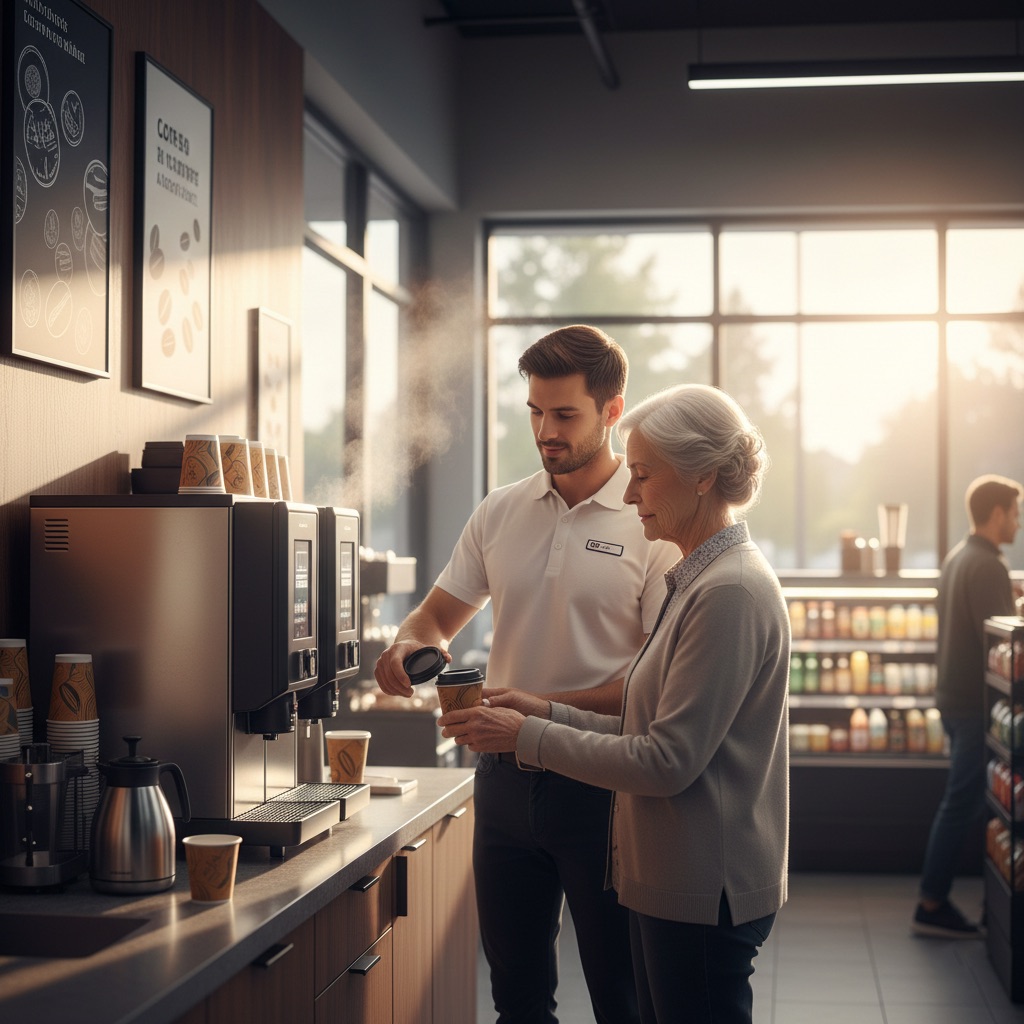
- The Coffee Counter: This is prime real estate for breakfast. Don’t just stock donuts here. Place a basket of protein bars or hard-boiled eggs (in a small cooler unit) right next to the coffee pots. Capture the morning commuter who knows a donut will make them crash by 10 AM.
What You Should Be Doing
You don’t need a remodel to change behavior. Start with these moves:
- The “Strike Zone” Reset: Go to your cooler. Are your functional beverages (Celcius, Poppi, Protein Shakes) at eye level (the “strike zone”)? Or are they hidden on the bottom shelf? Move your highest margin, highest growth items to eye level. Move commodity sodas down.
- Update Your POS: Clear the clutter at your register. Remove the slow-moving novelty candy. Fill that space with sugar-free gum, mints, and hydration stick packs.
- Install “interruption” signage: Pick three products you want to move (e.g., a new fiber snack). Put a “New & Healthy” wobbler sign on the shelf in front of it. Sales will increase simply because people finally notice it.
- Audit Your Adjacencies: Look at where your protein bars are. Are they next to the candy bars? If so, move them. Create a distinct section, so they aren’t viewed as just “expensive candy.”
The Bottom Line: Don’t Make It A Treasure Hunt
Merchandising for the “Food as Medicine” consumer is about reducing friction. These customers want to buy these products, but they are tired of hunting for them. By grouping healthy items and using benefit-driven signage, you enhance their shopping experience. Acknowledging their specific needs at the checkout turns your store into a partner in their health journey.
We have covered the product and the placement. Now, how do we tell the world? In Post 6, we will dive into the Marketing & Partnerships, exploring how to connect with local gyms, clinics, and community to drive new foot traffic to your door.


 The5For
Leave a comment