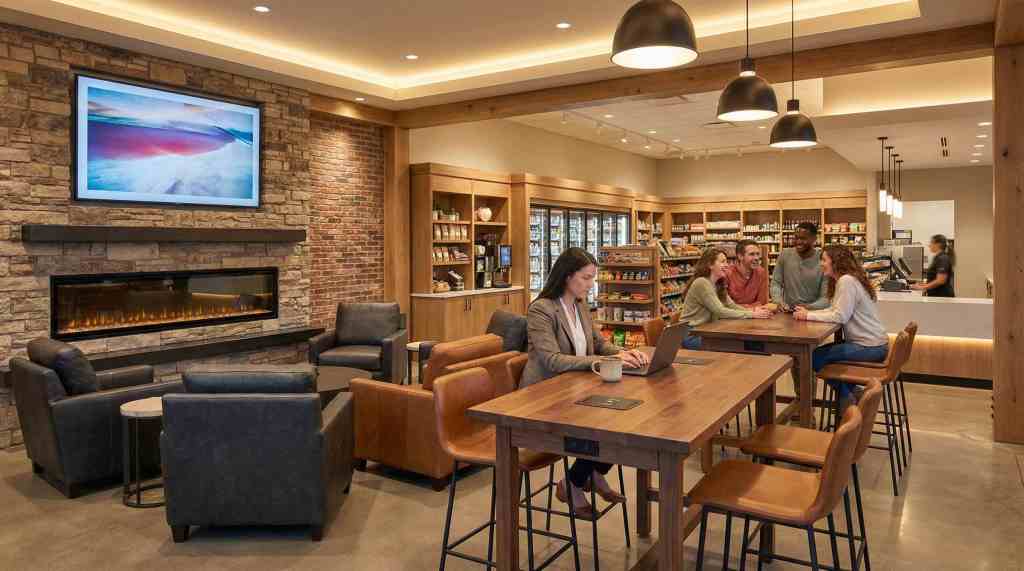
In our last post we talked extensively about turning your store into a “Third Place”, a destination where customers actually want to linger, rather than just a pit stop they rush through. We discussed the importance of seating, ambiance, and community connection. But once you’ve successfully created that inviting environment, the next logical question is: What are those people eating and drinking once they arrive?
Welcome to Part 4 of our series. Today, we are diving deep into the “Gas to Gourmet” revolution. By now, you likely know that the days of the “c-store stigma”, where the food was viewed as a desperate last resort, are dead and buried. In 2026, the “Gas to Gourmet” trend has fully matured. We are no longer just places for a quick candy bar; we are becoming essential destinations for legitimate meal occasions and “on-the-go wellness.”
Here is the reality of the landscape we are operating in: You are competing directly with Quick Service Restaurants (QSRs). In many ways, you actually have the upper hand. You have the prime real estate, the consistent foot traffic, and a much broader variety of categories than a standalone sandwich shop can offer. However, we are also facing the 2026 “Wallet Squeeze.” Consumers are tightening their belts, and their discretionary dollars are scarce. If you want them to spend those dollars with you, your food and beverage offerings must be destination-worthy.
A basic roller grill spinning lonely hot dogs won’t cut it anymore. To win in this climate, you need “passport-free” international flavors, customized “experiential” beverages, and a keen understanding of modern dietary shifts. I’ve been watching the data closely, and the winners in 2026 are the operators who are innovating. They are embracing “swicy” flavors, catering to the high-protein demands of GLP-1 users, and turning fountain drinks into social media moments.
In this post, I’m going to break down the five most impactful food and beverage trends for 2026. If your goal is to increase basket size and improve your pump-to-store conversion, these are the categories where you should be placing your bets.
1. “Passport-Free” Culinary Experiences
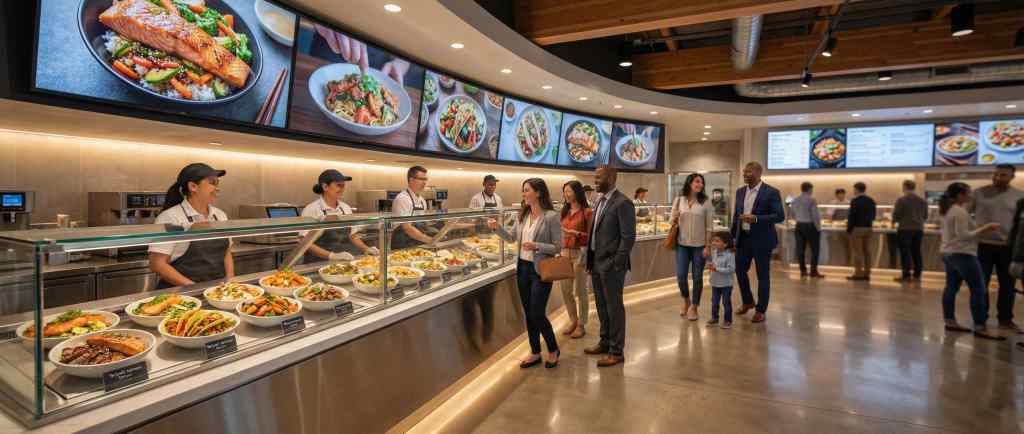
The modern consumer is looking for an escape, but their bank account is keeping them grounded. This has created a massive demand for variety without the sit-down restaurant price tag. We are seeing a surge in international foodservice options, specifically Mexican flavors like chicken tinga and Asian profiles like General Tso’s, Tikka Masala, and Teriyaki.
This isn’t just about having different flavors; it’s about capturing the “trading down” consumer. This is the customer who loves a flavorful, chef-style bowl from a fast-casual chain but can’t justify the $15 to $18 price point right now. If you can offer a high-quality, made-to-order (or heat-and-eat) international meal for $8 to $10, you win that visit. You are providing the flavor adventure they crave at a value they can afford.
What You Should Be Doing
- Audit your hot case variety immediately. If your lineup is strictly pizza and corn dogs, you are missing the boat.
- Talk to your food distributors about rotating in a “limited time offer” (LTO) featuring a global bowl or a spicy international chicken option.
- Sample aggressively. If you bring in a new Teriyaki chicken skewer, cut it up and get it into customers’ mouths during the lunch rush. The flavor must prove itself.
2. The “Dirty Soda” and Customization Craze
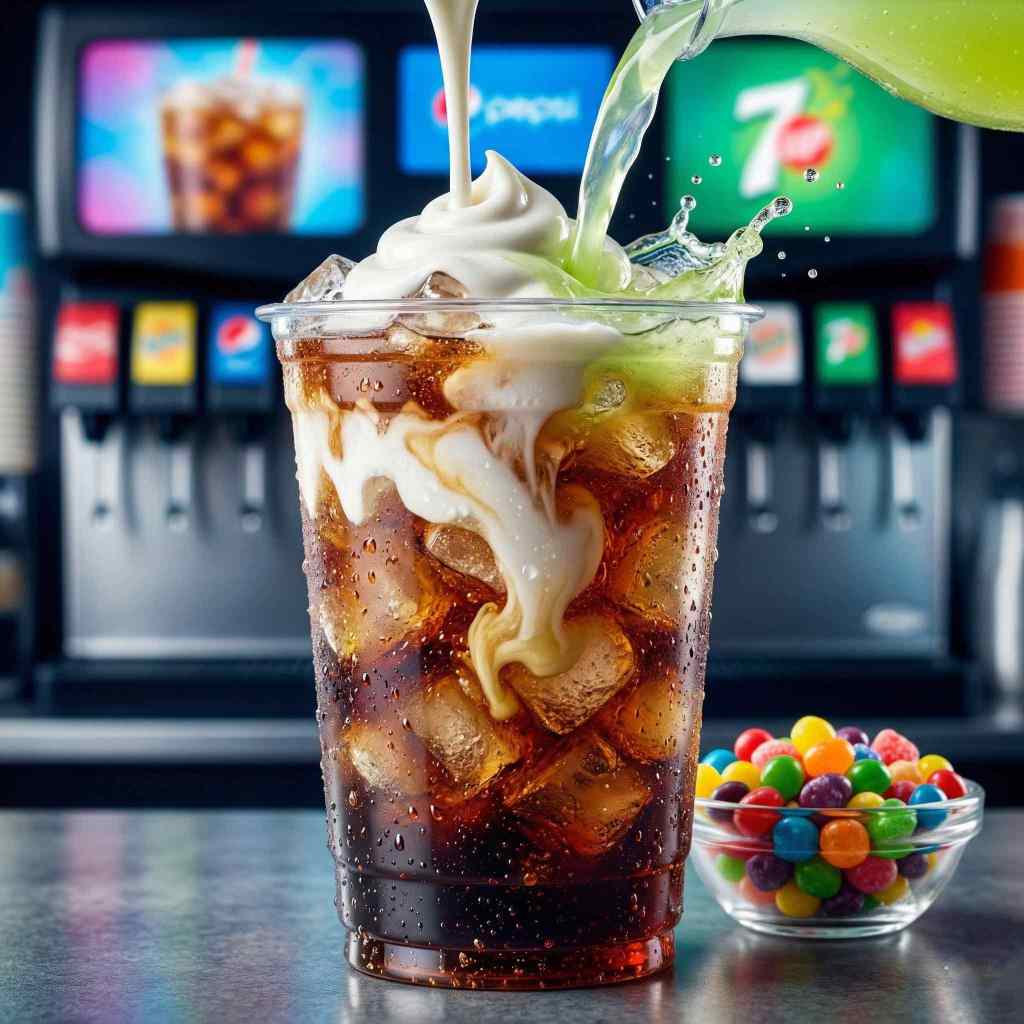
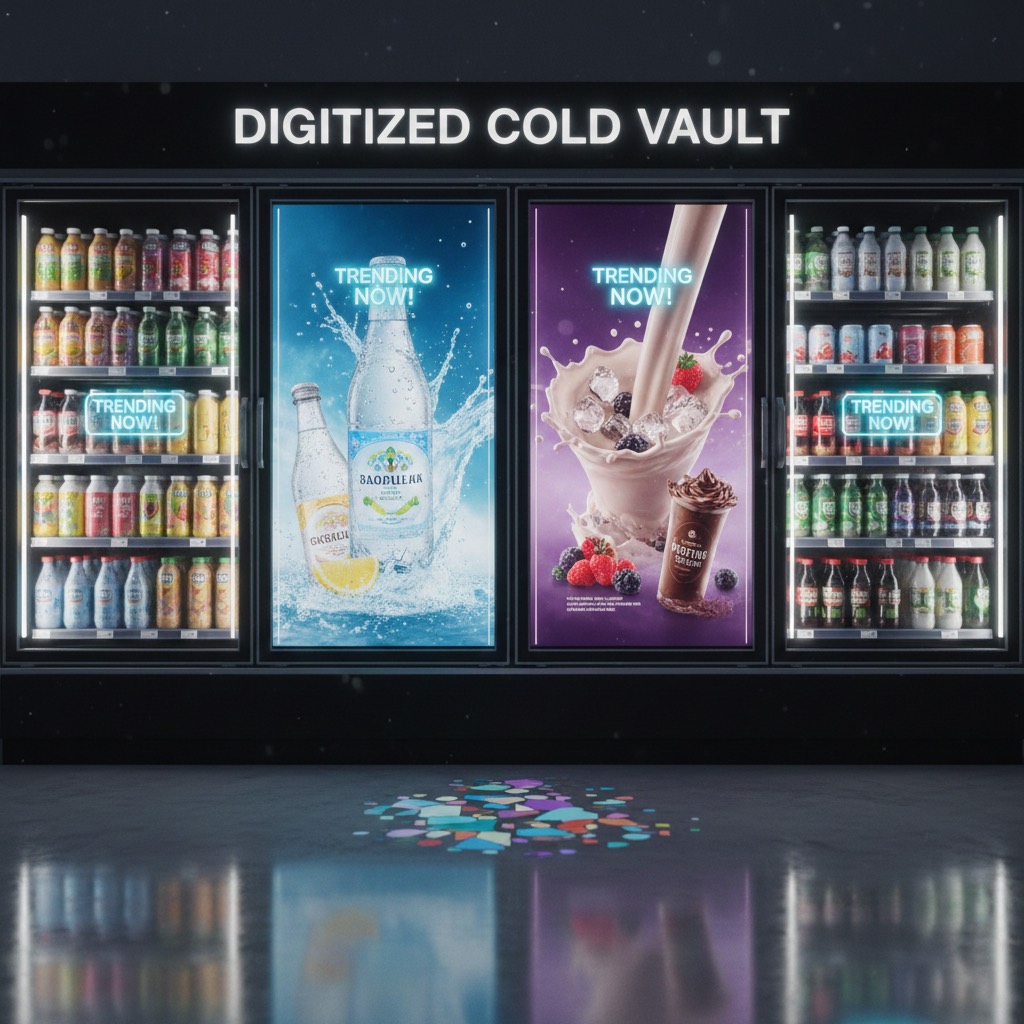
Beverages are no longer just hydration; they are an experience. If you haven’t heard of the “dirty soda” trend, you are leaving money on the table. This trend involves adding creamers, flavored syrups, and mix-ins to standard fountain drinks. This is a massive driver of traffic, particularly among Gen Z and Millennials who view these drinks as an affordable luxury.
Modern dispensing technology is your best friend here. New machines can provide up to 32 flavor combinations in a surprisingly small footprint. But you don’t even need high-tech machines to start. Simple additions like “bursties” (popping flavor balls) or candy mix-ins like Nerds can turn a low-margin $2 drink into a high-margin $5 destination purchase. It turns a commodity into a treat.
What You Should Be Doing
- Launch a “Dirty Soda” promotion. You don’t need a fancy franchise name to do this. Create a “Daily Special” where adding a creamer and a flavor shot to any large fountain drink is just $0.50 extra.
- Use visual aids. Digital signage or even well-printed counter cards showing mouth-watering photos of these custom drinks are essential. “Customize Your Cup” should be the message.
- Review your syrup inventory. Ensure you have the basics for this trend: coconut, vanilla, lime, and a heavy cream or sweet cream option.
3. GLP-1 Ready: The “Wellness” Pivot
This is perhaps the most significant shift in consumer biology we have seen in decades. With approximately 12% of adults now on weight-loss medications like Ozempic or Wegovy, the product mix in your center store needs to adapt.
These consumers have very specific needs: they prioritize portion control (because their appetite is suppressed) and nutrient density (because they are eating less, so every calorie counts). They are looking for high-protein options to maintain muscle mass. This means the 6-pack of donuts is out, and the single, high-quality “better-for-you” treat is in. They need high-protein dairy drinks and sugar-free electrolyte beverages.
What You Should Be Doing
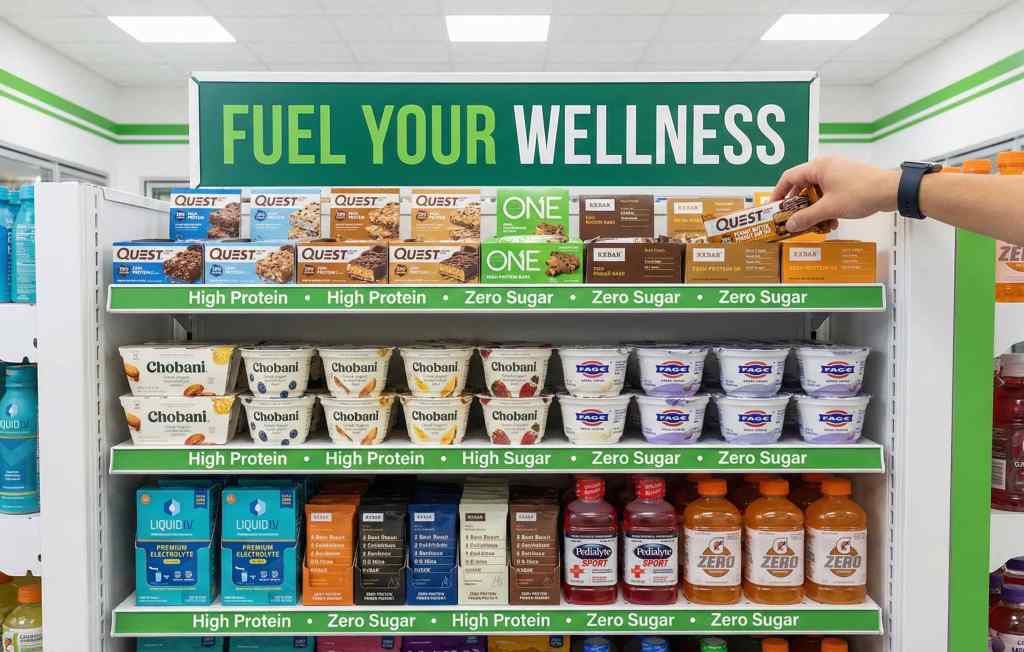
- Set up a “Wellness” Endcap. Don’t make these customers hunt. Group your high-protein jerky, Greek yogurts, protein bars, and sugar-free hydration drinks together.
- Use explicit signage. Use shelf talkers that shout the benefits: “25g Protein,” “Under 400 Calories,” or “Zero Sugar.”
- Re-evaluate your single-serve pastry sizes. Consider stocking premium; smaller portion treats rather than just bulk value packs.
4. “Swicy” and Bold Flavor Profiles
2026 is the year of the bold palate. We are seeing “swicy” (sweet and spicy) profiles taking over everything. It’s not just about heat; it’s about complex heat. Hot honey on chicken, spicy mango gummies, or chili-lime nuts.
Beyond swicy, pickle-flavored everything is having a major moment, from cashews to Cheetos. Sour profiles are also poised for massive growth. Why does this matter? Because these “buzzy” flavors create curiosity. They break the autopilot trance of a shopper. When a customer sees “Spicy Dill Pickle Almonds,” they pause. That pause encourages trial, helping you move more units per transaction.
What You Should Be Doing
- dedicate a “New & Bold” section near the checkout queue. This is prime real estate for impulse buys.
- Look for “Swicy” LTOs from major brands. When Frito-Lay or Hershey releases a spicy variation, stock it immediately and put it front and center.
- Pair these snacks with beverages. A spicy snack demands a cooling drink. Merchandise them together.
5. Intentional Bundling: The “Fuel Kit” Strategy
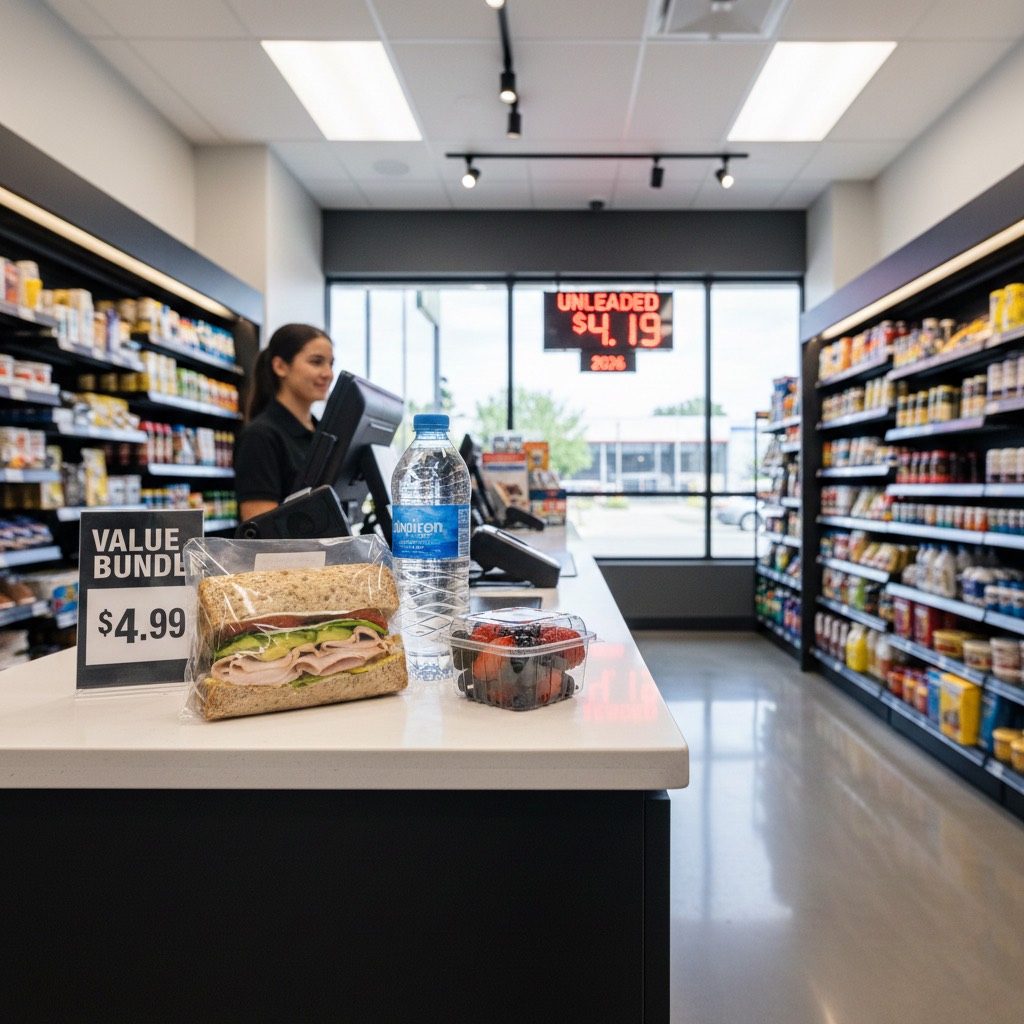
Because consumers are budget-conscious, bundling is more important than ever. But I’m not just talking about the old school “2 for $3” on soda. I’m talking about intentional meal kits that solve a problem for the consumer.
Look at strategies like Pilot’s “Fuel Kit.” This allows customers to pick a mix of snacks, fountain drinks, and hot food for a set price. This transparency is psychological gold. It helps the consumer feel in control of their budget while simultaneously increasing your total transaction value. It removes the “price anxiety” of grabbing three different items and wondering what the total will be at the register.
What You Should Be Doing
- Create “Category Bundles” for Dayparts. Use your POS data to see what people buy together.
- Build a “Morning Mission” bundle: Coffee + Breakfast Sandwich + Protein Bar for a clear, all-in price (e.g., $8).
- Build a “Lunch Rush” bundle: Global Bowl + Fountain Drink + Chips.
- Market the savings. Show the “A la carte” price versus the “Bundle” price on your signage. The value must be visible.
The Bottom Line: Diversification and Destination
The “Gas to Gourmet” shift is your single biggest opportunity to offset the flat transaction counts we are seeing across the rest of the retail industry. When we innovate in food and beverage, we aren’t just selling “stuff”; we are providing a high-value alternative to more expensive restaurant options. In 2026, quality and transparency are the names of the game.
The successful operator today understands that the consumer journey has become fragmented. Some folks walking through your doors are looking for the thrill of a new “swicy” snack, while others are on a strict wellness mission driven by GLP-1s. By diversifying your menu to include both, and by turning your beverage fountain into a customizable experience, you give everyone a reason to walk through your doors, and more importantly, a reason to buy.
Remember, 73% of in-store transactions currently come from beverages, tobacco, and beer. If we can use innovative food and customized drinks to pull those customers into other categories, we can significantly increase our basket size. The transition from being a “convenient” stop to a “destination” stop happens at the taste buds.
But innovating your menu is only half the battle. You must also manage it efficiently. In our next post, we’re going to look at the “brain” behind these innovations: technology. We’ll talk about how task-specific AI is helping operators manage these complex new foodservice programs without blowing their labor budgets. We’ll also look at Retail Media Networks and how you can monetize your store data in a way that big-box retailers will envy.
Join me for Part 5: 5 Real-World AI and Tech Applications for the Modern C-Store.

 The5For
Leave a comment