In our previous post, Part 5, we took a deep dive into the world of task-specific technology. We explored how self-checkout kiosks, AI-driven inventory management, and digital engagement tools can revolutionize your front-of-house operations and customer experience. It was all about the “flash” that drives sales. But today, I want to pivot. We are going to focus on the other half of the profit equation: protecting your margins from the “invisible” costs that are threatening to eat us alive in 2026.
Let’s be honest with one another; this year has presented a unique set of financial hurdles. The proposed 17% tariffs push up the cost of national brand goods. Labor and healthcare costs are rising relentlessly. As a result, the traditional convenience store model is under siege. If we simply keep operating the way we always have, we are going to see our bottom lines erode, regardless of how much top-line revenue we drive. We must find every possible way to keep more of each dollar we earn.
There are two primary ways I’m seeing smart operators build a “margin moat” around their businesses in 2026. The first is through a sophisticated, tiered private label strategy. Store brands are no longer just the “cheap option” for budget shoppers; they are a strategic asset. The second is through aggressive, data-driven energy and refrigerant management. This might sound like a boring “back-room” issue, but when refrigeration and HVAC account for up to 75% of your total energy use, it is actually a financial emergency.
I’ve seen firsthand how powerful these shifts can be. For a business operating on a thin net profit margin, saving $10,000 in energy waste, or preventing refrigerant leaks is the mathematical equivalent of generating $1,000,000 in new sales revenue. That is “margin math” you cannot afford to ignore. Furthermore, with strict new EPA and state-level regulations having gone into effect on January 1, 2026, staying ahead of compliance is no longer optional—it is a condition of staying in business.
In this post, I am going to walk you through five specific, battle-tested strategies to tighten your operations. We will look at how to expand your store brands to compete with national labels and how to use IoT tools to catch the “hidden energy drains” siphoning away your profits. Let’s get into the nitty-gritty of operational excellence.
1. Implement a Tiered Private Label Strategy
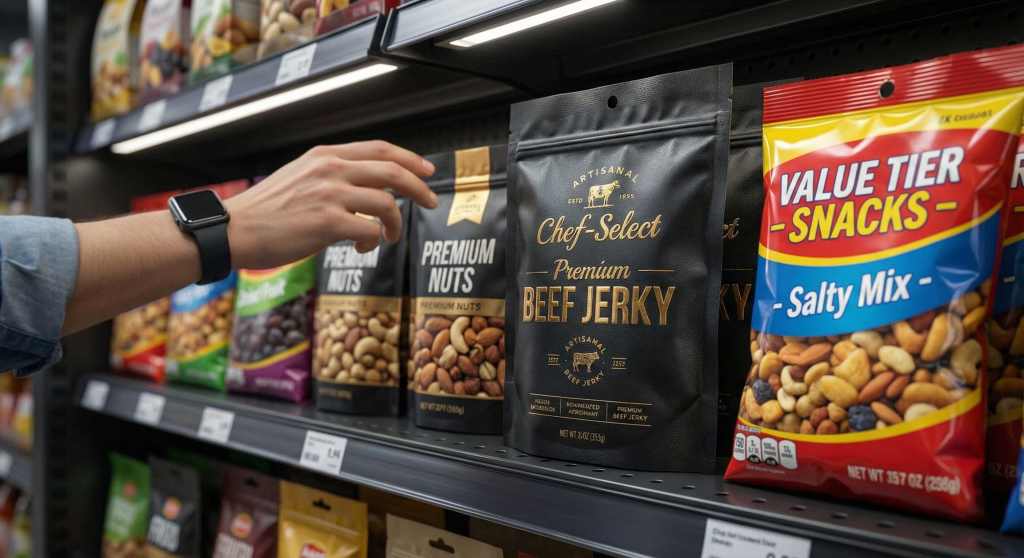
In a tariff-heavy economy, your private label is your single greatest competitive advantage. For years, many of us treated private label as a generic “bottom shelf” placeholder. However, consumer psychology has shifted dramatically. Nearly half of households earning over $100,000 now predominantly buy private labels because they trust the quality. They aren’t buying it because they have to; they are buying it because they want to.
Successful retailers in 2026 are moving toward a tiered approach. You need an “Entry” tier to defend the price-sensitive bottom of the market, but you also need a “Premium” tier that offers higher margins and chef-style quality. This is where you can really win.
By focusing on high-frequency categories like dairy, jerky, and household staples, you allow your customers to “trade down” from expensive national brands. Jerky is up 50% in category share. This change lets customers enjoy affordable options without sacrificing quality. When you own the brand, you control the supply chain and, most importantly, you own the margin.
What You Should Be Doing
- Audit Your Mix: Identify the top 5 national brand items that have seen the largest price hikes due to tariffs or inflation.
- Talk to Wholesalers: Immediately discuss adding a private label alternative in those specific categories.
- Create Tiers: Ensure you have a “good” (price fighter) and “best” (premium quality) option for your highest velocity categories, particularly in snacks and beverages.
2. Automatic Leak Detection (ALD) and Compliance
If you haven’t looked at your refrigeration compliance lately, you are walking through a minefield. Starting January 1, 2026, new regulations mandated that many commercial refrigeration systems must have real-time leak detection. The EPA is cracking down, and the fines are substantial.
Beyond the legal risk, there is the financial reality. The average leak rate for grocery and convenience stores hovers around 25%. Best-in-class operators reduce this to 7% or less. When you consider that refrigerant prices are skyrocketing due to production cuts and environmental taxes, a leak is literally blowing money into thin air.
Implementing a centralized management system does two things: it keeps you compliant with EPA 608 and CARB regulations, and it dramatically reduces the cost of expensive recharges. You cannot manage what you do not measure, and in 2026, manual checks are no longer enough.
What You Should Be Doing
- Check System Size: Review the new Jan 1, 2026, regulations. If your system holds more than 1,500 lbs. of refrigerant, you are likely required to have an Automatic Leak Detection (ALD) system.
- Review Maintenance Logs: Look at your refrigerant purchases over the last 12 months. If you are buying gas frequently, you have a leak that needs a permanent fix, not a “top-off.”
- Install Sensors: Retrofit older racks with IoT-enabled sensors that alert your phone the moment a pressure drop is detected.
3. IoT-Driven Energy Monitoring
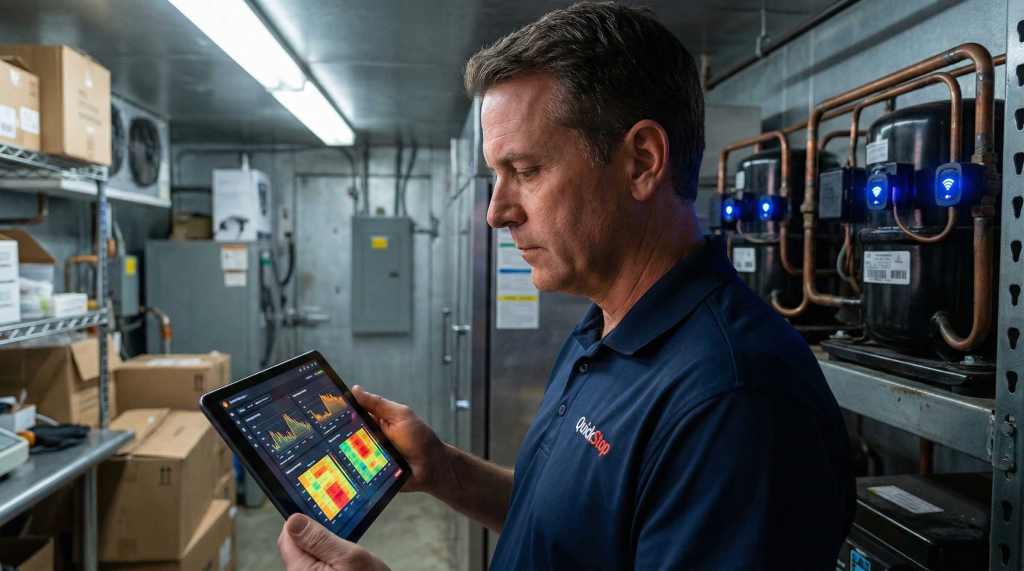
It is a painful statistic, but convenience stores use approximately 4x more energy per square foot than typical retail establishments. We are power-hungry businesses. However, a significant portion of that usage is pure waste. I’m talking about “phantom power” and behavioral issues, HVAC systems fighting open doors, or parking lot lights running at 100% brightness at 3:00 AM when no cars are present.
IoT sensors are the answer. By utilizing “floating head pressure” controls on your coolers and occupancy-based dimming on your lighting, the average store can save 19% on electricity. In our industry, a 19% reduction in utility bills translates to thousands of dollars in annual profit per location.
These systems identify the “hidden” waste that the human eye misses. They turn your energy bill from a fixed cost into a manageable variable cost.
What You Should Be Doing
- Conduct a “Night Walk”: Visit your store at 3 AM. Is every light at full brightness? Are the cooler doors sweating or not sealing? Identify the physical waste first.
- Install Smart Thermostats: Ensure your HVAC is programmed with set-points that prevent employees from cranking the A/C down to 60 degrees.
- Invest in EMS: Look into an Energy Management System (EMS) that automates lighting and temperature based on real-time occupancy.
4. Preventive Maintenance for High-Margin Assets
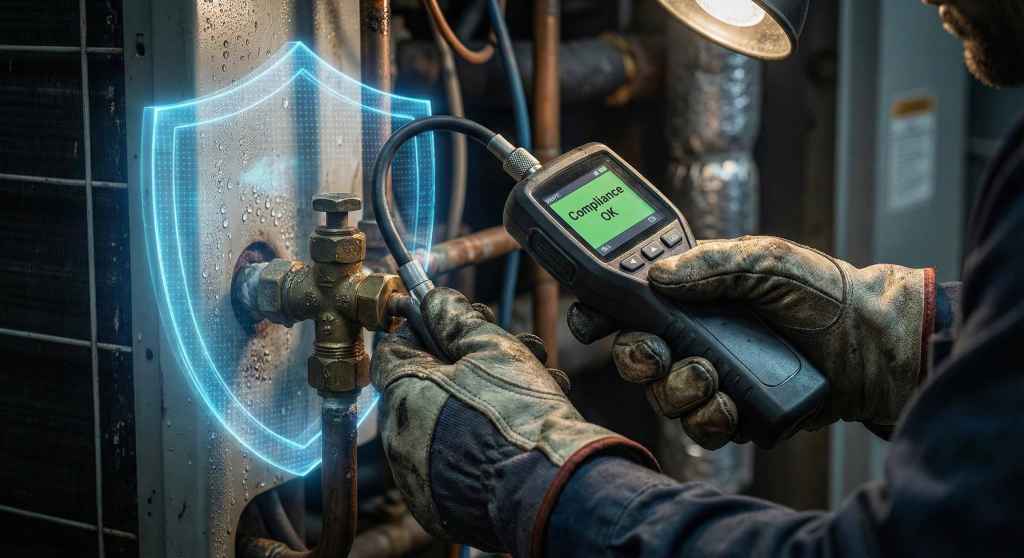
The most expensive repair is the one that happens when a system fails entirely. We have all been there. The compressor dies on the Fourth of July weekend. You lose $5,000 in inventory. Additionally, there is the cost of an emergency service call.
In 2026, 43% of forward-thinking retailers are focusing on aggressive preventive maintenance for their high-margin assets. They specifically target car washes, HVAC, and food service equipment. Using IoT-enabled “predictive maintenance” helps you spot a failing compressor (via vibration analysis) or a clogged filter (via airflow sensors) before it leads to a breakdown.
Reliability is a customer service issue. If your roller grill is cold or your car wash is “Out of Order,” customers don’t just skip that purchase; they skip your store entirely next time.
What You Should Be Doing
- Digitize the Schedule: Move away from paper checklists. Use a digital app to track when filters were last changed and coils cleaned.
- Prioritize Assets: Identify the three pieces of equipment that generate the most revenue (e.g., coffee machine, car wash, main cooler) and double the maintenance frequency on them.
- Listen to the Data: If you have smart equipment, enable the alert features that notify you of performance irregularities before a breakdown occurs.
5. Supply Chain and Vendor Consolidation
Finally, let’s talk about the trucks pulling up to your back door. To combat tariff-related volatility and rising fuel surcharges, retailers must streamline their procurement. Every time a truck stops at your store, it costs money, in labor to receive it, in administrative time to process the invoice, and in the “cost-to-serve” fees vendors are adding.
Retailers are switching to vendors that offer broadline services or those that integrate directly with your POS for “smart targeting” orders. By reducing the number of deliveries and “touches” per unit, you lower your operational overhead. Consolidating vendors also gives you better buying power and leverage when negotiating prices.
What You Should Be Doing
- Analyze Drop Frequency: Look at your vendor list. Are you getting three different deliveries for items that could come from one source?
- Integrate Ordering: Ensure your ordering system is talking to your inventory system to prevent over-ordering and dead stock.
- Negotiate Terms: Use your consolidated volume to ask for better payment terms or reduced delivery fees.
The Bottom Line: Plug The Leaks
Margin protection is the “blocking and tackling” of the 2026 convenience industry. While it is always exciting to talk about new food trends, flashy signage, or high-tech AI customer service, the real work, the work that keeps the lights on and the payroll met, happens in the back room and the supply chain.
In an economy where tariffs and healthcare hikes are squeezing your customers, you simply cannot afford to have any “leaks” in your operation. A physical refrigerant leak might vent into the atmosphere. Alternatively, there could be a financial leak from stocking overpriced national brands. If your customers are shying away from these brands, the result is the same: lost profit.
Expanding your private label brand is about more than just “saving money” for the customer; it is about taking control of your shelf. When you own the brand, you own the future of that category. And when you find that “hidden 19%” in energy savings through smart monitoring, you are essentially creating profit out of thin air. These strategies are what separate the survivors from the leaders in the 2026 market reset.
Remember, growth in 2026 often comes from stopping unproductive work and eliminating waste, not just adding more volume. By becoming an operationally excellent retailer, you create the financial flexibility to invest in the destination-worthy features we discussed in our previous posts.
In our final post, we are going to bring it all together. We will summarize the key themes of this entire series, from food service to technology to margin control, and provide a final “Battle Plan” for 2026. We will discuss how to integrate design, tech, food, and operations. This will form a single cohesive strategy that captures the heart of your community.
Join me for Post 7: 5 Strategic Steps to Master the 2026 Retail Reset.



 The5For
Leave a comment