Why “Functional Flavor” is Rewriting Your Customer’s Cravings
In our last post, we cracked open the door on a massive flavor shift heading our way in 2026: the concept of “Swangy.” We established that this collision of Sweet, Tangy, and Spicy flavors is set to dominate the convenience landscape, moving beyond simple heat to a more complex, multi-layered sensory experience. We talked about what is happening, the rise of “Swangy” BBQ chips, spicy-tart beverages, and zesty confectionery. But we didn’t fully answer the question that always nags at savvy business owners like us: Why?
Why now? Why this specific combination? In this industry, we often see trends driven by fleeting TikTok virality or the whims of celebrity chef endorsements. While those factors play a role, the “Swangy” phenomenon has a much deeper, more biological root that makes it far stickier than a typical fad.
There is a silent disruptor in the food industry that very few operators are talking about openly, yet it is reshaping the very taste buds of your core demographic. It is the widespread adoption of GLP-1 weight-loss medications like Ozempic, Wegovy, and Mounjaro. This isn’t just a pharmaceutical trend; it is a seismic shift in retail behavior. Today, we are going to explore the “Ozempic Effect” and how it is creating a physiological need for the high-acid, high-stimulation profile of Swangy foods.
If you are currently looking at your inventory and wondering why your standard sugary snacks are sitting on the shelf a little longer, this post is for you. Or, if you are questioning why customers are suddenly asking for “something different,” this post will provide answers. By the end of this article, you will understand that your customers aren’t just chasing a flavor because it’s cool. They are chasing it because their biology is demanding it. We are going to look at the side effects of these medications, specifically how they alter taste perception, and how you can position your store to be the solution for their sensory fatigue.
Biology Meets Business: Understanding “Ozempic Tongue”
To understand the convenience store customer of 2026, you must understand a condition known medically as dysgeusia. In the industry, we simply call it “Ozempic Tongue.” It is a real, documented side effect where patients taking GLP-1 medications report a persistent, unpleasant metallic, bitter, or sulfurous taste in their mouths.
Think about the implications of that for a second. If your mouth constantly tasted like old pennies or battery acid, would you want a bland turkey sandwich? Would you want a sugary, creamy chocolate bar that might taste cloyingly sweet or even nauseating against that metallic backdrop? Probably not. The standard “comfort foods” that have driven C-store sales for decades, mild, salty, fatty, doughy items, suddenly become unappealing to this growing demographic.
This creates a “flavor gap.” These customers still need to eat, and they still need convenience. However, their biological feedback loop is telling them to avoid the bland and the overly sweet. They are looking for something that can punch through that metallic film and register as “tasty.”
What You Should Be Doing
- Audit Your “Bland” SKUs: Immediately review your fresh food and grab-and-go sections. If your offering is dominated by mild flavors (plain mayo-based sandwiches, unseasoned nuts, plain crackers), understand that you are invisible to this demographic.
- Train Your Staff: While you can’t offer medical advice, your staff should know that customers asking for “something with a kick” or “something sour” might be looking for relief from flavor fatigue. Empower them to make recommendations.
- Sample High-Flavor Items: If you have a foodservice counter, sample items that have high acidity or spice to catch the attention of those with dulled palates. A small taste can trigger an immediate purchase.
The Craving for Acid and Heat
When the sense of taste is dampened or distorted by this metallic film, the palate craves something strong enough to cut through it. This is where the “Swangy” triad, specifically Acid (Tangy) and Spice (Heat), comes into play as a biological necessity.

The Acid Fix
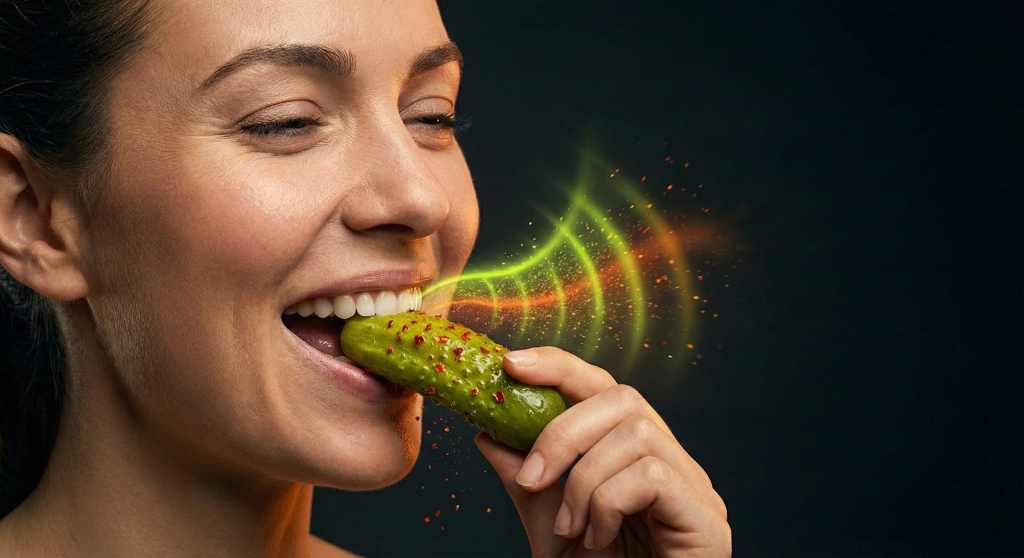
Foods high in citric or acetic acid, like pickles, intense citrus flavors, and vinegar-based sauces, act as a palate cleanser. They do two things: they physically cut through the bitter coating on the tongue, and they stimulate saliva production. Many of these medications cause xerostomia (dry mouth). Acid makes the mouth water, which immediately makes the customer feel better.
The Spice Kick
Capsaicin (the heat in chili peppers) does not rely solely on taste buds; it triggers the trigeminal nerve. It provides a physical sensation, a burn, or a tingle, that registers even when taste receptors are dull.
This biological reality is creating a new category of food that I call “Functional Flavor.” Your customers aren’t just buying that “Spicy Pickle” or “Lemon-Habanero Water” because it’s trendy or because they saw it on Instagram. They are buying it because it makes them feel normal again. It makes food palatable. It turns eating from a chore back into a pleasure.
What You Should Be Doing
- Prioritize “High-Stimulation” Snacks: Move items like spicy pickles, chili-lime popcorn, and salt-and-vinegar chips to eye-level placements.
- Rethink Your Beverage Vault: Ensure you are stocking drinks that feature ginger, tart cherry, or citrus. These are natural saliva stimulants and will sell well with this group.
- Merchandise for “Recovery”: Consider grouping these high-acid/high-spice items near your pharmacy or health/HBA section, subtly linking them to relief without making medical claims.
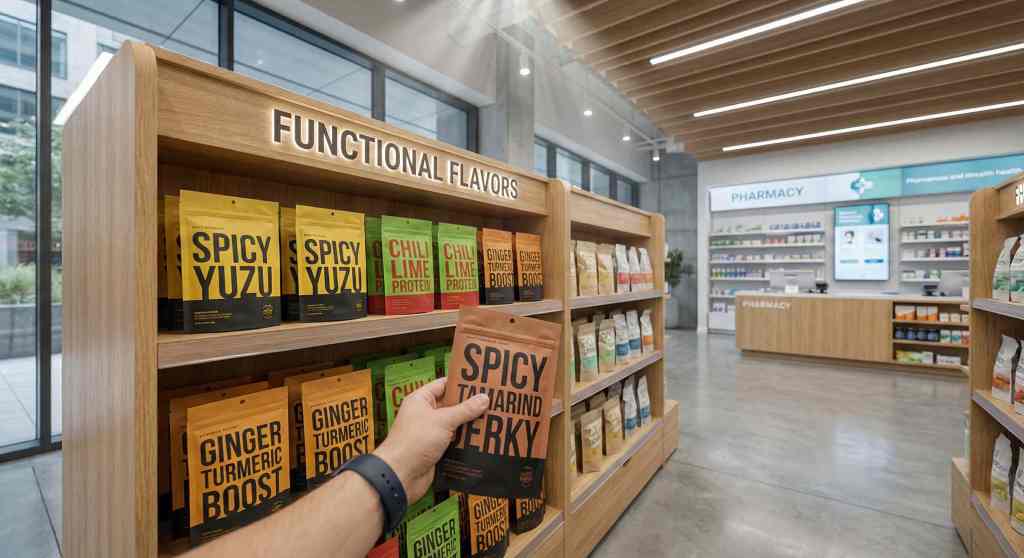
The Rise of the “Savor-Sour” Profile
This shift is pushing consumers away from traditional “comfort foods” (which are usually high-fat and high-sugar) toward “stimulation foods.” In the bakery world, which usually relies heavily on sugar, we are seeing the emergence of “Savor-Sour” items.
Imagine a biscuit or a scone. Traditionally, you might sell a Blueberry Sweet Scone. But for the GLP-1 customer, that sugar might trigger nausea. Instead, we are seeing products flavored with Sudachi (a sour Japanese citrus) and black pepper, designed specifically to settle the stomach and stimulate the appetite.
For a C-store, this is critical intel. The customer on a GLP-1 regimen is likely visiting your store less often for high-calorie binges, but they still need to eat. They are looking for protein, yes, but they are also looking for flavor density. They want a smaller portion that packs a massive sensory punch. A “Swangy” snack, like a protein-packed popcorn dusted with chili and lime, hits every single one of their biological buttons:
- Protein: Satiety (they get full faster, so every bite counts).
- Spicy: Sensory kick to wake up the nerves.
- Tangy: Cleanses the “Ozempic Tongue.”
- Sweet: A tiny hit of reward without the nausea of a full dessert.
What You Should Be Doing
- Revamp Foodservice Menus: If you serve hot food, introduce a “Savor-Sour” glaze or sauce option. A tamarind-chili glaze for chicken wings or a lime-pepper dust for potato wedges will outperform standard BBQ or Ranch for this group.
- Look for “Mini” Indulgences: Stock smaller package sizes of high-flavor items. This customer cannot eat a “Share Size” bag; they want a 1.5oz bag that explodes with flavor.
- Cross-Merchandise: Place high-protein snacks (jerky, nuts) next to high-acid beverages (kombucha, lemonade) to create a “meal deal” that appeals to the GLP-1 diner.
The “Health” Halo of Swangy
Even for customers not on medication, the “Swangy” profile carries a massive psychological “health halo.”
“Tangy” is associated with fruit, fermentation, gut health, and freshness. “Spicy” is associated with metabolism-boosting and thermogenesis. In a world where consumers are increasingly health-conscious, a “Sweet Chili Lime” profile feels lighter and “better-for-you” than a “Bacon Cheddar Ranch” profile, even if the calorie counts are similar.
This is a branding opportunity. When you market these flavors, you aren’t just selling a taste; you are selling a feeling of lightness and vitality. The heavy, greasy, savory profiles of the past decade (the “bacon explosion” era) are fading. The “Swangy” era is about bright, sharp, clean flavors that signal health.
What You Should Be Doing
- Update Your Signage: Use words that emphasize refreshment and stimulation. “Bright,” “Zesty,” “Crisp,” “Mouth-Watering,” and “Awakening” are trigger words for customers suffering from flavor fatigue.
- Rethink Your “Health” Section: Don’t just stock plain almonds and water. That is boring. Look for high-flavor, low-sugar items. Jerky is great, but Spicy Tamarind Jerky is better.
- Investigate Functional Beverages: Look for sodas and waters that explicitly feature apple cider vinegar (ACV) or prebiotics. These appeal directly to the digestion/dry mouth concerns of this demographic.
Market Scale: Why You Can’t Ignore This
You might be thinking, “Is this demographic really big enough to change my inventory? Is it worth rearranging my shelves for people on a diet?”
The answer is an emphatic yes. With millions of prescriptions written annually and the market growing exponentially, the “GLP-1 Palate” is no longer a niche subgroup. It is a structural feature of the modern food and beverage landscape. Furthermore, trends often bleed from the “early adopters” (in this case, the medication users) to the general public. As these flavors become ubiquitous, everyone starts to develop a taste for them.
Brands that ignore this will lose relevance. They will be stuck selling heavy, bland food to a population that craves lightness and stimulation. Brands that lean into it, by offering bold, acidic, spicy options, will become the go-to destination for this high-spending group.
What You Should Be Doing
- Talk to Your Distributors: Ask your DSD (Direct Store Delivery) reps what “high acid” or “spicy citrus” items they have in their portfolio. Tell them you are specifically looking for the “Swangy” profile.
- Monitor Sales Data: Watch your category data closely. Are your standard chocolate bars slipping while your spicy gummies are rising? That is the Ozempic Effect in action.
- Experiment with LTOs (Limited Time Offers): Bring in a “Swangy” item as a monthly special and track its velocity. Use that data to justify permanent shelf space.
The Bottom Line: Customer Cravings = Massive Opportunities
We have covered a lot of ground here, but the core takeaway is simple: The “Swangy” trend is being fueled by a biological imperative, not just a marketing gimmick. Your customers are physically craving acid and heat to navigate a changing sensory world where their own taste buds are often fighting against them. This concept of “Functional Flavor” creates a massive opportunity for Convenience Stores to provide relief and delight in a single package. We are moving away from the era of “Mindless Snacking” and into the era of “Mindful Stimulation.”
Recognizing that your customer’s physiology has changed is the first step to winning their loyalty. If you can be the store that offers the spicy pickle when they have a metallic taste in their mouth, or the tart cherry soda when they have dry mouth, you aren’t just a store anymore. You are a partner in their wellness journey. You are solving a problem they face every single day, often several times a day.
This demographic is high-value, consistent, and currently underserved by the broader market. By adjusting your inventory to include “Savor-Sour” profiles and high-stimulation snacks, you position your brand as forward-thinking and empathetic to their needs. You aren’t just selling food; you are selling the ability to enjoy food again.
But knowing why they want it is only half the battle. You need to know exactly what to sell them to capitalize on this. You can’t just put a raw lemon on the counter and call it a day. You need to know which specific ingredients are driving this trend on the supply side, so you can spot the winners before they even hit the shelves.
In our next post, “Part 3: Supply Chain Stars: The Hero Ingredients Behind the Swangy Revolution,” we are going to look at the specific flavors you need to hunt for. We will introduce you to the “Hero Ingredients”, from Yuzu to Tamarind, that you need to recognize on your order sheets to stay ahead of the curve. Get your order guides ready because we are going shopping.



 The5For
Leave a comment