Chili Crab, Fast Food Giants, and Stealing the Playbook
Welcome back to part five of our deep dive into the “Swangy” revolution.
If you read our last post, you are now intimately familiar with the anatomy of the “Swangy” flavor profile. We broke down exactly how the collision of Sweet, Tangy, and Spicy creates a sensory feedback loop that makes food literally addictive. We talked about the biology of the tongue and why this specific trifecta drives craveability more than any singular flavor note ever could.
But understanding the science is only half the battle. Now, we must talk about the war.
In the convenience store industry, we often look at Quick Service Restaurants (QSRs) purely as the competition. We track their pricing, we eye their drive-thru lines with envy, and we worry about them stealing our lunch crowd. And they are doing exactly that. But if you shift your perspective just slightly, you will realize they are also something much more valuable to us: they are our unpaid Research & Development department.
Chains like McDonald’s, KFC, and Wingstop spend tens of millions of dollars testing flavor concepts, refining supply chains, and running focus groups before an added item ever reaches the menu board. By the time a trend hits their drive-thru window, it has been validated, stress-tested, and optimized for mass appeal.
Right now, the QSR giants are doubling down on “Swangy.” They are betting the house on it. From the “Chili Crab” craze sweeping their Asian markets to the “Umami Bomb” wings dominating the U.S. urban scene, the big players are engineering their menus to hit those sweet-tangy-spicy notes harder than ever before.
In this post, we are going to discuss their strategies. I am going to show you exactly what the giants are doing, why it works, and most importantly, how you can steal these high-level menu engineering tactics and deploy them in your C-store foodservice program, often for pennies on the dollar.
The “Chili Crab” Lesson: Volume is Value
If you want to see the future of the “Swangy” sandwich, you must look internationally first. Specifically, look at Singapore. Both KFC and McDonald’s recently went head-to-head launching “Chili Crab” burgers.
For those unfamiliar, Chili Crab is essentially the “Swangy” final boss. It is a tomato-based sauce (Sweet), cooked down with fresh chilies (Spicy) and vinegar or lime (Tangy), and often thickened with egg for a rich, velvety mouthfeel. It hits every single receptor we discussed in our last post.
But here is the critical lesson McDonald’s learned the hard way. When they first launched their version, the customer feedback was brutal. People didn’t complain about the price or the bun; they complained it wasn’t saucy enough. To fix it, McDonald’s had to re-engineer the build and increase the sauce quantity by a staggering 30% to satisfy the craving.
Why This Matters to You
In the C-store world, we are often trained to control food costs by portioning strictly. We worry about “drowning” the sandwich. But when you are selling a “Swangy” item, say, a Sweet Chili Chicken Sandwich or a Spicy Hawaiian Slider, you must realize that the protein is just the vehicle. The sauce is the product.
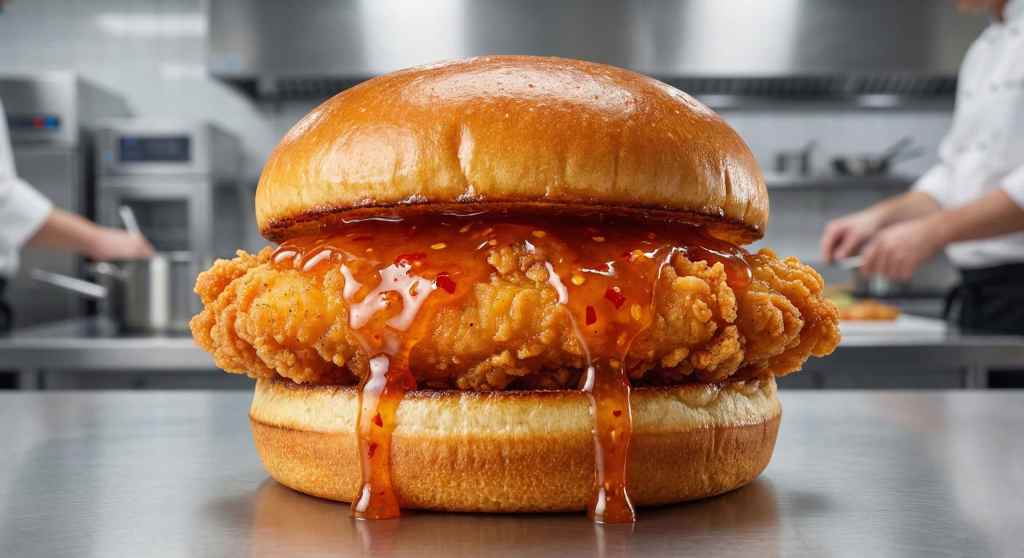
Customers buying these items want a messy, sensory experience. They want the “drip.” If you serve a dry sandwich with a hint of flavor, you aren’t selling “Swangy”; you’re selling disappointment.
What You Should Be Doing
- Audit Your Pumps: Check your condiment station and your deli prep area. Are your pumps set to a standard 0.5 oz? For “Swangy” items, you need to double it.
- The “Dip” Option: If you are worried about soggy buns (we will get to that in a moment), offer the sauce as a side “dunking” cup. This allows the customer to control the volume, and they will almost always use all of it.
- Visual Marketing: Update your menu board photos. Do not show a clean, dry sandwich. Show the sauce dripping. Show the glaze listening. Signal to the customer that this is a flavor-bomb experience.
The Wing King Strategy: Flavor Layering
Chicken wings are the absolute playground for Swangy innovation. While the big chains are great, some of the best R&D comes from independent legends, like House of Wings in Staten Island, who are currently serving up “Umami Bomb” wings.
Their secret? They don’t just rely on a sauce. They use a technique called Flavor Layering.
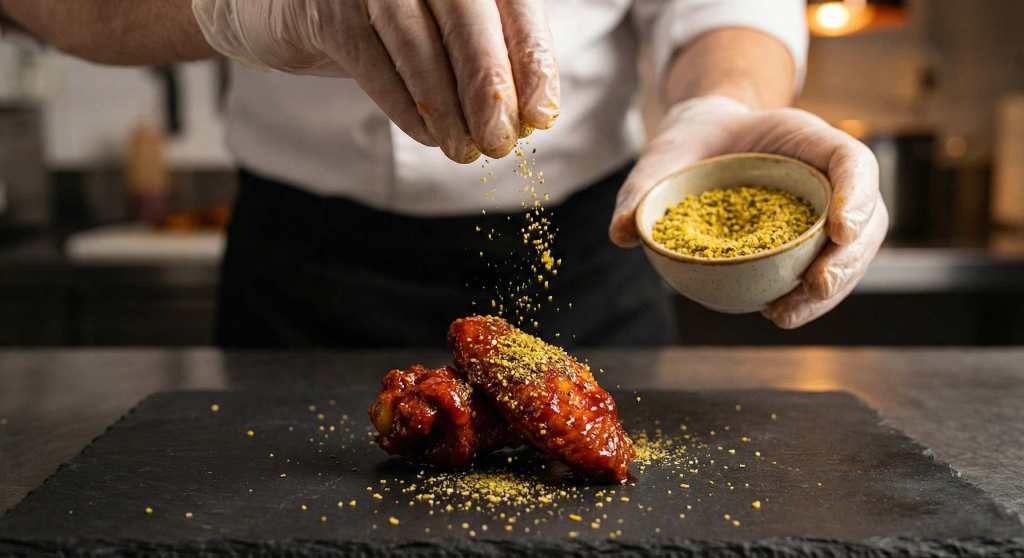
Most C-stores operate on a “cook, hold, serve” model. We might toss wings in a sauce, or we might buy them pre-glazed. The “Wing Kings” of the QSR world do it differently: they sauce the wing, and then they hit it with a dry rub.
The Technique
Imagine a wing tossed in a sweet Thai chili sauce. On its own, it’s good. Now, imagine that wet wing dusted immediately with a dry Lemon Pepper or Tajín seasoning. You have created a “Swangy” masterpiece. You have the wet, sticky sweet/spicy sauce, and you have the dry, gritty, tart punch of the seasoning.
This creates a texture contrast that heightens the “tang” and makes the product feel chef-crafted rather than manufactured. It tricks the brain into thinking the food is fresher and more complex than it actually is.
What You Should Be Doing
- Buy the Shakers: You don’t need a new supplier. Go to your cash & carry and buy large shakers of Tajín, Lemon Pepper, or even a spicy BBQ dust.
- The “Dusting” Step: Train your deli staff on the “Wet-Dry” method. If a customer orders BBQ wings, ask if they want them “Spiced Up.” Toss them in the sauce, plate them, and do a quick shake of the dry rub over the top right in front of the customer.
- Combo Promos: Market these as “Chef’s Specials.” A “Lemon-Heat Wing” (Buffalo sauce + Lemon Pepper dust) sounds like a premium LTO, but it utilizes ingredients you already have sitting on the shelf.
The Texture Factor: Mantou and Crunch
Nestle’s 2026 industry report emphasized something that convenience store operators often overlook: Texture is just as important as flavor.
Let’s go back to that KFC Chili Crab example. They didn’t just put the sauce on a sesame seed bun. They used a fried Mantou bun, a sweet, crispy Chinese bun, as the carrier.
Why It Matters
A “Swangy” sauce is usually wet, heavy, and sugar dense. If you put that on a standard, low-cost white bun, the sugar, and vinegar will dissolve the bread within minutes. The customer takes one bite, and the sandwich disintegrates into a hot mess.
You need a carrier with structural integrity and crunch. The crunch provides a necessary counterpoint to the sticky sauce. It stops the “mush” factor.
The C-Store Fix
You probably aren’t going to start frying Mantou buns next to your roller grill. That’s fine. But you can upgrade your bread game. If you are introducing a heavy sweet chili glaze for a new sandwich line, you cannot use the entry-level bun.
What You Should Be Doing
- Upgrade the Carrier: Switch to a Brioche bun or a toasted Pretzel roll for your high-sauce items. The dense crumb of a brioche or the outer skin of a pretzel roll acts as a barrier to the moisture.
- Toast It: This is non-negotiable. If you have a toaster or a rapid-cook oven, toast the cut side of the bun until it is golden brown. This creates a “seal” that keeps the sauce sitting on top of the bread rather than soaking into it.
- Add Crunch Elsewhere: If you can’t change the bun, add crunch inside. Pickles are the easiest way to add both “Tang” and “Crunch” simultaneously. A handful of crispy fried onions (like the ones used on green bean casseroles) is another cheap, shelf-stable way to add texture to a soft sandwich.
LTOs: The “Newstalgia” Play
Finally, let’s talk about how QSRs market these things. They use Limited Time Offers (LTOs) to test a concept called “Newstalgia”, new twists on old favorites.
A perfect example is Maruchan launching Mango Habanero Yakisoba. Everyone knows what Yakisoba is (Nostalgia), but the Mango Habanero flavor (New) makes it exciting. It’s a familiar format with a trending flavor profile. It lowers the barrier to entry for the customer because they already trust the format.
The C-Store Move
You don’t need to invent a new food category. You just need to remix your greatest hits. The roller grill is the perfect stage for Newstalgia. Everyone knows the hot dog. It is safe. It is familiar.
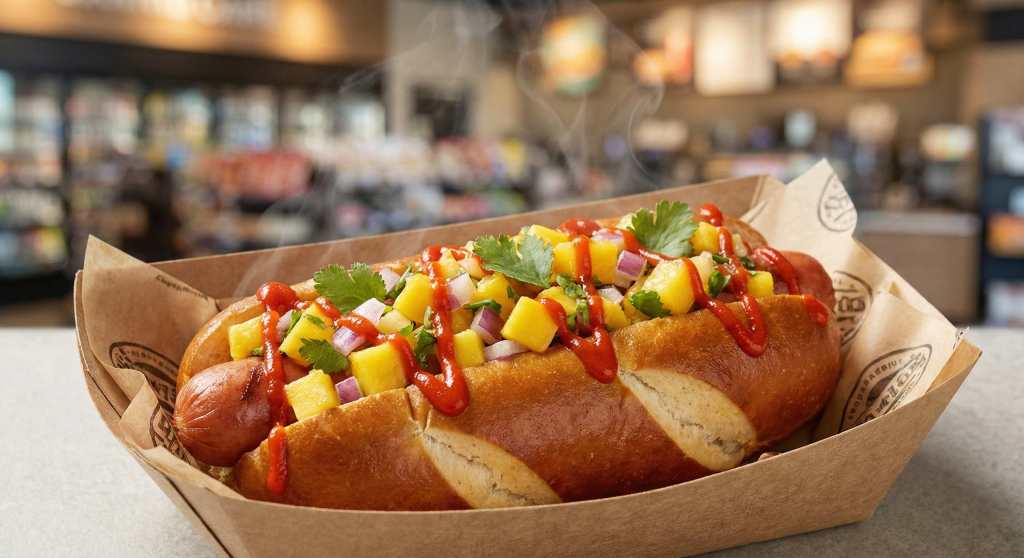
If you launch a “Mango Habanero Dog,” you aren’t asking the customer to take a significant risk. They know they like hot dogs. They are just trying a new topping.
What You Should Be Doing
- The “Swangy Dog” LTO: Run a month-long special. Take your standard roller grill hot dog or taquito. Top it with a Mango Salsa (you can buy this pre-made in bulk) and a drizzle of Sriracha.
- Sauce Your Pizza: Do not just offer “Pepperoni.” Offer “Hot Honey Pepperoni” as an LTO. It requires zero new equipment. You literally just drizzle a bottle of hot honey over the pizza immediately after it comes out of the oven. It adds a premium “Swangy” finish for pennies per slice, and you can charge a premium for the “Artisan” experience.
- Steal the Profile, Not the Ingredients: You don’t need actual crab to do a “Chili Crab” style item. A “Sweet Chili Tomato” sauce on a crispy chicken sandwich hits the exact same notes. Look for “Singapore Chili” or “Sweet & Sour Spicy” sauces from your mainline distributor.
The Bottom Line: To Boldly Go…
The QSR giants have taught us that winning the “Swangy” war requires boldness.
It requires the boldness to double the sauce portion because you know that’s where the flavor lives. It requires the boldness to layer dry rubs over wet glazes to create complexity. And it requires the operational discipline to upgrade your buns so they can handle the heat.
These strategies, Newstalgia, Flavor Layering, and Texture Optimization, are not reserved for companies with billion-dollar marketing budgets. They are operational tweaks that you can implement in your store tomorrow.
By treating your food service program with the same “R&D” mindset as a McDonald’s or a Wingstop, you stop selling “gas station food” and start selling “destination food.” You stop fighting on price, and you start fighting on craveability.
But here is the thing: Food is heavy. It requires prep, heating, and holding. There is one category in your store that moves even faster than food, has higher margins, and is currently undergoing a “Swangy” revolution of its own.
It’s the category where “Tangy” has always lived, but “Spicy” is just moving in.
In our next post, Liquid Swangy: Why “Dirty Sodas” and Spicy Sips are the Future of Hydration, we are grabbing a straw and diving into Liquid Swangy. From the “Dirty Sodas” taking over TikTok to the “Mouth-Blowing” spicy cocktails changing the alcohol game, your beverage cooler is about to get wild.


 The5For
Leave a comment