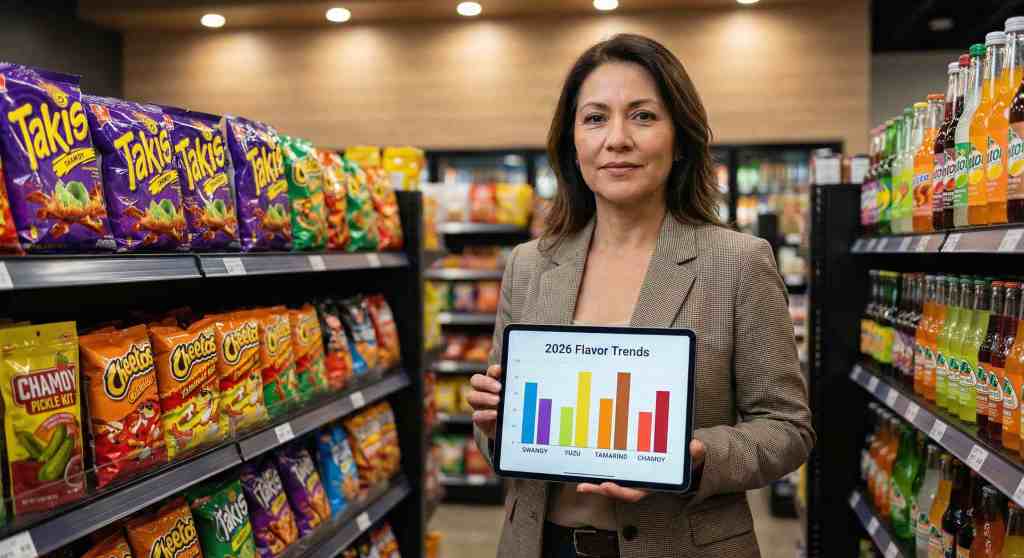
Your Strategic Roadmap to Winning 2026 and Beyond
We have been on quite a journey together over the last few weeks. When we started this series, the idea of “Swangy”, that specific, mouth-watering convergence of Spicy, Sweet, and Tangy, might have sounded like just another fleeting buzzword. But over the course of the last six posts, we have dissected this phenomenon from every conceivable angle, and the conclusion is undeniable: this is not a fad. It is the new baseline for the American palate.
We began in Post 1 by defining the shift, explaining how “Swicy” (Sweet and Spicy) was merely the stepping stone to the more complex, acidic profile of Swangy. In Post 2, we took a deep dive into the “Biology of Taste,” uncovering the fascinating link between GLP-1 weight-loss medications like Ozempic and the physiological craving for high-stimulation, functional flavors. We learned that for many of your customers, acid is literally becoming the new sugar.
From there, we moved to the practical. Post 3 identified the “Holy Trinity” of the Swangy pantry: Tamarind, Yuzu, and Chamoy. In Post 4, we walked the floor of your store, discussing how to operationalize these flavors at the condiment bar without breaking the bank on a remodel. Post 5 taught us how to steal menu engineering secrets from QSR giants, focusing on the critical interplay of “wet” sauces and “crunchy” carriers. Finally, in Post 6, we washed it all down with “Dirty Sodas” and spicy spirits, realizing that beverages are now serving as both desserts and entertainment.
Now, it is time to put it all together. This final post is your cheat sheet, your summary, and your launchpad. We are going to consolidate the “Swangy Paradigm” into a cohesive strategy. If you take one thing away from this entire series, let it be this: The palate of the American consumer has fundamentally changed. The only question remaining is, have you changed with it?
The Biological Imperative: Why “Swangy” is Structural
Throughout this series, I have emphasized that we aren’t just dealing with a preference change; we are dealing with a physiological one. As we discussed in our look at the “Ozempic Era,” the suppression of appetite often leads to “flavor fatigue.” The antidote to this fatigue is high-acid, high-stimulation food.
This means your role as a convenience store operator is shifting. You are no longer just selling calories; you are selling sensory stimulation. The “Swangy” profile works because it hits multiple receptors at once, the heat wakes you up, the sugar provides comfort, and the acid (the “Tangy” part) makes the mouth water, literally driving the desire for that next bite.
What You Should Be Doing
- Audit for Acid: Review your top-selling SKUs. If you are heavy on flat, salty, or purely sugary items, you are missing the “stimulation” demographic.
- Monitor Health Trends: Keep an eye on local health trends. If weight loss clinics or GLP-1 usage is high in your area, increase your stock of high-flavor, lower-calorie options (like pickles or spicy jerky).
- Train Your Staff: Ensure your team understands why you are bringing in these weird new flavors. Tell them: “People want flavor that pops.”
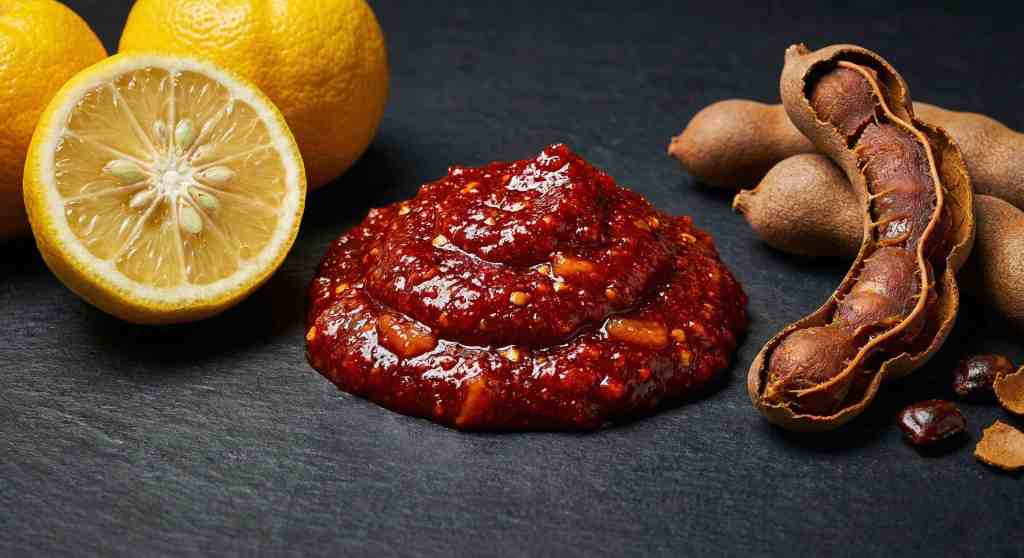
The Ingredient Triad: Authenticity Wins
We spent a lot of time discussing Tamarind, Yuzu, and Chamoy. It is crucial to remember that you cannot fake “Swangy” with generic citric acid or vague “spicy sauce.” The modern consumer is educated. They know what Yuzu is supposed to taste like (floral, tart, distinct from lemon). They know Chamoy is supposed to be savory and fruity, not just red and spicy.
Sourcing these specific ingredients communicates to your customer that your store is premium and current. It differentiates you from the gas station down the street that is still pushing Sriracha as the “cutting edge” of heat.
What You Should Be Doing
- Specific Sourcing: Contact your broadline distributors today. Ask specifically for Tamarind glazes, Yuzu extracts or sodas, and authentic Chamoy.
- Read the Labels: Don’t buy “Spicy Fruit Sauce.” Buy products that list these hero ingredients on the front of the package.
- Highlight the Origin: If you carry a Yuzu beverage, put a small shelf talker explaining it’s a “Japanese Citrus.” Education drives sales.
Operationalizing the Trend: The Low-Cost Pivot
One of my favorite takeaways from our series is the realization that you don’t need a new kitchen to capture this trend. The “Condiment Bar” is your greatest asset. By upgrading your pumps and packets, you can transform a standard roller grill hot dog into a culinary experience.
We also discussed “Trendjacking.” The Chamoy Pickle Kit is the perfect example of bundling existing SKUs (a pickle, a Fruit Roll-Up, Tajín, and Chamoy) to create a viral moment. This increases basket size without requiring you to cook a single thing.
What You Should Be Doing
- The Sauce Swap: Identify your two slowest-moving condiments. Replace them immediately with a Mango Habanero (Sweet/Heat) and a Korean BBQ or Thai Chili (Tangy/Sweet/Heat).
- Create Bundles: Look at TikTok trends. Group items together physically on an end-cap. Put the Takis next to the pickles next to the Chamoy. Make the purchase automatic.
- Upgrade the Pumps: Ensure your condiment station is clean, well-lit, and clearly labeled. “Secret Sauce” is out; “Spicy Tamarind Glaze” is in.
Menu Engineering: Texture and Complexity
In Post 5, we looked at how QSRs like McDonald’s and KFC are utilizing the “Swangy” trend. The lesson there was clear: Texture is non-negotiable. The “Swangy” sauces are generally wet and sticky. If you put them on a soggy bun, you have a mess. If you put them on a crispy chicken tender or a toasted brioche bun, you have a masterpiece.
This is about building complexity. You want the customer to experience the crunch, followed by the heat, followed by the sweet/sour finish. This “flavor arc” is what makes food “moreish” (a term for food you can’t stop eating).
What You Should Be Doing
- The Crunch Test: Evaluate your hot food items. Is the breading crispy? Is the bun toasted? If not, fix the prep method before adding the sauce.
- Layering: Instruct staff to apply sauce after cooking, or offer it as a dip, to preserve texture.
- Combo Menus: Pair high-flavor foods with palate-cleansing drinks. A spicy chicken sandwich combo should be promoted with a citrus soda, not a heavy chocolate milk.
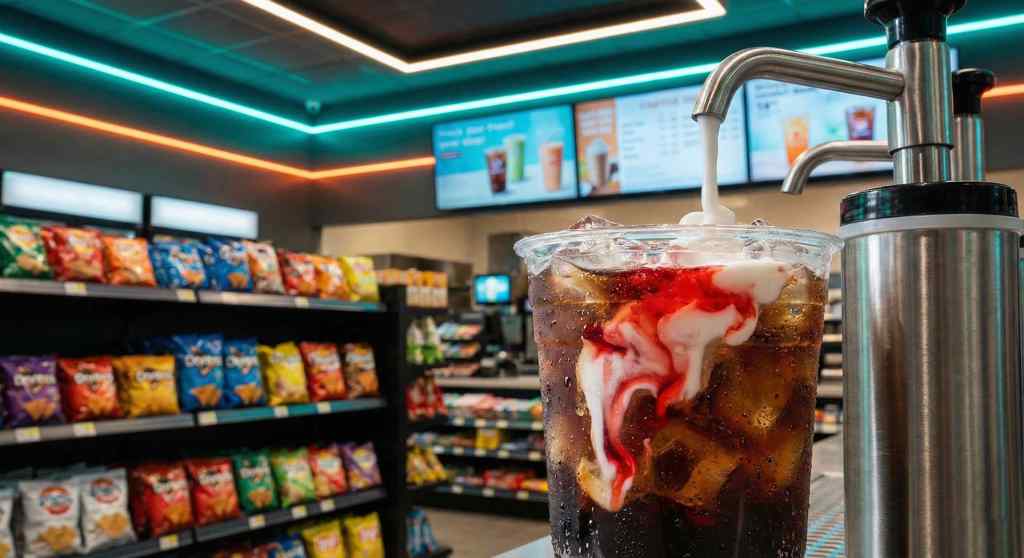
Liquid Innovation: The Dirty Soda Revolution
Finally, we looked at beverages. The “Dirty Soda” trend (mixing sodas with creams, syrups, and fruit purees) is the beverage equivalent of Swangy. It allows for customization and treats the drink as a dessert. Furthermore, the rise of “Spicy Spirits” (jalapeño margaritas, chili-infused vodka) shows that this trend extends to your alcohol cooler.
What You Should Be Doing
- DIY Stations: If you have a fountain machine, add a few pumps of coconut syrup, lime juice, and spicy mango syrup next to it. Let customers mix their own.
- Cross-Merchandise: Place nips of spicy liquor next to the mixers or single-serve lime juices.
- Functional Beverages: Stock prebiotic sodas (like Poppi or Olipop) that feature high-acid, fruit-forward profiles.
Your 30-Day Action Plan
You don’t have to overhaul your entire business overnight. Here is the checklist you can execute over the next month to start seeing results:
- Week 1: The Audit. Walk your store. Count your “Tangy” SKUs. If they represent less than 10% of your snack and beverage mix, you are under-indexed. Contact your distributor immediately.
- Week 2: The Sauce Swap. Replace one underperforming sauce at your foodservice station with a Mango Habanero or Sweet Thai Chili.
- Week 3: The Signage. Put up “Staff Pick” signs next to Swangy items (e.g., “Best Combo: Spicy Dill Chips + Chamoy”). Guide the customer’s eye to the flavor.
- Week 4: The Test. Run a low-risk Limited Time Offer (LTO). Try a “Hot Honey” drizzle on your pizza slices or a “Dirty Soda” pump station. Measure the lift in sales.
The Bottom Line: Make Your Store Addictive
As we look toward 2026, the “Swangy” trend represents a maturation of the American food scene. We are moving away from the “extreme heat” challenges of the 2010s, where pain was the point, to a sophisticated balance where heat is tempered by sugar and brightened by acid. It is a flavor profile that is sustainable, addictive, and universally appealing across demographics, from the Gen Z TikToker to the health-conscious Boomer.
The convenience store industry is incredibly competitive. The difference between a store that merely survives and a store that thrives is the ability to anticipate what the customer wants before they even know they want it. The data is clear: they want Swangy. They want excitement. They want functional flavor that wakes up their palate.
You have the road map. You have the insights. You understand the biology, the ingredients, and the operations. Now, you must execute. The future of flavor is waiting on your shelves, but it won’t sell itself.
Are you ready to transform your foodservice program and stay ahead of the curve? Don’t let the “Swangy” wave pass you by. Contact your suppliers today to ask about their Swangy, Yuzu, and Tamarind offerings, and start building the menu of 2026, today.

 The5For
Leave a comment