Why Your Convenience Store Risks Invisibility in the Era of AI Commerce
Welcome to 2026.
If you are reading this, you’ve likely survived the last few years of rapid digital transformation, supply chain hiccups, and the great labor shuffle. You’ve probably upgraded your POS system, maybe dabbled in a loyalty app, or even installed a few self-checkout kiosks to handle the morning rush. You might feel like you’ve caught up.
But as I look around our industry today, I see a fundamental shift that is far more disruptive than any single piece of hardware we’ve installed in the last decade. We aren’t just competing for the best corner real estate or the lowest fuel price anymore. In 2026, we are competing for visibility within a machine.
We have entered the era of “Agentic Shift.”
This post marks the beginning of a comprehensive, seven-part series where I am going to walk you through the most critical challenge, and opportunity, facing convenience store operators today: The Collision of Hyper-Personalization and Consumer Privacy.
We are living in a world where 70% of your customers are using AI to make decisions, yet, and this is the scary part, only 12% of them actually trust that AI to buy something for them. That gap, that massive “Trust Canyon,” is where your future sales are either going to thrive or die. Over the next six posts, we are going to tear apart this “Convenience Paradox.”
Here is a roadmap of where we are going together in this series:
- Part 2: We will deconstruct the “12% Problem” and the psychology of consumer distrust.
- Part 3: We will look at Retail Media Networks (RMNs) and how to monetize them without alienating shoppers.
- Part 4: We will tackle the “creepiness” factor of biometric data and facial recognition.
- Part 5: We will review impending legislation (like California’s SB 446) that could ban your dynamic pricing strategies.
- Part 6: We will outline the “Glass Box” solutions you need to build trust and transparency.
- Part 7: We will bring it all together with a comprehensive summary and playbook.
But before we get into the weeds of privacy laws and “creepy” algorithms, we need to understand the playing field right now. In this first post, I’m going to explain the “Agentic Shift” and why, if your store isn’t “AI-readable,” you might as well be invisible.
The New “Front Door” is Digital, and the Doorman is a Bot
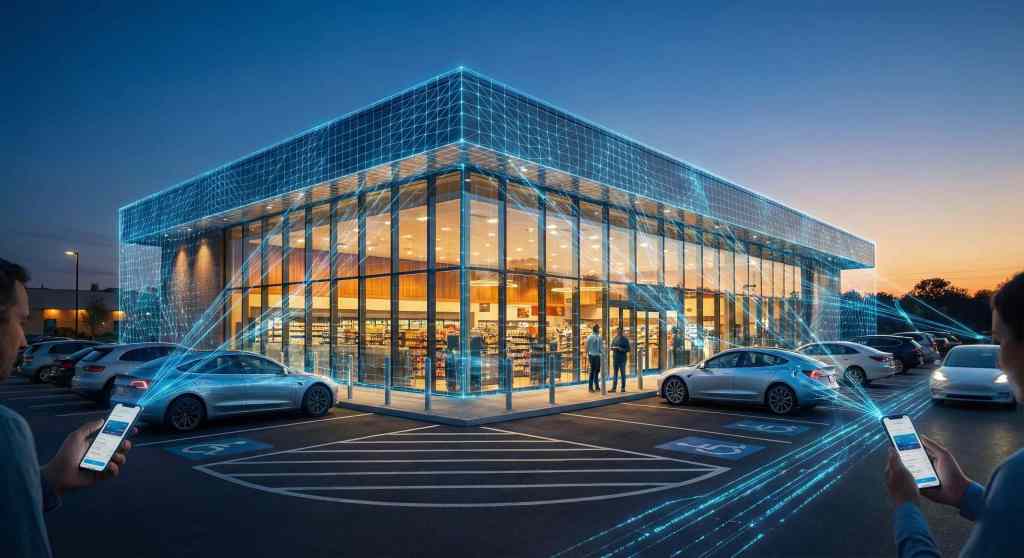
For decades, the “front door” to a convenience store was literal. It was the glass door under the illuminated sign. Then, roughly five years ago, it became the home screen of your mobile app. Today, in 2026, the front door has moved again. As noted at NRF 2026, we have formally entered the era of Agentic Commerce.
“Agentic Commerce” means AI-powered assistants, agents, are no longer just chatbots that answer questions; they are active participants that help shoppers decide what to buy, assemble their baskets, and even complete purchases.
Think about how your customers are finding you right now. A driver doesn’t just look for a sign on the highway anymore. They ask their car or their phone, “Where is the closest place I can get a healthy sandwich, charge my EV, and get a coffee with oat milk?”
The AI agent processes that request instantly. It looks at:
- Inventory Data: Do you actually have oat milk in stock?
- Operational Status: Is your EV charger currently functional, or is it down for maintenance?
- Pricing: Is the sandwich competitively priced?
If your store’s data isn’t feeding that agent, if your inventory isn’t digitized and your operational status isn’t broadcasting in real-time, you aren’t even an option. You are invisible upstream.
This shift changes the definition of “convenience.” It’s no longer just about being close geographically. It’s about being the recommended solution by a trusted AI advisor. We are moving from a model where we competed for trips to a model where we compete for the algorithm’s favor. And unlike a human, you can’t charm an algorithm with a smile; you must feed it structured, accurate data.
What You Should Be Doing
- Audit Your “Availability Signals”: Go beyond Google Maps hours. Check if your real-time inventory (especially high-demand items like food service and specific beverages) is indexable by search engines and aggregators.
- Verify EV Charger Visibility: If you offer EV charging, ensure your network provider is broadcasting real-time “up/down” status to major navigation apps (Waze, Apple Maps, Google). A broken charger listed as “working” is the fastest way to lose a customer for life.
- Standardize Your Menu Data: If you use a food ordering kiosk or app, ensure the metadata includes allergens and ingredients (e.g., “oat milk,” “gluten-free”). AI agents search by attributes, not just product names.
From “Gas and Smokes” to the “Immediate Consumption Ecosystem” (ICE)
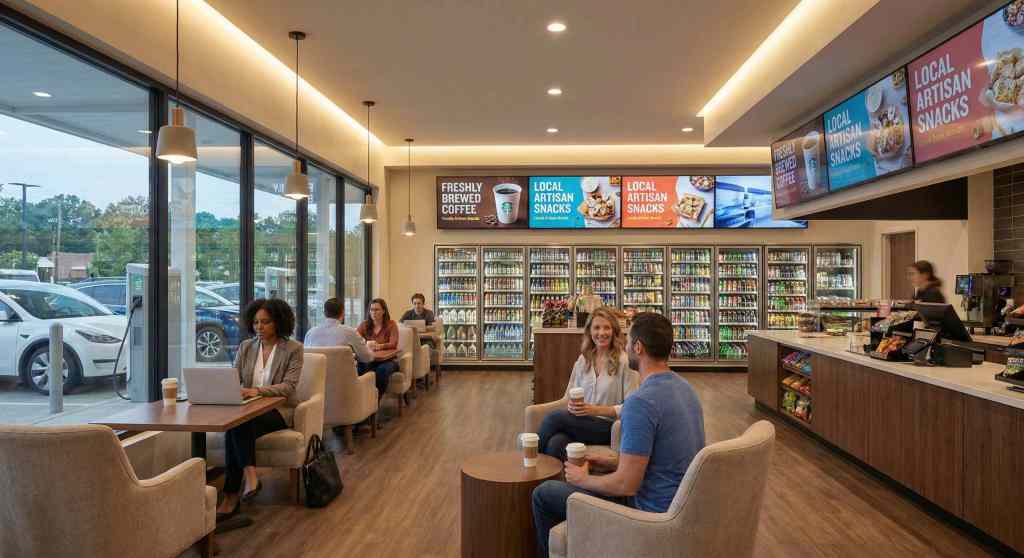
The operational reality of our stores is changing to match this digital shift. We are seeing a move away from the traditional “convenience” model toward an “experience-driven” model.
Why? Because the dwell time is increasing.
With the expansion of EV charging infrastructure, customers are spending 20 to 30 minutes on our lots, not just the traditional five minutes at a gas pump. That is a massive opportunity that major players like Wally’s, Casey’s, and Global Partners are capitalizing on right now. They aren’t just selling fuel; they are selling a 20-minute experience.
However, to monetize that experience, you need data. You need to know who that customer is, so you can serve them a relevant ad on the pump screen or send a personalized offer to their phone while they wait for their battery to hit 80%. This has turned our stores into Immediate Consumption Ecosystems (ICE).
We are collecting more data points than ever before:
- Biometrics: Facial recognition for age verification or payments.
- Behavioral: How long they stand in front of the cooler (using smart cameras).
- Transactional: What they buy and what they almost bought.
This reliance on data has made AI a “strategic necessity” for us. It’s not optional. We use it for food forecasting to reduce waste (crucial for margins), for labor management to ensure we have staff during the rush, and for inventory management. But as we build these massive data engines to service the ICE model, we are running headfirst into a wall of consumer skepticism.
What You Should Be Doing
- Shift Your Mindset to “Stay-and-Experience”: Stop thinking of your store as a vending machine. Evaluate your store’s atmosphere. Do you have comfortable seating? Is your Wi-Fi robust enough to stream video?
- Capture the “Wait” Time: Implement QR codes at charging stations and pumps that lead to gamified offers or menu ordering. Give the customer a reason to engage with your digital platform while they are stationary.
- Review Your Fresh Food Forecasting: If you are increasing fresh food to cater to longer dwell times, utilize AI-driven forecasting tools to track waste. The higher the fresh inventory, the higher the risk; let the data manage that risk.
The “12%” Problem: The Wall of Distrust
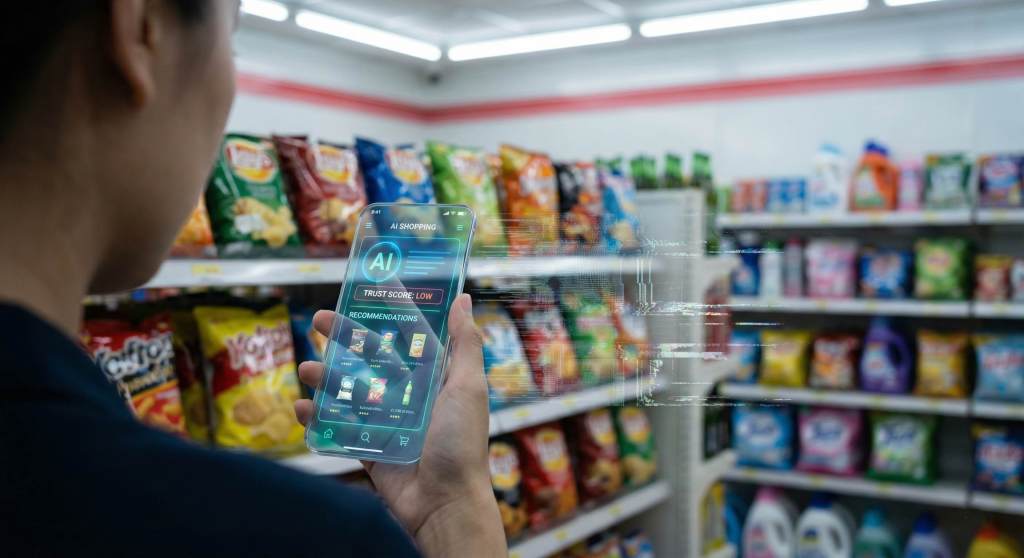
This brings me back to the statistic that defines our year: 12%.
According to the Acosta Group, while the vast majority of shoppers use AI to brainstorm and research, only 12% trust AI to execute a purchase. They use it as a consultant, but they don’t trust it as a buyer.
Why? Because they are terrified of “unapproved purchases,” fraud, and privacy violations. They perceive a loss of agency. They worry that if they let the AI choose, it will choose based on your profit margins, not their preferences.
This skepticism is the single biggest barrier to the automated, hyper-personalized future we were promised. If we can’t bridge that trust gap, all the fancy AI tools and Retail Media Networks in the world won’t drive the sales we need.
However, there is a generational divide here. Gen Z is your “proving ground.” Research suggests they are significantly more open to AI influence, with 53% trusting AI more than traditional sources. But your older demographics? They are the ones putting up the wall. You cannot apply a one-size-fits-all AI strategy to a customer base that ranges from 16-year-old digital natives to 70-year-old traditionalists.
What You Should Be Doing
- Embrace “Cautious Experimentation”: Don’t try to automate everything overnight. The research suggests that 2026 is the year for cautious testing. Implement AI in low-stakes environments first (like back-office inventory) before rolling out customer-facing AI that might alienate older shoppers.
- Segment Your Tech Rollout: If you launch a fully autonomous checkout or AI-based recommendation engine, market it heavily to your younger demographic via social channels, but maintain traditional service lines for those who distrust the tech.
- Review Your Data Governance: Before you collect another byte of customer data, ask yourself: “Can I explain to a customer why I need this?” If the answer is no, stop collecting it. Transparency is going to be the currency of the future.
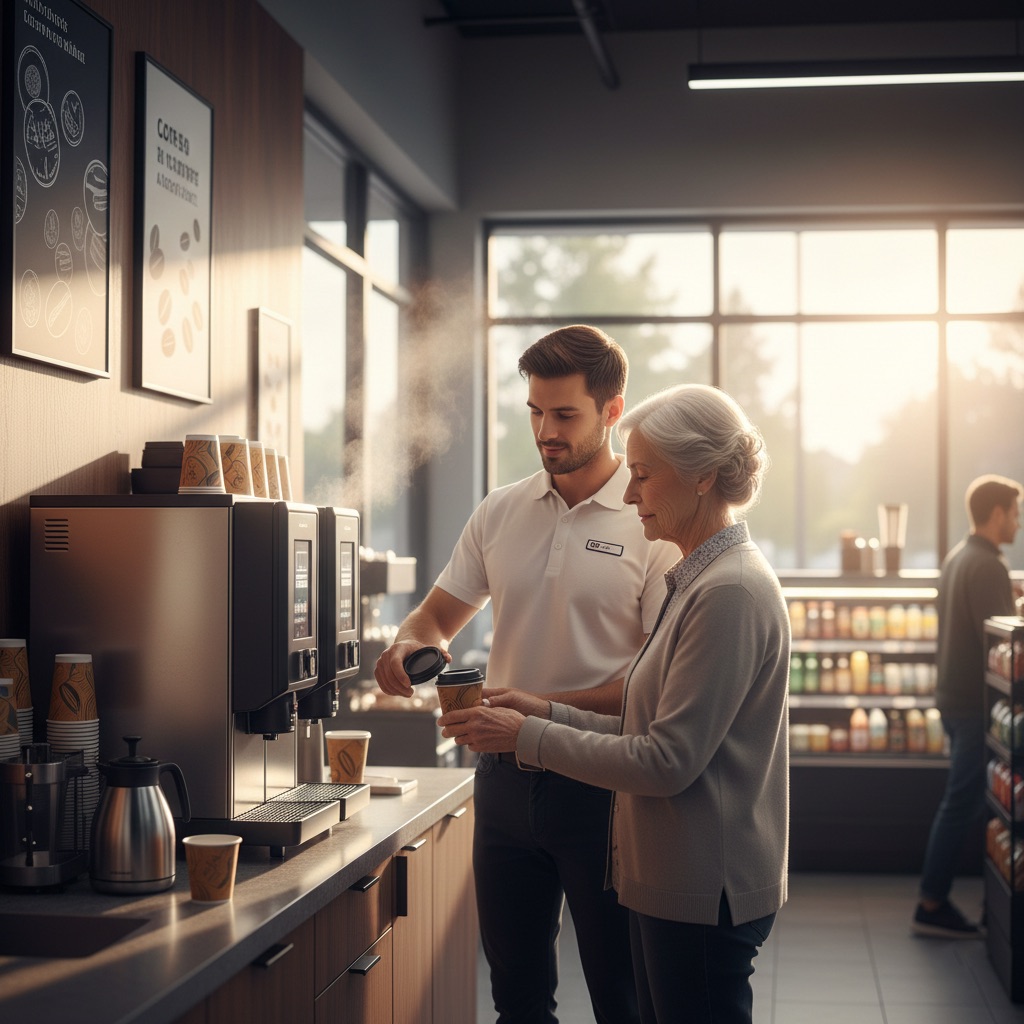
The Bottom Line: Technology Needs a Human Heartbeat
The convenience sector is at a crossroads. We have the technology to predict what a customer wants before they even pull into the lot. We have the media networks to sell that attention to the highest bidder. We have the “Agents” ready to drive commerce.
But we are operating in an environment of profound consumer distrust. The “Agentic Shift” demands that we be technically advanced enough to be found by AI, but human enough to be trusted by people. We are building Ferrari’s of data collection, but our customers are worried we’re taking them for a ride they didn’t agree to.
We have to fix that.
In the next post, I am going to take a hard look at that “12%” statistic. We are going to deconstruct exactly why your customers are scared of your AI, investigating the specific fears around privacy and loss of control that are keeping their wallets closed to automation. It’s a number that should scare you, but understanding it is the key to fixing it.
See you in Post 2.



 The5For
Leave a comment