Why Your Packaging is Your “Second Kitchen”
In our last post, we took a deep dive into the digital ecosystem. We specifically explored how third-party delivery and integrated apps are reshaping how your customers find you. We talked about the “digital storefront” and why your online presence is often the first interaction a customer has with your brand. But today, we’re shifting from the screen to the grease-stained reality of the physical product.
I’ve spent years in professional kitchens and seen the same tragedy play out a thousand times: a store spends thousands on a high-end convection oven, sources the finest mozzarella, and crafts a perfect crust, only to shove that masterpiece into a 20-cent cardboard box that destroys the quality in under six minutes.
In 2026, we have to stop looking at packaging as a “supply cost” and start seeing it as your second kitchen. Once that pizza leaves your warming rack or is handed to a DashPass driver, the box takes over the cooking process. If your packaging isn’t engineered to handle heat, your quality strategy has failed. Moisture can also ruin your strategy before the customer even takes their first bite.
In this post, I’m going to show you why “venting” isn’t enough, how new liner technology is a literal game-changer for your bottom line, and why your choice of cardboard might be the only thing standing between a five-star review and a “never again” customer. Let’s get into the physics of the perfect crust.
The Science of the “Sog”: Moisture is the Enemy
As a former chef, I can tell you that the most dangerous moment for a pizza isn’t the oven, it’s the first three minutes in the box. Fresh pizza releases a massive amount of steam. In a standard, sealed corrugated box, that steam has nowhere to go. It hits the lid, condenses into water droplets, and “rains” back down onto the cheese and the crust. This is how you get a “soggy bottom,” the literal death knell for pizza quality.
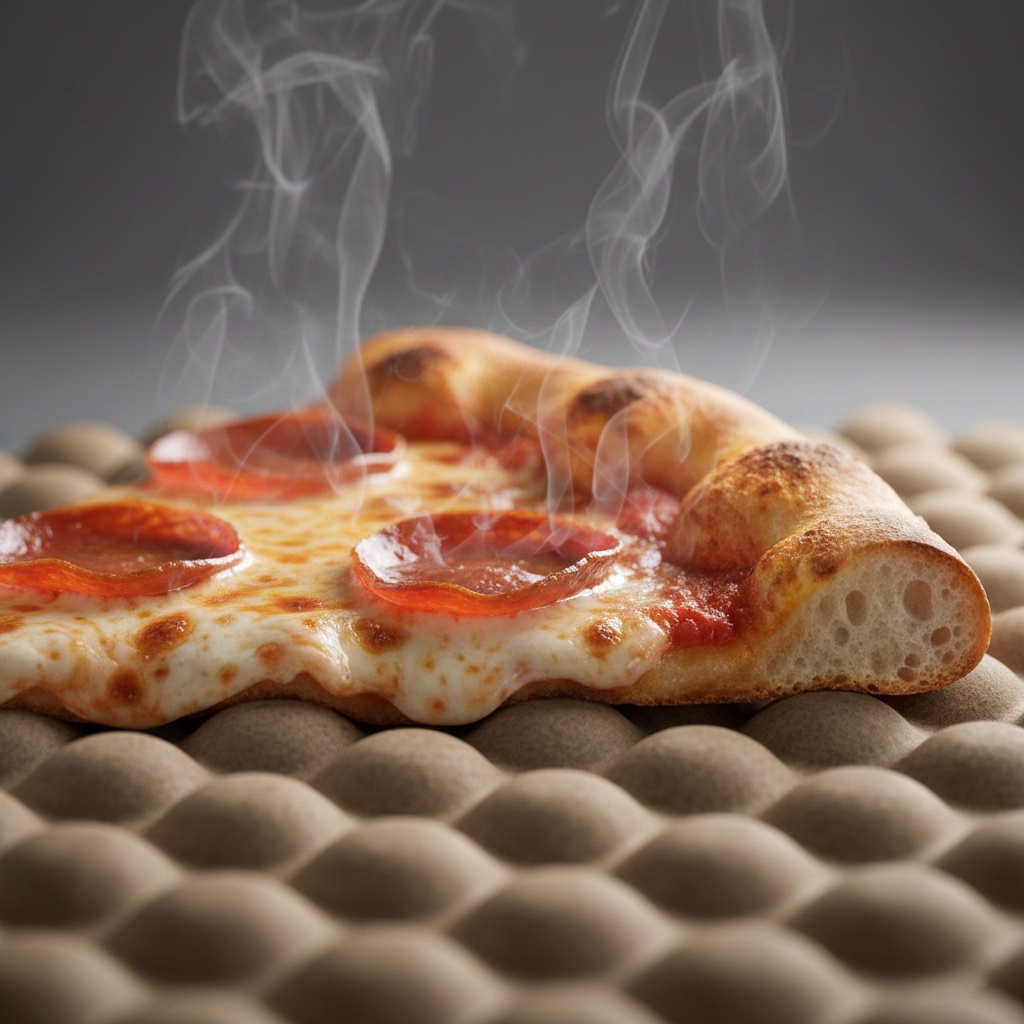
Innovation in 2026 is finally solving this. Take Westpak’s HeatWave technology, for example. They didn’t just add holes to a box; they re-engineered the floor of the packaging. By using a liner with alternating concave and convex domes, they lift the pizza base away from the bottom of the box.
Why does this matter to you as an operator? It creates a thermal barrier. In testing, this design kept 12-inch pizzas 27% hotter after 15 minutes compared to standard boxes. More importantly, it allows air to circulate under the crust, keeping it crisp while the heat stays trapped in the box. If you don’t control the moisture, you don’t control the customer’s second visit.
The Hidden Risks: Regulation and Reputation
Beyond the culinary side, we have to talk about the “boring” stuff that can sink a small business: legislation. As of early 2026, seven states have fully implemented Extended Producer Responsibility (EPR) laws. These laws hold the “producer” (that’s you, the store owner) responsible for the lifecycle of the packaging.
If you are using non-recyclable, plastic-coated inserts or boxes that aren’t compliant with local recycling streams, you aren’t just hurting the planet, you’re risking penalties that can reach $100,000 per day in some jurisdictions. Your packaging needs to be as “green” as it is functional.
What You Should Be Doing
- Audit Your Venting Strategy: Don’t just buy “vented” boxes; look at where they vent. Ensure vents are strategically placed away from the center of the lid. This allows steam to escape from the sides without allowing moisture to drip back onto the center of the pie, which is the most vulnerable spot for sogginess.
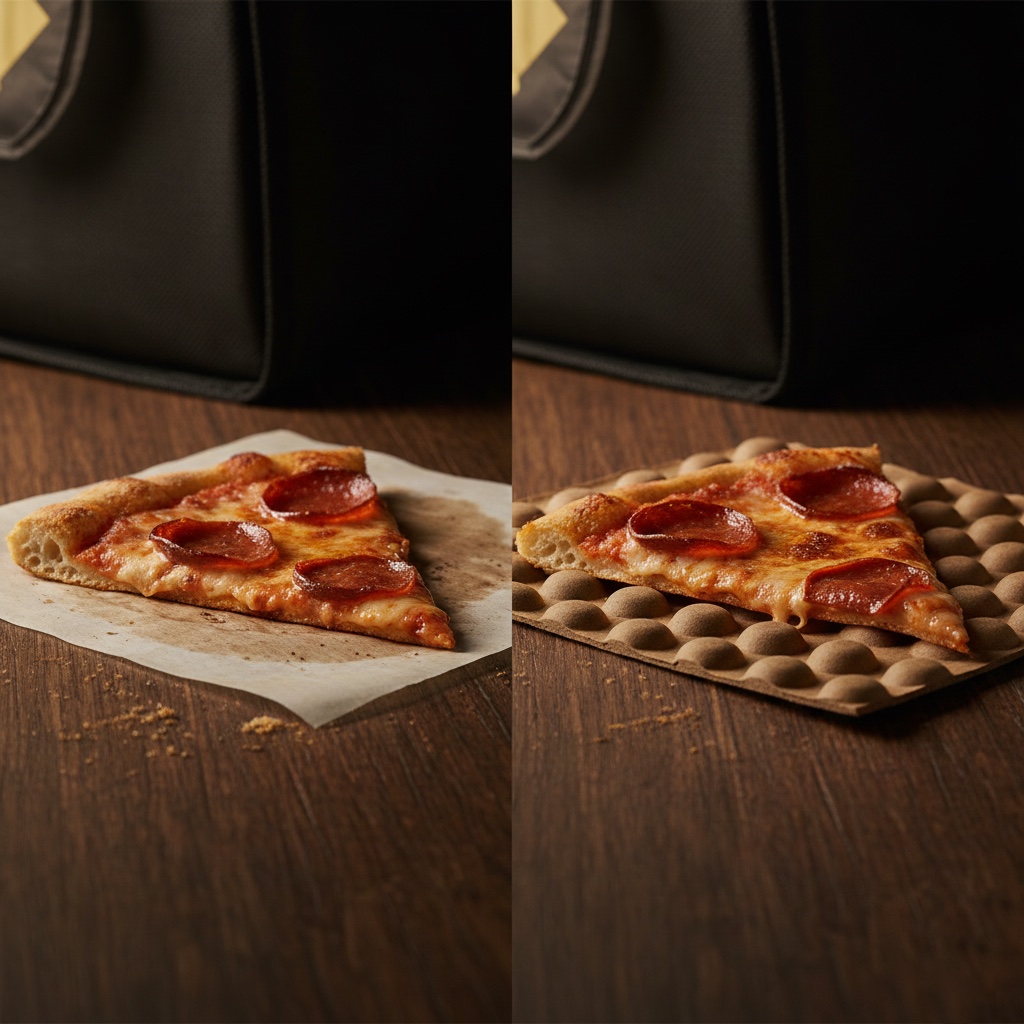
- Invest in Active Liner Technology: Move away from flat parchment paper. Look for “raised” liners or embossed cardboard inserts (like the HeatWave style) that create an air gap. This small investment (often pennies per unit) can extend your “quality window” from 10 minutes to over 20 minutes, crucial for delivery.
- Standardize Your Delivery Bag Protocol: If you offer delivery or have a high volume of “order ahead” customers, high-quality polyester or nylon insulated bags are mandatory. They must be foam-insulated and moisture-resistant. I recommend a “one bag, one order” rule to ensure heat retention isn’t compromised by constant opening and closing.
- The “Heat Sink” Separation Rule: This is a simple training fix. Never, under any circumstances, allow staff to put a cold 2-liter soda or a chilled salad in the same insulated bag as a hot pizza. The cold item acts as a “heat sink,” actively sucking the thermal energy out of the pizza. It ruins the temperature of the food and warms up the soda, a lose-lose for the customer.
- Check Your EPR Compliance: Contact your packaging supplier today and ask for a “Sustainability Data Sheet.” Ensure your boxes are 100% recyclable and check if they contain PFAS (per- and polyfluoroalkyl substances). Many states have banned these “forever chemicals” in food packaging as of 2025/2026.
- Conduct a “20-Minute Stress Test”: Take one of your pizzas, box it up, and let it sit on a counter for 20 minutes. Then, drive it around the block. Open it and check the crust. If it’s soggy or the cheese has “oiled out,” your packaging is failing you.
The Bottom Line: Packaging as an Insurance Policy
Your packaging is an insurance policy for your brand reputation. You can do everything right in the kitchen, you can have the best dough, the most expensive pepperoni, and the friendliest staff, but if the product the customer eats at their kitchen table is a lukewarm, soggy mess, that’s the only thing they will remember.
In the high-stakes world of C-store foodservice, we are fighting for “stomach share” against dedicated pizza giants like Domino’s and Papa Johns. Those companies spend millions of dollars on packaging R&D. To compete, you don’t need a million-dollar budget, but you do need to be intentional. You need to understand that the box is part of the recipe.
When you invest in better liners, smarter venting, and compliant materials, you aren’t just buying a box. You are ensuring that the “chef’s quality” you created in-store actually makes it to the customer’s mouth. In 2026, the C-store that wins is the one that masters the “last mile” of food quality.
Don’t let a cheap box be the reason you lose a loyal customer. Evaluate your stock this week, run a stress test, and make sure your “second kitchen” is performing at the same level as your primary one.
In Post 5, we’re going to pivot from the “how” to the “who.” We’ll be looking at a true industry titan, the “Rural King” of convenience pizza: Hunt Brothers Pizza. We’ll analyze how they’ve built a massive, high-margin empire by focusing on simplicity and local foot traffic, and what you can steal from their playbook to build the ultimate high-margin basket.


 The5For
Leave a comment