The Great Retail Reset
If you’re running a convenience store chain today, you know the ground is shifting beneath your feet. We’ve moved far beyond the simple equation of “gas plus a candy bar equals profit.” The reality is, demand for fuel is plateauing, and your future profitability is tied directly to how well you capture the consumer’s “share of wallet” inside the store. You are no longer just competing with the C-store down the street. You are also competing with every Quick Service Restaurant (QSR). In addition, you are competing with every online impulse purchase.
This is where we introduce the Micro Market (MM), and I need you to forget everything you think you know about vending.
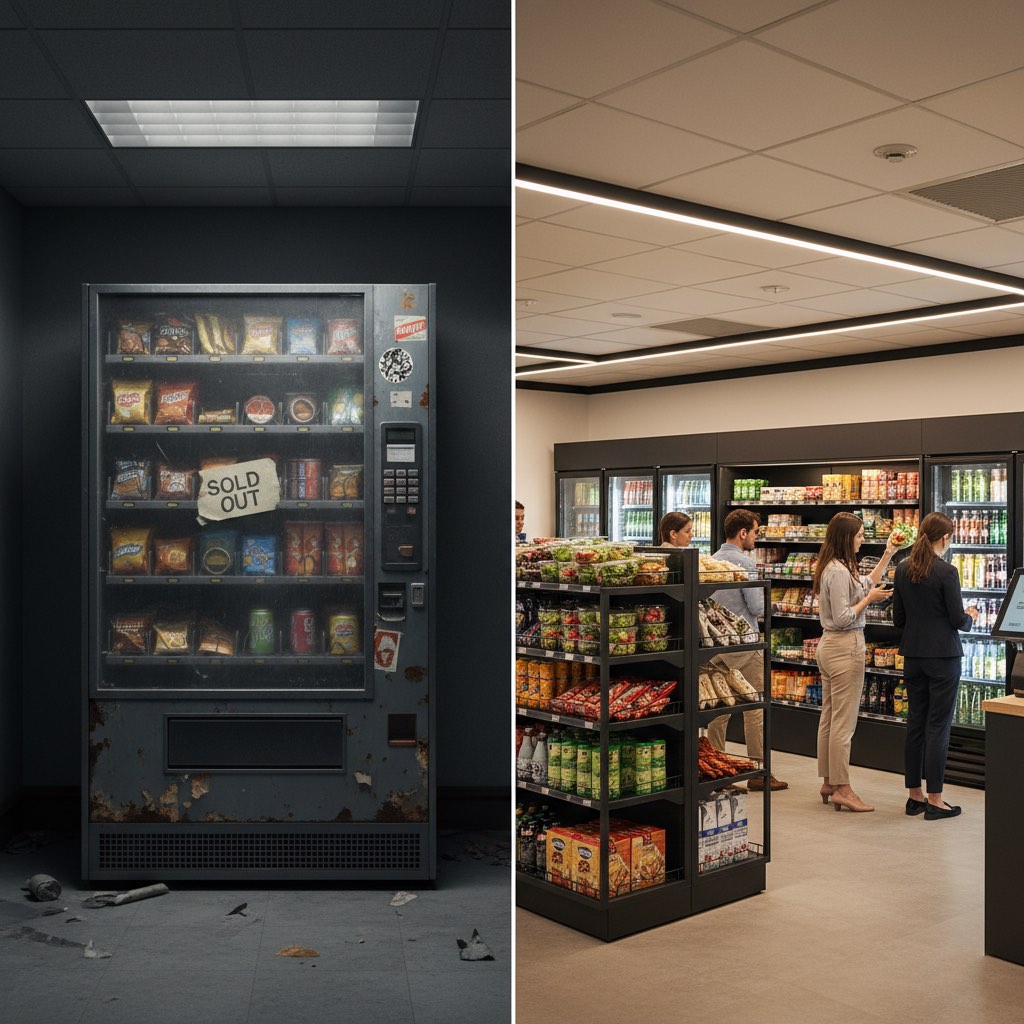
For years, vending machines were a necessary evil: low-maintenance boxes that dispensed sugar and chips. They had limited capacity, frequently jammed, and did nothing to enhance your brand. But the Micro Market is a genuine evolution. It is a hybrid retail solution. This combines the product variety of a small-format convenience store with the 24/7 self-service model of automated retail.
See the Micro Market not as an optional amenity. Instead, view it as a critical strategic path for chains aiming to mitigate the labor crisis. This approach helps in securing high-margin, non-fuel revenue. Think of it as extending your successful, clean, and high-quality in-store experience into captive environments, but without the payroll overhead. This is a game-changer. The consumer’s desire for speed and frictionless shopping has never been stronger. When you offer a modern, self-service experience, you meet the customer where they are, and you win.
The fundamental difference lies in the shopping experience. An MM eliminates the “vending bottleneck.” Customers don’t have to make decisions based on a tiny photo and a number pad. They can physically browse open shelving and inspect a sandwich. They can check the expiration date on a yogurt and select multiple items, just as they would in a traditional C-store. This browsing opportunity changes the sales potential of any unattended location. It is coupled with the ability to offer genuinely fresh, high-quality food. This is why we are seeing an explosion of interest. The economics of the Micro Market model are too compelling for growth-minded C-store operators to ignore.
In the following sections, we will break down the quantifiable sales differential. We will discuss the strategic advantages of 24/7 autonomous operation. We will also examine the product mix that elevates Micro Markets from a vending stopgap to a powerful profit center.
The New Economics of Unattended Retail: Moving Past the Vending Ceiling
To truly understand why a C-store chain should adopt MMs, we must look at the hard numbers. The shift from traditional vending to a Micro Market environment is not a marginal increase; it is a profound revenue leap driven by improved consumer experience and product selection.
1. The Four-Fold Revenue Multiplier
This is the most critical metric for any owner-operator. Micro Markets generate an estimated four times the sales volume per location compared to traditional vending machines. This is where the business case is built. Vending machines, constrained by size and mechanics, impose an artificial ceiling on your earnings. Micro Markets tear that ceiling down.
- Higher Ticket Average: Vending machines typically operate with an average ticket size of around $2.11. In contrast, the average ticket size in a Micro Market is roughly $4.25. Customers are not just buying a single bag of chips. They are purchasing a full, multi-item meal including a sandwich, a drink, and a side. The open-shelf design encourages impulse buys. It allows for multiple product selections in one transaction.
- Vastly Expanded Product Mix: A traditional vending machine is limited to around 45 items. A Micro Market, functioning like a self-service convenience store, can stock over 200 items. This breadth of offering includes fresh grab-and-go meals. It also includes premium healthy beverages and even non-food convenience items. This variety converts a passive “snack break” into a genuine, high-value shopping trip.
- Superior ROI Justification: The initial setup for an MM (kiosk, coolers, shelving) can run between $13,000 and $16,000. The potential return is far greater than the negligible revenue increase you might get from upgrading a single vending machine. The increased revenue potential of 65% to 70% from converting high-traffic vending sites makes the capital investment immediately worthwhile.
2. Strategic Imperative: Solving the Labor and Accessibility Puzzle
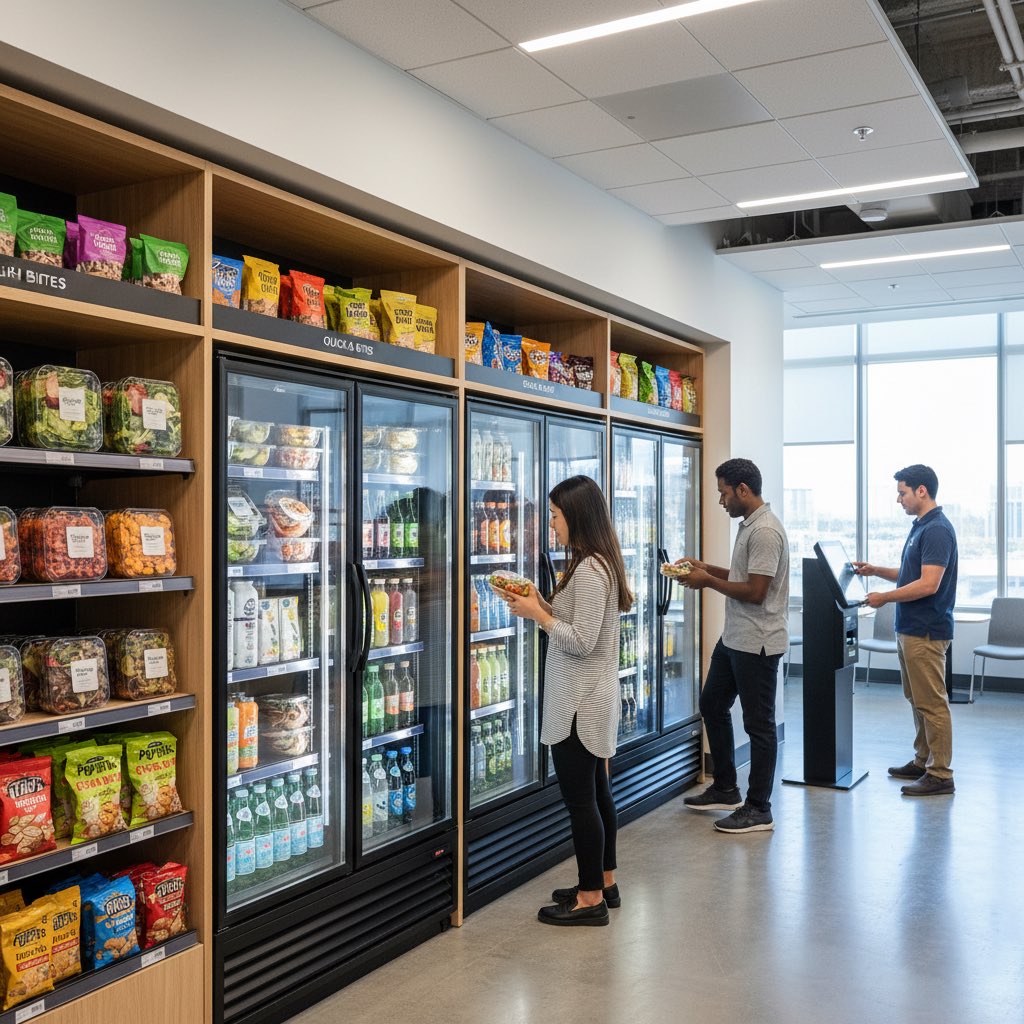
The retail labor crisis is perhaps the most existential threat facing C-store chains today. Micro Markets are a direct, powerful solution because they are designed for unattended operation.
- 24/7 Service without Staffing Costs: Some locations require round-the-clock service. Think of places like hospital shifts, manufacturing plants, or large logistics centers. Staffing a traditional convenience store in these settings is often cost-prohibitive. MMs offer a 24/7 service model. They provide essential food service for the third shift, an often underserved and highly captive customer base. This labor mitigation strategy allows you to capture revenue streams that would otherwise be impossible to access.
- Frictionless Shopping is the New Standard: Consumers, especially younger demographics, demand speed, and convenience. They want to bypass lines and complete transactions quickly. Self-checkout kiosks are a central feature of the MM experience, processing transactions faster than traditional cashier methods. This focus on speed improves customer throughput and significantly boosts overall satisfaction.
3. The Fresh Food Advantage: Competing with QSRs Off-Site
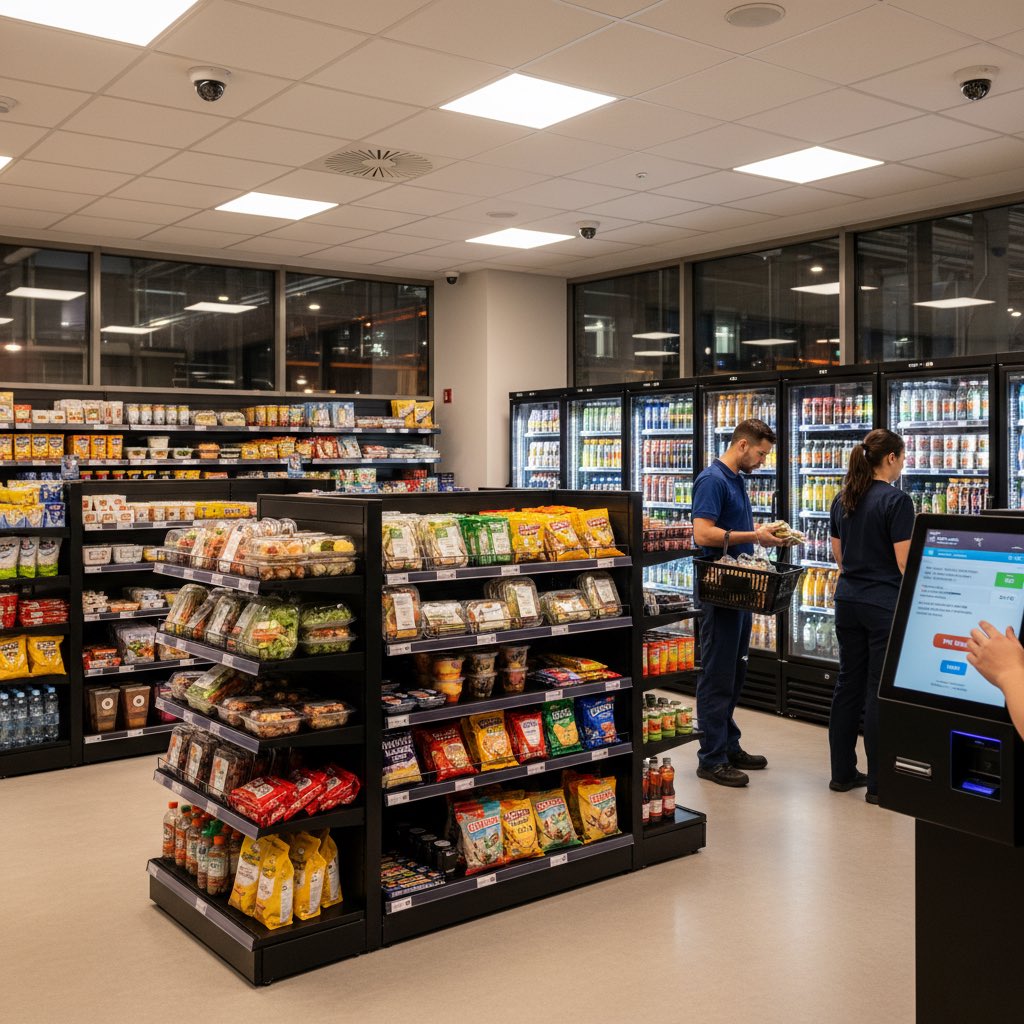
The ability to successfully merchandise and sell high-margin fresh food is the linchpin of the modern C-store, and the Micro Market is the perfect vehicle for this strategy in off-site locations.
- Vending’s Constraint vs. MM’s Opportunity: Traditional vending is physically incapable of stocking perishable, high-quality items like fresh salads, gourmet sandwiches, wraps, and specialty fruit cups. This is why C-stores have invested heavily in QSR-quality food programs (like those seen at Kwik Trip or Sheetz). The Micro Market extends this critical capability.
- A “Healthy Choice” Destination: By offering genuinely healthier options, MMs can position themselves as desirable alternatives to traditional fast-food options. They meet the growing consumer demand for wellness. They also satisfy the need for quick, nutritious meals. This capability allows C-stores to compete directly with QSRs and capture the lucrative lunch and dinner segments from their corporate or campus partners. The success of your MM is directly linked to the quality and diversity of the fresh food you put in it.
The strategic takeaway is clear: the Micro Market is a high-performance, labor-light extension of your most profitable in-store segment, fresh foodservice. It allows you to enter new, secure environments and capture a highly engaged, 24/7 customer base.
What You Should Be Doing: Your Initial Micro Market Strategy Check
The path to integrating Micro Markets starts not with buying hardware, but with strategic analysis. Here are the immediate, actionable steps you should take:
- Audit Your Existing Vending Portfolio: Identify all vending locations that currently have high daily traffic and a captive audience (e.g., large breakrooms, high-volume manufacturing floors). These are your prime candidates for conversion, as the potential revenue increase of 65-70% is already baked into the location.
- Establish a Baseline Financial Model: Create a conservative P&L. Compare the known revenue ceiling of your top-performing vending sites against the potential revenue floor of a Micro Market. Use the 4x sales multiplier and higher ticket average. This model is your internal justification for investment.
- Identify 24/7 Opportunity Partners: Target external businesses in your area with significant night or third-shift operations. Focus on places like hospitals, logistics centers, or corporate campuses. These locations have a profound need for 24/7 convenience that a staffed store cannot feasibly meet.
- Assess Fresh Food Readiness: Be brutally honest about your existing cold chain and food preparation capabilities. If your chain lacks the infrastructure or operational discipline, you need to solve this problem first. It is essential to consistently deliver high-quality, fresh food to multiple decentralized locations before launching an MM program.
This transition from traditional C-store to multi-channel retail powerhouse is the strategic decision of the decade. But every opportunity for high revenue comes with risk. The one factor that can instantly destroy the compelling ROI of a Micro Market is unmanaged loss.
The Bottom Line: The Call to Action is Clear
The days of relying solely on fuel and basic snacks are over. The Micro Market model offers a clear, measurable path to increasing your high-margin, non-fuel revenue. It dramatically improves the consumer experience and provides 24/7 service. This is achieved without additional labor costs. This isn’t just about modernizing your breakroom offerings; it’s about strategically expanding your brand’s footprint into secure, captive environments.
However, the Micro Market is a double-edged sword. The open, frictionless shopping experience drives high sales. However, it also introduces a massive vulnerability. This vulnerability can turn a profitable endeavor into a financial drain overnight. In our next post, we will tackle the single greatest threat to your Micro Market business, shrinkage, and theft. We will explore the necessary security technology. This includes AI-powered monitoring and 100% cashless policies. These measures will allow you to protect your profits. You can finally leave the ‘honor rule’ behind.


 The5For
Leave a comment