The Location-Based Strategy
In our first post, we explored the compelling financial case for Micro Markets, revealing the 4X revenue boost they offer over traditional vending. Then, in our second post, we immediately shifted gears to the critical necessity of managing shrinkage, proving that the right security investment is non-negotiable for preserving those high margins.
Now, we move to the most crucial strategic decision: Where should your chain focus its Micro Market (MM) efforts?
It’s a common mistake for convenience store operators to think of Micro Markets as a one-size-fits-all opportunity. They are not. A successful MM deployment hinges entirely on two factors that vary wildly across the C-store landscape:
- Fresh Food Logistics Capability: Do you have the infrastructure and operational discipline to consistently supply high-quality, short shelf-life items?
- Location Risk Profile: Is the market in a secure, closed-loop environment (high accountability) or a public, open-loop environment (high risk of theft)?
Your chain’s existing strengths, whether they are in QSR quality, urban density, or localized service, determine which MM strategy will be most profitable and least risky. Deploying the wrong MM model in the wrong location is a recipe for high shrinkage and operational frustration.
As industry experts, we have identified four distinct C-Store Archetypes, each with a tailored strategy for MM integration. Understanding which archetype your chain fits into will allow you to deploy capital with surgical precision, leveraging your existing operational strengths for maximum unattended retail growth. Stop trying to compete on every front; start competing where you are strongest.
Let’s dissect these four operational profiles and map your path to profitable Micro Market expansion.
The Four C-Store Archetypes and Their Optimal Micro Market Strategy
Archetype 1: Regional/Super-Chain C-Stores with Advanced Foodservice
The Profile: These are the industry leaders, chains like Kwik Trip, Wawa, or Sheetz. Their primary competitive advantage is a highly successful, QSR-competitive foodservice operation, backed by massive logistical infrastructure, established cold chains, and high brand recognition for quality and cleanliness. Their core business is sophisticated, fresh-food retail.
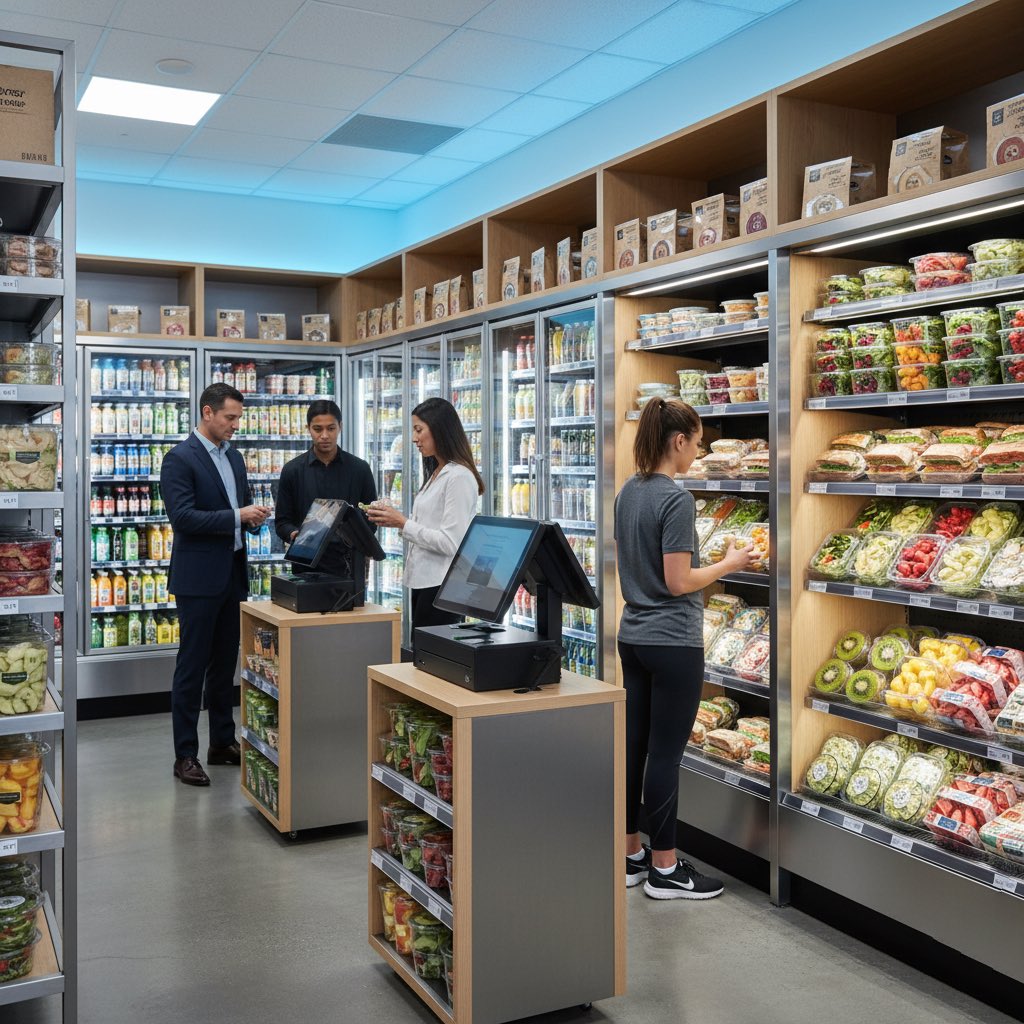
The Optimal MM Strategy: Off-Site Franchise Expansion (The Closed-Loop Partner)
- The Goal: To leverage their brand credibility and logistical muscle to capture B2B revenue in secure, external partner locations where building a full staffed store is impossible.
- Ideal Locations: Large manufacturing facilities, major corporate headquarters, logistics centers, and high-volume hospitals. These are high-volume, closed-loop campuses that demand 24/7 service for thousands of employees.
- Why It Works: These chains already master the complex logistics required for fresh food, the ultimate barrier to entry for many competitors. MMs become a labor-light, high-margin extension of their QSR brand. Deploying a “Connected Campus” model (which we cover in Post 5) allows them to efficiently service a sprawling network of MMs and vending units across wide areas with a single payment and management system.
- The Focus: Superior quality and variety of fresh, branded grab-and-go meals, capitalizing on the high ticket average that fresh food drives.
Archetype 2: Urban, Non-Fuel C-Stores
The Profile: These retailers operate in dense urban cores, think major city centers, where real estate costs are high, foot traffic is immense, and the primary consumer need is speed and convenience over everything else. They are under intense pressure to minimize labor costs while maximizing throughput.
The Optimal MM Strategy: Autonomous Smart Stores (The High-Security Premium)
- The Goal: To eliminate expensive cashier labor and operate 24/7 in premium, high-cost real estate locations, capitalizing on the consumer preference for rapid, cashierless transactions.
- Ideal Locations: Small, satellite urban spaces; transit hubs; high-density residential lobbies; and premium office lobbies.
- Why It Works: While the initial investment for a fully autonomous, AI-powered “Just Walk Out” store (Autonomous Micro-Retail) is the highest, it is the only viable MM model for high-risk, public urban environments. This technology (AI, cameras, embedded scales) is essential to mitigate the elevated theft risk inherent in public access areas. The ROI comes from maximizing high foot traffic and avoiding prohibitive cashier payroll.
- The Focus: Technology integration, transaction speed (completing sales in seconds), and superior loss prevention to justify the premium real estate and technology investment.
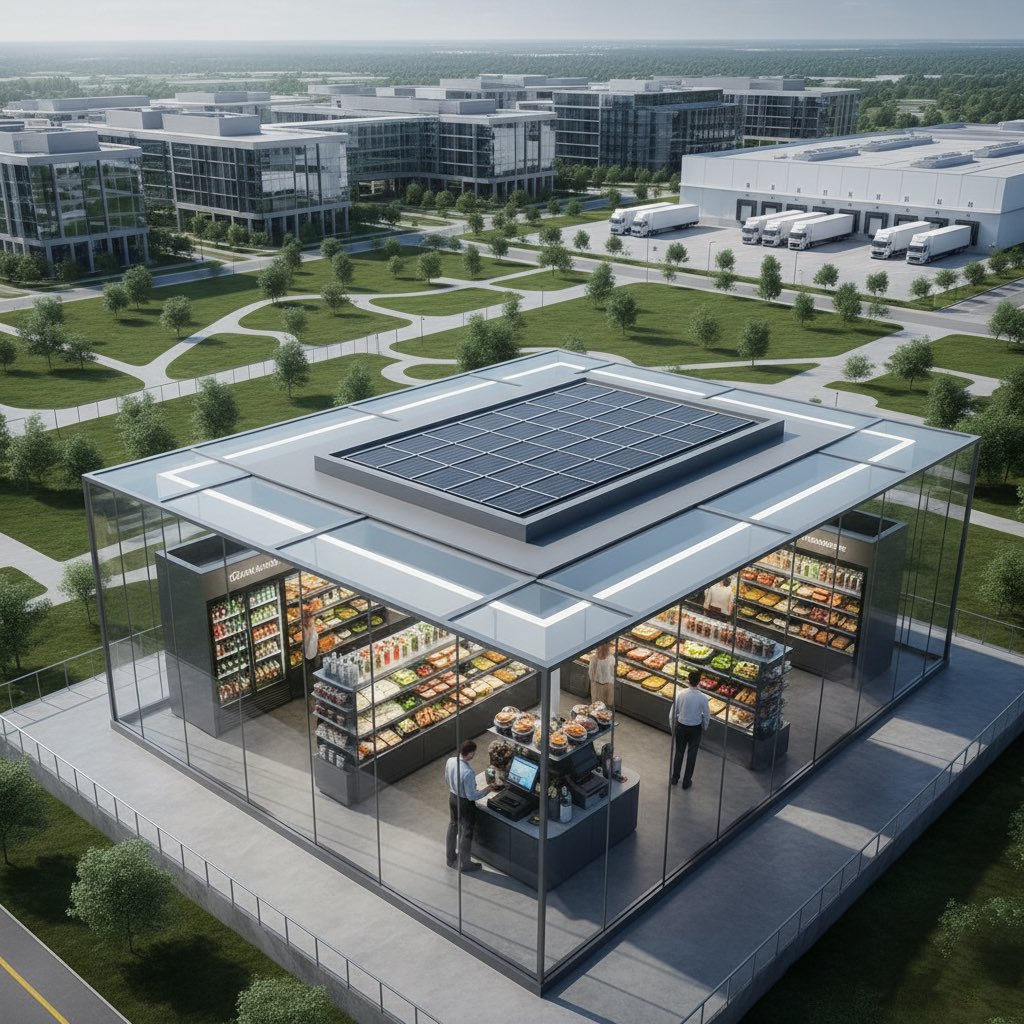
Archetype 3: Internal Campus C-Store Operators (Hospitals, Universities, Facilities)
The Profile: These operators specialize in managing food and convenience services within large, contained environments like hospitals, universities, or massive residential complexes. They serve a highly captive, round-the-clock customer base (students, patients, nurses, staff).
The Optimal MM Strategy: Closed-Loop Micro Market Implementation (The Classic, Low-Risk Winner)
- The Goal: To effectively replace traditional, high-labor cafeterias during off-peak hours and provide essential 24/7 convenience to shift workers, maximizing operational hours without increasing staff.
- Ideal Locations: Staff lounges, hospital breakrooms, remote wings, university libraries, and high-traffic campus areas.
- Why It Works: This is the MM model’s historical sweet spot—the textbook, low-risk, closed-loop environment. High customer accountability naturally minimizes shrinkage risk, allowing operators to use the basic, open-shelf MM model effectively. MMs are ideal for complementing existing dining services, providing 24/7 service without needing to staff the cafeteria overnight, thereby boosting employee satisfaction and retention.
- The Focus: High accessibility, catering to specific campus needs (e.g., healthy options for a health club or hospital), and leveraging convenience for a captive, underserved audience.
Archetype 4: Independent/Small-Format C-Stores
The Profile: This category represents the majority of the market, single-store, or small-chain operators (60% of all US C-stores). They thrive on local engagement, personalized service, and community connection, but they are characterized by limited capital and a low tolerance for high-risk technology or significant loss.
The Optimal MM Strategy: The Local Operator-Managed B2B Model
- The Goal: To create a secure, contract-based, secondary revenue stream that leverages their existing local knowledge and small-scale logistical efficiency, without exposing their core retail store to high security risk.
- Ideal Locations: Highly secure, local partner businesses (e.g., small local factories, mid-sized corporate offices, local depots).
- Why It Works: Crucially, these operators should generally avoid placing open-shelf MMs in their main public C-store location due to the prohibitive shrinkage risk. Instead, they should adopt a vending operator business model. They use their localized sourcing and short-distance routing knowledge to efficiently manage MMs in highly secure, internal breakrooms of local businesses. This allows them to benefit from the MM trend, high sales, low labor, while maintaining high accountability in a closed-loop setting.
- The Focus: Creating a lower-risk, supplementary revenue stream that fits within existing localized restocking routes, capitalizing on personalized service (e.g., stocking local snacks) for their specific B2B client.
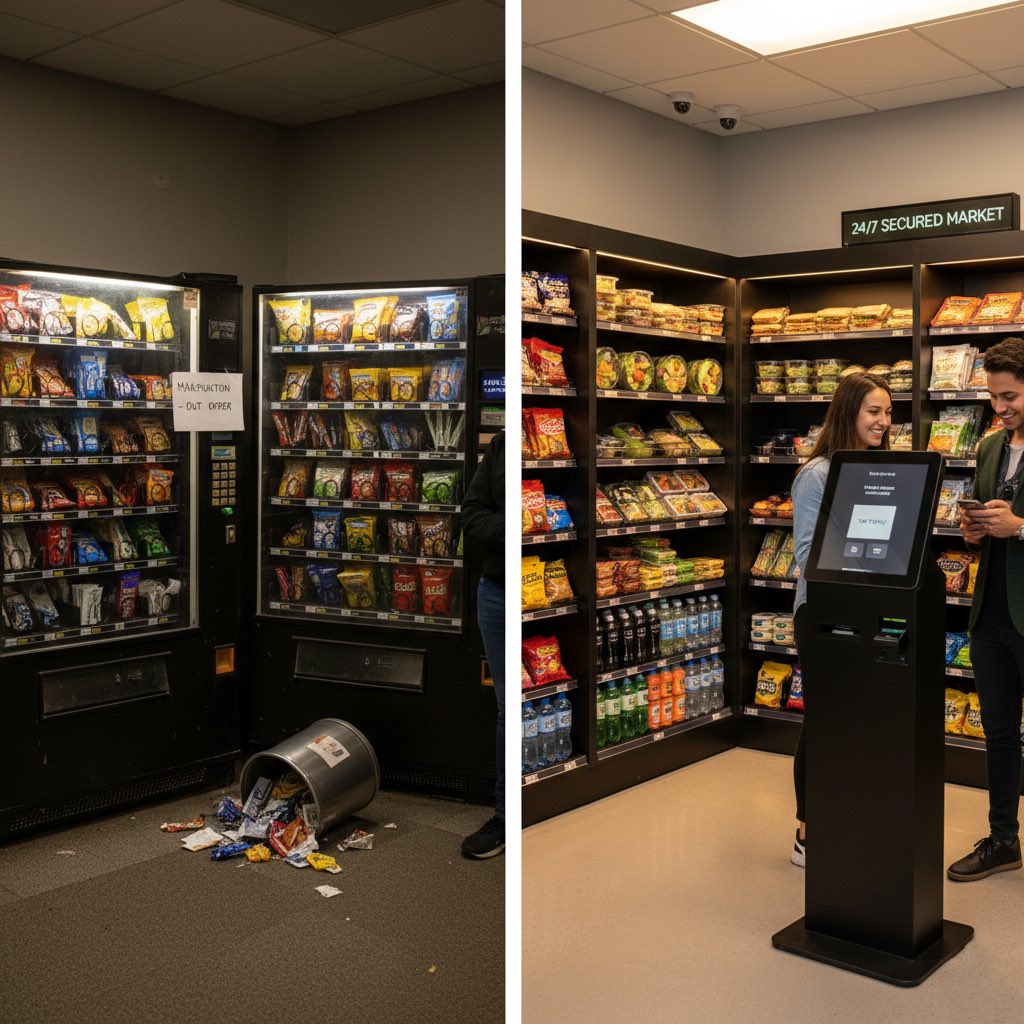
What You Should Be Doing: Mapping Your MM Opportunity
To move forward strategically, you need to first identify which archetype you are and then execute the appropriate strategy:
- Identify Your Core Strength: Determine if your chain’s biggest strength is Foodservice Logistics (Archetype 1), Urban Real Estate/High Traffic (Archetype 2), Campus Management (Archetype 3), or Local B2B Operations (Archetype 4).
- Commit to the Appropriate MM Model: Only Archetypes 1 and 3 are ready for the standard open-shelf MM model in closed-loop locations. Archetype 2 must plan for the high investment of Autonomous Smart Stores. Archetype 4 must treat MMs as an external B2B vending service, not an internal store feature.
- Conduct a Location Risk Audit: For every potential MM site, conduct a strict security assessment. If the location is not a controlled, internal-employee environment, you must budget for advanced security measures (as detailed in Post 2) immediately.
- Build Your B2B Partner Pipeline: If you are Archetype 1 or 4, start cultivating relationships with local businesses, hospitals, and manufacturing plants to offer a branded, 24/7 convenience solution for their employees.
The Bottom Line: Precision Deployment is the Key to Profit
The Micro Market is a powerful tool for growth, but like any specialty equipment, it must be used correctly. Your existing operational structure, your strengths in food, real estate, or local service, dictates which MM strategy will be profitable and which will lead to costly failure. The C-store industry is evolving, and the future belongs to those who deploy technology with strategic precision.
We’ve covered the opportunity and the security risk, and now we know who should adopt MMs and where they should go. However, none of this works without the core product: fresh food. The ability to offer high-quality, high-margin perishables is the foundation of the MM’s superior performance, and that capability lives entirely in your back-end operations. In our next post, we will tackle the logistics: The Cold Chain Challenge: How to Master Fresh Food Logistics for Micro Markets and Protect Your Perishable Profits.


 The5For
Leave a comment