Transitioning from Theory to Action
We’ve spent the first three posts building the business case for Emotional Safety (ES). We established the critical financial urgency (Post 1: the $8.13:1 ROI), defined the internal cultural shift necessary for employee retention (Post 2: Managerial vulnerability), and demonstrated how this internal care translates directly into superior customer experience and lasting loyalty (Post 3: SafeCX).
You are now convinced that emotional safety is not an option; it is a mandatory operational and HR strategy. But as a busy C-store operator, your key questionremains: How do I actually implement this without disrupting my entire workflow?
The good news is that implementation does not require massive capital investment; it requires a systematic approach, transparency, and consistency. As an organizational expert, I’m going to provide you with a concrete, three-step framework that uses the same analytical process you apply to managing physical risks but applies it to your psychological hazards. This process is known as Psychosocial Risk Management, and it’s the most effective way to build a sustainable culture of trust and respect.
This installment is your actionable blueprint. We will focus on:
- Assessment
- Culture-Shaping
- Policy Governance
By the end of this post, you will know exactly how to measure your risks. You will also learn to implement the daily behavioral changes needed to stabilize your team and secure your future.
Step 1: Formalizing Psychosocial Risk Assessment

You cannot mitigate risks that you haven’t formally identified. Your first step must be to move beyond assumptions and use objective data.
The Psychosocial Audit
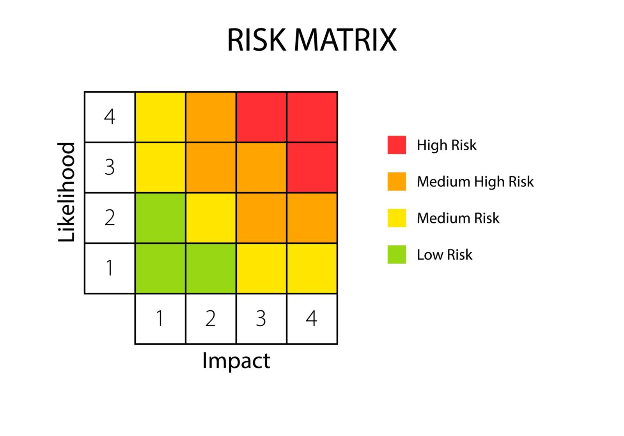
Psychosocial Risk Assessment is the formal process of identifying and evaluating the aspects of work design, organization, and management that can cause psychological harm, stress, or anxiety.
As discussed in Post 2, these are factors like: high job demands, low job control, poor support, and exposure to violence. The key is applying the same objective, analytical rigor to these mental hazards that you apply to physical hazards like checking fire safety or slip risks.
Targeting Solutions, Not Guessing: Why it Matters to You
Too many C-store owners try to fix “low morale” by throwing money at a vague problem, like buying pizza for staff every Friday.
A formal assessment provides targeted data, telling you precisely why your staff is stressed.
- If your data shows high Job Demands, the fix is process streamlining (like automated cash management).
- If it shows Poor Support, the fix is manager training on vulnerability and active listening.
This targeted approach maximizes your limited budget and managerial time, ensuring your safety investment directly hits the pain points that are driving up your turnover.
Measure and Consult: What You Should Be Doing
You must involve your team in the identification and mitigation of these hazards.
- Utilize a Formal Survey Tool: Look for free or low-cost psychosocial risk assessment surveys designed for the workplace. Use these to get anonymous, quantifiable data on the hazards impacting your store.
- Consult Your Team: The assessment process must involve consulting with workers and store managers to better understand the problems and involve them in finding the risk-control measures. You cannot solve a cultural problem without the voices of the people living it.
- Integrate into Existing Forums: Use your existing consultative forums and risk management processes, where you discuss spills, trips, and physical safety, to formally manage psychosocial hazards.
Step 2: Culture-Shaping for Internal Trust

Once you know what’s causing the stress, you must implement the behavioral tools needed to create a safety net for your team.
The “System over Blame” Mindset
Psychological safety is the belief that admitting a mistake won’t lead to humiliation or punishment. This requires leaders to actively cultivate a “system over blame” mindset.
When a failure occurs, a stocking error, a till discrepancy, or a dropped order, the leader’s primary question must be: “What about our system, process, or training led to this outcome?”
This is the necessary precursor to innovation, as it encourages employees to take the necessary interpersonal risks to surface problems and propose creative solutions.
Resilience and Innovation: Why it Matters to You
In a fast-changing industry, innovation and operational resilience are everything. The C-store industry is evolving rapidly with new food service models and self-service technology. If your frontline staff are afraid to report a flaw in the new self-checkout system or suggest a better way to stage inventory, you lose critical real-time data.
A psychologically safe team can “move fast and break things” because they are confident that they will capture what they learn about the process, not be penalized for the attempt. This is your innovation engine.
Coach and Encourage: What You Should Be Doing
Train your leaders to embody the key behaviors of a safe leader.
- Champion Curiosity: Managers should embrace curiosity and vulnerability, actively asking associates to share their perspectives, similarities, and differences without judgment.
- View Mistakes as Data: Use an after-action review format that mandates finding the systemic cause of the error. Reiterate that if a mistake is made, the organization is committed to finding out why the system failed them.
- Encourage Peer Coaching: A safe culture enables employees to coach each other. Encourage team members to openly ask for help or offer constructive feedback, knowing they won’t be rejected.
Step 3: Consistent Policy and Governance
Trust is built on consistency. The third step ensures that your HR policies actively support your cultural goals.
Non-Retaliation and Fairness
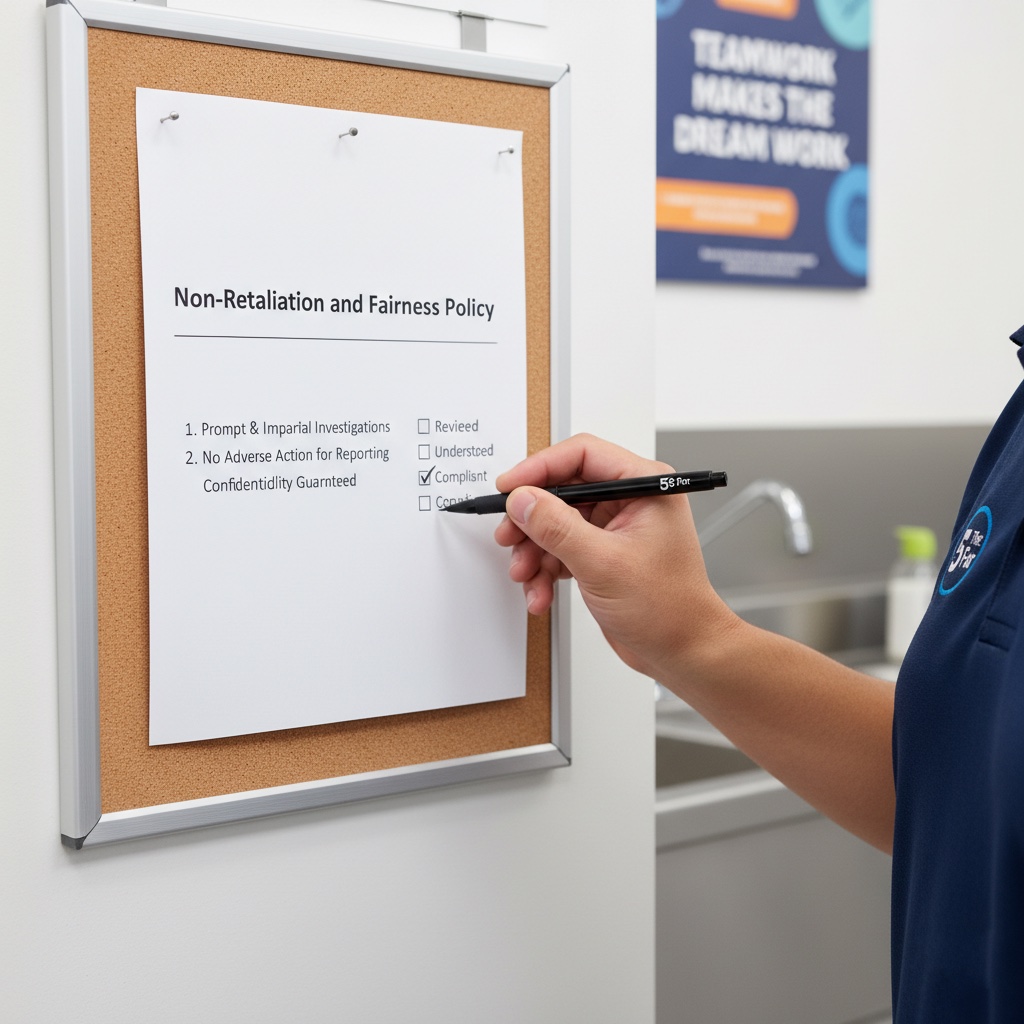
The quickest way to destroy psychological safety is through inconsistent or retaliatory policy enforcement. Governance means establishing and enforcing clear anti-harassment policies promptly and impartially, ensuring that those who violate the policy are appropriately disciplined.
Crucially, you must explicitly promise and deliver non-retaliation against any employee who reports concerns, harassment, or safety issues. If employees believe they will face punishment for speaking up, the entire safety structure fails.
Frictionless HR and Legal Protection: Why it Matters to You
A well-governed HR structure simplifies life for the owner/operator. The goal of improving the “Customer Experience of HR” (CxHR) is the deliberate removal of friction from transactional processes. Clear, simple, and consistently enforced policies reduce managerial ambiguity and allow leaders to focus on people development, rather than constant administrative policing.
By ensuring policies are enforced impartially and thoroughly investigated, you protect your business from costly legal liabilities and signal to the entire team that fairness is paramount.
Review and Enforce: What You Should Be Doing
Review your policies to ensure they are clear, accessible, and consistently applied.
- Standardize Corrective Action: Ensure managers understand that disciplinary action should always be focused on stopping the harassment/problem and preventing future occurrences, using a wide range of potential actions from counseling to termination.
- Audit Your Enforcement: Conduct a quarterly review of disciplinary actions to ensure consistency across different managers and different employee groups. Inconsistency destroys trust.
- Simplify Your HR Processes: Look for ways to remove friction points in basic HR transactions, like scheduling, shift swapping, or time-off requests. Redesigning these processes reduces daily administrative stress for managers and staff.
The Bottom Line: Measuring the Momentum
You now have a clear, actionable path: Assess your risks, Shape your culture through leadership, and Govern through consistent, non-retaliatory policy. This systematic approach is the difference between temporary morale boosters and sustainable organizational resilience.
When single-owner/operators in Houston and Dallas implemented similar safety ordinances, low compliance (only 9% in full compliance) demonstrated that initial effort fades without clear governance. Your commitment to these steps must be long-term.
By putting this plan into action, you are creating a reliable team that is better positioned to handle external stress and complexity. But how do you prove the value of this work to your accountant, your partners, or yourself?
You need the numbers.
In our next critical installment, we will provide the tools for accountability. We will dive into: Measuring Success: Metrics and ROI of Emotional Safety in Convenience Retail. We’ll show you exactly how to track the right KPIs, from turnover cost reduction to engagement scores, to prove that your investment in emotional safety is, in fact, your most powerful engine for profit.





 The5For
Leave a comment