
The Unpredictable Front Line
We’ve covered the strategic Why (Post 1), the internal Who (Post 2), the external Impact (Post 3), the Implementation steps (Post 4), and the Measurement systems (Post 5) for Emotional Safety. Your culture is shifting, your team is more engaged, and you have the data to prove it.
But let’s be honest: your C-store remains a challenging environment. It’s a 24/7 operation where staff interact with the public in high-stress, late-night, and occasionally isolated scenarios. Despite all your efforts, your team must be ready to face the unpredictable behavior of the public. This includes dealing with intoxicated customers and aggressive individuals engaging in theft.
The commitment you’ve made to emotional safety can be shattered by a single, poorly handled hostile interaction. This is why De-escalation Training is not a luxury or a “soft skill.” It is a mandatory investment that acts as a vital layer of protection for your employees. It fulfills your legal duty of care. It also preserves the confidence you’ve worked so hard to build.
This post is your practical guide to incorporating this crucial skill set. We will break down exactly what effective de-escalation training should cover, how it delivers tangible safety benefits, and how it links back to the improved customer loyalty we discussed in Post 3.
De-escalation Training: The Confidence and Competence Dividend
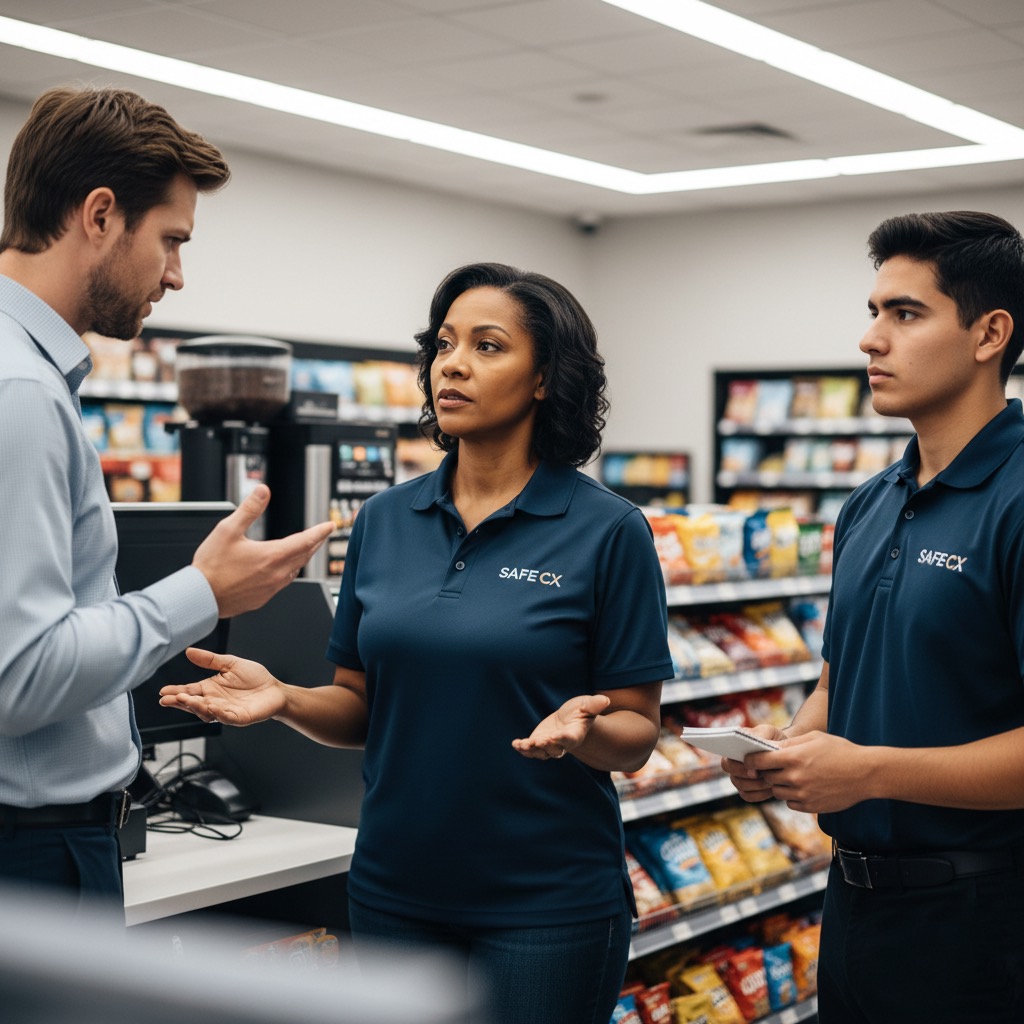
De-escalation training transforms employees from potential targets into confident, safety-focused agents.
A Proactive Conflict Tool
De-escalation training provides staff with the necessary skills to recognize when a situation is escalating and how to take action to prevent it. The focus is on finding peaceful resolutions and avoiding potentially dangerous incidents involving verbal or physical abuse.
For C-store staff, the core training modules must be comprehensive, covering key elements such as:
- Recognizing Early Signs of Conflict: Understanding body language and tone that signals a potential threat.
- Active Listening and Empathy: Utilizing communication skills to make the agitated person feel heard and understood.
- Managing Personal Emotions: Techniques for staying calm and focused in difficult, high-stakes situations.
- Handling Specific Scenarios: Strategies for managing situations like intoxicated customers or individuals experiencing mental health crises.
Legal Duty and Staff Confidence: Why it Matters to You
In the face of rising retail crime, mandatory, documented de-escalation training is a critical measure fulfilling the employer’s legal duty to provide a safe and healthy workplace.
Retailers tracking this data reported a 42% increase in shoplifting incidents involving threats or actual violence between 2022 and 2023. Given this documented risk, providing appropriate training is a vital legal safeguard against claims of negligence regarding staff protection.
Beyond compliance, the benefit is the confidence it instills in employees. Staff who feel they have the tools to protect themselves, and their colleagues experience significantly higher morale and lower stress.
Mandatory, Scenario-Based Training: What You Should Be Doing
Your de-escalation training must be practical, specific to the C-store environment, and mandatory for all customer-facing staff.
- Mandate Comprehensive Modules: Ensure your training covers not only communication techniques but also the legal rights and responsibilities of staff in a conflict situation.
- Use Realistic Scenarios: Utilize training that employs realistic scenarios tailored to the C-store environment, such as refusing a tobacco sale to a minor or managing a pricing dispute.
- Focus on Prevention: Emphasize that the goal is to identify and de-escalate volatile situations before they escalate into physical confrontations or other safety risks, protecting staff and minimizing property damage.
The Strategic Link: De-escalation and Customer Experience
De-escalation is not just about conflict avoidance; it’s about service excellence under stress.
Professionalism in Crisis
De-escalation training equips retail staff with the skills to handle customer interactions gracefully, even when under stress. The emphasis on empathy and active listening ensures customers feel valued and respected, even when an interaction is difficult.
The fundamental difference between an untrained and a trained employee lies in their abilities. A trained employee can turn a challenging moment into a display of professionalism and calm. They ensure that customers leave feeling respected and understood.
Protecting Loyalty: Why it Matters to You
As we discussed with SafeCX in Post 3, customer loyalty is profoundly affected by perceived safety. If a customer witnesses a chaotic, poorly managed, or aggressive confrontation in your store, they will be unlikely to return.
Staff who are trained and supported can maintain their composure, ensuring that the store environment remains safe and welcoming. This professionalism reinforces loyalty and positive word-of-mouth, which directly impacts the store’s reputation and sales.
Reinforce Professionalism: What You Should Be Doing
Integrate the language and principles of de-escalation into your everyday customer service expectations.
- Review CX Scores Post-Incident: Track customer satisfaction scores (CSAT or NPS) for the store location in the weeks following a major incident. Analyze whether the team’s response helped mitigate reputational damage.
- Role-Play Regularly: Incorporate short, 5-minute role-playing exercises into daily shift changeovers, focusing on difficult scenarios like handling intoxicated customers or dealing with verbal abuse.
- Celebrate Grace Under Pressure: Use team meetings to acknowledge and celebrate employees who successfully de-escalate a situation, reinforcing the desired behavior and building team confidence.
Technology and Design as De-escalation Support
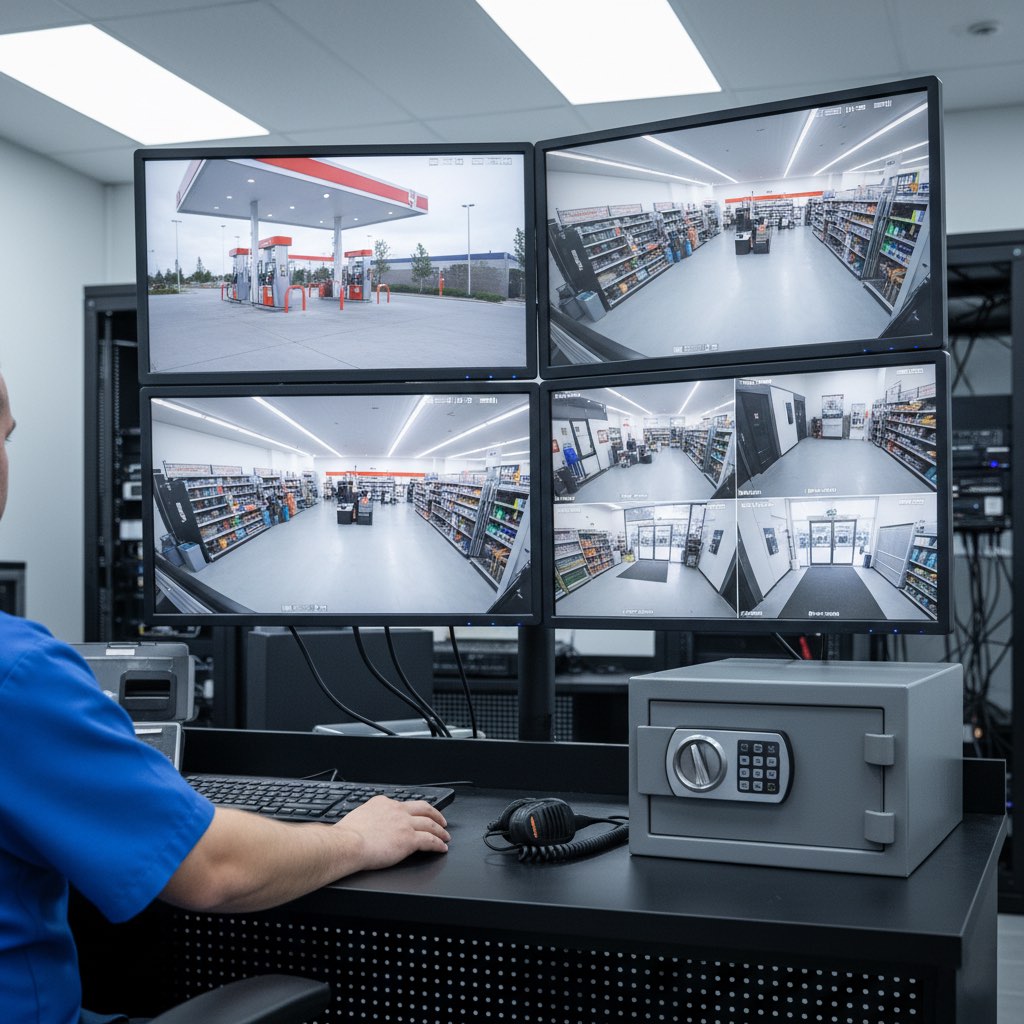
De-escalation is a human skill, but it is dramatically enhanced by your physical environment and technology.
Technological Deterrents
Technology acts as a visible deterrent and a real-time support system for staff in isolated or high-risk situations. Examples include:
- Internal Communication Systems: Headsets and robust internal communication allow staff members to stay connected, coordinate rapid responses, and prevent isolation.
- Visible Security: Prominently placed video cameras and monitoring screens signal that the area is supervised, which can deter aggressive behavior.
- Drop Safes: Cash control systems minimize the amount of accessible cash. This reduction decreases the “rewards” for robbery and lowers the risk of violence. It provides staff with a safe, non-confrontational response to demands.
Reducing Isolation: Why it Matters to You
In C-stores, staff numbers are often reduced during night shifts, making workers more likely to be working in isolation. This isolation is a major psychosocial hazard. Equipping employees with headsets acts as a powerful deterrent to both shoplifting and violent behavior.
By investing in CPTED (Crime Prevention Through Environmental Design) principles, you enhance natural surveillance. Applying methods such as keeping clear sightlines and using bright, cool white lighting makes the environment less appealing for crime. This gives staff a greater sense of control and safety.
Support the Front Line: What You Should Be Doing
Ensure your staff has the tools and environment to back up their training.
- Provide Real-Time Communication: Equip staff with earpieces or headsets. This is especially important during isolated shifts. This ensures they can instantly communicate with colleagues or a remote monitoring center.
- Check Lighting Weekly: Audit your interior and exterior lighting weekly, replacing any dim or burnt-out bulbs immediately. Bright lighting (around 4000K) enhances visibility and deters loitering.
- Reiterate Non-Intervention Policy: Ensure every employee knows to remove themselves from an unsafe situation. They should call the police. They must never physically intervene in a theft.
The Bottom Line: Your Commitment to Resilience
You have successfully navigated the complexities of Emotional Safety, from cultural transformation to financial accountability. By mandating rigorous de-escalation training, you complete the circle. You’ve not only built a supportive, high-trust culture internally. You’ve equipped that culture with resilience. You’ve provided it with practical skills. These are needed to thrive in the unpredictable world of convenience retail. This proactive stance protects your people, your profits, and your brand reputation.
We have now covered every facet of this crucial strategy. It’s time to consolidate all these moving parts, Culture, HR, Metrics, Training, and Security, into one simple, accessible plan.
In our final and most critical installment, we will provide the ultimate implementation guide: The Resilience Roadmap: Your Final C-Store Emotional Safety Audit and 90-Day Action Plan.
This post will synthesize the key takeaways from all six posts into a single, comprehensive checklist. It will give you the final, actionable steps you need to secure your C-store’s future success.


 The5For
Leave a comment