When Counter Real Estate is Premium
In our strategic journey, we’ve proven that cheap plastic displays are material and hygienic liabilities. In Post 3, we established the definitive solution: a strategic pivot to durable, powder-coated steel infrastructure, designed for 10+ years of hygienic, low-maintenance performance.
Now, we must tackle the primary operational constraint facing every convenience store owner: counter space.
Your high-traffic counter is crucial. It houses your coffee brewers, roller grills, bun cabinets, and cold condiment units. This area is arguably the most valuable real estate in your entire store. Every square inch must generate revenue and support efficiency. Fixed, bulky, or poorly designed fixtures act as barriers, creating dead space and limiting the items you can merchandise.
This is where the true genius of a modular organizing system like PanelRak comes into play. It transforms your display from a static container into a dynamic merchandising platform.
In this post, I will show you exactly how modularity is the key to optimizing space and maximizing flexibility, covering:
- How the modular components allow you to work seamlessly around existing equipment, maximizing counter utilization.
- The benefit of specialized baskets engineered for high-volume C-store items, reducing clutter and improving access.
- The powerful flexibility that comes from the system’s compatibility with standard slat wall hardware, enabling rapid merchandising changes.
Operational excellence demands fixtures that adapt to your space, not the other way around. Let’s dive into how modularity achieves this.
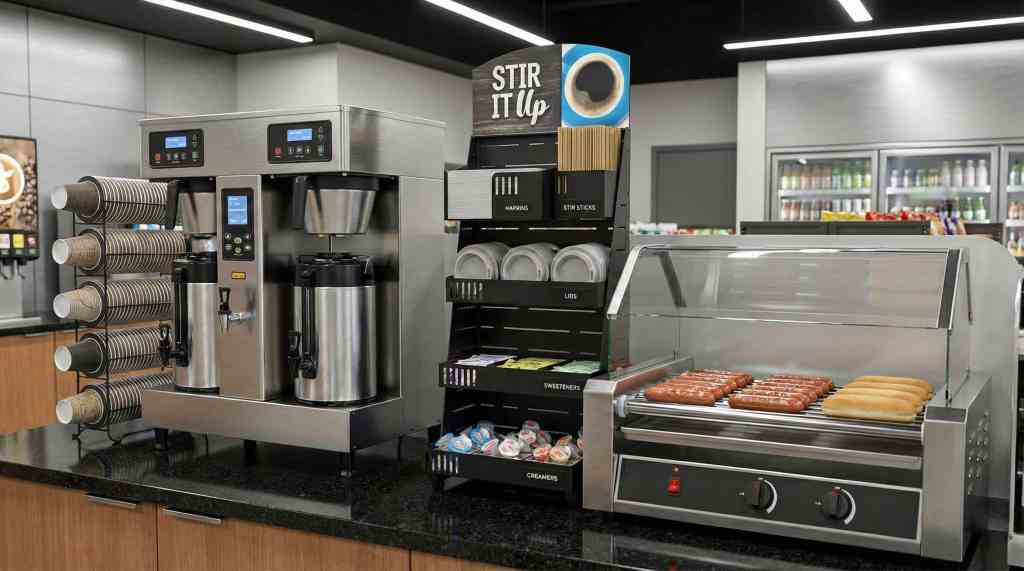
Working Around Constraints: Maximizing Counter Utilization
Most convenience store counters are not blank canvases. These counters already host essential and often bulky equipment. This includes the roller grill, the bun cabinet, the dedicated cold condiment chiller, and the primary beverage equipment. Fixed displays often waste the space between and adjacent to these units, creating inaccessible zones or frustrating dead corners.
The fundamental advantage of PanelRak’s modular design is its ability to configure around existing counter constraints. The system is built with panels, side fins, legs, and various baskets that can be arranged virtually endlessly.
Think of a busy hot dog station. Your counter must accommodate the roller grill and a bun cabinet. A static plastic bin system might take up valuable frontage. PanelRak, however, can be configured to sit seamlessly alongside that equipment, maximizing every available inch of counter real estate. This smart utilization is not just about looking neat. It’s about maximizing service speed. It ensures every necessary item is readily available. This reduces staff and customer search time.
What You Should Be Doing
Challenge your current use of counter space with these actionable steps:
- Conduct a “Dead Space” Audit: Map out your high-traffic counters. Measure the actual amount of linear and vertical space consumed by your existing fixtures. Identify any “dead space”, awkward gaps, unused corners, or areas that could accommodate more vertical storage.
- Prioritize Seamless Integration: When considering new fixtures, require solutions that can be configured to work in tandem with existing equipment. These include beverage towers and food prep stations. Ensure they do not simply sit awkwardly next to them.
- Go Vertical: Recognize that your counter space is limited, but vertical space is often abundant. Modular systems allow you to build up, using multi-tiered configurations to stock more items without increasing your physical footprint.
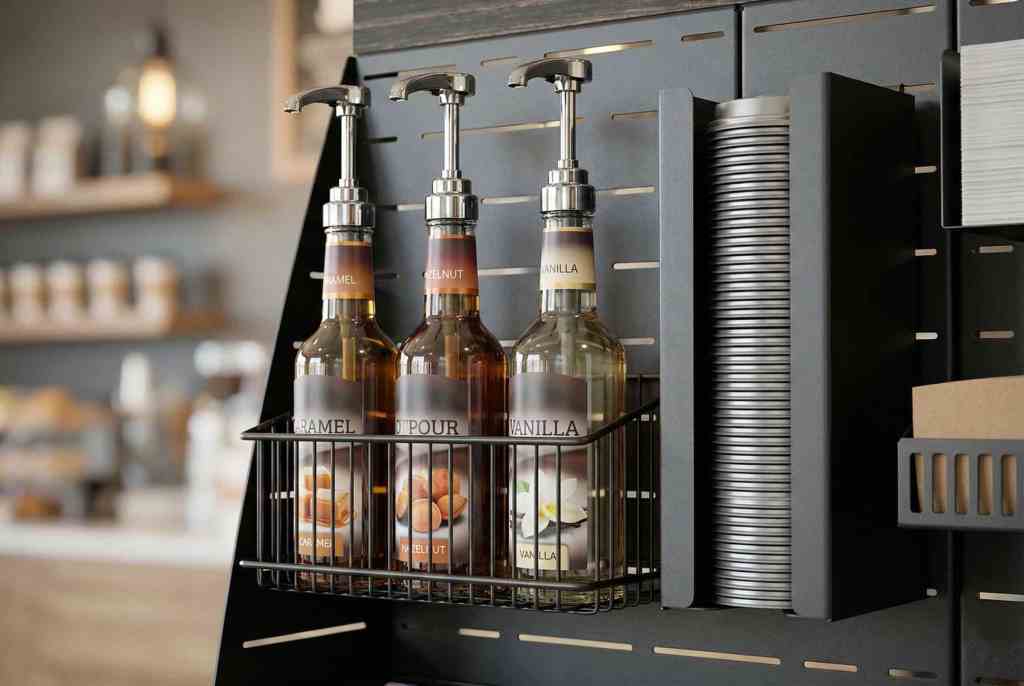
Targeted Organization with Specialty Baskets
One of the biggest contributors to “last mile” mess is the attempt to fit specialized items into general-purpose containers. Standard plastic bins are typically designed for basic packets. However, they fail in organizing different sizes of cup lids. They also struggle with specific flavoring syrup bottles or standard condiment shakers. This leads to the infamous “clutter tax” we discussed previously.
Modular systems eliminate this by incorporating specialty baskets engineered specifically for high-volume C-store items. PanelRak, for example, offers dedicated components for:
- Cup lids (ensuring proper stacking and easy access)
- Flavored syrup bottles (stable, secure, and visually appealing display)
- Condiment shakers and portion control packets
- Straws and napkins.
This targeted engineering ensures optimal organization and accessibility. When items are clearly organized and readily accessible, the customer experience improves. This boost in satisfaction leads to a greater likelihood of revisit. By corralling essentials into functional containers, you eliminate the visual clutter that can undermine your brand’s perception of quality.
What You Should Be Doing
Implement a hyper-organized approach to your inventory:
- Audit for Container Mismatch: Identify every item that is currently placed in a container not explicitly designed for it (e.g., lids in a standard bin, syrup bottles sitting loosely on the counter). This mismatch is a guaranteed clutter source.
- Invest in Targeted Solutions: Prioritize specialty baskets that match the form factor of your highest-volume items. This makes restocking easier, reduces spillage, and immediately improves the visual appeal of the station.
- Label Everything Clearly: Utilize the capacity of modular systems to support clear, customized labeling. Easy identification contributes to the perceived ease of use (PEOU), a key factor in boosting customer satisfaction.
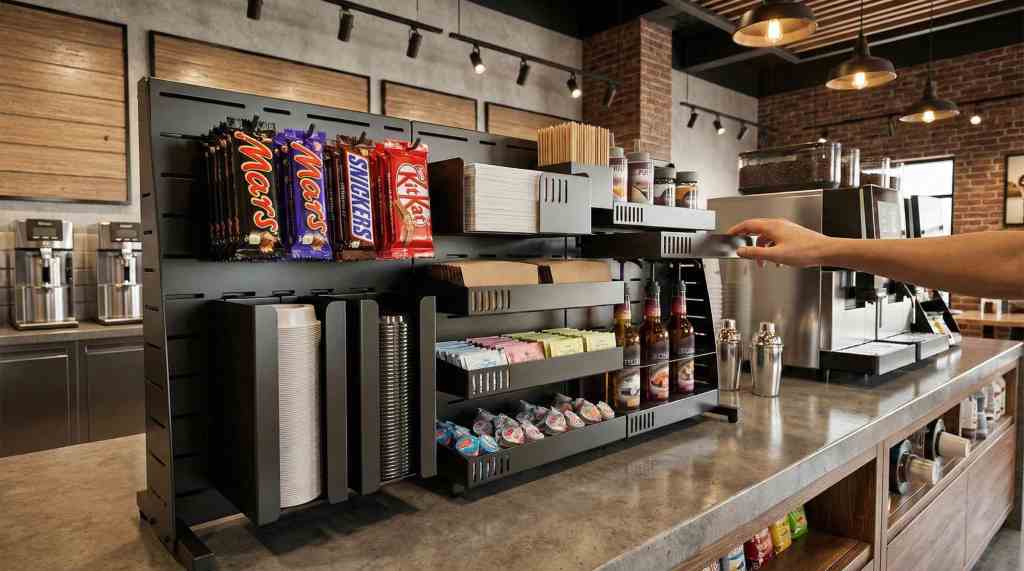
The Power of Adaptability: Merchandising Flexibility
In retail, flexibility equals opportunity. The market shifts seasonally, inventory changes daily, and merchandising needs can change based on a new promotion. Fixed plastic displays are static assets, they limit what you can sell or promote.
Modular systems are dynamic assets. PanelRak’s panels accommodate most traditional pegboard and slat wall hardware. This standardization offers unparalleled operational flexibility.
Imagine a major seasonal promotion. You can quickly add a small shelf for impulse items, like energy shots or candy bars. You can also change the height of condiment basket placements. Additionally, you can swap out a large signage header without expensive retooling. This flexibility minimizes the loss of opportunity associated with fixed layouts. It ensures your fixture can adapt to evolving retail needs. This approach maximizes its useful lifespan. The ability to quickly rearrange and customize your displays allows you to maintain a visual “freshness” that keeps customers engaged.
What You Should Be Doing
Leverage flexibility to drive impulse sales and stay relevant:
- Establish a Merchandising Cycle: Commit to using the modularity. Schedule quarterly merchandising refreshes. Use the display to highlight seasonal or impulse items that have a high attach rate to coffee (e.g., specialty creamers, breakfast bars).
- Standardize Hardware: If you are building a new system, prioritize fixtures that accommodate standard fittings like slat wall/pegboard. This guarantees access to a wide variety of affordable, off-the-shelf attachments for future needs.
- Delegate Merchandising Responsibility: Empower store managers. Allow them to make small, quick adjustments to the configuration. They can base changes on what they see selling best. The system should be intuitive enough for them to quickly swap baskets or add a divider without calling maintenance.
Next Up: The Unavoidable Financial Reality
We’ve seen the operational superiority of modular steel: it’s durable, hygienic, and maximizes your prime counter real estate.
But does this premium, engineered solution actually make financial sense? In our next post, we will dismantle the myth that the low upfront price of plastic is a bargain. We will prove that by avoiding frequent replacement cycles, we reduce labor costs. The long-term Total Cost of Ownership (TCO) for a modular steel system is significantly lower.
Join me for Post 5: The Financial Mandate: Calculating the Total Cost of Ownership (TCO) and Why Plastic Fixtures Are Your Most Expensive Mistake.


 The5For
Leave a comment