In our first post, we established a new reality: the metabolic landscape of your customer base has shifted. Thanks to the “Food as Medicine” movement and the widespread use of GLP-1 medications, the era of the “supersize” value proposition is fading. Your customers aren’t looking for the cheapest way to feel full; they are looking for the most efficient way to feel fueled.
Today, we are zooming in on the department that drives your highest in-store margins: Foodservice.
For decades, the convenience store lunch rush has been defined by the “combo meal” mentality, a large sandwich, a bag of chips, and a fountain drink. But for a customer on Ozempic or Wegovy, that combination isn’t just unappealing; it’s physically unmanageable. The sensation of fullness hits them faster and lasts longer. If you try to sell them volume, you will lose the sale.
But here is the good news: The death of the “Supersize” doesn’t mean the death of the ticket size. In fact, this is an opportunity to increase your margins through premiumization and “Snackification.”
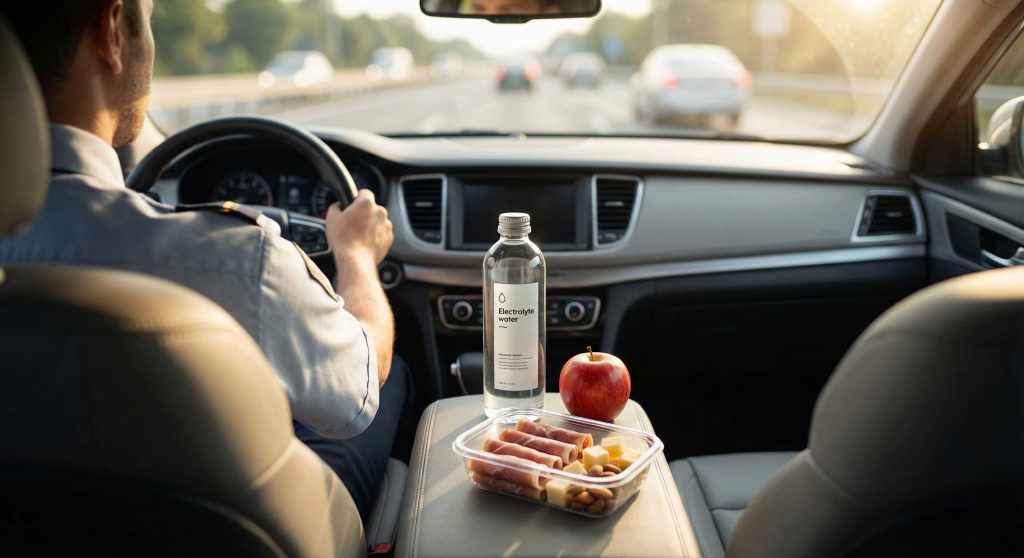
The “Snackification” of the Meal
The traditional three-meal day part structure (Breakfast, Lunch, Dinner) is dissolving. GLP-1 users often report skipping full meals entirely, replacing them with smaller, nutrient-dense snacks throughout the day. This phenomenon is known as “Snackification,” and it is reshaping the foodservice landscape.
Your customers are moving toward Micro-Meals. These are 300-500 calorie servings that pack a nutritional punch without the “food coma” or gastrointestinal distress associated with heavy, greasy foods.
Why is this happening? It comes down to Modular Consumption. A medicated consumer might want to eat a few bites of protein now and save the rest for two hours later. A hot dog in a bun gets soggy; a protein pack does not. This need for flexibility is driving customers away from the hot case and toward the open-air cooler.

The Rise of the “Adult Lunchable”
You’ve likely seen the success of “P3” packs or Starbucks’ “Bistro Boxes.” These are the prototypes for the future of c-store foodservice. We call them “Adult Lunchables,” but functionally, they are Protein Packs.
These assortments typically feature hard-boiled eggs, cubes of cheese, and nuts. They may also include a premium meat stick or prosciutto. They are the perfect solution for the GLP-1 consumer.
Here is why they win:
- ** Transparency:** There are no hidden ingredients, breading, or sauces. The customer sees exactly what they are getting.
- Satiety: They prioritize protein and healthy fats. These nutrients stabilize blood sugar and keep hunger at bay. They do this without the “heavy” feeling of carbohydrates.
- Portability: They can be eaten in the car, at a desk, or over the course of three hours.
From an operator’s perspective, these are gold. They require zero on-site cooking labor if sourced correctly. They have a longer shelf-life than a hot sandwich. They command a premium price point. A customer might balk at $4 for a hot dog. However, the same customer will happily pay $7 for a well-branded box of almonds, cheese, and turkey.
Re-Engineering the Hot Case
Does this mean your roller grill and hot case are obsolete? Absolutely not. But they need a retrofit.
The “Food as Medicine” customer often views breading and buns as “fillers” that waste their limited stomach capacity. They want the protein without the carb load.
Consider the “Scoop” strategy. If you offer made-to-order subs or bowls, explicitly offer a “no bun” or “in a bowl” option. Market it as “High Protein / Low Carb.”
Furthermore, look at your roller grill. Are you offering a lean turkey or chicken option alongside the traditional spicy sausage? Are there unbreaded chicken bites available in the warmer? The goal isn’t to remove the indulgent items, truckers and teenagers still need lunch, but to offer a “Safe Harbor” alternative for the health-conscious.
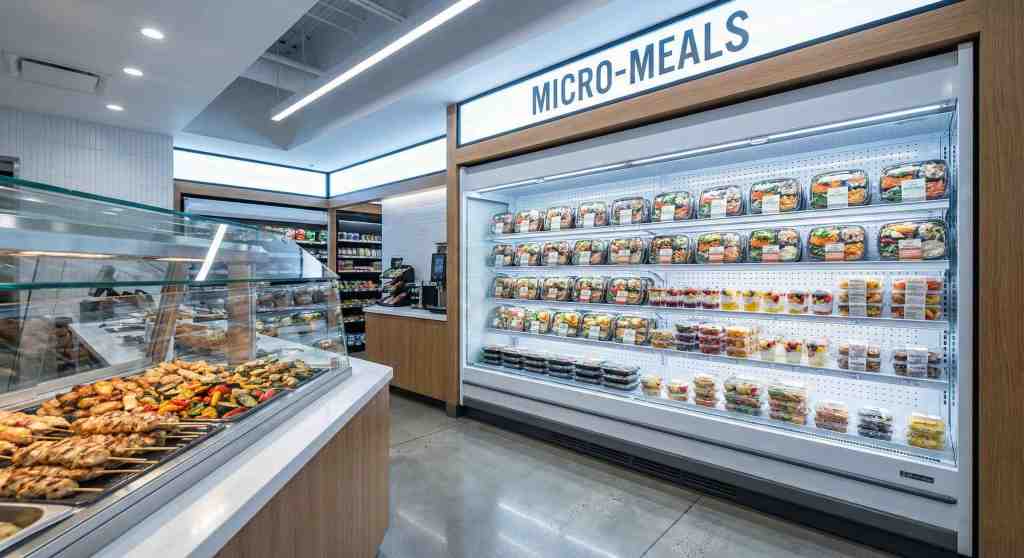
What You Should Be Doing
Adapting your foodservice offering doesn’t require a kitchen remodel. Here are three high-impact moves you can make this week:
- Build Your Own “Protein Packs”: If you have a commissary or a deli license, start assembling in-house packs. Two hard-boiled eggs, a handful of almonds, and distinct cubes of cheddar cheese in a clear container. Label it with the protein count (e.g., “18g Protein”). If you don’t prep on-site, source these aggressively from your distributor.
- Offer “Half-Size” or “Mini” Options: If you sell sub sandwiches, offer a 4-inch version. If you sell breakfast burritos, offer a “mini” size. This signals to the GLP-1 user (and the calorie-conscious) that you understand their needs. They will often pay 70% of the price for 50% of the product, increasing your margin.
- Rethink the “Meal Deal”: Stop bundling food with a 32oz soda and a bag of chips. Create a “Fuel Deal”: A protein pack + a functional water (like Smartwater or a probiotic soda) + a piece of fruit. This aligns with the new definition of value: metabolic health.
- Audit Your Breading: Look at your hot case. What percentage of items are breaded and fried? Aim to introduce at least two “naked” protein options (grilled chicken skewers, egg bites, or unbreaded wings).
The Bottom Line: Nutrient Density
The days of measuring foodservice success solely by volume are over. The new metric is Nutrient Density. By pivoting to Micro-Meals and Protein Packs, you capture the lunch money of a demographic. This demographic has stopped going to fast-food drive-thrus because the portions are too big. The grease is also too risky.
We’ve covered the protein side of the equation. However, as I mentioned in the first post, there is a “critical companion nutrient.” It is arguably even more important for the GLP-1 user. Unfortunately, it’s missing from almost every c-store in America.
In Post 3, we’re heading to the snack aisle to discuss Fiber, and why experts are calling it the “New Protein.”

 The5For
Leave a comment