Why Only 12% of Customers Are Ready for AI Buying (and How to Fix It)
In Part 1 of this series, we explored the massive “Agentic Shift”, the transition where AI assistants are evolving from passive search bars into active decision-makers. We discussed the reality that if your convenience store isn’t “readable” by these new AI agents, you risk becoming invisible to the modern consumer.
But there is a massive pothole on this road to the future. If we don’t fill it, it is going to wreck the suspension of our entire industry.
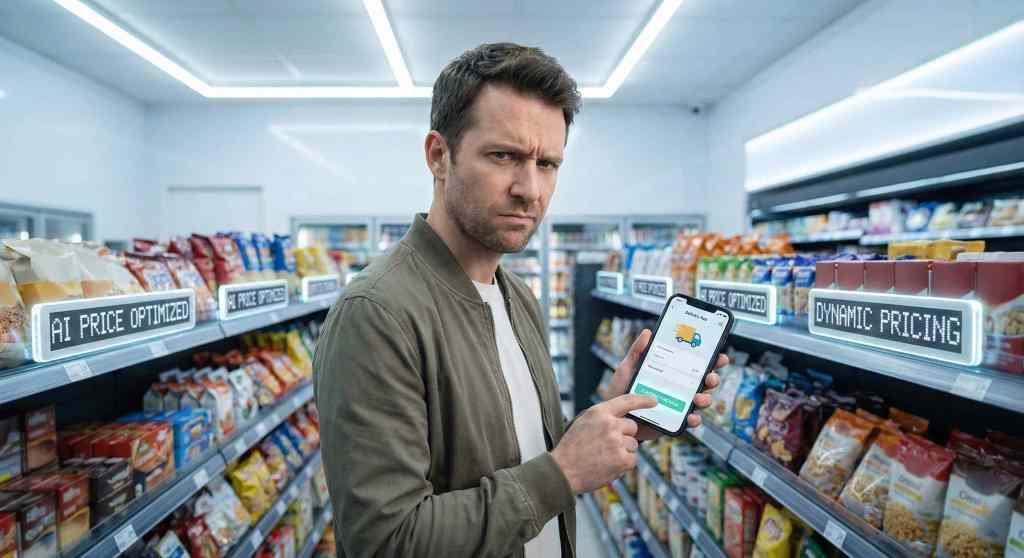
That pothole is trust.
We are currently building the most sophisticated digital infrastructure in the history of retail. We have cameras that know when a shelf is empty, apps that detect when a customer enters the parking lot, and algorithms that predict a craving for a breakfast sandwich before the customer even wakes up.
But all of this capability is colliding with a consumer base that is increasingly skeptical.
The data is screaming at us. While 70% of shoppers are happily using AI to brainstorm dinner ideas or compare product specs, a minuscule 12% trust that same AI to actually buy the product for them.
That gap, between the 70% who browse and the 12% who buy, is the “Trust Gap.”
In this post, we are going to tear that statistic apart. We need to understand why your customers are hesitant. If you can’t solve the trust equation, your investment in AI and digital loyalty is just an expensive toy.
The Anatomy of the 12%
Let’s look closer at the numbers coming out of the Acosta Group’s 2026 predictions. They found that 70% of shoppers have integrated AI tools into their shopping journey. They use them as “brainstorming partners.”
If I’m a customer, I might ask ChatGPT, “What’s a good snack that is high protein and under 200 calories?” I trust the AI to give me a list.
But when it comes to saying, “Okay, buy these items for me,” confidence collapses. Only 12% of consumers are willing to let AI execute that purchase autonomously.
Why the drop-off? It comes down to three specific fears:
- Privacy and Surveillance (60%): Consumers are increasingly aware that “personalization” is often just a fancy word for “tracking.” They worry that the data collected to help them (e.g., your favorite coffee order) will be weaponized against them (e.g., selling that data to a health insurance company).
- Loss of Agency (56%): There is a deep psychological resistance to “unapproved purchases.” We treat our money as an extension of our freedom. The idea that a machine might spend our money on the “wrong” brand of peanut butter or order a pizza when we decided to go on a diet that morning, feels like a violation of autonomy.
- Fraud and Security (56%): With data breaches making headlines every other week, consumers are terrified of storing payment credentials in yet another “black box” system.
The Generational Divide: A Multi-Speed Strategy
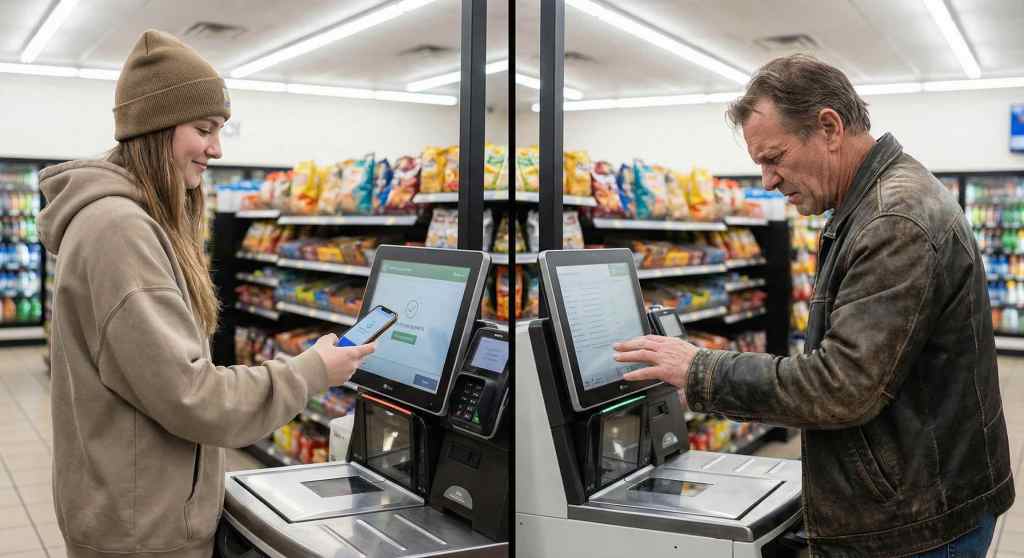
It is also crucial to realize that this “12%” isn’t spread evenly across your customer base. We are seeing a massive generational divide.
Gen Z is your proving ground. Research shows that 53% of Gen Z AI users find generative AI more trustworthy than traditional sources. They are digital natives who view AI as a utility, much like electricity. They are generally willing to trade some privacy for convenience.
However, your Boomer and Gen X customers, who often have higher disposable income, are significantly more skeptical. They view AI not as a utility, but as a risk.
If you force a “high-tech, low-touch” AI experience on them too quickly, you will alienate them. This means you cannot just flip a switch to full automation.
You need a multi-speed strategy: aggressive AI features for the app-native demographic, and reassuring, human-centric service for the rest.
The Collapse of Third-Party Verification
Here is perhaps the most alarming trend for brand builders: the collapse of third-party trust.
In 2024, 26% of consumers trusted “independent third-party signals” (like badges or certifications). By 2025, that number plummeted to 12%.
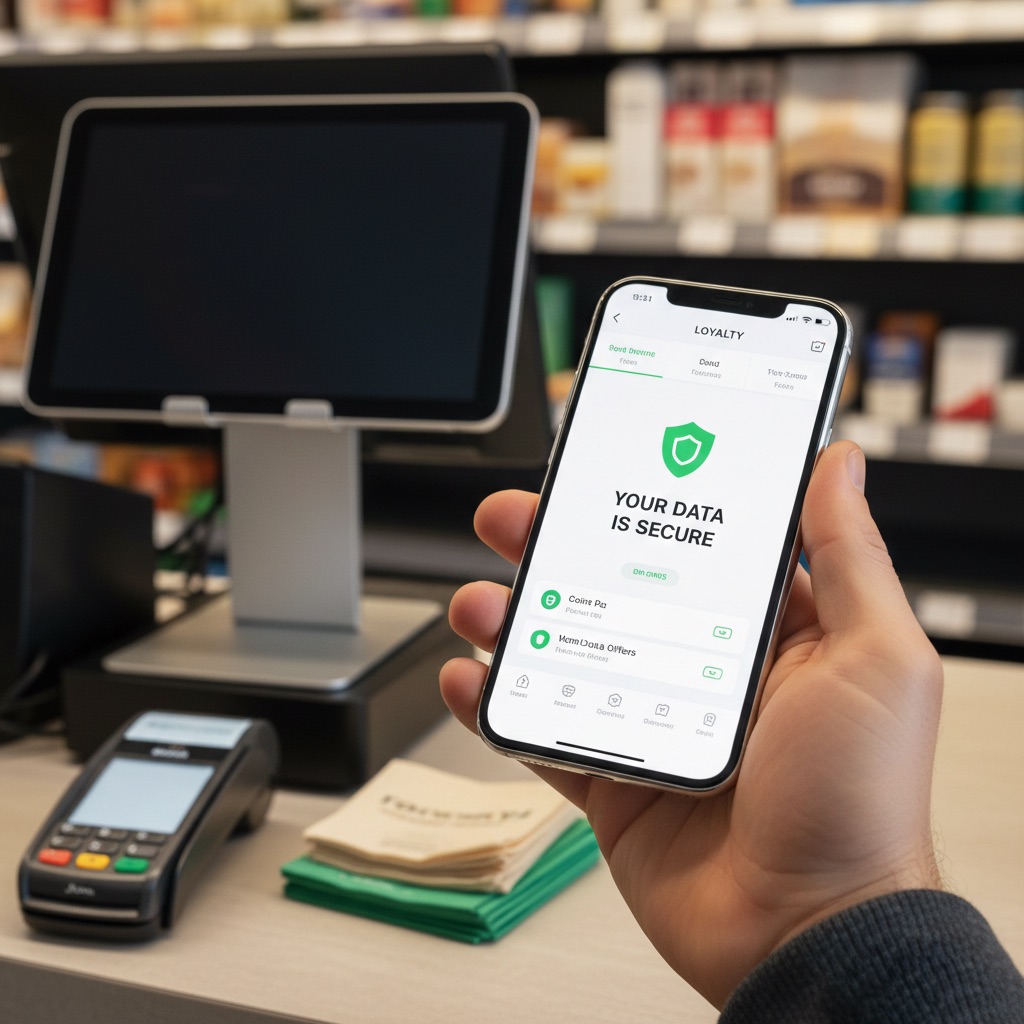
This means you can no longer rely on external validators to make your customers feel safe. You can’t just slap a “Verified Secure” badge on your app and call it a day.
Trust is no longer transferable. You have to manufacture it yourself, directly, through every interaction. Every time your app asks for location data, you are testing that trust. Every time your digital screen flashes an ad, you are either building equity or burning it.
What You Should Be Doing
To navigate this Trust Gap, you need to be proactive. You cannot wait for customers to “get used to it.” Here is your checklist for building a trust-based infrastructure:
- Implement “Just-in-Time” Permissions: Stop asking for location access the moment the user downloads your app. It’s suspicious. Instead, ask for it only when the user taps “Find a Store.” When the value (finding the store) is tied directly to the request (location), opt-in rates soar above 90%.
- Create a “Why Am I Seeing This?” Feature: If your app recommends a specific product, tell the customer why. Add a small text or tooltip: “We recommended this Red Bull because you bought one last Tuesday.” This transparency removes the “creepiness” factor and shows the logic, turning a black box into a glass box.
- Audit Your “Auto-Add” Features: If you are experimenting with auto-replenishment or predictive ordering, ensure the “Kill Switch” is obvious. The user must feel they have total control to cancel or modify an order before it processes. The feeling of control is the antidote to the fear of lost agency.
- Segment Your Experience: Don’t force your AI features on everyone. Use your loyalty data to identify your “tech-forward” users (likely younger, app-heavy users) and beta test your agentic features with them. Keep the experience traditional for those who haven’t opted in.
The Bottom Line: 12% Is The Warning Light On Your Dashboard
The “12%” statistic isn’t just a number; it’s a barrier to entry for the future of retail. If we can’t get more than one in ten customers to trust our systems, the “Agentic Era” will be a failure for our industry.
Building trust is the foundation, but to truly leverage that trust, you need a system to manage the data. While we worry about trust, the machinery of data collection is growing larger every day.
In Part 3 of this series, we are going to look at the massive engines driving this data hunger: Retail Media Networks. I’ll take you inside the strategies of 7-Eleven, Casey’s, and Circle K to show you how they are turning their stores into media powerhouses, and the specific risks they are taking to get there.



 The5For
Leave a reply to Part 3: The Surveillance Economy – The5For Cancel reply