Navigating the Privacy Paradox in Your Store
In Part 3, we explored the “Trust Gap” and the massive “Surveillance Economy” we’re building with Retail Media Networks. We discussed how data is the new oil, but also how easy it is to spill that oil and ruin your reputation.
Now, we need to get into the psychology of it all.
Why is a customer happy to use Google Maps (which tracks their every move) but gets furious if a store camera analyzes their face? Why do they love Spotify’s personalized playlists but hate it when a digital ad follows them around the internet?
We are operating in the “Privacy Paradox.”
Consumers claim they value privacy above all else, yet they constantly trade it away for minor conveniences. For a convenience store operator, navigating this paradox is critical. One wrong move, one “creepy” interaction, and you don’t just lose a sale; you lose the customer for life.
In this post, I’m going to walk you through the “Uncanny Valley” of personalization, the disaster of facial recognition in retail, and how to execute geofencing without looking like a stalker.
The Uncanny Valley of Retail
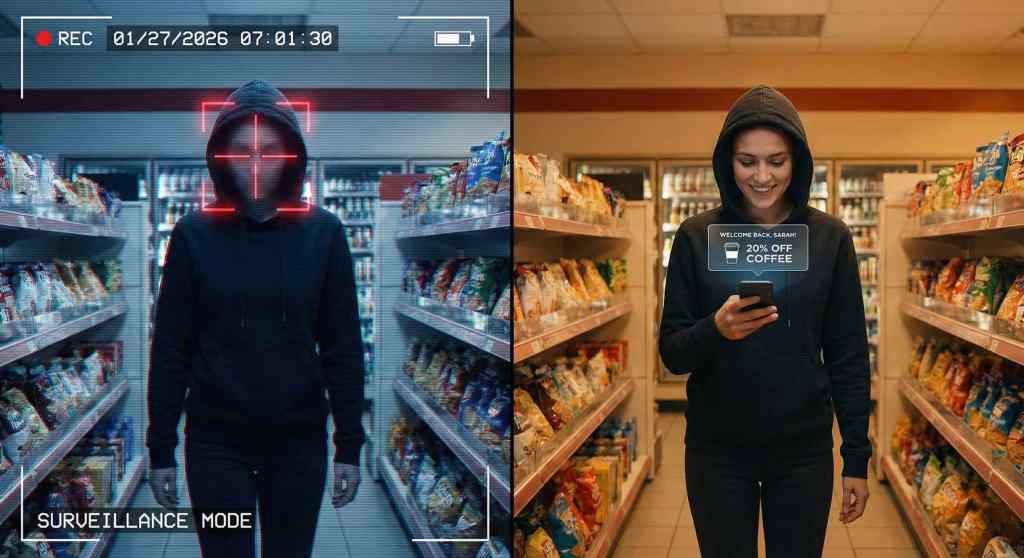
In robotics, the “Uncanny Valley” is that feeling of revulsion we get when a robot looks almost human but not quite. It makes our skin crawl. In retail, we have a similar zone where technology crosses from helpful to invasive.
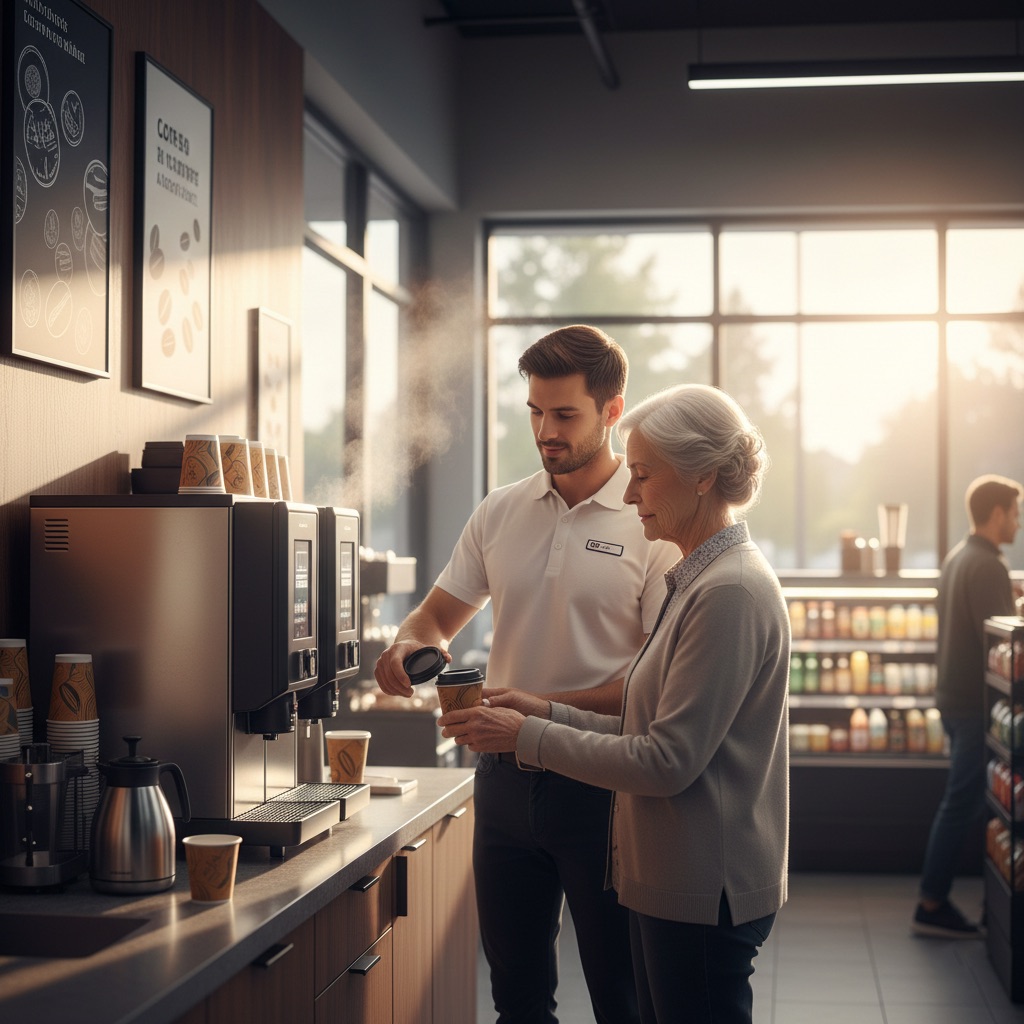
- Cool: You walk into a store, scan your app, and get a coupon for your favorite drink.
- Creepy: You walk into a store, and a digital screen greets you by name without you scanning anything.
The difference isn’t the technology; it is Agency.
In the first scenario, the customer initiated the action. They felt in control. In the second, the store “stole” the recognition. This distinction is vital. If the customer feels they are driving the experience, it’s cool. If they feel like a passenger in your data collection machine, it’s creepy.
What You Should Be Doing
- Audit Your Tech: Walk through your own customer journey. identifying moments where data is used.
- Ask the “Agency” Question: For every interaction, ask: “Did the customer ask for this?” If the answer is no, you are risking the “Creepy” label.
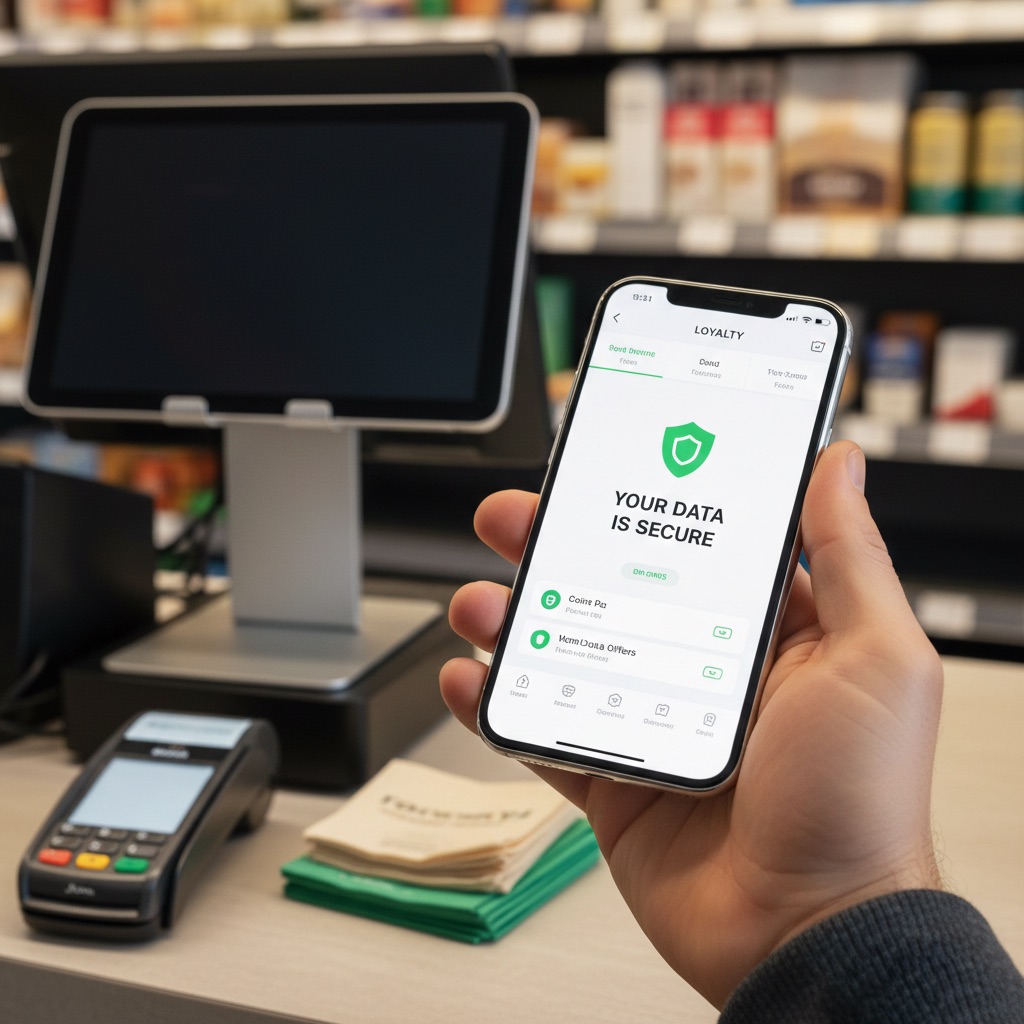
- Opt-In Only: Ensure your personalization features are strictly opt-in, never default.
The Facial Recognition Disaster
Nothing illustrates the “Creepy” side better than the recent backlash against facial recognition.
Major retailers like Wegmans and Sainsbury’s faced public outrage when they rolled out facial recognition cameras. Their intent was loss prevention, stopping shoplifters. But the customer perception was “mass surveillance.”
Wegmans had to deal with protests and legislative scrutiny because they were scanning every customer against a database. Even if you aren’t storing the data, the act of scanning biometric information without explicit, enthusiastic consent is a third rail in today’s market.
Consumers view their face as the ultimate private property. If you try to monetize or monitor it, you are crossing a line that few are willing to tolerate. My advice? Stay away from facial recognition for marketing. It is radioactive.
What You Should Be Doing
- Ban Biometrics for Marketing: Do not use facial recognition to identify loyalty members or trigger ads. The risk/reward ratio is terrible.
- Stick to Anonymity: Use computer vision for inventory (spotting empty shelves) or queue management (detecting long lines) but ensure the system does not identify specific people.
- Publicize Your Restraint: If you use cameras, clearly state on signage: “These cameras monitor shelves, not people.”
Geofencing: The “Cool” Way to Stalk
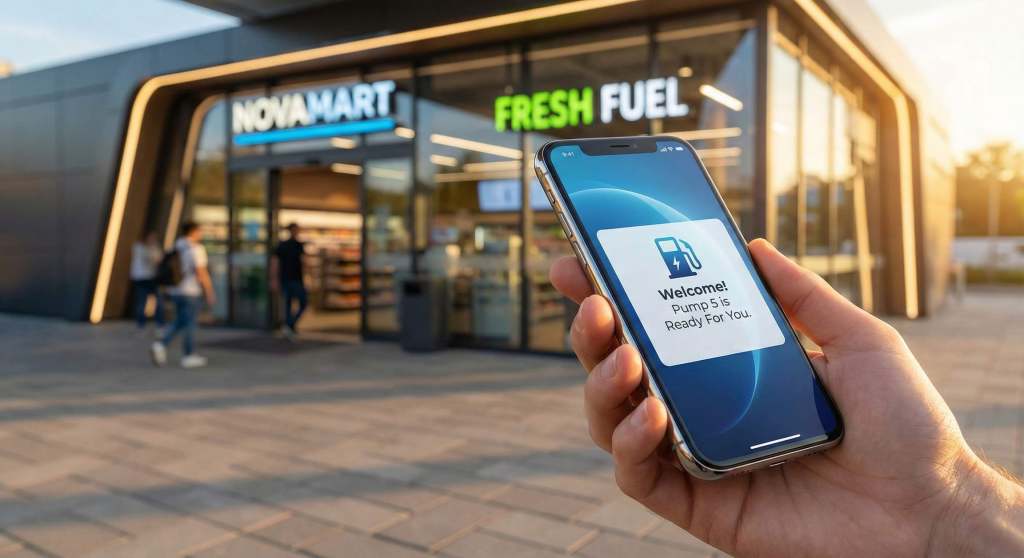
On the flip side, we have geofencing. This is the technology that draws a virtual perimeter around your store. When a customer crosses it, their phone pings.
This can be creepy, but when done right, it is incredibly effective. The difference lies in the Value Exchange.
Giants like Walmart use geofencing to trigger a “Welcome” mode in their app. When a customer enters the geofence, the app switches from “Browsing Mode” to “Store Mode,” automatically pulling up their shopping list and aisle locations. This is helpful. It saves time.
But then there is “Competitive Conquesting.” This is where you geofence a competitor’s location and send a coupon when a customer drives onto their lot. While effective (some campaigns see triple the industry average conversion rates), it is aggressive. As privacy sensitivity grows, I advise caution here. It is far better to geofence your own lot to improve the service experience (e.g., “Pump 5 is ready for you”) than to bombard people when they are trying to buy gas elsewhere.
What You Should Be Doing
- Focus on Service, Not Sales: Use geofencing to trigger helpful tools (store maps, mobile pay readiness) rather than just spamming coupons.
- The “Welcome” Notification: If you use geofencing, send a notification that acknowledges it transparently: “Welcome to [Store Name]! Open the app for your rewards.”
- Immediate Value: Ensure the very first interaction upon entering the geofence gives the customer something they want (e.g., Wi-Fi connection or a fuel discount).
Just-In-Time Permissions
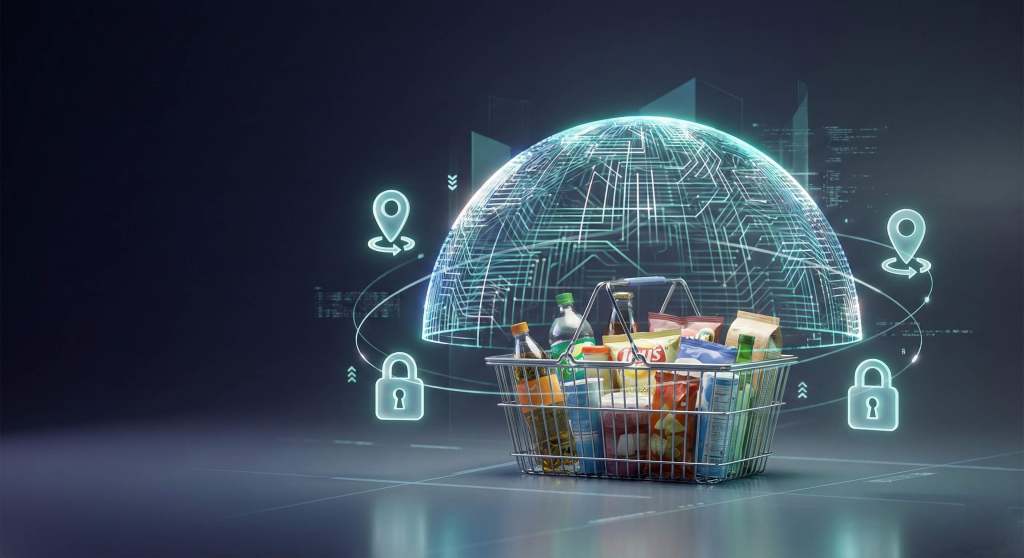
The key to making these technologies feel “Cool” rather than “Creepy” is exactly when and how you ask for permission.
In the past, apps would ask for “Always On” location access immediately upon installation. That is a huge red flag for users. Today, the best practice is “Just-in-Time” permissions.
Don’t ask for location access when the app installs. Ask for it when the user taps “Find Store”.
The user thinks: “I want to find a store.” The app needs to know where I am. Okay, Allow.” The logic is linear and transparent. You aren’t spying; you are assisting.
What You Should Be Doing
- Review Your Opt-Ins: Go through your loyalty app right now. When do you ask for location data? If it’s on the first screen, move it.
- Contextual Requests: Move permission requests to the exact moment the user attempts to use a feature that requires that data.
- Explain the “Why”: Change your permission prompt text. Instead of just “Allow location access?”, use “Allow location access so we can find the nearest store to you?”
The Bottom Line: Earning Trust Through Transparency
Navigating the “Creepy vs. Cool” divide is about empathy. It’s about understanding that your customers want to be recognized, but they don’t want to be watched.
Every piece of technology you deploy should answer one question: Does this give the customer more control, or less?
But this isn’t just about good customer service anymore. It’s about the law. In the next post, I’m going to walk you through the regulatory tsunami that is hitting our industry. California’s AB 446 (The Surveillance Pricing Protection Act) and the EU AI Act are changing the rules of the game, and if you’re using “surveillance pricing,” you might soon be breaking the law.



 The5For
Leave a reply to Part 5: The Law is Coming – The5For Cancel reply