Why Reliability and Security Are Your Best Marketing Tools
In our first post, we established that your relationship with the customer is your most valuable asset. We touched on how the industry is shifting away from a pure commodity model toward a “community” model where connection is the engine of growth. But for that engine to even start, you need a spark. That spark is trust.
As an operator, it’s tempting to think of trust as something “soft” or intangible. You might think, “As long as the lights are on and the milk isn’t expired, they’ll trust me.” But the psychology of high-frequency retail tells a much deeper story. Trust isn’t just about avoiding a negative; it’s the active, primary driver of why a customer chooses your store over the competitor across the street.
In today’s post, we’re going to look at the hard data behind consumer trust. We’ll explore why reliability, responsiveness, and assurance are the three pillars of your brand’s reputation. We will also address the growing importance of data security, a factor that can end a relationship faster than a broken fuel pump. By the time you finish this, you’ll see trust not as a “nice-to-have,” but as the foundational infrastructure of your business.
Building trust isn’t a one-time marketing campaign; it is a daily operational discipline. When a customer pulls onto your lot, they are subconsciously scanning for “trust signals.” They want to know if they are safe, if they will get what they paid for, and if you value their time. If you can answer “yes” to those questions consistently, you move beyond being a stop on a map and become a destination in their lives. Let’s dive into how we turn that abstract feeling of trust into a concrete business strategy.
The Bridge Between Attitude and Action
When we talk about loyalty, we often confuse two vastly different things: behavioral loyalty and attitudinal loyalty.
Behavioral loyalty is when someone shops with you because you’re on their way to work. It’s convenient, but it’s fragile. If a new store opens two blocks closer, they’re gone. Attitudinal loyalty, however, is a psychological commitment. This is the customer who goes out of their way to visit you. Why? Because trust acts as the bridge between their positive feelings and their repeated actions. Research utilizing the SERVQUAL model, a multi-dimensional research instrument designed to capture consumer expectations, shows that trust is the predominant factor affecting brand loyalty. In fact, it explains nearly 28.5% of why people stay with a brand.
For a convenience store, this trust is built on three specific factors that I want you to burn into your mind:
- Reliability: Consistently delivering on your promises, whether it’s the quality of your coffee or the accuracy of your shelf-edge pricing.
- Responsiveness: Your staff’s willingness to help and provide prompt service when something goes wrong.
- Assurance: The sense of security and confidence the customer feels from the moment they enter your lot to the moment they leave.
The New Frontier: Data Trust and Consistency
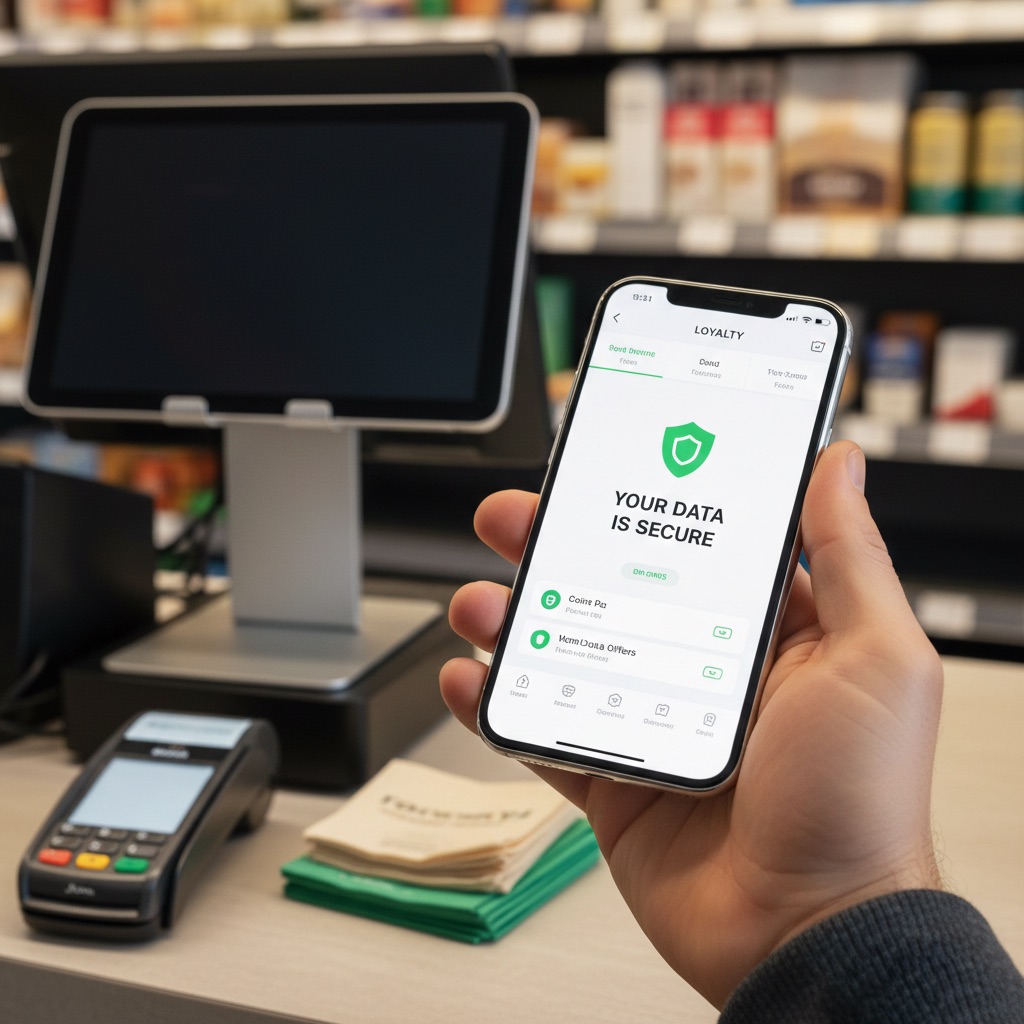
In 2026, trust has a new dimension: digital security. As we move more of our business into mobile apps and loyalty programs, we are asking customers to trust us with their personal information. This is a high-stakes game. Over one-third of consumers say they will withdraw their loyalty immediately if they feel a brand has misused their data.
This isn’t just about hackers. It’s about transparency. If your loyalty program feels “sneaky” or if your pricing is inconsistent between the shelf and the app, you trigger “cognitive dissonance.” That’s a fancy psychological term for that gut feeling a customer gets when something doesn’t add up. Once that dissonance sets in, the comfortable sense of reliability that regular patrons seek is shattered.
Consistency is the antidote. When your brand messaging, product quality, and service levels match every single time, you create a sense of predictability. To the busy, stressed-out customer, that predictability is incredibly comforting. It makes your store a “safe harbor” in their day. If they know exactly what the experience will be like, they don’t have to spend mental energy deciding whether to stop. They just stop.
What You Should Be Doing
To solidify the foundation of trust in your store, focus on these actionable steps:
- Standardize the “Fundamentals”: Trust starts with the basics. Ensure your bathrooms are cleaned on a strict, documented schedule and your “fresh” food is truly fresh (checked and rotated every few hours). Consistency in these “tangibles” is the first step toward building assurance.
- Be Radical with Data Transparency: If you use a loyalty app, tell your customers exactly what you do with their data. A simple, plain-English privacy promise at the point of sign-up can set you apart from national chains that bury their terms in legalese.
- Train for Responsiveness: When a customer has a problem, like a pump that won’t start or an app that won’t scan, your staff needs to respond with immediate “willingness to help.” A prompt, empathetic solution can actually increase trust more than if the problem had never happened at all (this is known as the Service Recovery Paradox).
- Audit Your Trust Signals: Walk your store through the eyes of a stranger. Are there security badges or certifications visible? Is your return policy clearly posted? Do your employees wear clean, professional uniforms? These small signals tell the customer’s brain, “This is a professional, reliable place.”
- Synchronize Your Pricing: Ensure your digital prices (on the app/website) and physical prices (at the pump and shelf) are identical. Nothing erodes trust faster than a “price surprise” at the register.
The Bottom Line: Trust is the Upward Spiral
I’ve seen many operators try to “buy” loyalty with deep discounts, only to find that those customers disappear the moment the promotion ends. That’s because they were building on the sand of price rather than the rock of trust. When you prioritize trust, you create an “upward spiral.” Trust sparks loyal behavior, and that loyal behavior strengthens the emotional connection, which in turn builds more trust.
Think of it as a long-term contract. Every time you fulfill a promise, you are signing that contract again. It could be a small promise, like having their favorite snack in stock. It could also mean ensuring the receipt paper in the pump isn’t empty. If you keep the contract for months and years, you earn the right to the customer’s “attitudinal loyalty,” which is much harder for competitors to break.
It’s about being a “loyal friend” to your customer. Just like a real-life friendship, this takes time and intentional effort. You have to prove yourself over and over again. But once you do, you become more than just a convenience store; you become a trusted part of their daily ritual. You become the place they don’t have to think twice about visiting.
In this post, we’ve covered why reliability, responsiveness, and security are the bedrocks of your reputation. We’ve looked at how trust bridges the gap between a customer simply “using” your store and a customer “loving” your store. We also addressed the critical need for data transparency in a digital-first world.
Now that we’ve built the foundation of trust, we need to talk about how to manage the “currency” of that relationship. In our next post, we’re going to dive into The Emotional Bank Account. We’ll use the groundbreaking research of Dr. John Gottman to show you how to measure the “balance” of your customer relationships and how to avoid the “withdrawals” that lead to relational bankruptcy.
I’ll see you in Part 3.



 The5For
Leave a comment