The 2026 Masterclass on Turning Convenience into a Community Lifeline
The convenience retail landscape in 2026 has reached a definitive inflection point. For decades, our industry was defined by two variables: speed and fuel. But as I look at the stores successfully scaling today, those old metrics are no longer enough to guarantee a seat at the table. We have moved into an era where the traditional boundaries between commerce, public utility, and social infrastructure have blurred. No longer merely transient stop-offs for immediate-consumption snacks, the most profitable stores are being reimagined as “Community Lifelines.”
This isn’t just a marketing buzzword. The terminology is borrowed from federal emergency management frameworks, defining a lifeline as a critical service essential to human health and safety. In 2026, owner-operators have discovered that embracing this role is the most potent driver of foot traffic, basket size, and long-term brand equity in an increasingly competitive mobility environment.
What we’re seeing is a “Reputation Revolution.” While inside transactions saw a slight dip of 1.9% recently, average basket values grew by 3.2%. What does that tell us? It means that while fewer people might be aimlessly wandering in, the ones who do are coming for a specific purpose, and they are spending more when they find it.
In this guide, I’m going to walk you through the three pillars of the 2026 “Community Lifeline” strategy: Water, Health, and 24/7 Service. We will move from the high-level “why” to the surgical “how,” focusing on the equipment, design, and marketing shifts required to turn your store into an urban institution. By the end of this post, you will have a prioritized 12-month roadmap to transform your footprint from a simple shop into a neighborhood anchor.
The Foundational Landscape: Why “Community Lifelines” Rule 2026
To understand why we need to pivot, we must look at the social fabric of 2026. For many residents, particularly the elderly or those working remote, the local convenience store represents their only social interaction of the week. Research shows the average customer visits their local store 2.7 times per week. Compare that to a grocery store or a pharmacy, and you start to see the immense power of our frequency.

The Power of the 2.7x Visit
The convenience store is uniquely embedded in the community space. In 2026, 57% of our customers arrive on foot. Perhaps most importantly, 36% of your customers report knowing you or your staff “quite well” or “very well.” This level of trust is a commodity that big-box retailers and pure-play e-commerce giants cannot buy.
When we talk about “Community Lifelines,” we are talking about institutionalizing that trust. The stores that are winning today are moving away from “simple commerce” and toward “urban institutionality.” They are prioritizing the stabilization of the community’s social fabric because they recognize that a store’s financial health is linked to its neighborhood’s well-being.
The Shift from Gas to Gourmet
We’ve all seen the headlines: “C-stores are the new QSRs.” By now, 72% of consumers view c-store food as a viable alternative to quick-service restaurants. But in 2026, “foodservice” has evolved into “wellness-service.” The reputation of our industry has moved toward quality, freshness, and cleanliness. If your store still smells like old fryer grease and looks like a 1990s truck stop, you aren’t just losing sales; you are becoming irrelevant to the 2026 consumer.
What You Should Be Doing: Establishing Your Foundation
- Audit Your Trust Equity: Are your employees trained to provide a “listening ear”? In 2026, the clerk is no longer a transactional agent; they are a community signpost.
- Analyze Your Pedestrian Flow: With 57% of traffic on foot, your storefront and signage must be optimized for the sidewalk, not just the street.
- Define Your “Social Role”: Determine if you are a “Third Place” gathering hub or a “High-Speed Lifeline.” Your design must reflect one or the other.
Strategic & Operational Execution: Water and the “Hydration Hub”
In the heat of June and July 2026, hydration has transitioned from a product category into a critical public health service. As climate change increases the frequency of extreme heat events, the store’s hydration stations have become vital infrastructure.
The Death of the Soda Fountain; The Birth of the Hydration Hub
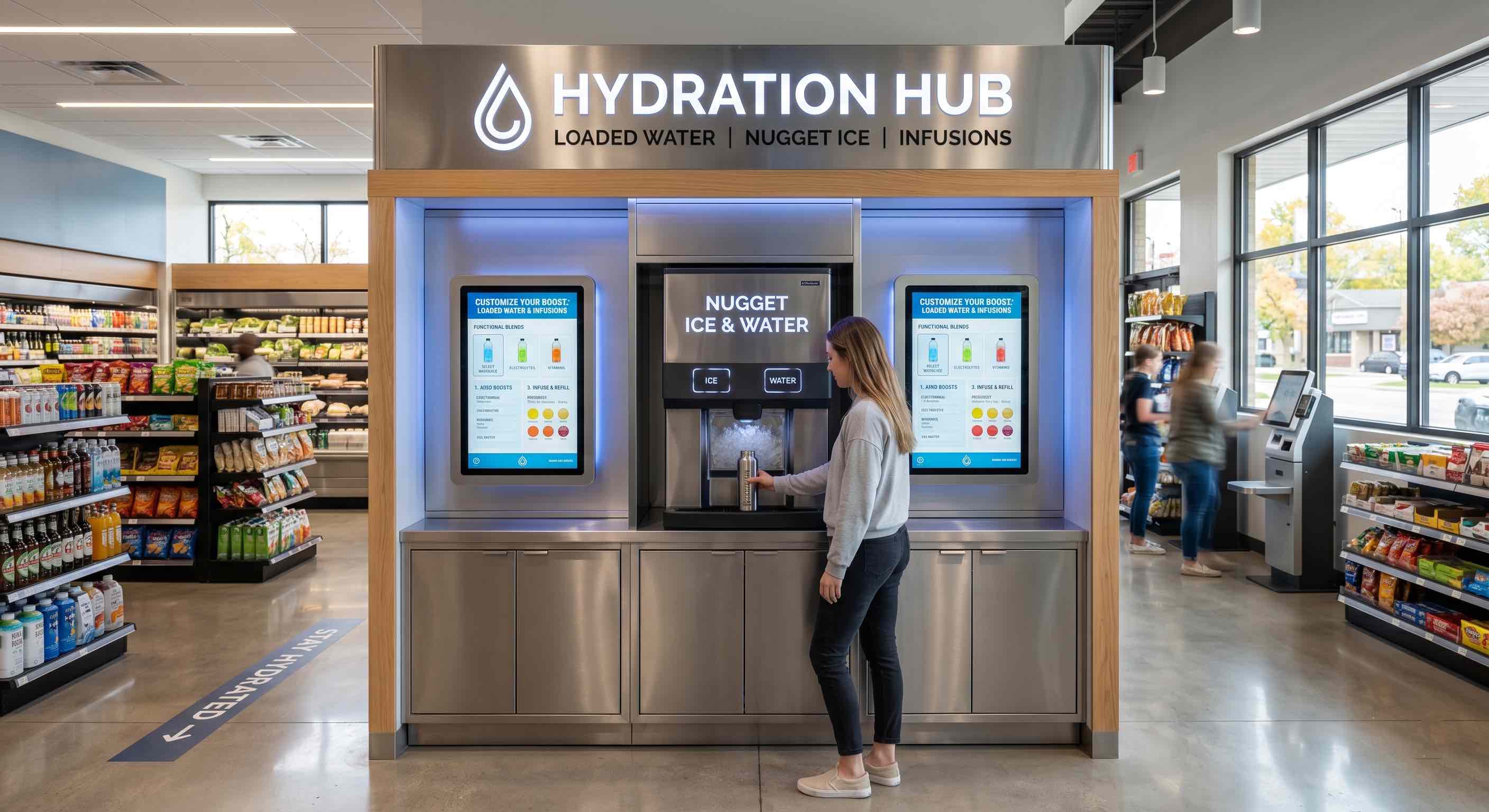
The 2026 operator no longer views the fountain as a source of sugary carbonation. We are designing “Hydration Hubs.” Consumers are seeking “everyday wellness” solutions that fit their routine, with 78% of people citing hydration as their top health and wellness goal.
From an equipment perspective, this means a total rethink of the beverage wall. We are seeing a massive trend in “Loaded Waters”, dispensed water stations that allow for healthy add-ons like electrolyte shots, liquid vitamins, and gut-health boosters.
Equipment and Design: The Quality of the Cold
As your equipment partner, I cannot stress this enough: in 2026, the “quality of the cold” is a primary differentiator. High-clarity ice, nugget ice, and precision-chilled dispensed beverages are essential. We are moving away from standard plastic bins and toward modular, stainless steel “Mobile Hydration Stations” that can be moved to high-traffic areas during heat waves.
What You Should Be Doing: Operationalizing Hydration
- Upgrade Your Ice: Invest in nugget or chewable ice dispensers. Younger demographics specifically seek out “specialty ice” as a destination draw.
- Build “Heat Wave Preparedness Kits”: Bundle high-SPF sunscreens, cooling towels, and electrolyte powders near your water station.
- Implement “Loaded Water” Signage: Use digital signage to teach customers how to customize their water with functional shots.
- Sustainable Messaging: Partner with local water authorities. If your city is running sustainability initiatives, mirror that messaging at your pump and your tap to build goodwill.
Innovation & Profit Maximization: Health, Wellness, and the GLP-1 Economy

The most significant shift in the 2026 c-store model is the adoption of “structured public health messaging” and the pivot toward the “Retail Healthcare Hub.”
The GLP-1 Shift: “Salad Mode” is Real
The rise of GLP-1 weight-loss drugs (like Ozempic and the now-ubiquitous Amazon Foundayo) has fundamentally altered summer eating habits. Consumers are moving away from heavy carbohydrates, the old “pasta and beans” fillers, and into what we call “salad mode.”
These customers are susceptible to dehydration and are actively seeking high-protein, nutrient-dense snacks. In 2026, 66% of consumers say their purchasing decisions are influenced by perceived health impacts. If you aren’t “protein-maxxing” your grab-and-go case, you are leaving money on the table.
Signposting: The Store as a Social Safety Net
“Structured signposting” is the act of using your store’s communication channels to point customers toward local health services. This might mean digital flyers for local memory screenings, mental health resources, or community blood drives. This isn’t just “being nice”, it’s building “Customer Equity.” When a customer views your store as a psychological safety net, their loyalty becomes unbreakable.
24/7 Day: Branding Reliability
July 24 is “24/7 Day.” This isn’t just another Hallmark holiday; it is our industry’s primary vehicle for demonstrating our role as a Community Lifeline. By recognizing first responders, medical personnel, and Red Cross volunteers, you aren’t just giving away a free coffee; you are engineering brand equity through reliability.
What You Should Be Doing: Maximizing Health and Goodwill
- Curate a GLP-1 Friendly Zone: Group high-protein, fiber-rich snacks and probiotic-infused beverages together with clear “Wellness” signage.
- Institutionalize “Signposting”: Partner with local VCFSE (Voluntary, Community, Faith, and Social Enterprise) organizations to display “what’s on” flyers in your store.
- Activate 24/7 Day Strategically: Don’t just do one day. Follow the lead of innovators who run month-long campaigns, donating a portion of every beverage sale in July to the Red Cross.
- Host Local Heroes: Use 24/7 Day to host a “Firehouse Lunch” or present plaques to local police. This creates high-engagement social media content that reinforces your store as a social hub.
The Executive Action Plan: Your 12-Month Roadmap
To fund these community initiatives, you must be ruthlessly efficient. In 2026, this means “Invisible AI.” AI should be the quiet infrastructure behind your smarter store layouts, inventory forecasting, and dynamic pricing.
Phase 1: The First 30 Days (Assessment & Quick Wins)
The goal here is “APOETE”: Assess, Plan, Organize, Equip, Train, and Exercise.
- Week 1-2: Conduct a “Community Audit.” Identify the local health clinics, non-profits, and first responder units in a 3-mile radius.
- Week 3-4: Optimize your Local SEO. Claim your Google Business Profile and ensure your “Hydration” and “Health” keywords are updated. Ensure your restrooms are “Gold Standard” clean, this correlates directly to food quality perception.
Phase 2: The 90-Day Sprint (Operational Pivot)
- Month 2: Install “Invisible AI” tools for inventory management. Eliminate the mundane tasks like manual cash counting by outsourcing cash management so your staff can focus on face-to-face service.
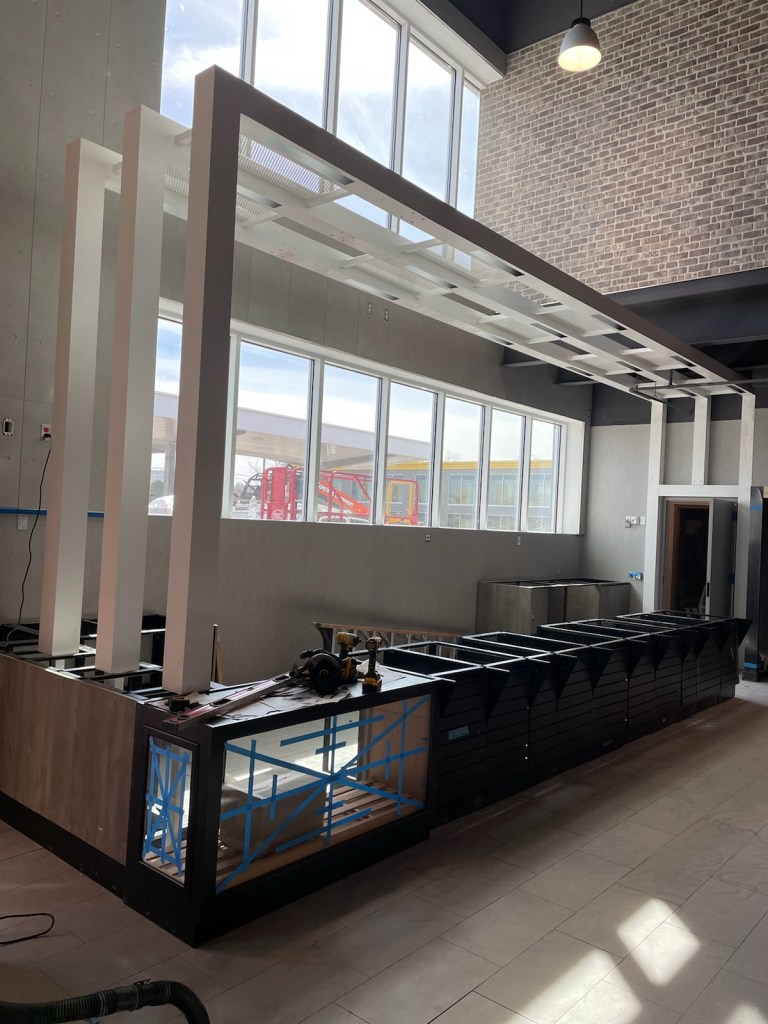
- Month 3: Refresh your dispensed beverage area into a “Hydration Hub.” Introduce functional shots (electrolytes, protein) and update your graphics to reflect a “Wellness” theme.
Phase 3: The 12-Month Vision (Institutionalization)
- Months 6-12: Re-evaluate your footprint. Is there room for “Third Place” amenities? Think café-style seating, premium WiFi, and charging ports. As EV charging becomes more prevalent, you need to cater to the 20-30 minute dwell time.
- The Goal: By the end of Year 1, your store should be a “Node of Services.” You aren’t just selling products; you are offering time and space solutions.
The Bottom Line: Becoming the Institutional Anchor
The convenience store owner-operator of 2026 is a community architect. We have moved past the era where we can survive on fuel margins alone. The “Goodwill Equity” you build by serving as a Community Lifeline is now a quantifiable variable that shows up in higher retention rates and a 22% increase in basket size for loyalty members.
By focusing on Water, Health, and 24/7 reliability, you are doing more than just selling; you are strengthening the social fabric of your neighborhood. You are the guardian of hydration during heat waves, the primary node for public health signposting, and the 24/7 sanctuary for the heroes who keep our world running.
Don’t let another summer heat wave catch you unprepared. Conduct a “Community Audit” today.
Leave a Reply