Convenience Excellence, Supply Chain Resilience, and the Final Summer Push
The convenience store industry in late July 2026 is navigating a uniquely challenging macroeconomic climate. Geopolitical uncertainty and economic softening, highlighted by a domestic unemployment rate edging toward 7.7%, are weighing heavily on consumer confidence. Cost fatigue and persistent market pressures have created a K-shaped retail economy.
This polarization is deeply split along income lines. Households with annual incomes at or above $100,000 report stable spending and high consumer sentiment, while households earning below $75,000 are actively cutting back on non-discretionary purchases, including everyday groceries and fuel.
This divergence has permanently dismantled traditional brand loyalty. The modern consumer has adopted a hyper-vigilant shopping pattern characterized by continuous price-checking and aggressive channel switching.
In fact, 41% of convenience store shoppers now actively compare prices across multiple locations, a behavior outpaced only by grocery and fuel customers. Rather than relying on a single favorite store, the average US consumer now visits 3.2 different convenience store brands per month, a significant 17% year-over-year increase.
This means that every time a motorist pulls onto your forecourt, they are an “uncommitted customer”. They are highly willing to bypass your store and visit a competitor if your shelves are bare, your checkout lines are too slow, or your retail environment looks dated.
As an industry partner specializing in custom store cabinetry, retail equipment, interior design, and high-impact graphics, I look at this market polarization and see an extraordinary opportunity. Winning the final weeks of summer isn’t just about cutting prices; it is about absolute operational discipline, seamless checkout technology, and an elevated foodservice presentation.
In this ultimate guide, I will walk you through the four essential pillars of convenience excellence for 2026. You will learn how to turn your physical store design into your most powerful customer acquisition tool, ensuring you capture every uncommitted dollar before the summer heat fades.
The Foundational Landscape: Mapping the Shifting 2026 C-Store Consumer
To win the final summer push, we must first understand how the physical nature of the convenience store visit has evolved over the past 12 months. Across the country, brick-and-mortar retailers are experiencing steady overall foot traffic, but the structure of that traffic has fundamentally shifted.
Consumers are making quicker, more frequent retail trips, but they are filling much smaller baskets per visit. They are using each micro-trip to manage their household budgets in real time.
Quick-trip shopping frequency has surged by 8.9% year-over-year. Meanwhile, the average retail basket size has contracted by 11% in overall unit volume.
Furthermore, time spent inside the retail footprint is shrinking rapidly. Trips lasting less than 15 minutes now make up more than 40% of food retail visits nationwide.
Shoppers are entering your store with a hyper-focused, single-item mission, bypassing traditional aisles entirely. Transaction counts are flat, and unit sales are declining across nearly all top 10 in-store categories, with the sole exception of packaged sweet snacks.
This means the physical store layout must work harder than ever to trigger unplanned, impulsive purchases. Because 73% of all inside-store transactions are concentrated in just three core categories, packaged beverages (34.1%), tobacco/nicotine products (27.9%), and beer (11.2%), your high-traffic zones must be designed for maximum conversion.
If a customer pops in for a cold beverage and is met with a bottlenecked checkout line or a disorganized cooler, they will walk out without purchasing an add-on item. The final weeks of summer represent a critical, high-volume period driven by peak road trips and elevated beverage demand.
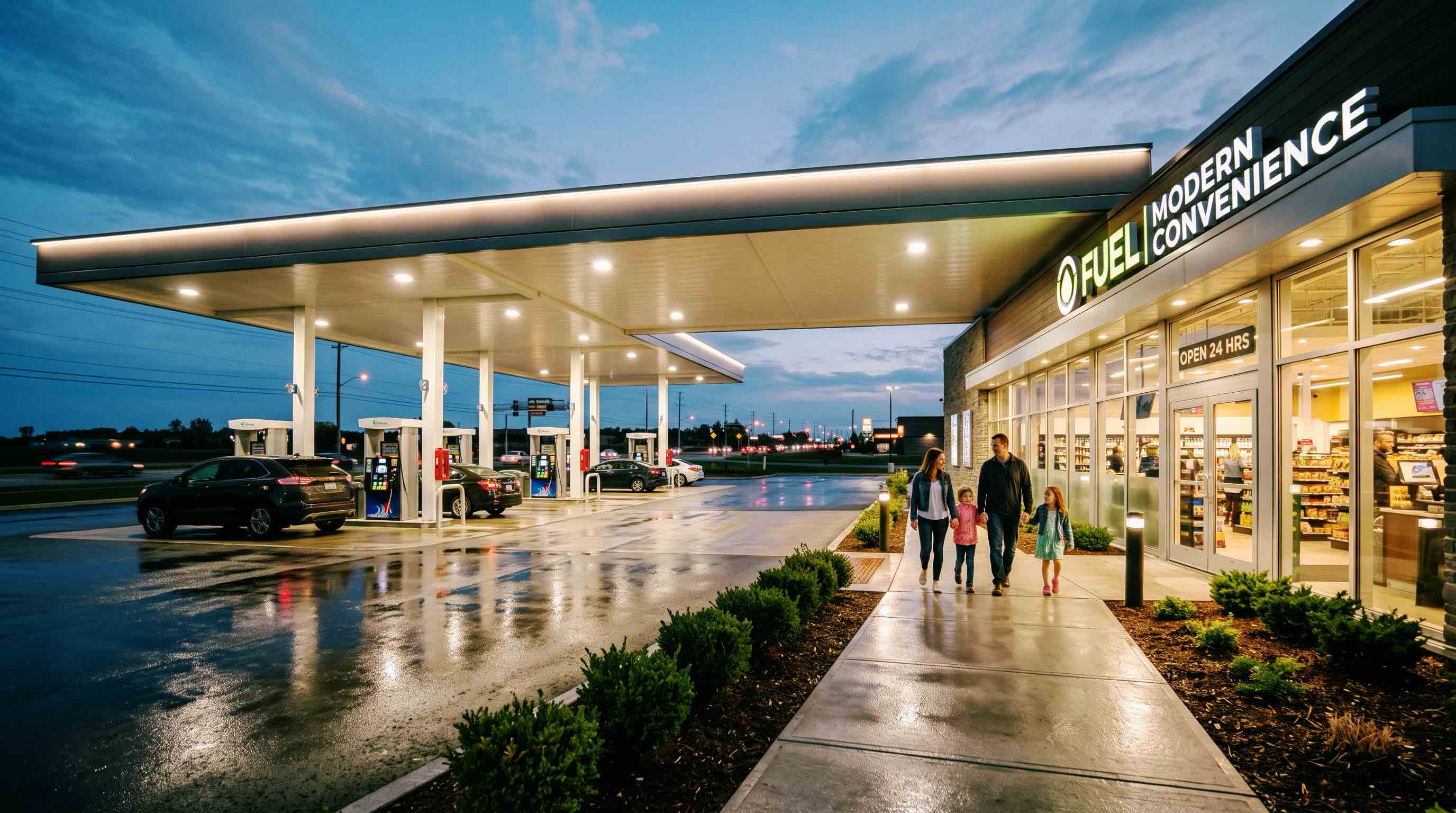
With 72% of Americans planning a road trip during this window, your store’s initial visual presentation is the defining factor in whether they transition from the fuel pump into your retail cabin.
What You Should Be Doing: Foundational Layout Adjustments
- Audit Your First 15 Feet: Dedicate the high-visibility zone immediately inside your entrance to seasonal travel bundles, grouping high-margin, immediate-consumption items together.
- Implement High-Contrast Graphics: Place bold, directional graphics on your entry doors and windows to guide uncommitted customers directly to your high-margin food and cold beverage zones.
- Optimize Sightlines From the Pump: Ensure your forecourt window graphics are professionally designed and uncluttered, giving motorists at the pump a clear, inviting view of your fresh coffee bar or clean-label grab-and-go coolers.
- Streamline Your Checkout Pathway: Remove all physical clutter around your registers to facilitate rapid, friction-free transactions for the 40% of guests completing micro-visits under 15 minutes.
Strategic & Operational Execution: Hardening Your Store with AI and Design Integration

Transitioning from foundational theory to daily practice requires absolute operational discipline. In a market where loyalty is highly fragmented, out-of-stock scenarios on core, fast-moving items are catastrophic.
When a price-sensitive, uncommitted customer encounters an empty shelf, they do not wait for your next delivery; they immediately leave and spend their money at one of your local competitors.
To defend your margins, you must integrate advanced back-of-house artificial intelligence with highly efficient, custom-engineered storefront cabinetry.
The financial cost of inventory inefficiency is staggering. Globally, more than $163 billion of retail inventory is discarded annually due to damage, oversupply, and poor planning.
For convenience store operators who operate on tight margins, inaccurate manual forecasting can inflate inventory holding costs by up to 30%, directly eroding baseline profitability.
By deploying predictive AI demand forecasting platforms, you can analyze real-time sales transactions, local traffic patterns, and weather changes to automate replenishment. This cutting-edge software reduces overall supply chain and forecasting errors by up to 50%, while slashing lost sales from stockouts by as much as 65%.
However, technology is only as effective as the physical environment in which it is installed. As a design partner, I frequently see retailers invest heavily in inventory software, only to have their staff struggle with outdated, hard-to-clean cabinetry or poorly arranged stockrooms that delay restocking.
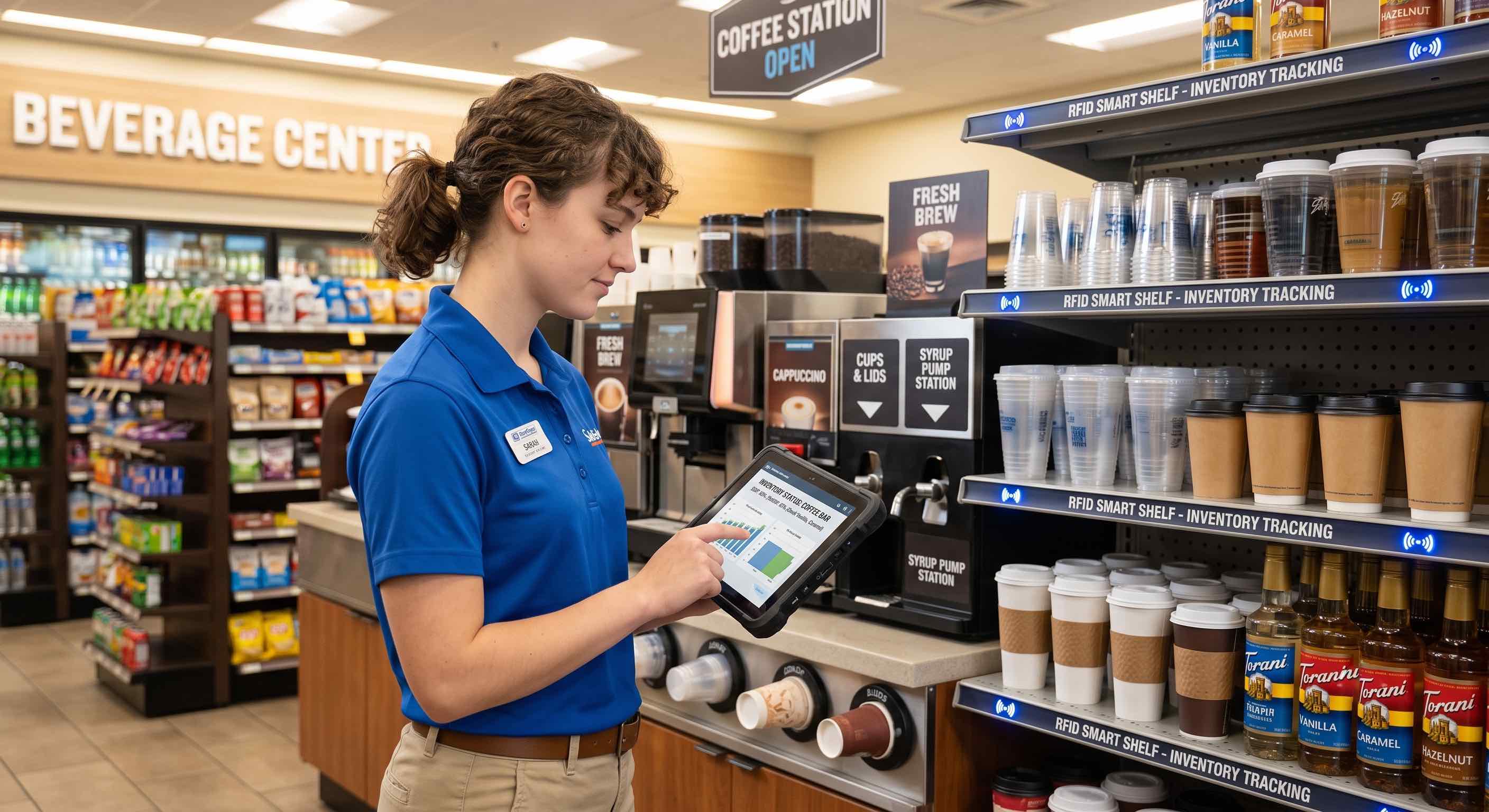
To achieve true operational excellence, your high-velocity categories must be supported by modern equipment, including RFID-enabled “smart shelves” and weight sensors. These systems monitor stock levels in real time and automatically alert floor staff when fast-moving items are running low, reducing out-of-stock rates by up to 30% and eliminating manual inventory checks by nearly 40%.
Similarly, back-office ERP platforms and mobile retail inventory systems allow your team to conduct rapid stock audits and immediate pricing updates directly from handheld devices on the sales floor. This mobility is crucial during chaotic summer travel rushes.
To maximize this efficiency, your point-of-sale (POS) cabinetry must be custom-designed to seamlessly house modern touchscreen cash registers, integrated customer-facing payment terminals, and automated age-verification scanners.
This keeps your transactions moving smoothly and reduces employee stress, allowing your frontline staff to focus on delivering exceptional, friendly customer service instead of wrestling with cluttered counters and tangled cords.
What You Should Be Doing: Operational Design and Inventory Alignment
- Install Custom POS Counters with Integrated Cable Management: Upgrade to heavy-duty, commercial-grade checkout counters that feature recessed cord ports and dedicated mounting brackets for dual POS screens and self-checkout kiosks.
- Incorporate Smart Shelving on High-Velocity Endcaps: Retrofit your primary impulse endcaps with smart shelf weight sensors and clean, high-impact branding graphics to automate stock alerts on top-selling packaged snacks and sports drinks.
- Design a Mobile Back-Office Hub: Configure a dedicated area behind your checkout counter with secure cabinetry to house mobile tablets, handheld scanners, and thermal label printers, keeping your real-time inventory management tools easily accessible.
- Standardize Frontline Task Checklists: Create high-visibility, laminated graphic templates on your back-of-house walls that outline daily operational and cleaning checklists, ensuring your staff maintains an immaculate, premium store appearance.
Innovation & Profit Maximization: Dominating the “Foodvenience” and Beverage Frontier
To truly differentiate your convenience brand from the competitive “sea of sameness,” you must aggressively transition into a genuine foodservice player. Foodservice has evolved into the absolute anchor of inside-store profitability, generating approximately 27.7% of in-store sales and representing nearly 40% of overall gross margin.
However, you cannot expect to quadruple your foodservice profits by simply trying to steal sales from the convenience store across the street; you have to steal them from traditional quick-service restaurants (QSRs).
The primary driver of the global foodservice revolution is the battle for the morning commute. The breakfast food market is projected to expand from $210 billion in 2026 to $255 billion by 2030, presenting a massive growth window for retailers who can execute high-quality programs at scale.
Customer demand for premium quality is at an all-time high, with 66% of all shoppers, and 72% of Gen Z, demanding premium, made-to-order meal options from convenience brands.
To successfully compete with QSRs, you must eliminate transaction friction by deploying self-service ordering kiosks. These kiosks manage morning rush periods with flawless order accuracy, freeing up your limited labor force to focus on food preparation and consistent quality control.
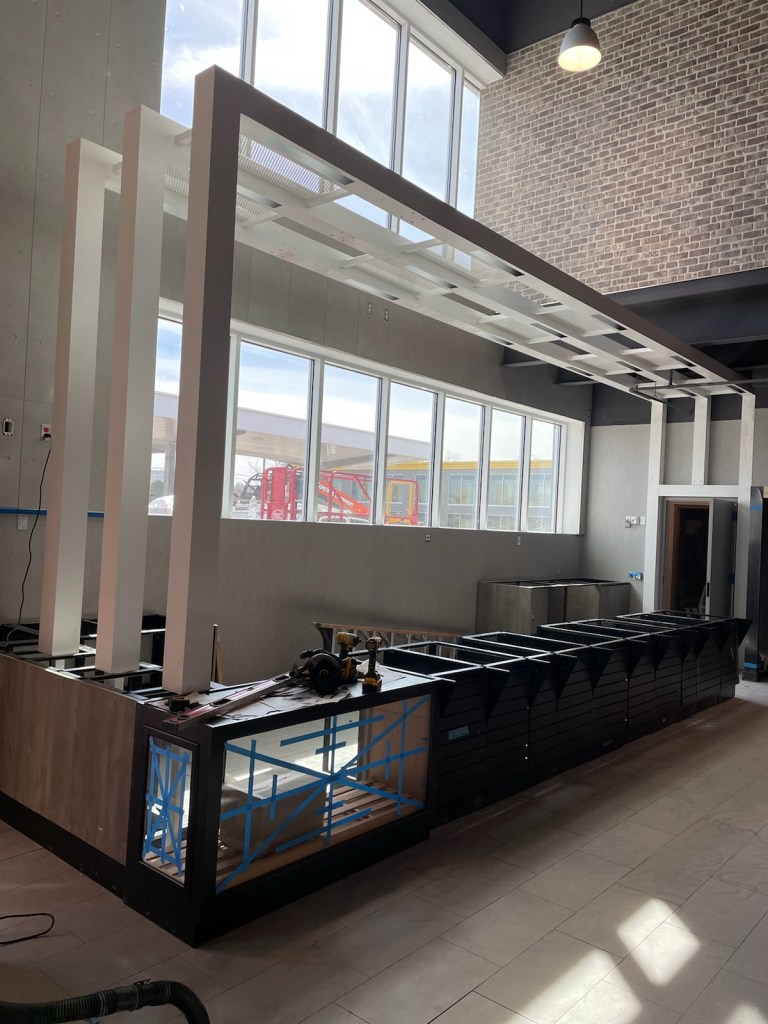
To support this premium food program, your physical prep area must be designed like a high-performance commercial kitchen. Outdated laminate counters and wire racks must be replaced with custom, non-porous solid surface countertops and integrated food-grade stainless steel cabinetry.
Your layout should guide the customer naturally from a sleek, self-service kiosk stand to a clearly designated pick-up station.
Additionally, you can extend your breakfast sales well into the afternoon by creating comfortable, modern “Third Place” dining environments. By incorporating café-style seating, built-in power outlets, USB ports, and premium wood-grain graphics, you transform your store from a quick transactional pit stop into an inviting social gathering space.
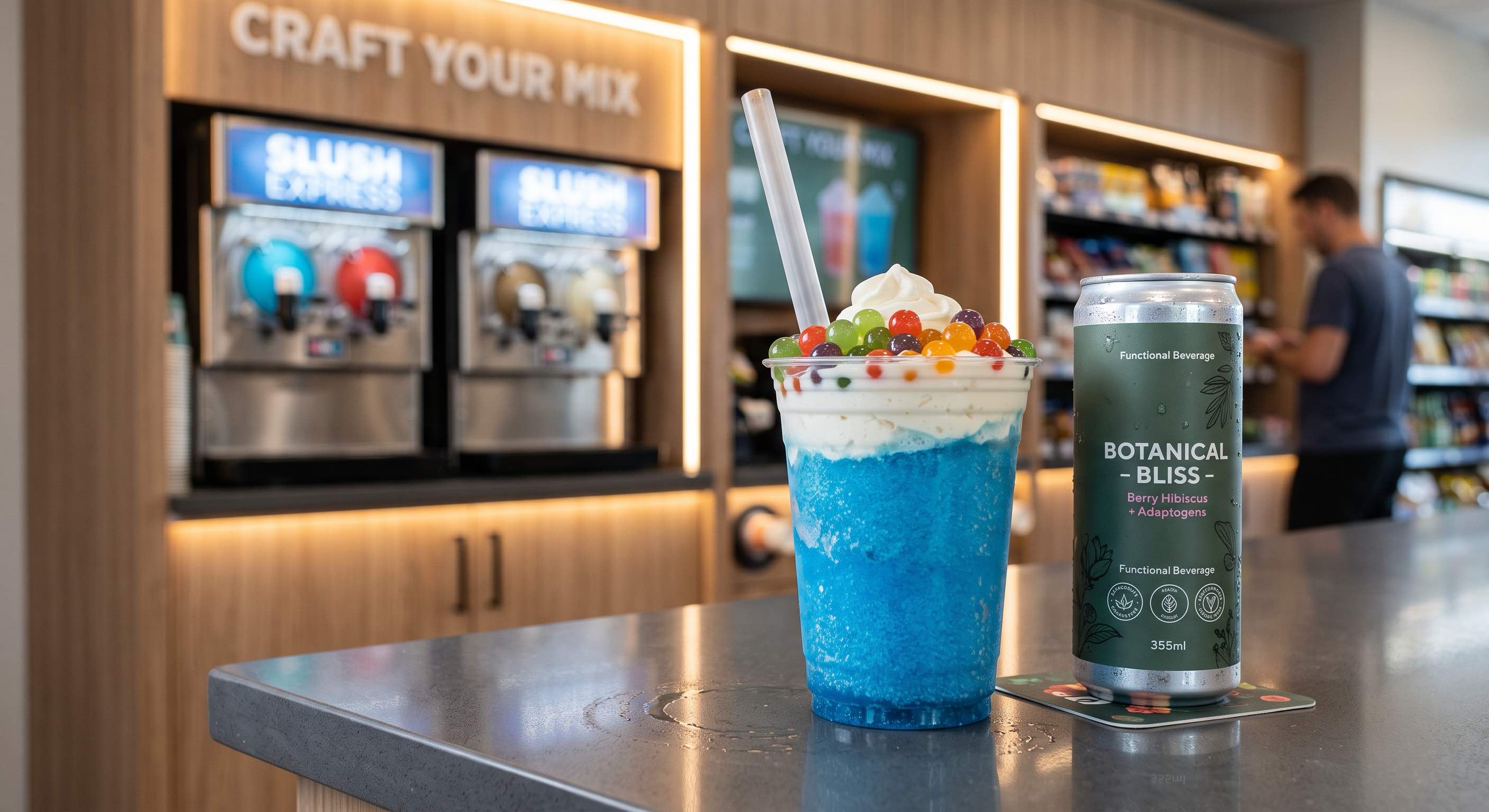
To maximize your transaction size, your premium foodservice program must be paired with cutting-edge beverage innovation. The beverage category is currently experiencing an unprecedented wave of product development, driven by two major consumer trends:
- Wellness and Portion Control: The rapid rise of GLP-1 weight-loss medications has significantly altered purchase patterns, driving a positive sales shift toward premium, portion-controlled, and single-serve items.Categories experiencing strong, health-aligned growth include clean-label deli meats, high-protein snack bars, Greek yogurt, fresh fruit, and advanced hydration beverages. To capture this spending, you must reallocate a portion of your cold vault and open-air coolers to “better-for-you” grab-and-go options, using clean, green graphics and bright LED lighting to draw focus to these high-margin, single-serve wellness items.
- Hemp-Derived, Low-Potency THC Beverages: Capitalizing on the federal framework of the 2018 Farm Bill, hemp-derived THC drinks have emerged as a highly lucrative, rapidly growing segment. Major retail chains like Circle K have successfully rolled out cold, single-serve cans of these drinks. Stevenson’s research at the NACS Show revealed that consumers have a powerful preference for cold, single cans of these beverages. The highly successful placement strategy is to merchandise these cold cans in a dedicated cooler door located directly adjacent to your beer vault, utilizing professional, high-visibility graphic wraps to educate consumers on dosage and build immediate trust.
Furthermore, convenience store operators can monetize these high-traffic product placements by establishing in-store Retail Media Networks (RMNs). RMNs are projected to generate a staggering $89 billion globally by the end of 2026, driven by point-of-decision advertising screens.
Because c-store shopping is heavily driven by immediate-consumption and impulse-oriented decisions, displaying digital ads at the fuel pump, on your endcaps, and near checkout registers can yield immediate sales lifts of 5% to 9% on advertised products.
This allows you to create a highly lucrative, secondary advertising revenue stream while enjoying a direct lift in your average basket size.
What You Should Be Doing: Foodservice and Beverage Maximization
- Deploy Custom Self-Service Kiosks: Install sleek, space-saving ordering kiosk enclosures with custom branding panels and recessed cords directly at the entrance of your foodservice zone.
- Incorporate Premium “Third Place” Seating: Design a dedicated seating bar against an underutilized perimeter wall, complete with durable commercial barstools, charging ports, and custom graphic accents.
- Reorganize Cooler Doors with High-Margin THC and Functional Zones: Create a high-visibility, designated door for cold, single-serve THC and prebiotic beverages, positioned directly adjacent to your beer cooler and framed with informational border graphics.
- Integrate RMN Digital Screens into Custom Endcaps: Partner with a quality design team to build custom, endcap display headers that house digital media screens, allowing you to run paid supplier advertisements right at the point of decision.
The Executive Action Plan: Your Prioritized Roadmap for the Next 12 Months
To successfully navigate the late-summer season of 2026, defend your profit margins, and capture the highly uncommitted consumer, you must execute a coordinated, phased operational roadmap.
Phase 1: Day 1 to 30 (The Critical Launch)
Your immediate, short-term focus must be on maximizing the transactional conversion of your existing forecourt traffic during the final summer road trip surge.
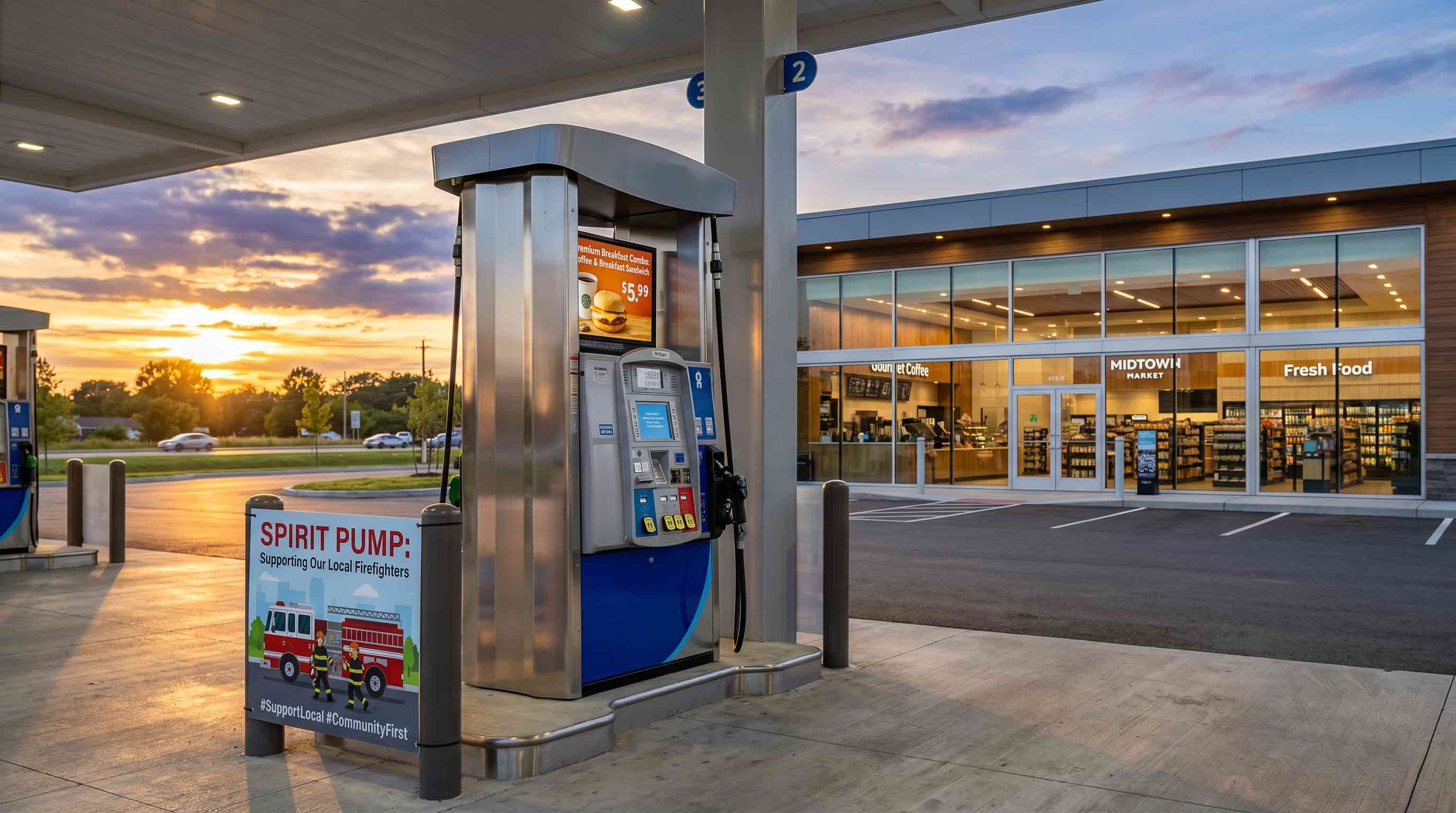
- Activate Reciprocal Pump-to-Store Promotions: Install high-visibility, weather-resistant graphic banners at every fuel pump, and program your digital dispenser screens to offer immediate-use fuel discounts when paired with the purchase of a fresh breakfast sandwich or a premium cold beverage.
- Optimize Impulse Checkout Zones: Install custom-engineered, quick-grab shelving units directly in front of your cash registers, stocking them with pre-packaged summer survival bundles (e.g., car-friendly snacks, water bottles, and wet wipes) to immediately boost unit counts and average basket size.
- Launch Summer Beverage Challenges: Distribute high-quality, branded insulated travel cups that offer discounted cold refills all summer long, encouraging daily recurring habits and securing the loyalty of local commuters.
Phase 2: Day 31 to 90 (Technology & Operations)
Once the summer peak begins to transition into early autumn, shift your focus to streamlining your labor costs and optimizing your inventory precision.
- Deploy AI-Powered Scheduling Platforms: Integrate labor optimization software like TimeForge to align your staff scheduling directly with real-time, predictive hourly visitor volume, reducing total labor expenses by 10% to 15% and cutting scheduling errors by 20%.
- Upgrade to Intelligent Smart-Shelving: Work with your equipment partner to install weight-sensing smart racks on your high-velocity beverage and tobacco endcaps, enabling real-time stock alerts that eliminate out-of-stock scenarios.
- Establish Measurable Vendor Scorecards: Transition your supplier relationships to a maintained system of record, utilizing centralized back-office reporting to track order fulfillment accuracy, SLA adherence, and delivery times, ensuring complete supply chain responsiveness.
Phase 3: Day 91 to 180 (Foodvenience Expansion)
During the mid-term phase, execute the physical design upgrades required to transform your store into a premium foodservice destination.
- Install Self-Service Ordering Kiosks: Deploy modern ordering kiosk stands with bright, intuitive user interfaces to handle peak rush hours and increase order volume without requiring additional register staff.
- Re-Engineer Your Food Prep Line: Replace porous counters with custom, seamless solid surface worktops and integrated hot/cold food-grade storage wells, maximizing hygiene and assembly speed.
- Incorporate “Third Place” Seating: Install a custom perimeter counter bar with integrated power charging outlets and wood-grain graphic wall paneling, giving customers a comfortable reason to stay and dine.
Phase 4: Day 181 to 365 (Brand Metamorphosis & Local Moat)
In the long term, complete your transition from a transactional commodity stop into an irreplaceable neighborhood social hub.
- Complete a Full Interior Design & Graphics Remodel: Execute a cohesive brand redesign featuring premium wood textures, bright LED menu boards, and highly professional local imagery to permanently distance your store from the “sea of sameness”.
- Deploy in-Store Retail Media Networks: Partner with a specialized equipment and media company to install digital advertising screens across your fuel dispensers, endcaps, and coffee bars, monetizing high-impulse point-of-purchase spaces.
- Launch Hyper-Local Goodwill Initiatives: Establish dedicated “Spirit Pumps” that permanently donate a portionof monthly fuel sales to your local volunteer fire department, and partner with regional public schools to donate fresh meals, building an emotional, unbreakable neighborhood bond.
What You Should Be Doing: Executing the Action Plan
- Designate a Technology Lead: Appoint a project manager to oversee your AI demand forecasting and labor scheduling integrations, ensuring the software is correctly tailored to your store’s unique operating hours.
- Consult a Professional Design & Cabinets Partner: Schedule a comprehensive store walk-through with an expert design team to analyze your current floor plan, identifying exactly where to install self-service kiosks, custom food service cabinetry, and premium seating.
- Set Clear Monthly KPI Milestones: Track and review critical performance indicators, including average basket unit counts, foodservice profit margins, and labor cost percentages, on a fixed, monthly schedule.
- Develop a Local Community Giving Calendar: Connect directly with your neighborhood’s schools, youth sports organizations, and first responders to schedule monthly community charity events, ensuring your goodwill campaigns remain active and visible.
The Bottom Line: Fostering Local Loyalty: The Human Moat as Your Ultimate Competitive Edge
At the end of the day, in a hyper-polarized and highly competitive retail environment where products, technology, and pricing are rapidly commoditized, the single greatest differentiator you have is human connection.
This industry has taught me a profound truth: customer loyalty in the convenience store sector is fundamentally personal rather than brand specific.
Focus group research consistently reveals that consumers are loyal to the people who work inside the store, rather than the corporate banner on the street or the specific product assortment on the shelf.
This means that your frontline employees are not merely a labor expense to be minimized; they are the ultimate strategic moat protecting your business.
To build an unbreakable retail brand, your internal investment in your team must align seamlessly with your external, hyper-local community involvement.
Beginners, Deciders, and highly Involved convenience shoppers all agree that how an operator treats their employees and engages with the local community is a defining factor in where they choose to spend their money.
By actively stepping up to support your neighbors, whether by donating surplus fresh produce to local food pantries, sponsoring youth sports teams, or hosting vibrant summer car shows in your parking lot, you create immense, emotional brand equity.
The final summer push of 2026 is here, and the uncommitted customer is deciding right now which of the local stores they will visit today. Don’t let them walk into a competitor’s store because your retail space looks dated or your checkout lines are too slow.
Now is the time to turn your physical footprint into your strongest competitive advantage, driving immediate foot traffic, increasing your average basket size, and securing lifelong customer loyalty.
Leave a Reply