Integrating Technology for a Frictionless Future
In our previous deep dive, we explored the fascinating world of gender-specific shopping behaviors. We discussed how men and women navigate your aisles differently, with men often on a “mission” and women frequentlyengaging in “discovery” shopping. We looked at how tailored lighting, signage, and product bundles can cater to these psychological drivers to increase basket size.
But even the most perfectly curated endcap or gender-neutral color palette can’t save a sale if the customer hits a bottleneck at the register. Today, we are tackling the “accelerator” of the modern convenience store: Technology.
As someone who spent years designing the cabinetry and equipment layouts that house these digital tools, I’veseen firsthand that technology is no longer a luxury “add-on.” In 2026, it is the very definition of convenience. We are moving beyond simple “self-checkout” into the era of Frictionless Commerce. If your store feels like a relic of the 1990s at the point of sale, you aren’t just losing time, you are losing the next generation of loyal shoppers.
In this post, we’ll explore how AI-powered checkouts, digital retail media networks, and IoT sensors are redefining the “18-second goal.” You’ll learn how to stop being a “human scanner” and start being a brand ambassador, ensuring that your physical space works as hard as your digital apps.
The 18-Second Mandate: Speed as a Currency

Wait times are the silent killer of c-store loyalty. Data shows that 64% of customers will walk out without buying a single thing if they perceive the line as too long. Furthermore, nearly 70% of shoppers rank the checkout experience as the single most important factor in how they perceive your brand.
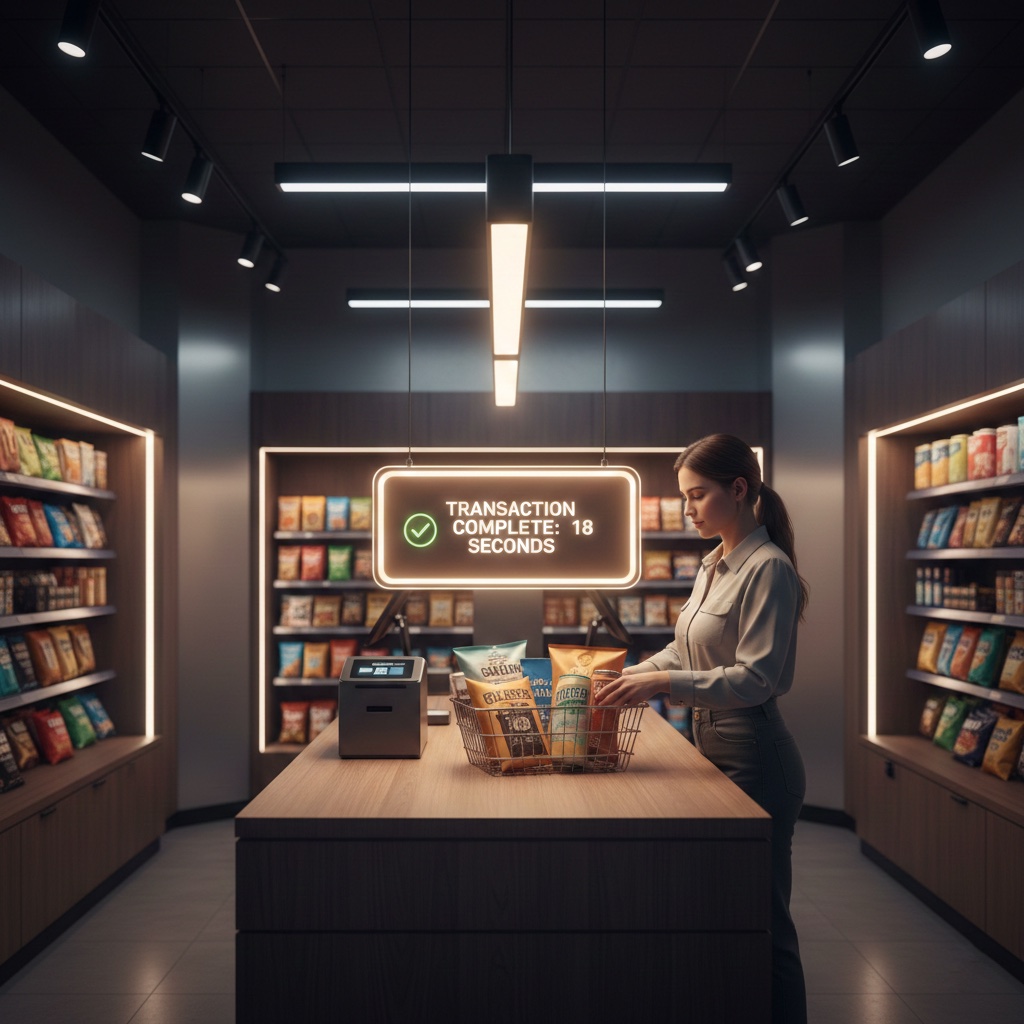
In the industry, we now aim for the 18-second transaction. This isn’t just a random number; it’s the psychological threshold where a customer feels the experience was “instant.” Systems like Mashgin, which use computer vision and AI to “see” items without barcodes, are reducing checkout times by 3x. When you remove the friction of hunting for a barcode or waiting for a slow card reader, you don’t just move people faster; you increase revenue by up to 400% at high-traffic sites because people stop “bailing” on their purchases.
What You Should Be Doing: Streamlining the Transaction
- Audit Your “Tail” Time: Use a stopwatch to measure how long it takes from the moment a customer reaches the counter to the moment they receive a receipt. If it’s over 30 seconds, you have a friction problem.
- Implement Computer Vision: Explore “scan-less” AI checkout systems. These allow customers to place multiple items on a tray and pay instantly, removing the “fumble factor” of traditional scanning.
- Prioritize Contactless Everything: Ensure your terminals are optimized for ultra-fast NFC (Apple Pay, Google Pay) and “tap-to-pay” cards. Every second saved on a card dip is a second earned in customer satisfaction.
Digital Signage: Your Store’s “Live Feed”

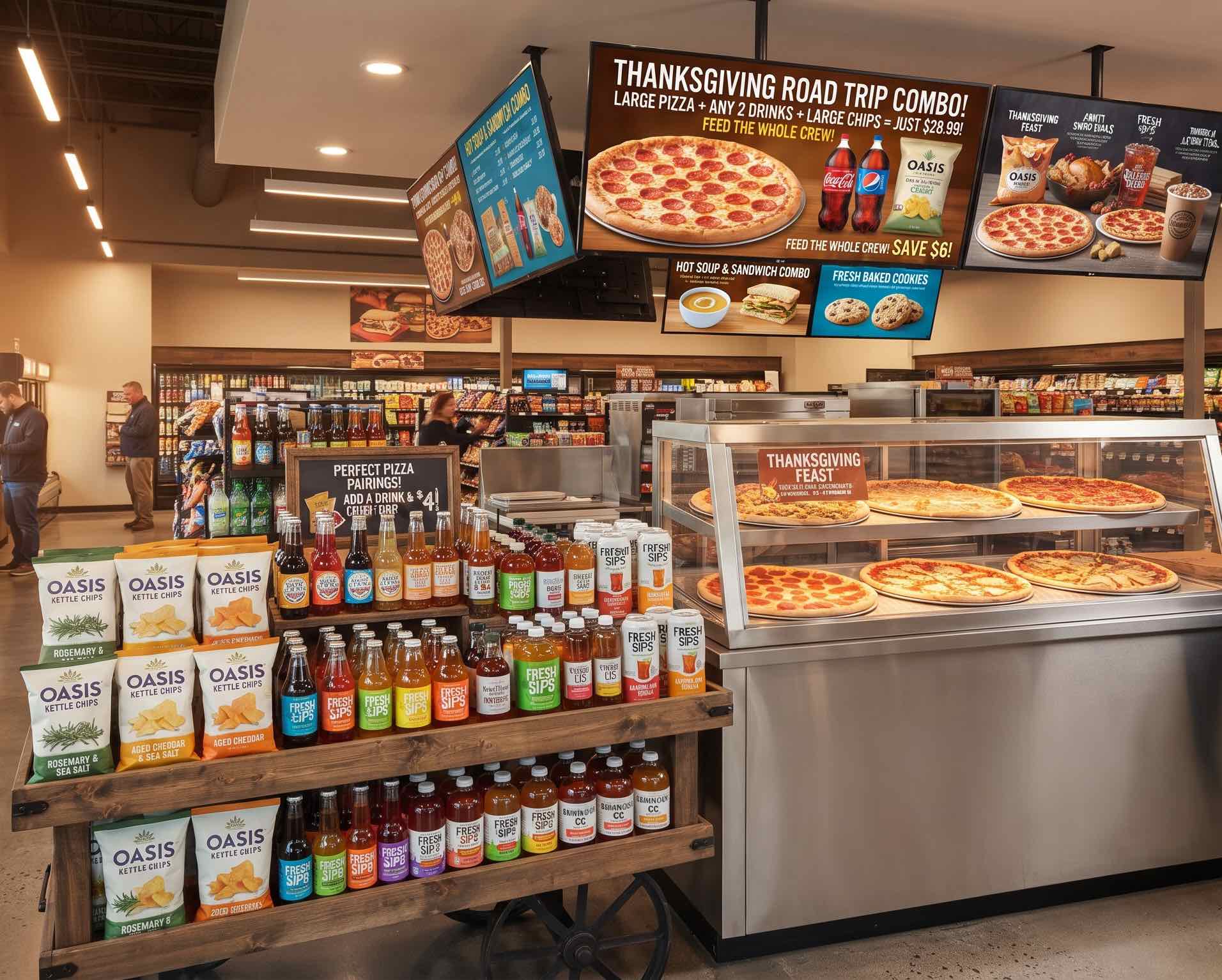
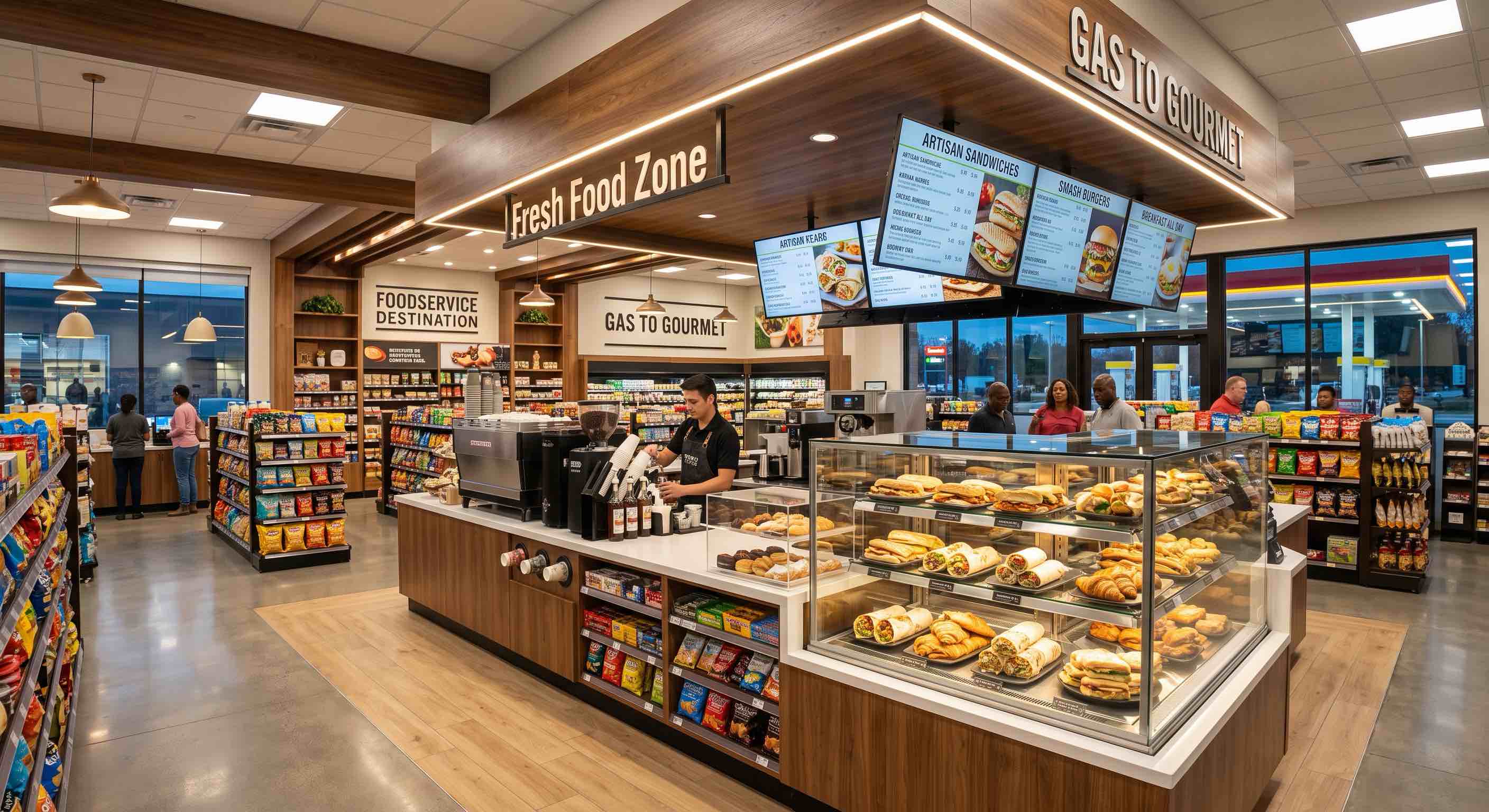
Digital screens have evolved. They are no longer just static monitors playing weather loops; they are the RetailMedia Network (RMN) of your store. This is the “Omnichannel Bridge,” the tool that connects what a customer sees on TikTok or your loyalty app to what they see at the shelf.
Modern digital signage is AI-driven. It can change promotions in real-time based on:
- The Weather: Swapping coffee ads for iced tea when the temperature hits 80°F.
- Time of Day: Shifting from breakfast burritos to late-night snacks automatically.
- Demographics: Using sensors to detect the general age or vibe of the person in front of the screen to show the most relevant offer.
What You Should Be Doing: Activating Your Surfaces
- Monetize the Forecourt: Use retail media screens at your pumps or EV chargers. Retailers see a 60% increase in conversion when they use targeted promotions at the pump to lure drivers inside.
- Sync Your Socials: If you are running a “Limited Time Offer” on Instagram, that exact creative should be flashing on your endcap digital screens. Consistency builds trust.
- Interactive Wayfinding: Use kiosks to help shoppers find specific items (like “Healthy Snacks” or “Local Craft Beer”). This reduces “search fatigue” and keeps the flow moving.
Smart Operations: The “Brain” Behind the Cabinets

While the customer sees the screens and the scanners, the real magic happens behind the scenes with the Internet of Things (IoT). As a supplier of the equipment that houses these technologies, I can tell you that “smart” cabinetry is the future of profitability.
IoT sensors now track everything from cooler temperatures to the energy efficiency of your coffee brewers. This does two things: it prevents “shrink” (spoiled food) and ensures that your equipment never fails during a morning rush. Combined with AI-powered inventory systems, technology ensures that when a Gen X customer walks in for their specific brand of sparkling water, it is actually on the shelf.
What You Should Be Doing: Investing in “Smart” Back-ends
- Automate Temperature Logs: Stop having employees manually write down cooler temps. Use IoT sensors that alert your phone if a fridge goes above 40°F.
- Predictive Ordering: Move toward inventory software that “learns” your store’s rhythm. If your Friday beer sales spike when there’s a local game, your system should know to order extra on Wednesday.
- Shift Staff Roles: As technology handles the “scanning,” retrain your staff to be “Roaming Concierges.” Their value shifts from being a “human scanner” to a brand ambassador who maintains the food service area and engages with guests.
The Bottom Line: Connecting the Blueprint
Technology is the final, vital layer that makes all your psychological and spatial engineering work. Think of it as the “accelerator” for your store’s performance. We have spent this series building a blueprint: we started with the Vibe(atmosphere), moved to the Flow (layout), understood the Generations (demographics), and mastered the Gender nuances.
By adding the right technology, you ensure that the beautiful store you’ve built isn’t just a place to look at products,it’s a high-speed engine designed for the modern consumer’s lifestyle. You aren’t just selling snacks and fuel; you are selling time.
In our final post, Part 7: Connecting the Dots of Modern C-Store Design, we are going to pull this entire journey together. I’ll provide a master summary of the “5 For” philosophy and give you a comprehensive, actionable checklist to help you turn these insights into a high-performance retail reality. Let’s bring the blueprint full circle

Want the ‘The 18-Second Revolution’ infographic in a printable PDF? Leave me a comment and I’ll reach out. Stay tuned for the rest of the series.

Leave a Reply