
Pump to Profit in the New Era of Convenience
The year 2026 isn’t just another date on the calendar for the convenience store industry; it is an inflection point. As I look across the landscape today, I see an industry that has matured into a complex, technology-driven powerhouse. We are no longer just “gas stations” with some snacks in the back. At the end of 2025, the U.S. count stood at 151,975 convenience stores. While that total dipped slightly, the number of stores selling fuel hit an eight-year high. But here is the reality we are all facing: people are visiting the pump less often due to better fuel economy and a budget-conscious economy.
To thrive, you must move the profit center from the forecourt to the floor. And there is no better catalyst for this transformation than the 2026 FIFA World Cup. This is one of the most significant business impact moments in decades, bringing a “volatility” that can either overwhelm an operator or create a legendary year of sales.
I’ve spent my career as an industry partner—designing the cabinetry, selecting the equipment, and crafting the graphics that turn a standard box into a destination. I’ve seen what works when the “surge” hits. In this guide, I’m going to walk you through my “Volatility Playbook.” We will explore how to use real-time data to capture fan sentiment, how to design your store for “micro-moments” between matches, and how to innovate your menu to compete with the biggest QSRs. By the time you finish this post, you will have a 12-month roadmap to turn the 2026 World Cup into the most profitable season your business has ever seen.
The Foundational Landscape: Why 2026 is the Year of the “Reputation Revolution”
The first thing we need to acknowledge is that the consumer of 2026 is fundamentally different from the consumer of 2020. We are currently in what researchers call a “Reputation Revolution”. For years, C-store food carried a stigma. Today, that stigma is dead. 40% of consumers now believe our food offerings are actively improving; that’s eight times more than those who think they are getting worse.
The Shift to the “Third Place”
In 2026, guests still want speed, but they also want intentional experiences. Stores are becoming “Third Places”, destinations where people choose to spend time rather than just complete a transaction. This is particularly true for Gen Z and Millennials, who are twice as likely as Boomers to visit a C-store specifically for a deal or a quality food experience. When millions of World Cup fans land in our cities and travel our corridors, like the busy I-94 stretch heading toward Chicago, they aren’t looking for a “gas station.” They are looking for a reliable, fresh, and tech-savvy hub.
The Reality of Volatility
The World Cup creates extreme demand spikes. One hour your store is quiet; the next, a match ends, and you have 200 fans looking for “buzzy” beverages and international snacks. This requires a “Volatility Playbook.” You can’t rely on static plans. You need a baseline of technology and an infrastructure of design that allows you to pivot in real-time. Whether it’s adjusting your digital signage to celebrate a local win or suppressing an out-of-stock item on your menu board automatically, your foundation must be built for speed and agility.
What You Should Be Doing Now:
- Audit Your Brand Perception: Does your store look like a “Third Place” or just a pit stop? Update your graphics to reflect quality and freshness.
- Analyze Your Local Demographics: If you are in a Millennial-heavy area, prioritize tech integrations like mobile apps and scan-and-pay.
- Study the World Cup Schedule: Know the match dates for your region. For example, if you’re near the I-94 corridor, mark March 31 (Mexico vs. Belgium in Chicago) and June 6 (USA vs. Germany) as high-alert days.
Strategic & Operational Execution: Building the High-Performance Fan Destination
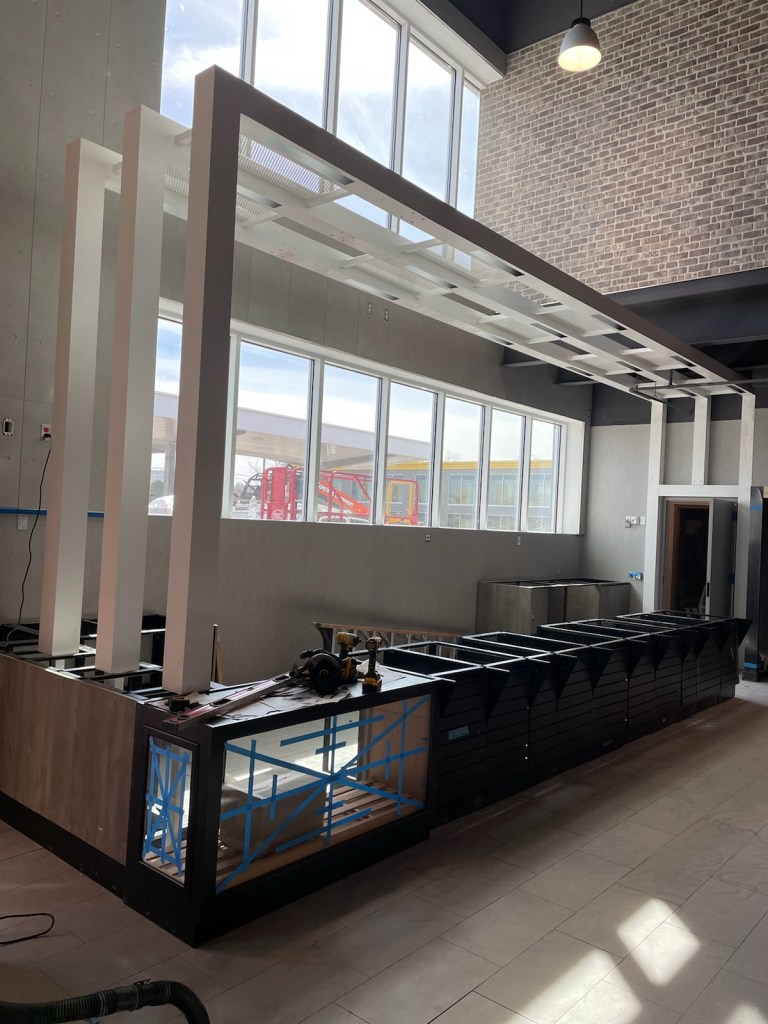
Now, let’s talk about the “how.” As a partner who provides cabinetry, equipment, and design, I can tell you that your store’s layout is your most silent yet effective salesperson. During the World Cup, your store needs to handle “micro-moments”; those brief windows where a fan decides to buy a high-margin bundle or just walks out because the line is too long.

Cabinetry and Layout for Speed of Service
Your cabinetry shouldn’t just hold products; it should guide the journey. In 2026, we are seeing a massive shift toward “Build-Your-Own” formats for burritos, pizza, and sub shops, which interest over 50% of consumers. This requires modular, hygienic stainless-steel worktables and prep surfaces that are perfectly sized for rapid output in minimal square footage.
If your “back-of-house” is cramped, you will fail the surge. I recommend high-density commercial shelving and nesting racks that can be reconfigured based on whether you are pushing breakfast sandwiches in the morning or “celebration bundles” at night.
The “Gold Standard” Restroom
I cannot stress this enough: your restrooms can make or break your store’s reputation. In 2026, leading operators set the “gold standard” for clean, modern facilities. A fan traveling hundreds of miles will remember a “hospital-clean” restroom and, more importantly, they will associate that cleanliness with the quality of your food. If you haven’t upgraded your touchless fixtures or lighting recently, now is the time.
Digital Signage: The Voice of Your Store
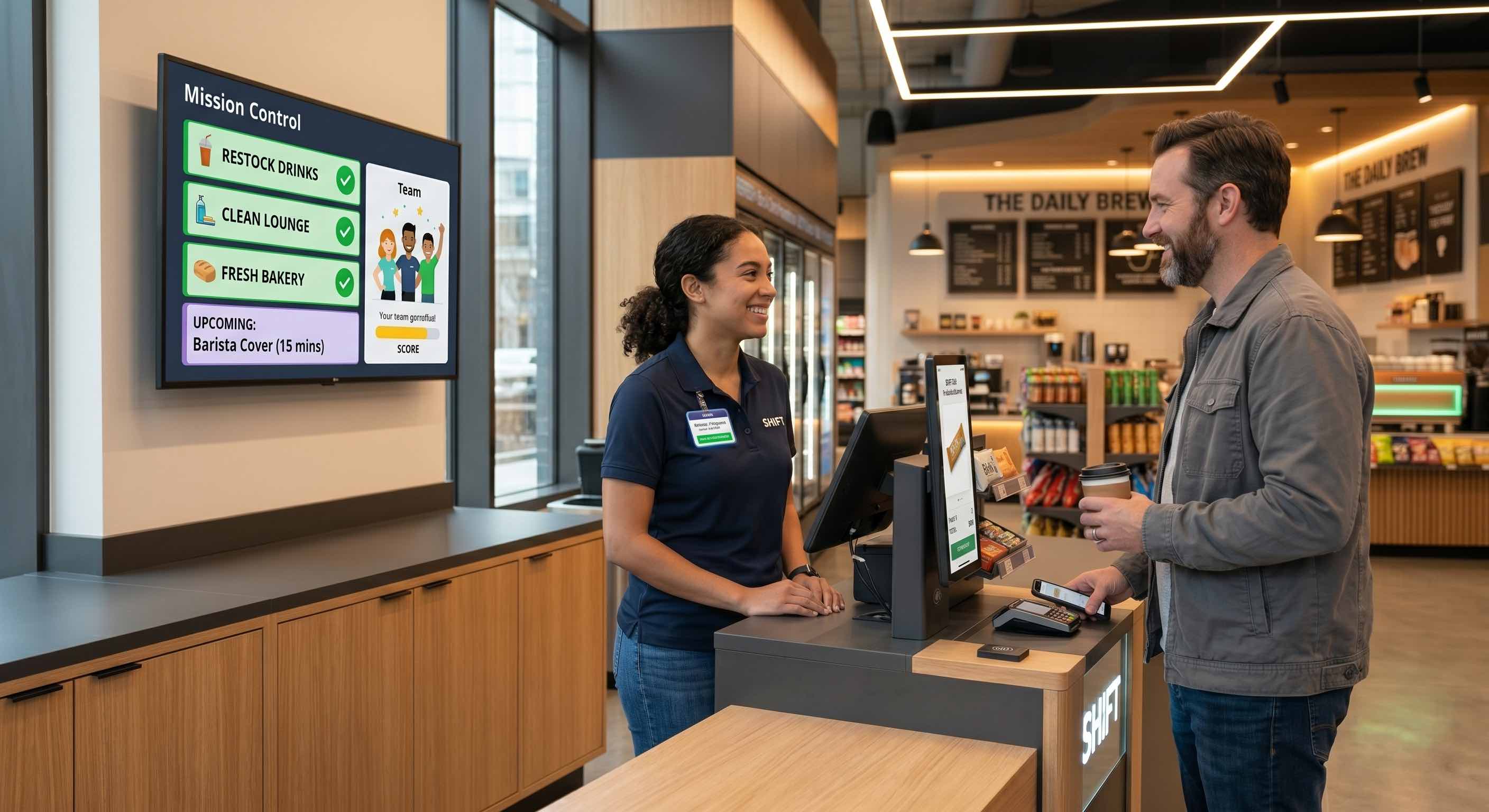
Static posters are a liability in a volatile market. You need digital signage at the pump, the entrance, and the register. Modern digital boards can increase your average basket size by over $2 per transaction. By integrating your signage with your POS, you can automatically promote overstocked items or hide products that have sold out, preventing customer frustration.
For the World Cup, use these screens to show live scores or countdown timers. It creates a “captive audience” effect that keeps people in the store longer, increasing the chance of an impulse buy.
What You Should Be Doing Now:
- Install Self-Service Kiosks: They manage morning rush complexity and free up your staff to focus on food quality rather than taking orders.
- Upgrade to POS-Integrated Signage: Use platforms like bitSHUTTLE to ensure your screens always reflect “what is true right now” regarding pricing and availability.
- Maximize Dwell Points: Place high-definition digital screens near coffee carafes and beverage coolers to suggest pairings, like a discounted snack with any soda.
Innovation & Profit Maximization: The Culinary World Cup and Tech-Driven Gains
This is where we turn excitement into hard currency. To maximize profits during the World Cup, you need to offer products that fans can’t find anywhere else. We are moving toward a “Culinary World Cup” within the C-store aisles.

Foodservice Innovation: International Flavors and “Buzzy” Trends
“Pickle” is projected to be the flavor of 2026. From dill pickle cashews to spicy pickle-flavored snacks, these bold, sour profiles are exactly what younger consumers are craving. Pair these with “buzzy” beverages, frozen juices, functional teas, or hemp-derived THC-infused drinks, which are seeing massive sales growth in chains like Circle K.
But to truly capitalize on the World Cup, you must think globally. Create “Match-Day Bundles” based on the teams playing that day. For example:
- Uzbekistan Bundle: Sweet biscuits, puff pastry cookies, and fruit-based soft drinks.
- Haiti/Caribbean Bundle: Savory patties (chicken or beef) and coconut sweets.
- Morocco/Middle East Bundle: Traditional snacks and fruit juices.
Programmatic DOOH: Reaching Fans on the Move
You can’t just wait for fans to walk in. You need to reach them while they are in transit. Programmatic Digital Out-of-Home (pDOOH) allows you to bid on digital billboard space in real-time. You can trigger ads to appear on roadside billboards near stadium approaches or transit hubs exactly when a match ends.
Even better, use DOOH-to-mobile retargeting. When a fan sees your digital billboard on the I-94 corridor, you can follow up with a targeted mobile ad on their phone moments later. Studies show this “omnichannel” approach can increase store visitation rates by up to 127%.
Agentic AI and Predictive Inventory
The stores that win in 2026 will be the ones that “think for themselves.” Agentic AI can analyze historical sales, weather forecasts, and even sports schedules to tell you exactly what to order and when. Use inventory management software like Thrive or Lightspeed to set “safety stock” levels for your high-margin items like water and energy drinks. This ensures you never have a stockout during the critical 30-minute window after a match.
What You Should Be Doing Now:
- Develop an “International Snack” Strategy: Partner with suppliers to secure unique global SKUs three to six months before the tournament.
- Implement “Arena Alignment” Staffing: Sync your employee schedules with the World Cup match calendar. Prioritize “Cross-Training Utility” so your team can pivot from the register to the deli line as traffic spikes.
- Launch a World Cup Loyalty Feature: Take a page from Weigel’s and add a “trivia” or “match predictor” feature to your app to keep fans engaged with your brand daily.
The Executive Action Plan: The 30-Day Sprint to Kickoff
With the World Cup matches approaching fast, you don’t have months to deliberate. You need a high-intensity, four-week sprint to prepare your infrastructure, team, and marketing. Here is your week-by-week roadmap to the opening whistle.
Week 1: Data, SKU, and Technology Lockdown
- POS & Inventory Sync: Audit your POS system. 1 in 4 retailers are currently upgrading to support “total store operations”. Ensure your inventory software, like Ply or Thrive, is set with “Safety Stock” alerts for high-margin beverages and snacks.
- Global Sourcing: Finalize your “Culinary World Cup” inventory. Order your international snack SKUs now, focus on bold pickle flavors and traditional snacks for nations like Uzbekistan, Haiti, and Morocco.
- Data for Cost Reduction: Use your existing sales data to identify and cut waste in low-performing categories, freeing up capital for high-margin tournament items.
Week 2: Layout, Sanitation, and Equipment Sprint
- “Gold Standard” Restrooms: Conduct a deep clean and fixture audit. If your restrooms aren’t perfect, they will hurt your overall food reputation during the surge.
- Equipment Mobility: Ensure your back-of-house uses mobile, high-density shelving and modular prep tables. You need to be able to reconfigure your kitchen layout in minutes to handle “Build-Your-Own” surges.
- Digital Signage Content: Upload your “Volatility Playbook” content to your CMS. Set up automated triggers via platforms like bitSHUTTLE to suppress out-of-stock items and sync with live scores.
Week 3: Marketing Activation and Staffing Alignment
- pDOOH Deployment: Finalize your programmatic DOOH bids for roadside billboards near transit hubs and stadium approaches. Set your dynamic creative to change based on match results or time of day.
- “Arena Alignment” Scheduling: Release your staff schedule for the tournament month. Sync shifts directly with match calendars to ensure you are fully staffed for pre-match rushes and post-game surges.
- Safety Tech Check: Ensure your workplace safety tech, such as 911-certified emergency buttons, is active and that staff are trained on incident response for high-crowd scenarios.
Week 4: Final Execution Drills and Launch
- Staff Training Drills: Use AI-powered frontline training platforms like Axonify to run 5-minute daily “micro-learning” sessions on service speed and the “Volatility Playbook”.
- Cross-Training Check: Confirm that your “Utility” staff can handle multiple roles, register, food prep, and sanitation, to manage unexpected game overtime spikes.
- Loyalty Engagement: Push “World Cup Trivia” or “Match Predictor” notifications to your app users to drive daily visits even on non-match days.
The Bottom Line: The Final Whistle and Your Call to Action
The 2026 World Cup is a once-in-a-generation opportunity for the convenience store industry. We have moved past the days of being a simple pit stop. In this new era, your store is a high-tech foodservice destination, a community hub, and a critical piece of the fan experience.
By embracing the “Volatility Playbook,” investing in modular and hygienic equipment, and leveraging the power of real-time POS integration, you aren’t just selling snacks, you’re building long-term loyalty. The fans who visit your store because of a live-score update on your digital signage or a “gold standard” restroom will be the same customers who return to your app and your aisles long after the tournament ends.
Don’t wait until the opening kickoff to start your transformation. The competition is already moving. Vape shops, coffee chains, and QSRs are all eyeing your categories. But they don’t have your proximity, your fuel-driven traffic, or your ability to pivot in the “micro-moments.”
Your First Step: Take a walk through your store today from the perspective of a fan who has been traveling for eight hours. What is the first thing they see? Is it a “Goal Celebration Special” on a vibrant screen, or is it a faded paper sign?

Leave a Reply