The 2026 Guide to Back-to-School Convenience Store Sales
Picture a typical Tuesday in late August at 3:15 PM: every fuel pump on the forecourt is occupied, but inside the store, the aisles are quiet and the hot food case holds nothing but a few shrinking taquitos. For many convenience store operators, this is a familiar, and frustrating, scene.
Back-to-school is the second-busiest retail season of the fiscal year, generating an estimated $85.42 billion in expanded economic activity nationwide. Yet many convenience store owner-operators still treat it as a passive event, assuming that stocking a few extra notebooks and basic lunchboxes is enough to capture their share of the neighborhood’s seasonal spending.
In 2026, consumer behavior looks different. Inflationary pressure has heightened price sensitivity, with 75% of shoppers now actively looking to switch brands or stores to find better value. The back-to-school shopping window has also stretched out: rather than concentrating purchases in a few weeks, shoppers are spreading them from May through late September to manage cash flow.
That shift creates an opening for convenience stores. Consumers are increasingly avoiding long trips to big-box supercenters in favor of quick, high-intent stops closer to home that save time and fuel.
This guide walks through how to capture that foot traffic: understanding the “Academic Daypart” (the morning drop-off and afternoon pick-up windows that drive local commuter movement), optimizing store layout to reduce friction, applying current foodservice trends like “Protein + Fiber Synergy,” and converting seasonal shoppers into longer-term, high-frequency customers.
The 2026 Back-to-School Landscape
To capture seasonal spending, it helps to understand the economic and behavioral forces shaping shoppers this year. Overall consumer spending remains relatively stable, the National Retail Federation reported unadjusted year-over-year retail sales growth of 5.89% in July 2026 and 6.81% in August 2026, both up from 1.45% and 0.50% month-over-month, respectively. But how shoppers spend has changed: households are managing tighter budgets by hunting for promotions and researching purchases digitally before they ever enter a store.
That planning phase is largely digital. About 70% of shoppers decide on a destination brand before leaving home, and 75% actively search for digital coupons while planning a trip. That digital research, in turn, drives physical visits: 68% of consumers visit a physical store specifically to buy something they discovered online, and 59% go in person to evaluate a product before buying it.
This pattern, sometimes called “clicks-to-bricks”, has a measurable payoff. When a shopper who has had a digital interaction visits a physical store within 15 days, they spend an average of $131 more while there.
For convenience stores, this omnichannel behavior is an advantage rather than a threat: the store functions less as a destination and more as a fast, convenient stop that fits naturally into a commuter’s existing routine. This is especially true for Gen Z, despite being digital natives, 88% of Gen Z college students say they prefer shopping in physical stores, citing the immediacy, tactile experience, and social aspect of in-person shopping.
There’s a sociological dimension here too. The local convenience store often functions as a kind of neutral, accessible neighborhood hub, a place families, students, and educators pass through as they move between the structured school day and after-school routines.
Key 2026 metrics at a glance
- Willingness to switch brands for promotions: up from a previous baseline of roughly 50% to 75% in 2026. Loyalty is more volatile than it used to be, which means clear pricing and visible value matter more.
- Total back-to-school retail spend: core NRF spending is projected at $38.8 billion, with the broader seasonal economic footprint estimated at $85.42 billion, a large addressable market centered on food, fuel, and daily commuter trips.
- Average family seasonal spending: up from a previous baseline of about $850 per household to a range of $875–$1,365 in 2026, concentrated in daily routines, commute-saving bundles, and snacks.
- Year-over-year retail sales growth: 6.81% in August, up from 5.89% in July (both unadjusted),solid demand, but heavily weighted toward visible promotions and deals.
- Online-to-offline spending lift: shoppers who visit a store within 15 days of a digital interaction spend $131 more on average, which is one reason it’s worth integrating digital coupons, order-ahead, and in-store pickup where feasible.
- Gen Z in-store preference: 88% of Gen Z college students prefer shopping in person, which argues for keeping stores clean, well-lit, and well-stocked.
What you should be doing:
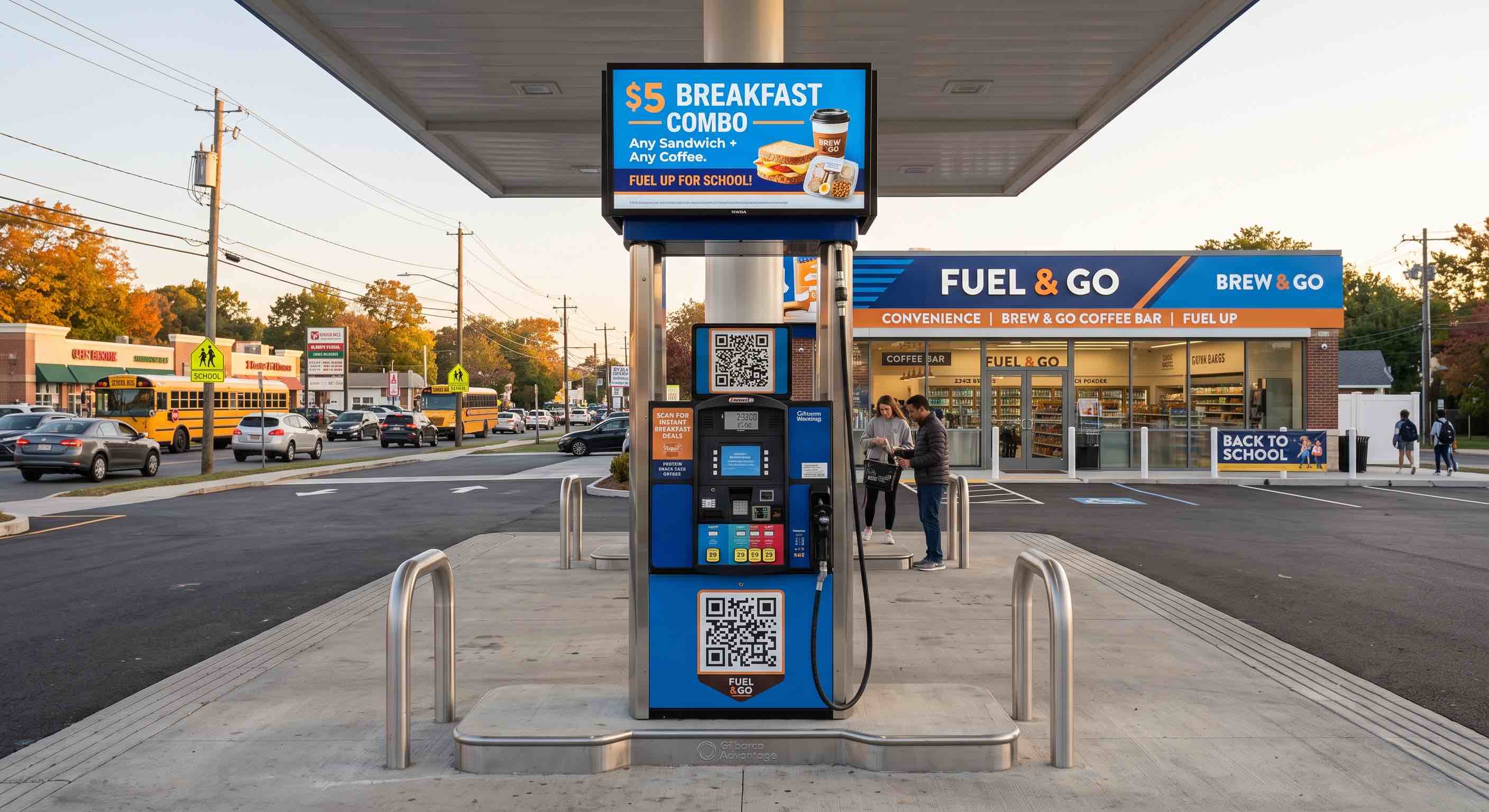
- Display QR codes at the pumps, on window graphics, and on social channels so drivers can scan and unlock in-store coupons.
- Structure inventory for different shopper types, those hunting for direct coupons, those buying multi-packs to stretch a budget, and those who just need a fast, pre-packaged option.
- Keep your highest-demand grab-and-go items front and center, fully stocked, and clearly priced for time-pressed commuters.
Store Layout and Daypart Execution
Capturing back-to-school demand isn’t only a marketing question, much of it comes down to store-level execution and physical layout. There are two key windows worth designing around: the morning drop-off and the afternoon pick-up.
Morning drop-off (7:00–9:00 AM)
Mornings are defined by time pressure. Rushed parents and commuting students need fast, low-friction transactions. Thirty-one percent of operators identify breakfast as the daypart with the highest potential for foodservice growth, which makes speed and simplicity the priority during this window.
Several national chains have built morning traffic around flat-rate combos that remove decision friction: 7-Eleven, Speedway, and Stripes all run breakfast-sandwich-plus-any-size-coffee promotions for a flat $5. Laredo Taco Company offers $3 egg-and-protein quesadillas on fresh flour tortillas, and Raise the Roost offers a $3 chicken tender biscuit or a $5 bacon-egg-and-cheese combo with hash browns and a large drink. The common thread is a simple, predictable price point that commuters don’t have to think about.
Afternoon pick-up (2:30–5:00 PM)
The afternoon window has a different character, more social, less rushed. Once school lets out, the store often becomes a gathering spot where students socialize and parents treat their kids. Seventy-five percent of parents say they view back-to-school season as an opportunity to treat themselves or their children, and 62% report their kids directly influence afternoon spending.
QuickChek, an East Coast chain, has built a model around this: 99-cent handcrafted iced coffees, $3 six-inch subs, and a 3:00–7:00 PM “happy hour” with 99-cent fountain drinks of any size. Promotions like this draw in student groups and the parents supervising them, which creates a natural opening for higher-margin snack add-ons.
Layout: sightlines and decompression
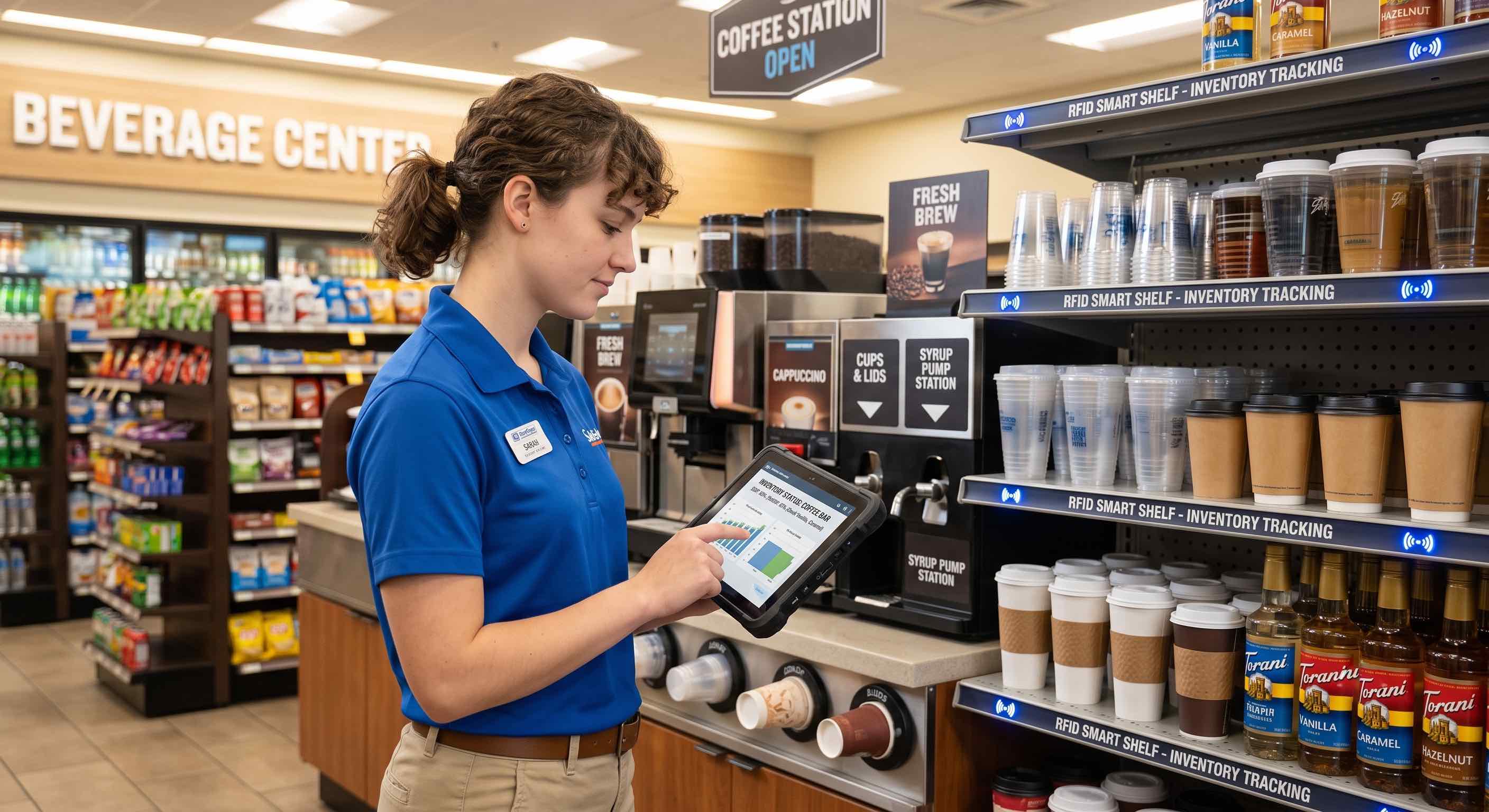
The first 15–20 feet inside the front door functions as a “decompression zone”, it should stay open and free of bulky displays so customers can orient themselves and quickly spot the coffee bar, cold drinks, and restrooms.
From there, a continuous floor loop, without dead ends or narrow aisles, works better than a maze-like layout. Placing high-volume, lower-margin items like milk and basic cold beverages toward the back of the store means customers walk the length of the store and pass higher-margin impulse items along the way, particularly on eye-level endcaps and near the checkout line. Positioning premium snacks and seasonal items near beverage stations has been associated with sales lifts of up to 40%.
Cleanliness also matters more than operators sometimes assume, particularly to students and parents. In surveys of student shoppers, the areas rated most important were: the visible kitchen or food assembly area (44.2% importance rating), food quality and freshness (42.2%), public restrooms (40.4%), overall value and pricing (40.0%), and the main sales floor and aisles (35.9%). Practical responses to each: install glass shields and keep prep areas stainless steel and staff in clean uniforms for the kitchen area; monitor expiration dates daily and favor fresher ingredients for food quality; run hourly cleaning logs and use touchless fixtures in restrooms; post clear, visible pricing and combo signage for value perception; and keep floors swept and lighting bright with low shelf profiles for clear sightlines on the sales floor.
Two metrics are worth tracking as you make these changes. Average Basket Size (ABS) is total retail sales revenue divided by the total number of completed transactions, it tells you whether layout and bundling changes are increasing what each customer spends. For stores with fuel service, Conversion Rate (CR) is in-store transactions divided by total pump visitors, multiplied by 100, it tells you whether you’re successfully pulling fuel customers into the store.
What you should be doing:
- Clear temporary displays from within 15 feet of the entrance so sightlines to the coffee bar, food cases, and checkout stay open.
- Consider a 3:00–7:00 PM “happy hour” on fountain drinks, supported by window graphics and digital signage near the register.
- Build hourly cleaning sweeps into staff routines, with a visible, signed log near the restrooms.
Foodservice and Beverage Trends

Foodservice remains one of the largest profit drivers for convenience stores, and in 2026 menus are increasingly shaped by “grazing”, eating several smaller, portion-controlled snacks throughout the day rather than three traditional meals. That shift plays to convenience stores’ strengths, provided the product mix is built for portability and quick execution.
Protein-and-fiber snack formats
Rather than loose chips or a standard candy bar, many 2026 shoppers are looking for pairings of protein and fiber that offer steadier energy without a sugar crash. This can be packaged as a curated snack cup combining a protein source, turkey jerky, mozzarella sticks, or hard-boiled eggs, with a fiber source such as whole-grain crackers, roasted chickpeas, or hummus, generally kept under roughly 250 calories per cup. A similar approach with bite-sized salami, animal crackers, baby carrots, and grapes can appeal to younger customers.
For sweeter options, co-branded dessert lines such as Conagra’s Snack Pack puddings (including Starburst, Sour Patch Kids, Cinnabon, and Ice Cream Sandwich flavors) offer a higher-margin treat that fits the more social, treat-oriented afternoon daypart.
Bundled combos can also drive volume. SunStop runs a $7 customizable pack with two chicken tenders, a drink, chips, and a candy bar, as well as a “$5 After 5” family deal with two chicken tenders or legs, two sides, and a roll, a low-cost dinner option for busy parents.
Grab-and-go for tight labor budgets
Labor shortages remain one of the biggest operational challenges for convenience stores, which makes premium, pre-packaged grab-and-go food worth prioritizing, it doesn’t require made-to-order assembly, and 41% of consumers already buy pre-packaged sandwiches and wraps specifically for a quick lunch. Suppliers like E.A. Sween offer several relevant product lines: Deli Express (value-oriented sandwiches and microwave breakfast items in modified-atmosphere packaging for longer shelf life), Market Sandwich (premium meats and cheeses on multigrain bread, generally at higher margins), and San Luis (pre-packaged burritos as a low-labor hot food option).
Beverages and clean-label demand
Back-to-school season brings a seasonal spike in hydration products tied to school athletics. During the roughly five-week peak from mid-August through mid-September, sports drink unit sales rise about 35% above the annual weekly average, and bottled water sales rise about 12%.
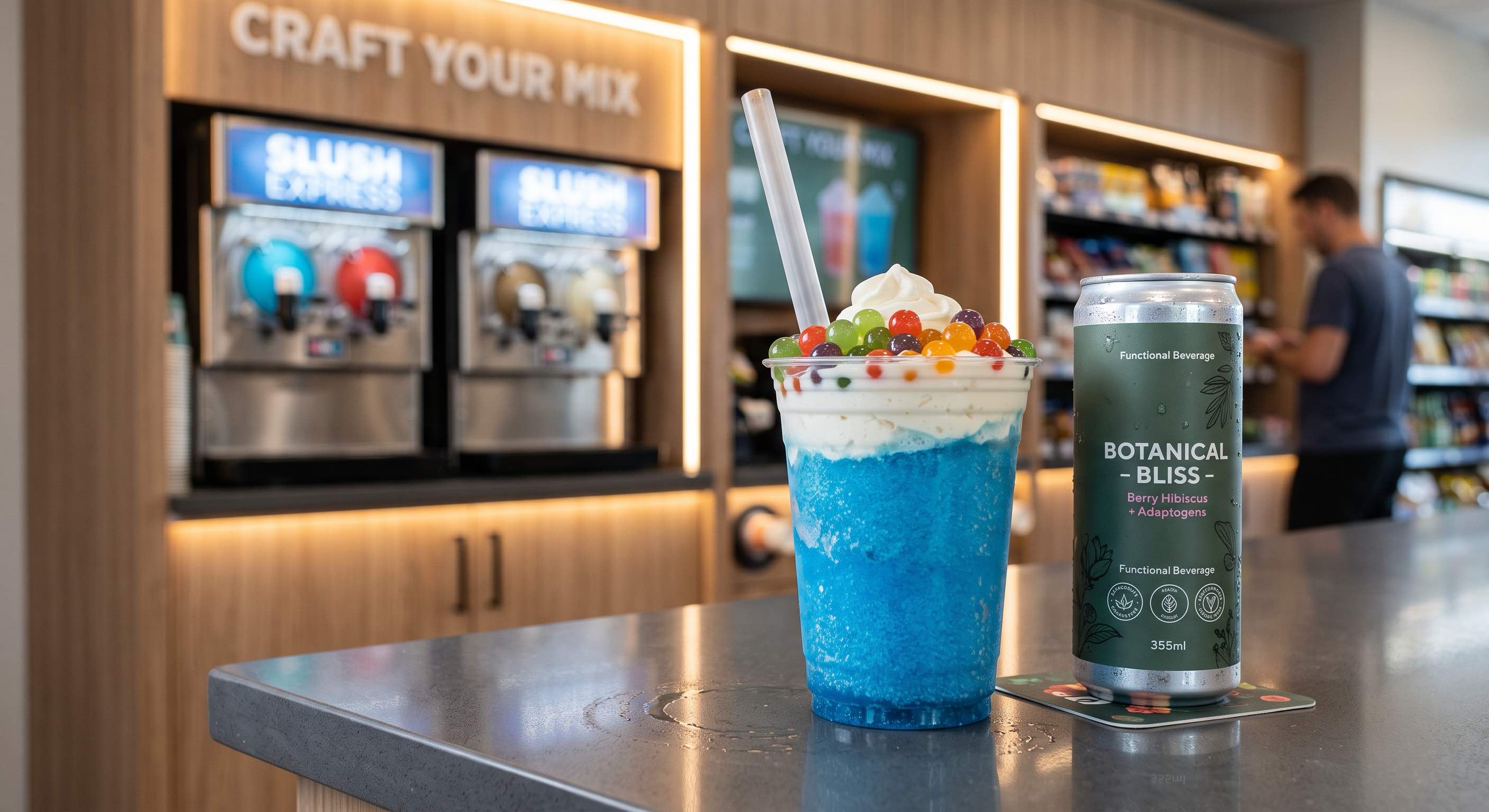
Parents are also paying closer attention to labels and are willing to pay more for cleaner formulations. Spending increases during this period for products with specific attributes are notable: products free of artificial sweeteners see a 37% spending increase, antioxidant-positioned products see 29%, low-sodium products see 29%, products free of artificial colors see 25%, and sugar-free products see 19%.
Cross-merchandising matters here too, 48% of beverage transactions in convenience retail already include a food purchase, so pairing sports drinks and water with protein snacks near checkout and drink stations can capture additional impulse sales.
Digital marketing and geofencing
Beyond the store itself, targeted digital advertising can help reach nearby families during this window. Digital out-of-home (DOOH) placements, digital billboards, transit panels, in-store screens, work well for reaching people already on the move, and several networks are worth considering depending on your market and budget, generally indexed for either general urban commuters, mall/retail dwell zones, high-density family areas, or broad regional reach.
Mobile geofencing lets you target advertising to a defined radius around schools, campuses, or athletic facilities, delivering offers when someone enters that zone. A related approach, sometimes called geoframing, uses historical location data to identify devices that regularly visited schools or athletic facilities in a previous term, building a more precise target audience for future campaigns.
To avoid overwhelming a small local audience, most operators cap weekly frequency: roughly 3–5 impressions per household for connected TV, 3–5 impressions per device for mobile display ads, and 5–7 impressions per user for web browser ads. Done well, this kind of localized digital targeting can be effective, some regional retailers running integrated geofencing campaigns have reported tens of thousands of incremental store visits and a roughly 10-to-1 return on ad spend.
What you should be doing:
- Dedicate an eye-level shelf in the cold vault to sugar-free, low-sodium sports drinks with clear labeling.
- Add a small grab-and-go cooler near the beverage station stocked with protein-and-fiber snack cups as a quick add-on purchase.
- If pursuing digital marketing, consider geofencing a few nearby schools to deliver targeted morning and afternoon offers.
A 30-Day Execution Plan
Rather than spreading changes across several months, many operators find it more effective to compress execution into a focused 30-day window before the core back-to-school period closes.
Days 1–10: Layout and equipment.
Clear freestanding displays within the first 15–20 feet of the entrance to open up the decompression zone and maintain sightlines to the coffee counter and checkout. Position grab-and-go coolers near beverage stations, add clear signage for clean-label options, and coordinate with suppliers to stock low-labor sandwich and wrap products. Set up a clean, visible prep area for assembling protein-and-fiber snack cups.
Days 11–20: Partnerships and marketing setup.
If interested, look into joining a local safety network (such as the National Safe Place program) and displaying related signage, with staff trained on relevant procedures. Consider a round-up campaign at the register that lets customers donate spare change to local schools, potentially with matching contributions from CPG partners, similar to Casey’s “Cash for Classrooms” model. Set up any geofencing or local digital campaigns around nearby schools.
Days 21–30: Launch and monitor.
Roll out daypart-specific promotions, a flat-rate morning breakfast combo and an afternoon drink special, and train staff to mention relevant add-ons at checkout. Track Average Basket Size and pump-to-store conversion rate to see what’s working. Consider a loyalty mechanic that rewards a customer’s fourth visit with something valuable, like a free item or bonus fuel points, to help convert seasonal visitors into regulars.
The Bottom Line: Become Their Routine
The 2026 back-to-school period is more than a brief spike in traffic, it’s a window where a convenience store can establish itself as a useful, trusted part of the neighborhood routine. Aligning store hours and promotions with school schedules, adjusting the product mix toward the kinds of snacking customers actually want, and investing in basic cleanliness and layout improvements can build goodwill alongside sales.
Store layout, lighting, and signage all influence how customers experience a visit, often more than any single marketing campaign. Even strong promotions can underperform if the store itself feels cluttered, the coolers are outdated, or pricing isn’t clear. Addressing those fundamentals, alongside the daypart and product strategies above, gives operators a meaningful way to make the most of this season.
Leave a Reply