What Owner-Operators Need to Know in 2026
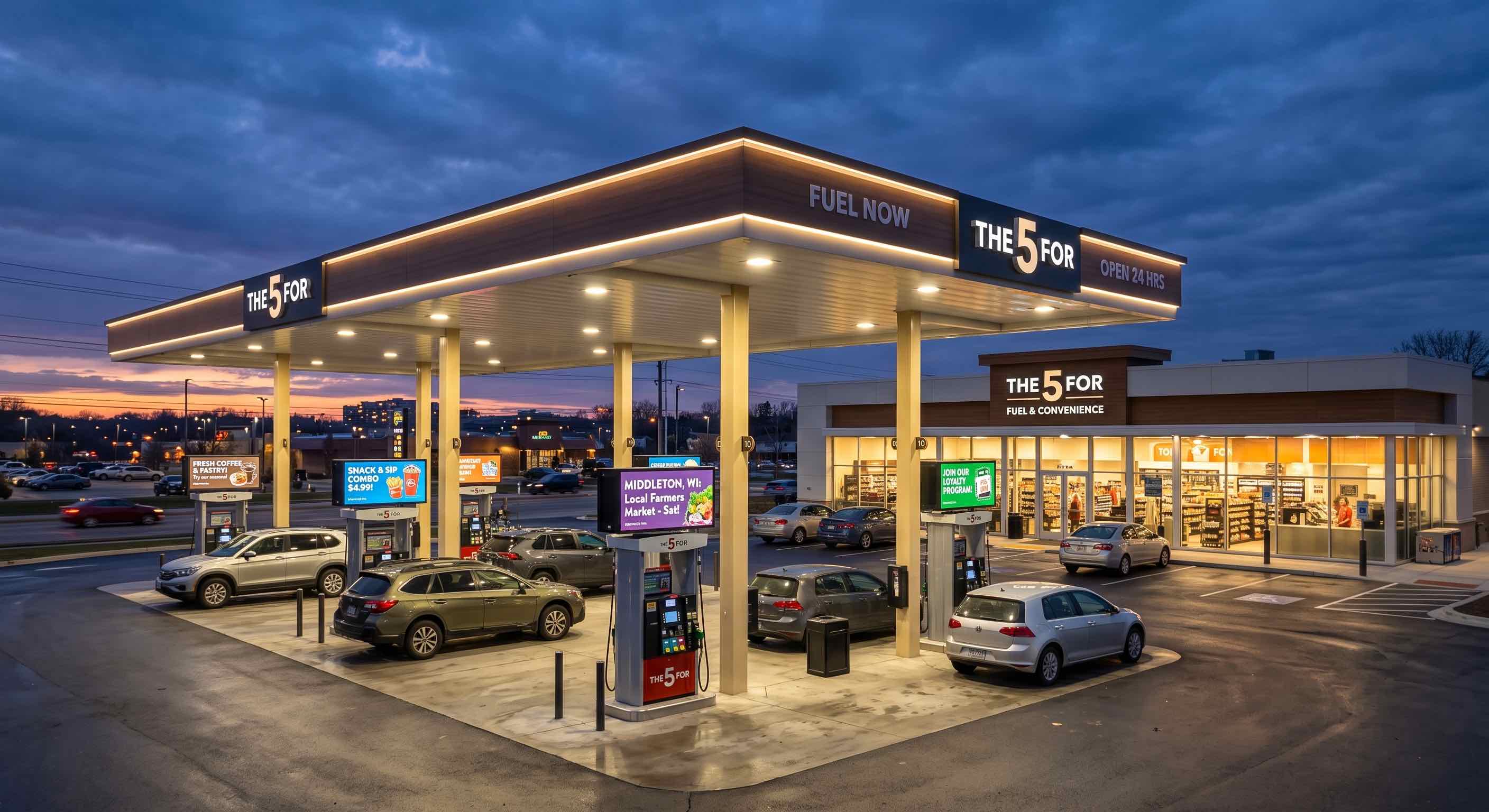
If you walk onto the forecourt of a modern convenience store today, you’re standing on more than a place to sell fuel and coffee. You’re standing on one of the most under-monetized pieces of real estate in retail, and 2026 is the year that’s starting to change.
For decades, the convenience store playbook was simple: pull drivers in with the fuel canopy, upsell them at the register, repeat. That model is under real pressure. Fuel volumes are flattening as vehicles get more efficient, and EV adoption grows, and inside-store unit sales are fighting inflationary headwinds. Waiting for foot traffic to wander past the register isn’t a growth strategy anymore, it’s a hope.
At the same time, something is happening upstream in digital advertising that most operators haven’t fully clocked yet. AI shopping agents are starting to handle routine online searches, price comparisons, and even purchases on a consumer’s behalf. When an AI agent does the browsing, the human never sees the ad. That’s a real problem for CPG brands that have spent two decades building digital marketing funnels aimed at human eyeballs.
Their answer is your store. Physical retail is emerging as one of the few remaining places brands can reliably reach a human being at the exact moment of a purchase decision. That’s the idea behind Retail Media Networks (RMNs), turning your existing foot traffic, screens, and loyalty data into an advertising channel that CPG brands pay for, without you needing a single extra square foot of floor space.
This post covers four things every owner-operator should understand before deciding whether, and how, to get into this space:
- Why in-store retail media is growing so fast, and what it actually pays
- The physical design mistakes that have blown up in other retailers’ faces (and how to avoid them)
- How this connects to your highest-margin category: foodservice
- A realistic, phased way to start testing this without overhauling your store
None of this requires you to become an ad-tech company. It requires understanding what you already have that’s valuable and being deliberate about how you use it.
Why In-Store Retail Media Is Growing So Fast
U.S. retail media ad spend is projected to approach $70 billion in 2026, growing faster than digital advertising as a whole. Online marketplaces like Amazon have captured most of that so far, but physical stores are the next frontier, largely because they offer something online retail media can’t: a captive, high-frequency, repeat audience standing in front of the product.
Convenience stores in particular have an advantage here that grocery and big-box don’t: visit frequency and proximity. No other retail format sees the same customers as often, or sits as close to the line between “ad impression” and “transaction happening ten feet away.”
Once your screen infrastructure and content system are in place, serving programmatic ad impressions costs you almost nothing incremental, which is why the margins on this side of the business look very different from your merchandise margins. Here’s roughly how a mature in-store network breaks down, by format:
- Onsite sponsored product placement (about 40% of RMN revenue): priced per click ($0.50–$3.00) or per thousand impressions ($10–$40 CPM), with gross margins in the 80–90% range. This is the digital equivalent of an endcap, brands pay to be the featured option at the point of decision.
- Display and native ads (about 10% of revenue): standard CPM pricing ($5–$25), 70–85% margins, mostly used for awareness and new product launches.
- In-store digital screens (about 15% of revenue): CPM pricing ($10–$50), 50–70% margins. This is the most visible layer to customers, menu boards, cooler-adjacent displays, cash wrapscreens.
- Offsite programmatic/connected TV (about 35% of revenue): CPM pricing ($25–$60), but lower margins for the operator (20–40%), since you’re licensing your first-party data for brands to target shoppers off-premises.
- First-party data licensing (about 10% of revenue): flat monthly fees ($5,000–$50,000), with margins of 80–95%. This is the least visible piece and the most valuable per dollar, brands paying for access to your purchase and behavior data.
What you should be doing:
- Prioritize loyalty program signups now. First-party purchase data is the foundation every one of these revenue streams depends on.
- Walk your store and inventory every screen you already have, pump toppers, menu boards, checkout displays, and check whether they’re on one system or five disconnected ones.
- If you run a regional footprint rather than a national chain, look into retail media aggregators that pool smaller operators’ screen inventory and data to compete for the same national CPG ad budgets that a chain like 7-Eleven can access on its own.
The Physical Design Mistakes That Have Already Backfired
Before you bolt a screen onto anything, it’s worth understanding what’s already gone wrong elsewhere. The clearest cautionary tale is Walgreens’ rollout of digital screens on cooler doors, which drew a lawsuit and sustained customer backlash. A few things went wrong at once:
- The screens blocked the product. Opaque LCD panels replaced clear glass, so customers couldn’t see what was actually in the cooler, and digital “in stock” graphics sometimes didn’tmatch empty shelves behind them.
- The tech was unreliable. Laggy software and unresponsive sensors meant customers often saw dead screens instead of promotions.
- Cameras made people uncomfortable. Visible tracking hardware made shoppers feel surveilled rather than served.
- It was visually chaotic. Rows of bright, uncoordinated screens created sensory overload customers actively avoided.
The fix isn’t to avoid digital retail media, it’s to design around these failure points from the start:

- Keep cooler doors transparent. If you want digital elements there, use thin LED strips along shelf edges rather than screens that replace the glass.
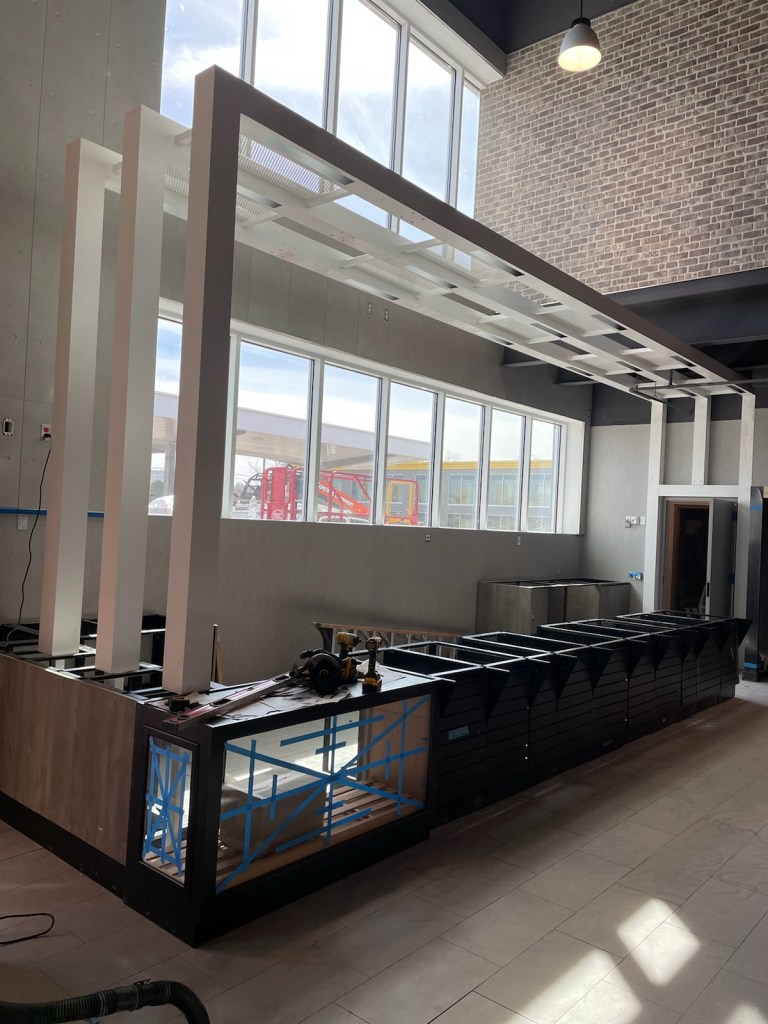
- Build screens into cabinetry rather than mounting them as obvious add-ons, cash wrapcounters, menu board backdrops, coffee bar surrounds. This keeps wiring clean and the store looking intentional rather than retrofitted.
- Use identity-blind millimeter-wave sensors instead of cameras to measure foot traffic and dwell time. They bounce radio waves off moving objects to estimate shopper counts and dwell time with high accuracy, without capturing any image or biometric data, which sidesteps the surveillance discomfort that sank the cooler-door rollout.
- Tie screen content to your actual real-time inventory system so you’re never advertising something that isn’t on the shelf.
What you should be doing:
- Leave your entryway clear of racks and screens for the first several feet. Customers need a beat to adjust before they’re receptive to any promotion.
- Route new screen installations through cabinetry design, not just electrical, treat it as a store design decision, not a tech install.
- If you’re considering any kind of shopper-tracking sensor, choose camera-free options and be upfront with customers about what is and isn’t being collected.
Where This Connects to Foodservice
Prepared food and hot beverages now make up roughly 38% of in-store sales industry-wide,officially ahead of cigarettes, and contribute a similarly outsized share of in-store gross profit. If you’re serious about retail media, foodservice is where it earns its keep, because it’s the category most driven by moment-to-moment decisions.

Stores that move from roller grills to visible, made-to-order food counters report meaningful lifts in foodservice revenue, customers respond to seeing food prepared, not just displayed. Digital menu boards let you adjust that experience by time of day and even weather, since convenience purchases are heavily impulse-driven (a large share of transactions include at least one unplanned item):
- Morning commute: coffee and breakfast sandwich pairings, reinforced by canopy audio and visible food prep on menu boards.
- Afternoon rush: packaged snacks paired with cold energy drinks, promoted via cooler-adjacent and endcap displays.
- Late night: hot food (pizza slices are a common anchor) and high-caffeine drinks for shift workers and younger customers, baskets in this window tend to run noticeably higher than daytime averages.
- Weather triggers: hot soup or comfort food promoted automatically when a cold or rainy afternoon hits.
A few chains have already built this out at scale, Wawa’s in-store and app-based network, 7-Eleven’s audio program built on its loyalty data, and Casey’s data-driven promotions tied to its fresh food program are all public examples of the same underlying idea: use what you already know about timing and weather to serve the right offer at the right moment, rather than running the same loop all day.
What you should be doing:
- Replace static printed menu boards with a digital system that can update automatically by time of day.
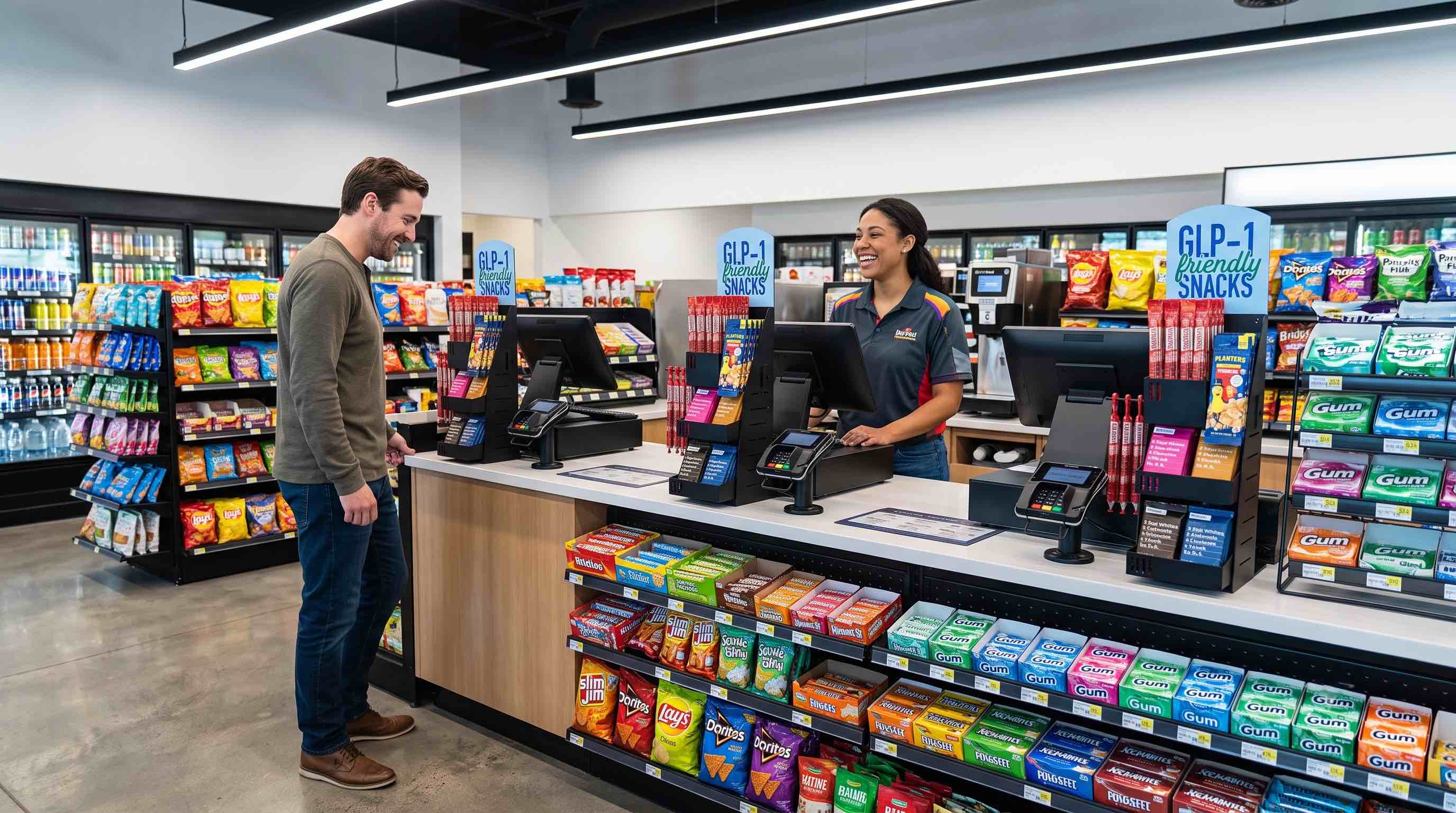
- Physically pair complementary high-margin items near each other and reinforce the pairing on-screen, pastry near coffee, snacks near energy drinks.
- If you don’t already sync pump promotions with a coffee or breakfast push, that’s a low-effort way to move drivers from the forecourt inside.
A Realistic Way to Get Started
You don’t need to overhaul your store in one pass. A reasonable phased approach looks like this:
First few weeks: get your data and systems in order.
Clean up your loyalty and purchase data, consolidate whatever screens you already have onto a single content management system instead of updating them manually one by one, and if you’re a regional operator, look into joining a retail media aggregator rather than trying to build a network from scratch.
Next stretch: plan the physical changes.
Map how customers actually move through your store and identify where they linger versus where they just pass through. Work with whoever handles your store design and equipment on where screens and sensors would actually make sense, rather than defaulting to “wherever there’s a blank wall.”
Final stretch: pilot and measure.
Install any sensors, start running time-of-day and weather-based content, and run a limited trial with a handful of CPG partners so you can see actual sales lift before committing further.
What you should be doing:
- Treat this as a multi-month process, not a weekend project, rushing the physical design step is exactly how the Walgreens situation happened.
- Get one clean measurement in place (dwell time tied to POS data) before you try to sell anyone on your ad inventory.
- Start with a small pilot and a handful of brand partners rather than committing your whole screen footprint on day one.
The Bottom Line: Striking The Proper Balance
Convenience stores succeed because they’re intensely local, the place open at 2 a.m. for a shift worker, the spot that knows regulars by name. That’s worth protecting as you build out any advertising layer.
The stores that get this right tend to follow a simple content discipline: the majority of screen time goes to things customers actually want to see, local sports scores, community notices, weather, safety alerts, with paid content mixed in rather than dominating. Counterintuitively, this also makes the paid slots worth more, because customers are actually paying attention to the screen instead of tuning it out as noise.
The Walgreens example is worth keeping in mind any time a vendor pitches you on a flashy screen install: the underlying idea (in-store media) wasn’t the problem. The execution, blocking product, using cameras, and flooding the screen with ads, was. Do the version that respects how customers actually shop, and this can be a legitimate, high-margin addition to a business that’s otherwise fighting for margin everywhere else. Do the other version, and you’ve bought yourself a customer relations problem.


Leave a Reply