How GLP-1 Drugs Are Changing Convenience Store Shopping
For decades, the convenience store floor plan was built around a simple, highly profitable formula: guide the consumer through a gauntlet of hyper-palatable, sugar-dense treats to reach the cold beverage vault, encouraging impulse grabs along the way.
But as we navigate 2026, a quiet biological revolution is dismantling that layout.
The rapid rise of glucagon-like peptide-1 (GLP-1) receptor agonists, such as Ozempic, Wegovy, Mounjaro, and Zepbound, is reshaping how millions of Americans experience appetite, satiety, and food cravings. This is no longer a passing dietary fad. Approximately 12% of the adult U.S. population has used or is actively taking these medications, and up to 22% are either using or actively considering them for weight management. Today, roughly 1 in 6 American households (16.3%) has at least one active GLP-1 user.
These medications biologically quiet “food noise”, the constant psychological urge to graze on high-calorie, ultra-processed items. Because they slow gastric emptying and increase insulin secretion, users experience a 20% to 30% reduction in daily caloric intake. Traditional grocery and fast-food channels are feeling the effects, with grocery baskets shrinking by 5.3% to 9% and limited-service restaurant spending dropping by 8%.
Convenience stores, however, are proving more resilient. While other food channels see steep declines, convenience store spending has remained essentially flat, dropping a negligible 0.1% overall. Active GLP-1 consumers are five times more likely to shop at convenience stores than non-users.
Why? Convenience stores naturally specialize in what industry observers call “the power of one.” GLP-1 users tend to avoid bulk packages of treats from the supermarket, which carry a risk of food waste and don’t match their suppressed appetites. Instead, they gravitate toward single-serve, portion-controlled formats that satisfy an immediate, intentional craving. That structurally positions the channel well with this customer segment.
That said, a 2016-style store layout isn’t built to capture this customer. When GLP-1 users start these medications, their average individual c-store spend drops by 5.2% during the first year, largely because they shift away from traditional impulse categories, buying 11% less in salty snacks and 17% less in dried meat snacks. Stores that continue to lead with visual clutter and grease-heavy environments risk losing these shoppers before they buy anything.
This guide walks through how the store footprint, foodservice offerings, and merchandising approach are shifting in response, and what the data suggests about where c-store categories are gaining or losing ground.
Understanding the “Intentional” Shopper
GLP-1 medications chemically alter how a person relates to food. By mimicking natural metabolic hormones, they signal to the brain that the body is satisfied. The constant, subconscious urge to snack on high-fat, high-sugar foods diminishes.
When food noise is quieted, shopping shifts from an impulsive, emotional activity to a more deliberate, intentional one.
Traditional c-store impulse categories are seeing measurable contraction:
- Salty snacks: Households on these medications have reduced purchases of ultra-processed savory snacks by up to 11.1%. Within the c-store channel specifically, users spend about 11% less on traditional salty snacks during their first six months on the drug.
- Dried meat snacks: Historically a $2 billion c-store category, high-sodium jerky is seeing a 17% spending decline among active users.
- Sweet confectionery and alcohol: Saturated fats, refined sugars, and alcohol are often avoided due to nausea side effects. Standard sweets and beer tend to be among the first items dropped from baskets.
At the same time, when volume drops, value tends to rise, a premiumization effect. Because GLP-1 consumers are often spending significant money on these therapies, they’re generally willing to pay more for foods and beverages that support muscle maintenance and hydration goals, and are actively seeking out protein, dietary fiber, and hydration products.
Key GLP-1 market indicators
- U.S. adult adoption rate: Roughly 12% of adults report active or past usage, with up to 22% currently using or considering weight-loss medications. This is a relatively high-income, health-conscious segment.
- Household penetration: About 16.3% of U.S. households (1 in 6) contain at least one active GLP-1 user, which influences household grocery lists and convenience store trip patterns more broadly.
- C-store spending trajectory: Overall spending has dropped a mere 0.1%, compared to steeper declines in drug, dollar, and mass grocery channels.
- Shopping frequency ratio: GLP-1 users are five times more likely to shop at convenience stores than non-users, underscoring the channel’s role for portion-controlled, immediate-consumption purchases.
- Average caloric reduction: Active users typically reduce daily intake by 20% to 30%, which has implications for inventory mix, shifting from bulk items toward nutrient-dense, high-protein singles.
Category shifts: what’s gaining and what’s losing
- Fresh produce and fruit: Strong positive shift. Growing demand for single-serve fresh fruit cups, pre-sliced apples, and bananas.
- Yogurt and dairy singles: A primary growth driver, particularly high-protein Greek yogurts and cottage cheese cups.
- Hydration and electrolytes: Strong positive momentum, especially zero-sugar beverages and hydration enhancers.
- Gum and breath mints: Notable volume lift, often tied to medication side effects.
- Salty and savory snacks: 10%–11% decline, with growing interest in single-serve roasted edamame, chickpeas, and portioned nuts as alternatives.
- Dried meat snacks: 17% monthly decline, with some shift toward lower-sodium varieties and high-protein meat sticks.
- Sugary confectionery: Severe decline, with up to 58% of users dropping these items from their baskets; interest is emerging in low-sugar, high-fiber alternatives.
- Alcohol (beer and wine): Sharp negative shift, with some interest moving toward non-alcoholic beers, functional seltzers, and adaptogen drinks.
The underlying theme: these customers aren’t abandoning convenience stores, they’re avoiding chaos. A shopper who walks into an aisle with fifty varieties of standard potato chips and no clean protein options tends to experience choice overload and leave. Curated, clearly labeled, single-serve options tend to perform better with this segment.
The Physical Store Environment

When a GLP-1 user walks into a standard convenience store, they may encounter real environmental friction. Bright, cluttered packaging, confusing signage, and the heavy scent of a deep fryer can trigger nausea for someone experiencing slowed digestion.
Scent and ventilation
For decades, the smell of frying food was used deliberately to trigger hunger and drive purchases. For a consumer experiencing gastroparesis or medication-related nausea, that same scent can be an active deterrent. Commercial kitchen hoods with activated carbon air filtration can help keep cooking odors from carrying onto the retail floor.
Refrigeration and perceived freshness
Fresh fruit, pre-packaged salads, Greek yogurts, and cottage cheese are sensitive to temperature fluctuations, and customers tend to associate cold-case condition with food safety and freshness. Well-maintained, properly lit open-air coolers and glass-door dairy cases help fresh and packaged items read as trustworthy at a glance.
Checkout merchandising
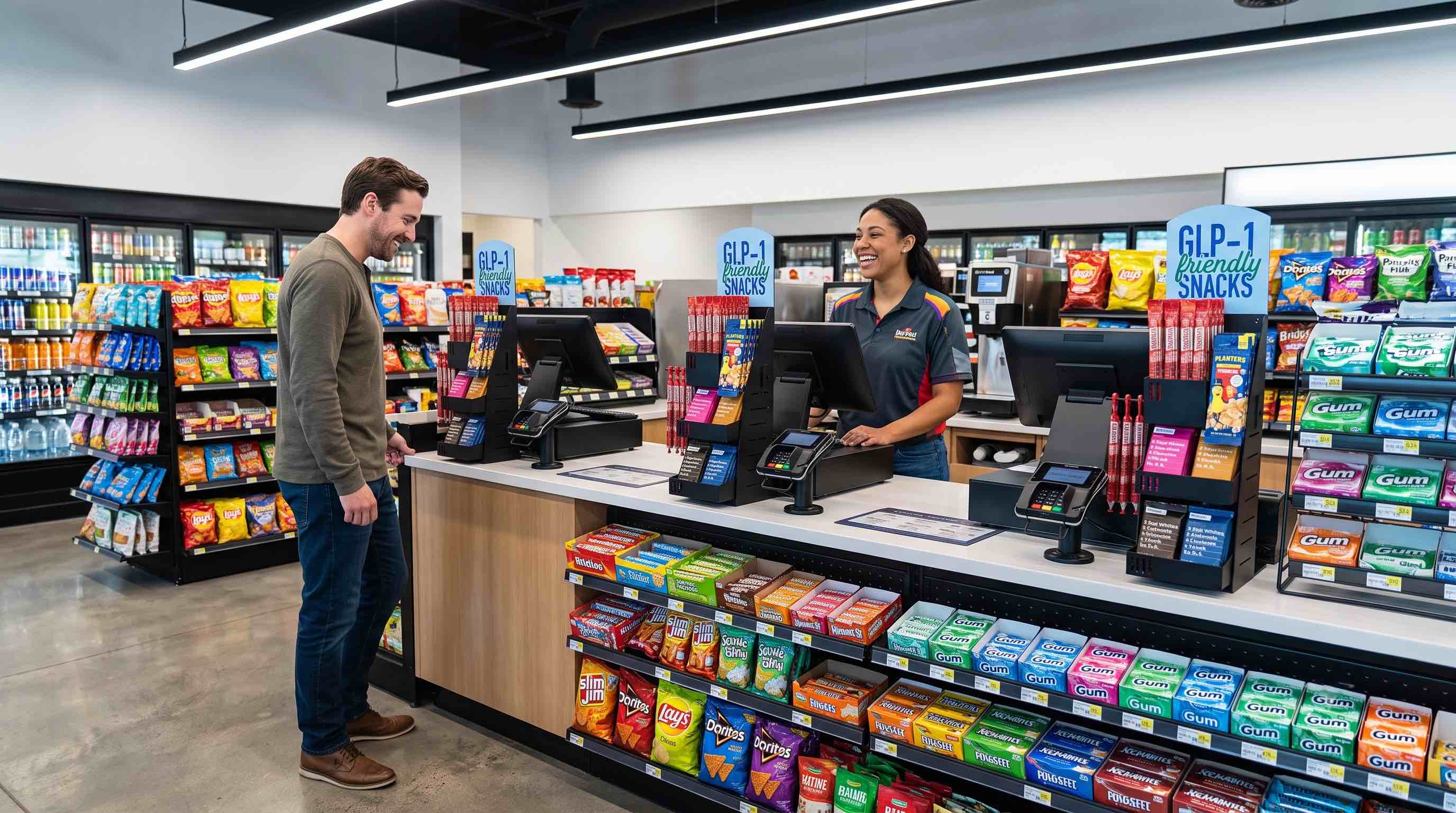
The checkout counter is high-value retail real estate, traditionally stocked with candy and pastries. Modular countertop wire racks offer a low-cost way to create a dedicated “better-for-you” display zone, grouping items like high-protein yogurts, low-sodium meat snacks, single-serve nut packs, and hydration products near the register without requiring structural changes.
Signage and labeling
There are currently no formal FDA regulations defining what constitutes a “GLP-1 friendly” food, so retailers should be careful with marketing language and avoid unapproved medical claims. Clear, factual callouts tend to work better than medical framing, for example:
- “High-Protein Picks”
- “Under 300 Calories / Over 15g Protein”
- “Hydration Headquarters”
- “Smart Portions for Daily Balance”
Foodservice, “BYOzempic,” and the Broader Wellness Shift

GLP-1 consumers generally aren’t dining out less, they’re dining more deliberately, prioritizing nutrient-dense ingredients over large, low-cost portions. That shift favors foodservice programs built around quality rather than volume.
Foodservice customization
Digital ordering kiosks are increasingly used to support macro-conscious menus, letting customers:
- Filter by macro goals, such as “High Protein” or “Low Sugar”
- Choose smaller portion sizes, such as a “Half-Size Bowl,” often at a discount
- Customize ingredients, for example, swapping a flour tortilla for a lettuce wrap, or replacing a high-fat sauce with a protein-rich yogurt dressing
Menu items that tend to perform well with this segment include grilled chicken breast bowls with vegetables, turkey and quinoa wraps, protein bowls with hard-boiled eggs and leafy greens, and smoothies formulated for at least 20 grams of protein.
Protein density as a benchmark
Several CPG brands have launched “GLP-1 friendly” product lines, such as Nestlé’s Vital Pursuit line of high-protein frozen pizzas and chicken bowls. One useful way to evaluate these and similar prepared foods is the protein-to-calorie ratio:
Protein-to-Calorie Ratio = Grams of Protein ÷ Total Calories
Foods with a ratio above roughly 0.08 (8g of protein per 100 calories) tend to support satiety and muscle maintenance particularly well. For reference:
- Vital Pursuit Four Cheese Pizza: 33g protein plus 17g fiber, 360 calories, ratio of about 0.092, notably strong on both fiber and protein for a portion-aligned format.
- Comparable frozen entrées from other brands: around 30g protein, 350 calories, ratio of roughly 0.085–0.088, high protein density that supports satiety.
- Pre-packaged hard-boiled eggs (2-pack): 12g protein, 150 calories, ratio of about 0.080, a simple, additive-free grab-and-go option.
- Kiosk-style turkey wrap: 18g protein, 220 calories, ratio of about 0.081, a hand-held, lower-carb option.
- Greek yogurt parfait (8.25 oz): 20g protein, 260 calories, ratio of about 0.077, highly digestible and rich in probiotics.
“BYOzempic”: natural satiety triggers
Alongside prescription use, there’s a parallel consumer trend, sometimes called “BYOzempic” (Bring Your Own Ozempic), focused on stimulating the body’s own GLP-1 pathways naturally, without medication. Foods associated with this approach include:
- Dietary fiber (oats, unsalted almonds, whole-grain breads), which encourages L-cells in the small intestine to secrete more GLP-1
- Leafy greens and vegetables, which contain thylakoids shown in some clinical research to support satiety
- Probiotics (yogurt, kefir, fermented foods), which support gut health and may help optimize hormone secretion
- High-protein items (hard-boiled eggs, skinless turkey, low-fat dairy), which tend to stimulate satiety more effectively than processed carbohydrates
The wider wellness effect
The lifestyle shift among GLP-1 users extends beyond food. Research indicates that 52% of users feel more positive about their appearance, 43% report being more motivated to take care of themselves, and 29% report a boost in social confidence, a shift that’s especially pronounced among Gen Z and Millennial users.
Rapid weight loss is also often accompanied by dermatological changes, which has increased demand for related personal care products, including:
- Facial moisturizers, serums, and cleansers addressing dryness and skin elasticity
- Body-firming lotions and creams
- Shampoos, conditioners, and scalp treatments addressing hair thinning, a common side effect of rapid weight loss
The discontinuation paradox
One of the more complex dynamics retailers are navigating is medication discontinuation. Long-term studies show that roughly 34% to 60% of users stop taking GLP-1 medications within their first twelve months, often due to cost, insurance restrictions, or gastrointestinal side effects. Currently, only about 1 in 10 patients havefull insurance coverage for these medications, leaving most to pay out of pocket or turn to compounding pharmacies.
When patients stop taking the medication, appetite and food noise typically return quickly, since the drugs suppress appetite biologically rather than through lasting behavioral change. Notably, spending on indulgent foods doesn’t just revert to baseline after discontinuation, purchases of candy, chocolate, and sugary confections have been shown to surge 11.4% above pre-adoption levels.
This creates a real tension for retailers: leaning too far into a health-focused assortment of risks alienating both non-users and this rebound segment. The data suggests that maintaining a mixed assortment, keeping traditional indulgent snacks well-stocked alongside a clearly segmented functional-health selection, serves the full range of shoppers moving through different stages of medication use.
A 30-Day Implementation Framework
For stores considering these changes, a phased approach tends to work better than an overnight overhaul.
Days 1–7: Audit and mapping
- Review point-of-sale data from the past quarter to identify slow-moving items in salty snack, confectionery, and beverage categories.
- Walk the store floor to identify visual clutter, congestion, or odor issues that could create friction for shoppers.
- Assess how much cold-vault space is allocated to sugary beverages and alcohol versus functional waters, sports drinks, and dairy singles.
Days 8–15: Planning and ordering
- Select countertop fixtures (such as clamp-on wire racks) and any needed kitchen ventilation upgrades,options that don’t require major construction.
- Finalize compliance-conscious signage highlighting protein, fiber, and hydration information.
- Update foodservice menus and kiosk software to support customizable, high-protein options.
Days 16–22: Installation and merchandising
- Install countertop racks and any ventilation upgrades.
- Stock new product sets, protein singles, Greek yogurts, single-serve nuts, hydration products.
- Install updated signage across the sales floor.
Days 23–30: Staff training and rollout
- Train staff on the needs of this customer segment and how to point shoppers toward relevant options.
- Update loyalty programs with relevant meal bundles.
- Launch updated kiosk menus and monitor point-of-sale data for changes in basket size and category performance.
The Bottom Line: Adapt To Stay Meaningful
The rise of the GLP-1 consumer reflects a genuine, biological shift in how a meaningful share of Americans shop and eat, not a passing trend. Convenience stores relying solely on high-volume, low-cost snack formats may see shrinking baskets and declining traffic among this segment over time. Stores that adapt their layout, foodservice offerings, and merchandising to serve both intentional, health-focused shoppers and traditional customers are better positioned to capture the full range of consumer behavior this shift is producing.
Leave a Reply