Your 2026 Blueprint for Winning the December Food Holidays and Turning Them Into Foot Traffic, Loyalty, and Sales
If you’re an owner-operator, you already feel it. The ground under this industry has shifted, and it isn’t shifting back.
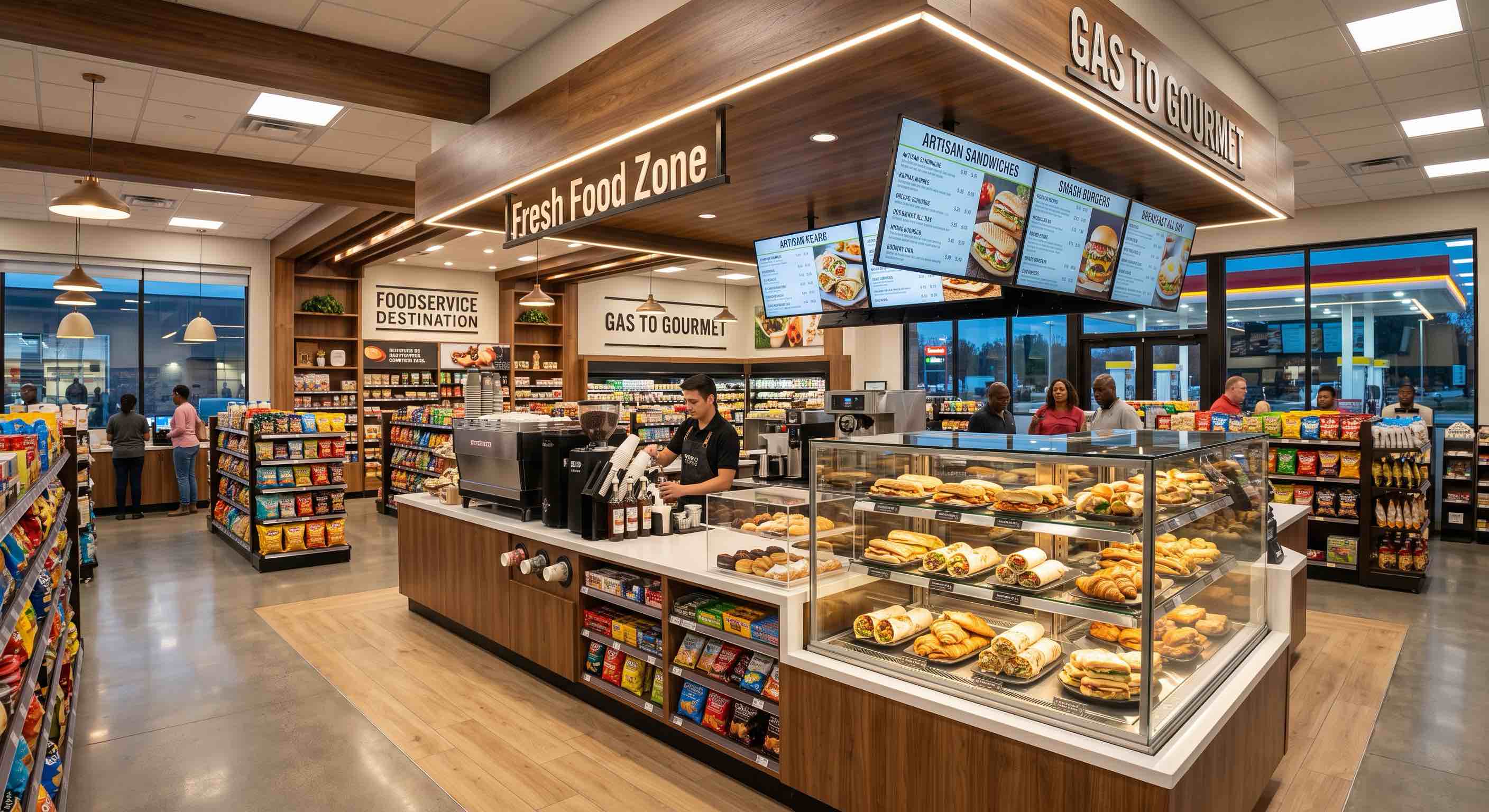
I spend my days designing custom cabinetry, specifying foodservice equipment, and building the graphic packages that pull customers deeper into stores like yours. That gives me a front-row seat to what’s working on the floor right now. I don’t run your register, but I help build the environment where it rings.
Here is the hard truth as we head into the 2026 holiday season: the pump is no longer your profit center. It’s your most expensive customer acquisition tool. In 2025, fuel accounted for 65.0% of total industry sales dollars but generated just 38.8% of gross profit dollars, according to NACS State of the Industry data. Meanwhile, in-store sales hit a record $341.2 billion, and foodservice alone drove nearly 39% of all in-store gross profit.
The store has eaten the pump. The operators who win in the next few years are the ones who treat every fueling customer as a store visit waiting to happen.
December is where that shift plays out fastest. Holiday stress, weather-driven “cocooning,” and a hunger for community all peak at once. Customers are tired, short on time, and looking for something easy that still feels special.
December also hands you a built-in promotional calendar. National Cookie Day, Brownie Day, Pastry Day, Lager Day, and Cocoa Day all land within about ten days of each other. Most of your competitors will barely touch them. That gap is your opportunity.
The problem is that most stores approach December the way they approach every other month. They stock a few seasonal items, hang a banner, and hope. The result is the same habitual, low-ticket visit, just with tinsel.
This guide is organized into four pillars, so you can move from “why” to “how” to “what next” without losing the thread:
- The Foundational Landscape: the shifts driving the market and the financial discipline you need before you merchandise anything.
- Strategic and Operational Execution: how to win the forecourt and use your floor plan to turn traffic into basket size.
- Innovation and Profit Maximization: the specific food holidays, categories, and community plays that set you apart.
- The Executive Action Plan: a prioritized 30-day roadmap you can start in November.
By the end, you’ll know which dates to build around, where to place your highest-margin items, how to pull “gas-and-gone” customers through your door, and how to run it all without over-ordering or running out. Let’s get into it.
The Foundational Landscape
The Store Has Eaten the Pump
Fuel still drives traffic, but it no longer drives profit. Look at the 2025 numbers again: 65.0% of sales dollars from fuel, and only 38.8% of gross profit dollars. Inside the store, the math flips.
Foodservice is the engine of that flip. It delivers nearly 39% of all in-store gross profit, which makes it the single most important category for any operator who wants to grow margin. A fuel customer is expensive to win and thin to serve. A foodservice customer is the opposite.
That changes how you should think about every December decision. The question is no longer “How do I sell more gallons?” It is “How do I turn the gallon buyer into a basket buyer?”
Why December Is Different
December compresses every behavior you want to influence into one month. Customers are juggling inflation, holiday hosting pressure, and gift budgets. They want convenience, but they also want to feel like they’re doing the holidays right.
Weather adds another layer. When winter turns brutal, shoppers retreat into “cocooning” mode. They want comfort food, hot drinks, and a quick stop that doesn’t cost them an hour. Your store is perfectly positioned to be that stop.
There is also a community element. People crave connection this time of year, and a neighborhood store that shows up for its neighbors earns loyalty that no coupon can buy. I’ll come back to that in the Innovation and Profit Maximization part.
Your Own Pressure Points
You’re stretched too. Labor costs, utilities, and record-high card swipe fees are all eating your margin. Every dollar you spend on a holiday push has to earn its keep.
That’s why the foundation matters before the festive merchandising. Let’s call it financial fortitude: the operational discipline to avoid running out of your best sellers without wasting money on perishables you over-ordered on a hunch.
Let AI Protect Your Margin
I regularly see operators invest heavily in beautiful new deli cases and hot food displays, then run the inventory behind them on gut feel and a spreadsheet. That’s where margin leaks out.
AI-driven demand forecasting tools, such as LEAFIO, Upshop, and TimeForge, are the names I hear most often. They analyze your sales history, local weather patterns, and even nearby event calendars to predict what you’ll sell and when.
The results operators report are hard to ignore:
- Up to a 50% reduction in food waste
- Nearly 65% fewer out-of-stocks
- 10–15% lower labor costs when schedules are built around AI-predicted traffic peaks
Those savings are what fund your holiday pricing and merchandising push without gutting your net. You don’t need to be a large chain to benefit. Many POS and back-office platforms now include forecasting modules, so start by asking what you already have.
What You Should Be Doing: Protect Your Margin With Smarter Forecasting
- Audit whether your POS or back-office system offers real AI-driven demand forecasting. If you’re still ordering deli perishables on instinct, you’re losing margin.
- Confirm your forecasting is weighting seasonal patterns, local events, and weather correctly before December begins.
- Reallocate labor savings from smarter scheduling into customer service training and extra hands during peak holiday hours.
- Lock purchase orders for key holiday items early so nothing runs out in the first week of December.
The Shopper’s Mindset: “Home Cooking, Reimagined”
Forty-three percent of consumers worry their holiday meal prep won’t go as planned. They aren’t looking to cook from scratch. They’re looking for a shortcut that still feels like a real dinner.
The global cooking sauce market is projected to hit $43.2 billion by 2032 as shoppers chase bold, authentic flavor without the effort. That’s a clear signal about where demand is heading.
This is your opening. Pair premium, vacuum-sealed proteins with globally inspired simmer sauces, and a gas stop on a dark December evening becomes a grocery mission. You’re not selling a cut of meat and a jar of sauce. You’re selling a stress-free dinner.
What You Should Be Doing: Sell the Dinner Solution
- Source high-quality proteins and pair them directly with premium simmer sauces on a high-visibility endcap.
- Train staff to pitch the pairing as “a stress-free holiday dinner solution,” not as two separate products.
- Keep the offer simple and visible. A clear price for the pair beats a complicated promotion.
Strategic and Operational Execution

Win the Forecourt Before You Lose the Customer
Historically, about 55% of your fuel buyers are “gas-and-gone.” They pay at the pump and never cross your threshold. If you want December’s food holidays to move the needle, you have to pull that customer inside while they’re standing at the pump for two or three idle minutes.
That window is more valuable than most operators realize. The customer is stationary, looking around, and open to a suggestion. The question is what they see and hear while they wait.
Geofencing, Loyalty Apps, and the Pump-to-Store Push
Geofencing and anonymous device-ID targeting let you serve mobile ads directly to a customer’s phone while they’re fueling. If you run a loyalty app, December is the season to push hard.
Two details from the data are worth using. Notifications with emojis perform 47% better, and contest language like “giveaway” lifts engagement by 28%.
Consider a push offering a free premium hot cocoa to a regular fuel buyer. Hot dispensed beverages carry margins north of 60%, so that’s a cheap way to buy a store visit. Once the customer is inside, you have a chance at the pastry, the snack, and the dinner bundle.
Make the Forecourt Do the Talking
Not every customer uses your app, so the physical forecourt has to work too. Weather-resistant pump toppers and pump-screen messaging let you advertise your December bundles while the customer is still fueling.
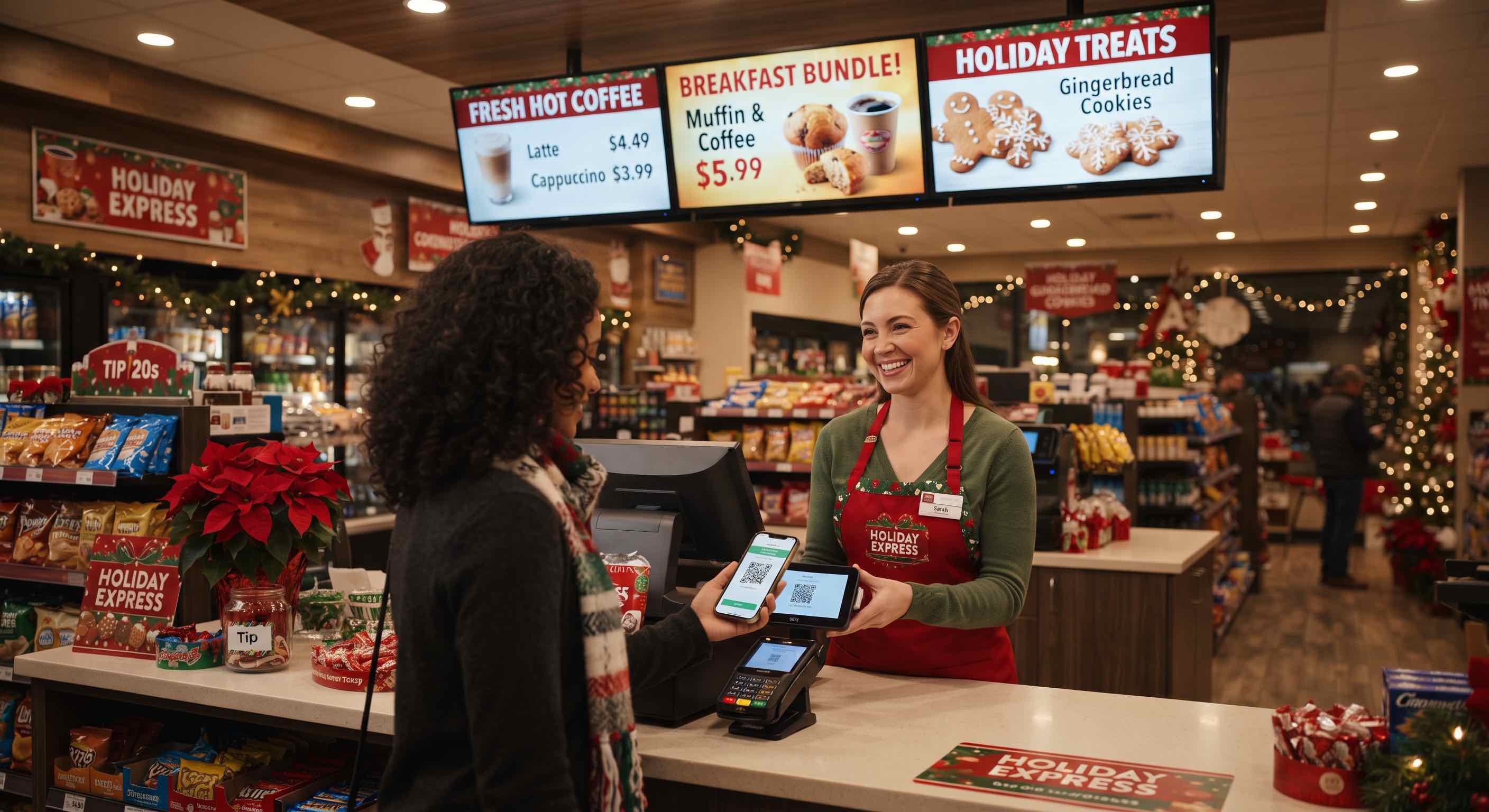
Imagery matters here. High-resolution, appetizing photography does more than text-heavy promotions, especially for baked goods and hot beverages. Keep copy short and specific, such as “Fresh croissant and coffee, $3.99.”
What You Should Be Doing: Pull the Pump Customer Inside
- Install weather-resistant pump toppers advertising your specific December food holiday bundles, using high-resolution, appetizing imagery.
- Promote your pastry-and-coffee bundle on pump screens so the decision is made before the customer opens your door.
- Schedule loyalty app pushes for the 4–9 a.m. commute window, and always include emojis and urgent language.
- Test a “free premium hot cocoa” or similar giveaway offer for regular fuel buyers, and track redemption.
Read the Store Like a Map: Spatial Analytics and the Strike Zone
Once a customer is inside, roughly 70% of convenience store transactions include an impulse buy. About a third of unplanned purchases happen simply because the shopper noticed the item while walking by. That isn’t luck. It’s layout.
Retail heatmapping, using video analytics or IoT sensors, shows you exactly where customers walk and linger. Your “red zones” are high-traffic areas. Your “blue zones” are dead space where products sit unnoticed.
When we design equipment layouts, we deliberately place high-margin impulse fixtures in the direct path of your highest-velocity foot traffic. A promotional dump bin between the door and the beer cave is a good example. It forces a moment of engagement.
The Strike Zone
Placement isn’t only about where in the store. It’s also about how high. The “strike zone” is the vertical band between knee and shoulder height, where grabbing an item takes zero extra effort.
Items placed above or below that band sell less, even when they’re in a high-traffic aisle. For holiday merchandise, which is almost entirely impulse-driven, this is one of the cheapest improvements you can make.
Equipment and Presentation Matter More in December
Foodservice and bakery sales depend heavily on how the product looks. Lighting in your bakery case should make chocolate look rich and pastries look fresh. Cooler lighting should make beverages and party items look crisp.
Clean cases, good lighting, and clear signage cost far less than a new fixture, yet they influence nearly every impulse decision. If a case is dim, cluttered, or half empty, the product inside it won’t sell, no matter how good it is.
What You Should Be Doing: Make Your Floor Plan Work Harder
- Run a 7-day heatmap audit using your existing video security system or a spatial analytics provider.
- Identify your top three red zones and your biggest blue zones.
- Move high-margin impulse items, such as seasonal baked goods and premium chocolate, out of blue zones and into the path to the cold vault and the register queue.
- Walk your store and confirm every impulse-driven holiday item sits between knee and shoulder height.
- Check lighting in bakery cases, hot food displays, and coolers, and replace failing bulbs before December.
Innovation and Profit Maximization

This is where December’s calendar becomes a profit strategy. The goal is to match the right category, the right display, and the right message to each date.
Your December Food Holiday Calendar
| Date | Holiday | Core Opportunity |
| Dec. 4 | National Cookie Day | Gift-ready cookie boxes |
| Dec. 8 | National Brownie Day | Afternoon-slump chocolate at the counter |
| Dec. 9 | National Pastry Day | Pastry-and-coffee bundle |
| Dec. 10 | National Lager Day | “Party prep” beer and snack endcap |
| Dec. 13 | National Cocoa Day | Premium hot beverage bar |
National Cookie Day (Dec. 4) and National Brownie Day (Dec. 8)
Bakery margins run 50–80% when managed well, and over half of c-store shoppers buy baked goods on impulse. That combination makes these two dates an easy win.
For Cookie Day, bundle premium cookies into festive, gift-ready boxes. A price like three for $4 still protects your margin while giving shoppers a ready-made gift. For Brownie Day, target the afternoon slump. Light your bakery case to make the chocolate look rich, and position the product right at the transaction counter to catch impulse spenders on their way out.
What You Should Be Doing: Bakery Days
- Order specialized festive packaging for bakery items ahead of Cookie Day and Brownie Day.
- Bundle cookies into gift-ready boxes with a clear multi-buy price.
- Place brownies at the register and promote them in the afternoon.
- Watch sell-through daily, and adjust your afternoon bake schedule if bundles sell out by mid-morning.
National Pastry Day (Dec. 9)
Nearly three-quarters of c-store trips are quick, planned visits driven by habit. That means you have to interrupt the routine to upsell it.
Offer an elevated pastry option, like an authentic butter croissant, and bundle it aggressively with your coffee program. Promote the bundle on your pump screens so the decision is made before the customer opens your door. The customer who came in for coffee leaves with a higher-margin ticket.
What You Should Be Doing: Pastry Day
- Create a clearly priced pastry-and-coffee bundle.
- Feature the bundle on pump screens, pump toppers, and at the coffee station.
- Train staff to offer the pairing every time a customer orders coffee.
National Lager Day (Dec. 10)
Convenience stores hold roughly 43% of all retail beer sales, and the channel typically sees a modest lift in December alcohol sales from last-minute party prep. Shoppers are already in a hosting mindset.
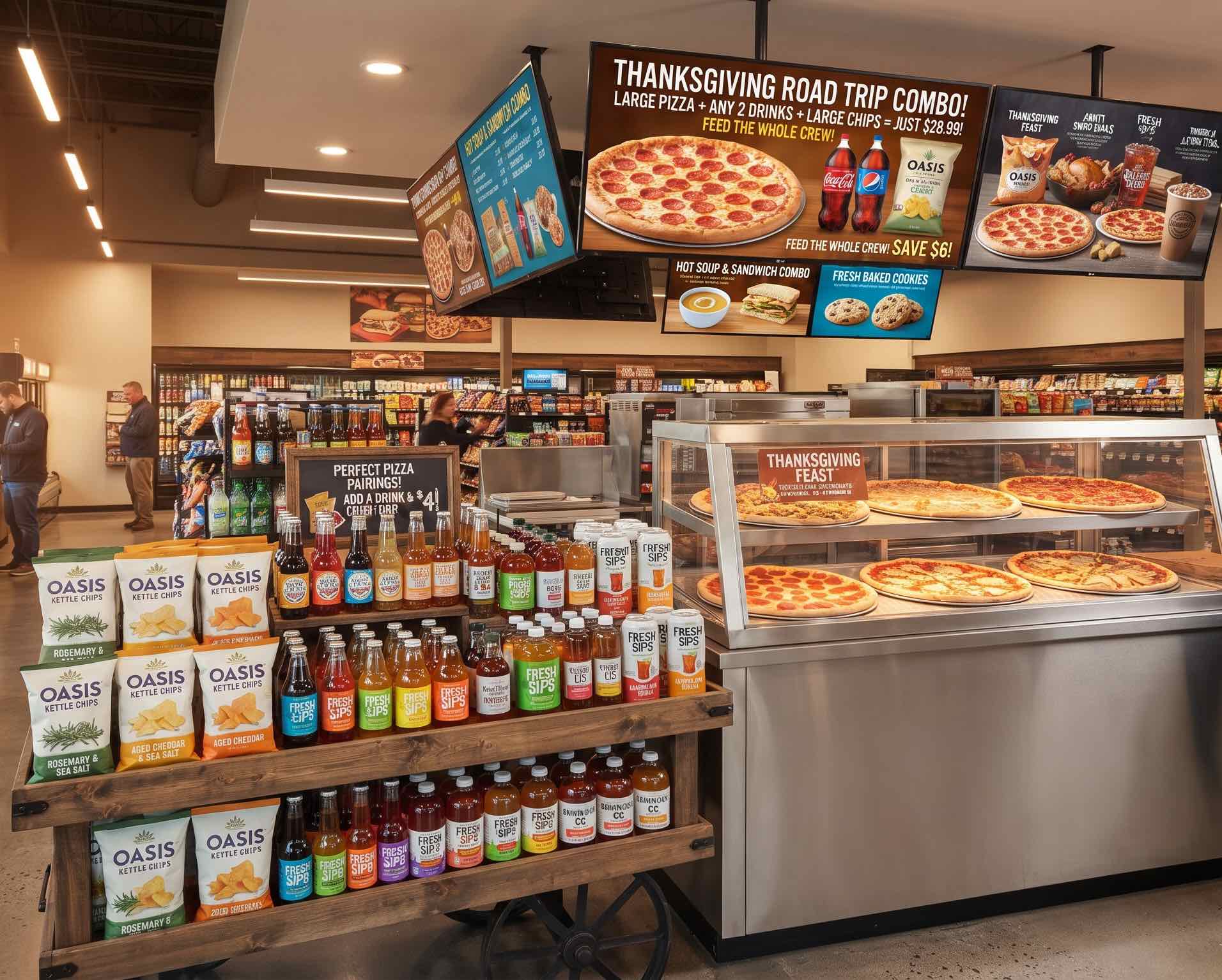
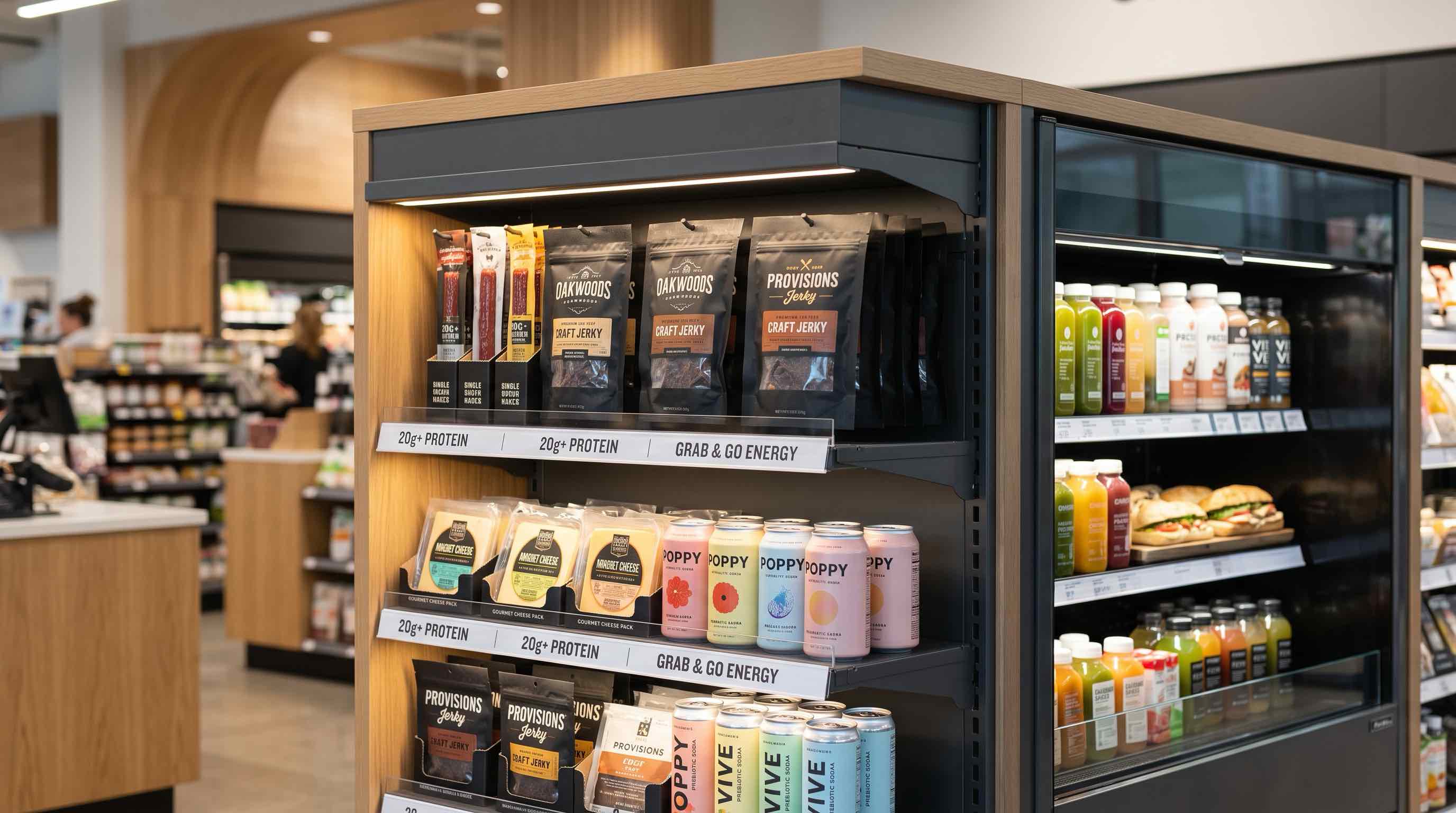
Expand facings of premium craft and winter seasonal brews, then cross-merchandise with salty snacks and premium cured meats near the cooler. A “party prep” endcap by the beer cave captures shoppers who are already primed to add to their basket. Check your local regulations on alcohol promotions before you build the display.
What You Should Be Doing: Lager Day
- Build a freestanding jerky, cheese, and snack display next to the beer cave.
- Expand facings for premium craft and winter seasonal beers.
- Use clear, simple signage that frames the display as “party prep.”
National Cocoa Day (Dec. 13) and the Cocooning Effect
As winter weather turns brutal, consumers retreat into “cocooning” mode, and hot dispensed beverages become one of your most profitable categories. Make your beverage bar a destination rather than an afterthought.
Offer premium cocoa with marshmallow and peppermint add-ins. If you want real brand affinity, consider a proprietary seasonal cup design. Regional chains like Kwik Trip have turned holiday cup drops into genuine social media moments, which is free marketing for the store.
What You Should Be Doing: Cocoa Day and Hot Beverages
- Upgrade your hot beverage station with holiday signage, premium syrups, and seasonal cups before Cocoa Day.
- Offer add-ins that encourage trade-up, such as marshmallow and peppermint.
- Use your loyalty app to push a cocoa offer to fuel customers at the pump.
Respect the Weather: Be the Community Lifeline
When a severe storm hits, QSR traffic can drop as much as 90% while your store becomes a community lifeline. People stock up on what they need without driving across town.
Categories like canned soup, frozen meals, and heating supplies can spike 30–40% ahead of a storm. If your inventory isn’t ready, that demand goes to someone else. This is another place where AI forecasting pays for itself.
What You Should Be Doing: Storm-Ready Inventory
- Set automatic elevated reorder triggers for water, canned soup, and batteries tied to severe weather forecasts.
- Assign someone to watch the long-range forecast daily.
- Keep a small “storm essentials” display ready to deploy at the front of the store.
Turn Sales Into Community Goodwill
You can’t separate profit from community standing this time of year. Partner with a local charity your customers already recognize and trust. Food banks and holiday meal programs are a natural fit for December.
Run a round-up campaign at the register, or turn your shelves into a non-perishable donation drive customers can shop right off the aisle. You’re not just raising money. You’re making your store part of the neighborhood’s holiday season.
What You Should Be Doing: Community Giving
- Select a local charity partner before December 1st.
- Set up a frictionless POS round-up option.
- Print in-store signage that names the charity and shows what the money supports.
- Train your team to ask for the round-up donation with confidence.
The Executive Action Plan
You don’t need to do everything at once. You need to do the right things in the right order. If you start November 1, this plan finishes by the end of the month, before the first food holiday arrives.
Your 30-Day Execution Plan
Days 1–7: Infrastructure and inventory
- Confirm your AI forecasting is weighting seasonal and local event data correctly.
- Lock purchase orders for proteins, sauces, and bakery ingredients.
- Finalize your charity partner and print signage.
Days 8–14: Spatial and visual setup
- Run the heatmap audit and identify your top three red zones.
- Build the “Home Cooking, Reimagined” endcap and the beer cave “party prep” station.
- Check lighting in bakery cases and coolers and confirm strike-zone placement.
Days 15–21: Marketing activation
- Upload pump-screen graphics for Cookie Day, Pastry Day, and Cocoa Day.
- Pre-schedule loyalty app pushes for the morning commute.
- Train your team to pitch dinner bundles and ask for the round-up donation.
Days 22–30: Execution and adjustment
- Track daily category movement as the food holidays arrive (Dec. 4–13).
- Adjust your bake schedule immediately if bundles sell out early.
- Watch the long-range forecast so a storm never catches you flat-footed.
What You Should Be Doing: Keep the Plan on Track
- Assign ownership of each pillar (technology, merchandising, marketing) to a trusted shift manager.
- Set measurable goals, such as “increase bakery bundle sales 15%” or “hit 40% pump-to-store conversion among app users.”
- Review department gross profit daily so margin fade gets caught early, not after the month closes.
Quick Answers for Busy Operators
- What are the main food holidays in December for convenience stores?
- National Cookie Day (Dec. 4), National Brownie Day (Dec. 8), National Pastry Day (Dec. 9), National Lager Day (Dec. 10), and National Cocoa Day (Dec. 13).
- How can a c-store turn pump customers into in-store customers?
- Use pump toppers, pump screens, and loyalty app pushes with clear, appetizing offers. A free or discounted hot beverage is a low-cost way to earn the visit.
- Why does fuel generate less profit than in-store sales?
- In 2025, fuel made up 65.0% of industry sales dollars but only 38.8% of gross profit dollars. In-store categories, especially foodservice, carry much higher margins.
- What is the “strike zone” in c-store merchandising?
- It’s the vertical band between knee and shoulder height, where customers can grab an item with no extra effort.
- Where should impulse items go in a convenience store?
- Place them along the highest-traffic paths, such as between the entrance and the cold vault or in the register queue, and out of low-traffic “blue zones.”
The Bottom Line: December Is More Than One Day
December is more than any single date on the calendar. The operators who win the month are the ones who prepare, not the ones who decorate.
Let’s pull it together across the four sections.
The Foundational Landscape. The store has eaten the pump. Fuel drove 65.0% of sales but only 38.8% of gross profit in 2025, while foodservice delivered nearly 39% of in-store gross profit. When you build financial fortitude with AI-driven forecasting, you protect your margin and fund everything else.
Strategic and Operational Execution. Most fuel customers never walk in, so you have to pull them in with pump toppers, pump screens, and well-timed loyalty pushes. Once they’re inside, your floor plan does the rest. Heatmaps, red zones, and the strike zone turn impulse behavior into basket size.
Innovation and Profit Maximization. The food holidays running from December 4 through 13 let you turn habitual, low-ticket visits into basket-building events. Bakery bundles, pastry-and-coffee pairings, a “party prep” beer endcap, and a premium cocoa bar all raise margin. A dinner solution endcap speaks to the 43% of shoppers worried about holiday meals.
The Executive Action Plan. A focused 30-day plan, with clear owners and measurable goals, turns good ideas into results. Daily gross profit reviews catch margin fade early.
And when you show up as a real pillar of your community during the hardest weeks of winter, you build the kind of loyalty no competitor can undercut with a coupon. A round-up campaign or donation drive takes little effort and says a great deal about who you are.
Here is my challenge to you. You don’t have to launch all of this. Pick one move from this plan: the charity round-up, the dinner endcap, or the pump-screen graphics. Get it live in your store by the end of this week.
Then watch what happens at the register. Learn from it, adjust, and add the next move. Small, consistent steps are how stores like yours take back the profit the pump no longer delivers.
If you have a December success story or a question about any of these strategies, I’d love to hear it. Your bottom line will thank you.
Leave a Reply