
In our first post, I outlined the five massive shifts coming to the cold vault in 2026. Now, it’s time to drill down into the biggest money-maker on the horizon: The Functional Wellness Revolution.
Remember when “health food” meant a dusty granola bar in the corner? Those days are over. Today, your customers, from the construction worker to the college student, are hacking their biology. They aren’t just thirsty; they want performance. They want to focus better, recover faster, and manage their weight. If your coolers are just filled with sugar water, you are ignoring the fastest-growing segment of the beverage market. Let’s break down how to capitalize on this.

Analysis and Synthesis: The “Ozempic Effect” and Energy 3.0
Two massive cultural forces are reshaping what “healthy” means in a convenience store: the widespread use of GLP-1 weight loss drugs (the “Ozempic Effect”) and the evolution of energy drinks into cognitive performance tools.
The “Ozempic Effect” on Your Basket
You’ve seen the headlines. Millions of Americans are using GLP-1 medications like Ozempic and Wegovy. These drugs suppress appetite, meaning these customers are buying less food volume. They aren’t grabbing that second hot dog or the king-size candy bar.
But here is the opportunity: they need protein. To maintain muscle mass while eating less, these consumers are turning to high-protein, ready-to-drink (RTD) shakes. The global high-protein drink market has surged significantly, and in the c-store environment, we are seeing a direct swap. The $2.00 candy bar sale is being replaced by a $4.50 premium protein shake sale. Your unit count might drop, but your basket dollar value goes up.
- Indulgence without Guilt: These aren’t chalky gym drinks anymore. Brands are releasing “dessert-inspired” flavors like Salted Caramel or Root Beer Float. They satisfy the craving for sweets that GLP-1 users still experience, but in a format that fits their new nutritional requirements.

Energy 3.0: Calibration, Not Just Stimulation
The energy category is the powerhouse of the c-store, but it’s changing.
- Energy 1.0 was Red Bull (Caffeine + Sugar).
- Energy 2.0 was Bang/Reign (High Caffeine + Zero Sugar).
- Energy 3.0 is about Focus (Nootropics + Adaptogens).
Consumers, especially Gen Z, are stressed out. They don’t want the jitters; they want “calibration.” They are looking for ingredients like L-Theanine, Lion’s Mane mushroom, and Ashwagandha to help them focus on gaming, studying, or work. This sub-category is growing faster than traditional soft drinks.
Hydration Plus: The “Healthy Soda” Pivot
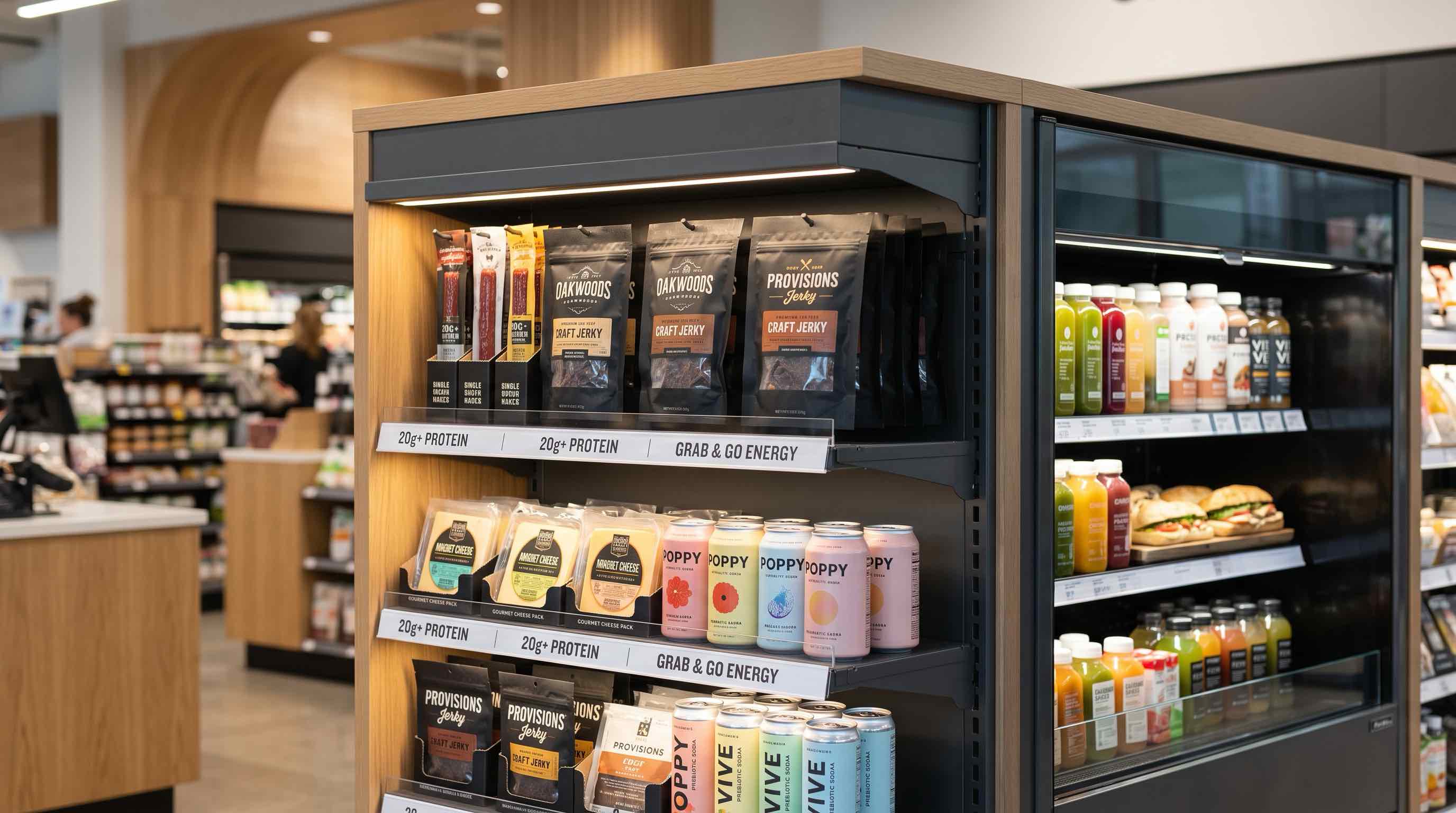
Finally, the “soda” drinker is evolving. They still want bubbles, but they want benefits. Prebiotic sodas (like Poppi and Olipop) that support gut health are exploding. These drinks bring a new demographic into your store. They are often female shoppers who previously avoided the cold vault. They are willing to pay a premium for “cleaner” labels and functional fiber.

Actionable Insights: How to Merchandise for Function
You cannot hide these products in a “health” section. They need to be front and center because functional shoppers are often on a specific “mission.”
- The “High-Performance” Door: Create a dedicated door that groups Energy 3.0 drinks and Protein shakes together. Label it “Fuel & Focus.” This targets the morning commuter and the afternoon slump shopper simultaneously.
- Trade Up the Soda Drinker: Place prebiotic sodas next to the traditional colas. When a customer goes for a soda, they see the healthier option right beside it. The price gap (e.g., $2.29 vs. $3.49) is small enough to trigger an impulse “trade-up” purchase.
- Price Confidence: Don’t be afraid of the $4.00+ price point. Functional shoppers are less price-sensitive because they view the drink as a tool or a meal replacement, not just a refreshment.
What You Should Be Doing
- Review Your Protein SKUs: Ensure you have at least 3-4 facings of high-protein (20g+) RTD shakes. Look for “dessert” flavors that double as a treat to capture the GLP-1 shopper looking for indulgence.
- Scout for Nootropics: Check your energy drink planogram. Do you have brands that call out “Focus,” “Brain,” or “Nootropic”? If not, talk to your distributor immediately to swap out slow-moving traditional legacy brands.
- Audit Your Hydration: Are you stocking “clinical” hydration (like Electrolit or Pedialyte)? These should be in your cold vault, not just the medicine aisle. They are major recovery sellers for everyone from athletes to the weekend “party” crowd.
- Signage Matters: Use shelf talkers. “20g Protein,” “Gut Health,” or “Focus Fuel” helps the customer navigate these new ingredients quickly. In a c-store, you have about 3 seconds to catch their eye.
- Bundle for the “Ozempic Basket”: Create a “Wellness Combo” deal, a protein shake and a pack of almonds or a fruit cup. This replaces the lost “soda and chips” margin.
The Bottom Line: Be A Problem Solver
The Functional Wellness trend is your best defense against declining food volumes and changing consumer habits. By stocking products that offer biological benefits, such as protein, focus, and gut health, you transform your store into a wellness destination. It becomes more than just a pit stop. You are increasing the average ring at the register. You are solving real problems for your customers. They are more health-conscious than ever before.
However, wellness isn’t the only thing changing the liquid landscape. What about the customers who want to unwind? In the next post, Trend II: The Convergence of Vice and Virtue, we’ll explore how the lines between alcohol, soft drinks, and cannabis are blurring, and how you can legally cash in on the “Fourth Category” of beverages.

Leave a Reply