
Building Loyalty Through the Social Anchor Model
In our last post, we took a deep dive into the “Work Accelerator.” We explored how high-speed, high-efficiency layouts and functional beverages like nitro cold brews serve as the fuel for the professional “flow state.” It’s a vital model for the customer in a rush, but as I often tell my clients in the convenience industry, humans aren’t robots. We don’t just need to refuel; we need to belong.
Today, we are shifting gears from “speed” to “social.” Many call this concept The Neighborhood Porch. You might recognize it as the “Buc-ee’s effect,” but it’s scalable for stores of any size. When you lean into the Social Anchor model, you stop competing solely with the gas station across the street and start competing with Starbucks, local diners, and community hubs.
This post will explore the psychological and physical shift required to turn your store into a destination. We’ll look at the concept of Commercial Friendship, the art of moving beyond the transaction to create emotional trust. We will also discuss how Environmental Branding and the LIFT (Lighting, Image, and Facilities Transformation) initiative can physically manifest this welcoming atmosphere.
As someone who spends my days helping stores design cabinetry, select equipment, and implement graphics, I’ve seen firsthand how a store’s “vibe” dictates its bottom line. If your store feels like a clinical, fluorescent-lit box, people will leave as soon as their tank is full. If it feels like a “porch,” they’ll linger. And in our world, “dwell time” is the secret sauce for increasing basket size and customer lifetime value. By the end of this post, you’ll have a roadmap for transforming your location from a place people have to go into a place they want to be.

The Power of Commercial Friendship
Commercial friendships are relationships that move beyond the “scan and pay” interaction to include social support and empathy. In my sixteen years as a chef and now in my work with Food Concepts, Inc., I’ve learned that people don’t just buy products; they buy how a place makes them feel.
For many of your customers, especially the older demographic in rural or suburban areas, your clerk might be the only human interaction they have all day. When your staff remembers a regular’s name or asks about their grandkids, they are building emotional trust. This trust is a massive competitive advantage that big-box retailers and automated kiosks can’t replicate.
However, as an operator, you must guard against the “tipping point.” If a customer senses that the friendliness is fake or purely a sales tactic, the “betrayal” feels deeper because they thought you were friends. Authenticity is your greatest currency in 2026.
What You Should Be Doing
- Implement a “GUEST” Training Protocol: Move beyond basic customer service. Train your team on the GUEST model: Greet, Understand, Eye Contact, Speed, and Thank You.
- Empower “Active Listening”: Train staff to nod, maintain eye contact, and paraphrase customer needs. If a regular says they’re tired, the clerk should be empowered to suggest the new high-caffeine roast you just installed.
- Personalize the Transaction: Encourage staff to learn three “facts” about their top ten regulars. It sounds simple, but it creates a social bond that survives price hikes or construction delays.
Environmental Branding: Designing for “Dwell”

To be a Social Anchor, your store needs to look the part. This is where my world of cabinetry, equipment, and graphics comes into play. You cannot build a “neighborhood porch” with cracked linoleum and flickering shop lights.
Take the example of the Synergy Cooperative in Cumberland, Wisconsin. They didn’t just build a gas station; they built a “North woods” experience. They used vaulted knotty pine ceilings, local stone accents, and high-end cabinetry to display local meats and cheeses. They utilized the LIFT (Lighting, Image, and Facilities Transformation) initiative to add a 360-degree LED “Halo.”
This kind of lighting doesn’t just provide safety; it creates an “inviting glow” that signals warmth from the street. When you combine warm wood tones with acoustic management (to lower the “clatter” of a busy store), you lower the customer’s cortisol levels. When they feel relaxed, they stay longer. When they stay longer, they buy more.
What You Should Be Doing
- Audit Your “Sensory Brand”: Walk into your store as a stranger. Is the music too loud? Is the lighting harsh and blue-toned? Switch to warm LED lighting (around 2700K-3000K) in seating and coffee areas to create a “living room” feel.
- Invest in Quality “Touchpoints”: Replace flimsy plastic counters with durable, high-quality cabinetry. In my experience, customers treat a store better when the environment feels premium.
- Manage the “Clutter”: Use professional graphics and cohesive signage to direct traffic. A confused customer is a stressed customer, and stressed customers don’t “dwell.”
Localizing the Social Hub

The final piece of the Social Anchor model is localization. People want to support their neighbors. By featuring “Hero Ingredients” from local vendors, like Wisconsin maple syrup, local honey, or craft jerky, you aren’t just selling a product; you’re selling community pride.
This differentiates you from the national chains that have the same cookie-cutter inventory in every state. When you partner with a local bakery for your morning pastries or use a local roaster for your “premium” coffee line, you become an extension of the neighborhood.
What You Should Be Doing
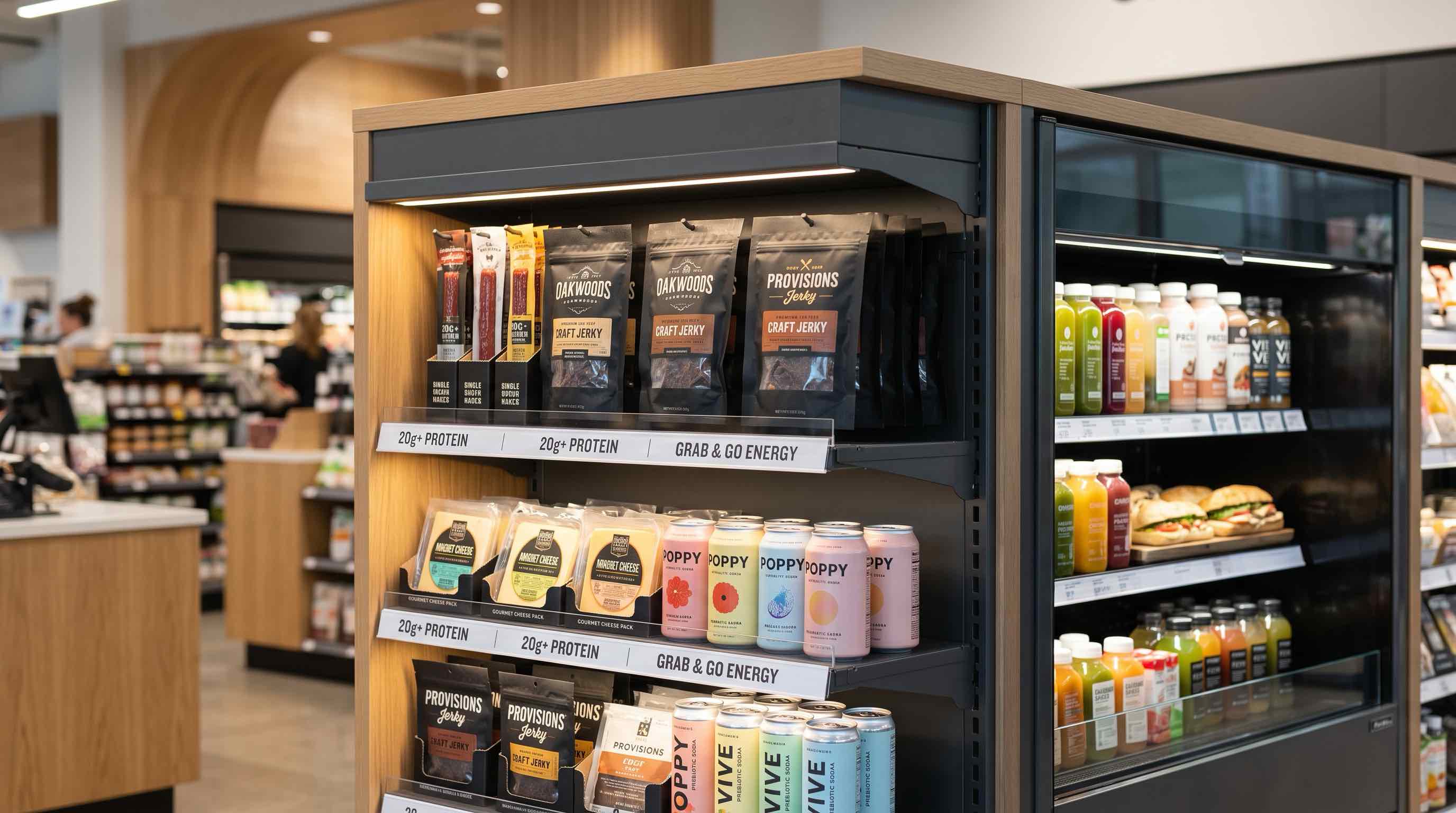
- The “Local Spotlight” Shelf: Dedicate one high-visibility endcap or a custom-built cabinet to “Grown/Made in [Your Town].”
- Tell the Story: Use your wall graphics to tell the story of your local vendors. If you sell honey from a farm five miles away, put a picture of that farmer on the wall. It builds an immediate connection.
- Create a “Community Board” 2.0: Don’t just pin up flyers. Use a digital screen to highlight local high school sports scores or community events. Make your store the “information desk” of the town.
The Bottom Line: Invite Customers Onto Your Porch
The “Social Anchor” is about more than just selling snacks; it’s about building a porch for your neighborhood. It is about the transition from a “point of purchase” to a “point of connection.” When you successfully implement the Social Anchor model, you are leveraging Commercial Friendship to build a moat around your business that no competitor can cross.
As we’ve discussed, this requires a dual approach. You need the “soft skills” of a highly trained, empathetic staff, and you need the “hard assets” of a well-designed, inviting environment. Whether it’s through a LIFT initiative to upgrade your lighting or a strategic redesign of your cabinetry and graphics to showcase local products, every physical choice you make should reinforce the message: You are welcome here.
But the world is changing rapidly. As we move further into 2026, a new type of customer is emerging, one who needs your store to be social and productive simultaneously. They aren’t just looking for a porch; they’re looking for a mobile office. They are the EV drivers waiting for a charge and the remote workers tired of their home walls.
In our next installment, we are going to look at how to capitalize on this specific shift. Get ready for Part 5: Monetizing the Wait: Transforming Your Store into a Digital Nomad HQ. I’ll show you how to turn “wait time” into “profit time” by catering to the professional on the move.
See you in the next post.

Leave a Reply