
The “Fifth Place” Sanctuary
In our previous deep dive, we explored The Nomad Hub, focusing on how your store can become a high-tech “Third Place” for the mobile workforce of 2026. We discussed the importance of high-speed connectivity, ergonomic “perch” zones, and the tech-integrated foodservice that keeps the modern professional fueled and functional. But as we move toward the final pillar of our framework, we shift from the physical and digital needs of the customer to their emotional and ethical aspirations.
Welcome to the pinnacle of our journey: The Fifth Place: The Transformative Sanctuary.

If you’ve been following this series, you know we’ve moved through Maslow’s Hierarchy of Needs, starting with the physiological safety of the “Home Annex” and the efficiency of the “Refueling Station.” Now, we reach the top: Self-Actualization. The Transformative Sanctuary isn’t just about selling a product; it’s about helping your customer feel like a better version of themselves for having walked through your doors.
For the modern consumer, specifically Gen Z and Millennials, often dubbed the “stressed generations”, shopping is no longer a neutral act. It is a moral and personal choice. These customers are looking for “Purpose.” They want to know that the caffeine they drink is ethically sourced, that the snacks they eat support their mental well-being, and that the business they support shares their values.
In this post, we are going to explore how “Euphoric” wellness beverages and “Radical Transparency” in your sourcing can align your store with your customer’s Ideal Self. I’ll show you how to move beyond being a “transactional box” to becoming a destination that feeds the spirit. By the end of this article, you’ll understand how to implement high-level wellness trends and honesty-based marketing to build a type of loyalty that price-cutting can never touch.
The Rise of the “Euphoric” Wellness Revolution
The concept of “wellness” in a convenience store used to mean stocking a few protein bars and some bottled water. In 2026, that is the bare minimum. We are seeing the peak of the wellness trend hit the beverage cooler in the form of Euphoric Beverages. These are non-alcoholic social tonics infused with adaptogens (like ashwagandha or reishi mushrooms) to manage stress and nootropics (like GABA or L-theanine) to boost cognitive function and mood. Brands like Kin Euphorics or Hiyo are not just drinks; they are marketed as “social lubricants” that provide a “natural high” or a “gentle float” without the looming shadow of a hangover.
As a former chef, I can tell you that flavor profiles are shifting too. These aren’t sugary sodas. They are complex, botanical, and sophisticated. When you stock these, you aren’t just quenching thirst. You are telling your customer, “I understand your stress, and I have a solution that helps you perform better tomorrow.” You are transitioning from a purveyor of “vice” (tobacco, alcohol, sugar) to a partner in their personal optimization.
What You Should Be Doing
- Identify the “Stress Milestones”: Look at your data. When do customers look the most burned out? Is it the 4:00 PM slump or the Friday night “wind down”? Position your adaptogen drinks as a “Healthy Reset” for these specific times.
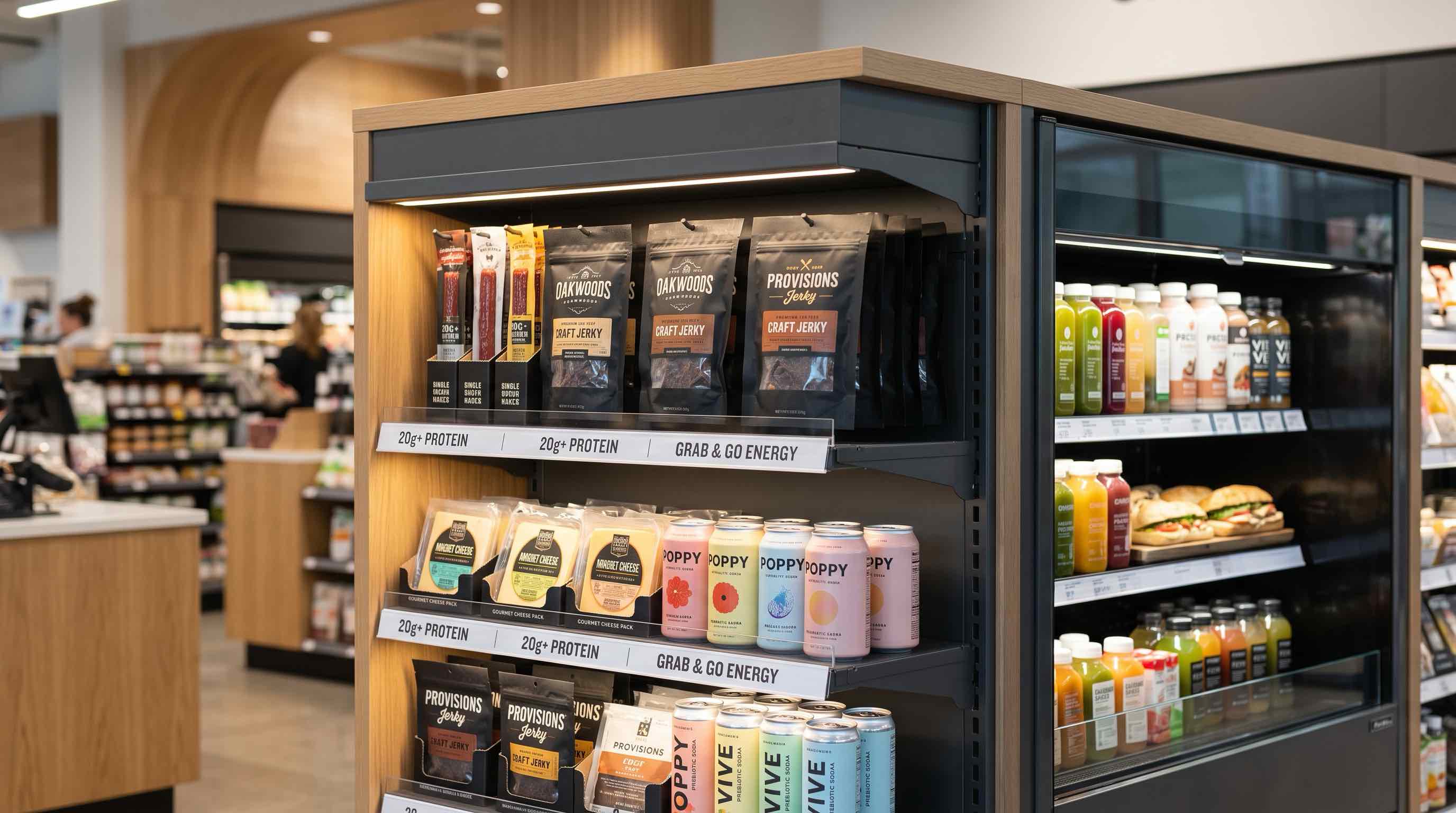
- Educate via Signage: Most customers won’t know what “nootropics” are. Use simple shelf talkers that say: “Focus without the Jitters” or “Socialize without the Hangover.”
- Curate a “Mocktail” Endcap: Group these high-margin euphoric drinks with premium garnishes or clear ice. Create a destination in the cooler that screams “Premium Wellness.”
Radical Transparency: The Willy Street Co-op Model

The second half of the Transformative Sanctuary is Radical Transparency. In 2026, “greenwashing”, the practice of making a brand seem more environmentally friendly than it actually is, is a total brand killer. Today’s B2B and B2C landscapes demand the truth, even when it’s messy.
I often look at the Willy Street Co-op in Madison, WI, as a gold standard for this. They use their monthly publication, The Reader, to be bone-honest with their community. If there is a fungicide issue with their citrus supply, they tell the customers. If they are struggling to hit their goals for a livable wage for their clerks, they publish the progress and the hurdles.
This level of honesty builds values-based loyalty. When you are honest about your supply chain, your pizza’s ingredients, or your environmental footprint, the conversation with the customer changes. It moves from “How much does this cost?” to “Who am I supporting when I buy this?” For a convenience store owner, this means moving away from “faceless corporation” vibes and toward “trusted community partner.”
What You Should Be Doing
- The “Hero Ingredient” Story: Pick one item you are proud of, perhaps your coffee or your fresh-made sandwiches. Use a QR code on the packaging that leads to a short video or page explaining exactly where that flour or those beans came from.
- Waste Transparency: Be open about what your store is doing to reduce food waste. If you donate day-old pastries to a local shelter, put a sign up! It shows your store has a heart.
- Labor Pride: If you offer your staff specific benefits or training (like the design and equipment expertise my company provides to help operators succeed), share that! Customers love supporting businesses that treat their “back of house” well.
Designing the Sanctuary: Graphics and Atmosphere

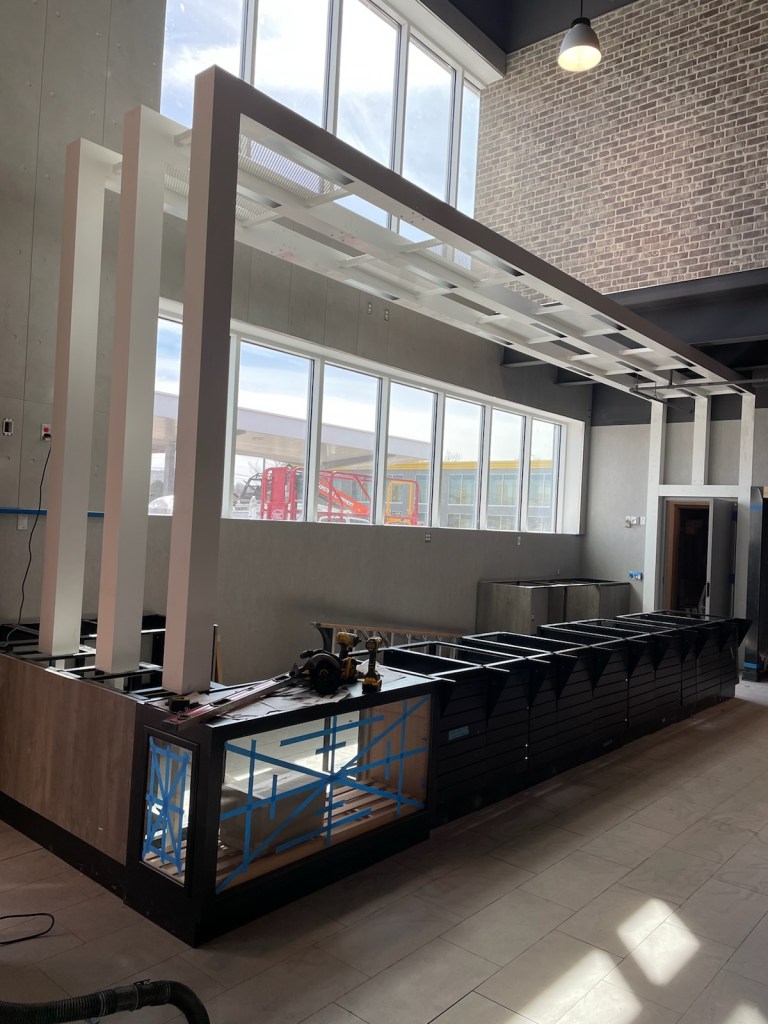
As someone who works daily with cabinetry, equipment, and graphics for C-stores, I can tell you that the “Sanctuary” vibe is created through intentional design. You cannot sell “Zen-like wellness” in a store with flickering fluorescent lights and cluttered, dirty counters.
To achieve the Fifth Place, your store needs to look the part. This involves using natural textures, wood grains in your cabinetry, matte finishes on your graphics, and earthy tones in your décor. The goal is to lower the customer’s cortisol levels the moment they step inside.
What You Should Be Doing
- Update Your Cabinetry: Move away from clinical, white plastic. Opt for warmer wood-look laminates in your coffee and wellness zones to create a “cafe” feel.
- Soft Lighting Zones: If possible, use dimmable LED lighting in your seating or “Sanctuary” areas to differentiate them from the high-energy aisles of the store.
- Values-Based Graphics: Use your wall space to tell your story. Instead of just “PIZZA,” use graphics that say,”Sourced from Local Dairies” or “Crafted with Care in [Your Town].”
The Bottom Line: The Ultimate Destination
The Transformative Sanctuary is the final piece of the puzzle. It is where your store transcends its physical walls and becomes a reflection of the customer’s heart and values. When you embrace “Euphoric” wellness and “Radical Transparency,” you aren’t just selling products; you are participating in a movement. You are helping your Gen Z and Millennial customers navigate a stressful world, and in return, they are giving you a level of loyalty that no “buy one, get one” coupon could ever achieve.
We have now traveled through the entire strategic architecture of the Five Places.
- 1. The Home Annex: Reliability and safety.
- 2. The Refueling Station: Speed and efficiency.
- 3. The Social Anchor: Community and connection.
- 4. The Nomad Hub Productivity and technology.
- 5. The Transformative Sanctuary: Purpose and wellness.
You now have the psychology, the industry benchmarks, and the marketing strategies to win in 2026. You have the tools to transform your cabinetry, your equipment, and your brand voice to meet the customer exactly where they are.
Coming up next: In our final installment, Post 7: Your 2026 Roadmap: From Transactional Box to Essential Ecosystem, I will bring this entire series full circle. I’ll provide a comprehensive summary of every “Place” we’ve discussed and give you a step-by-step ultimate action plan to transform your business for the future.

Leave a Reply