
Turning Food Insecurity Initiatives into Foot Traffic, Loyalty, and Sales
If you operate a convenience store in 2026, you already know our industry isn’t just gas stations that happen to sell snacks anymore. The numbers make that case on their own. There are roughly 152,000 convenience stores in the United States, ringing up somewhere north of 160 million transactions a day. Foodservice and merchandise sales topped $341 billion in 2025 alone, marking the 23rd consecutive year of inside-sales growth. But the more interesting number is where the profit actually comes from: foodservice now accounts for 28.5% of in-store sales, yet it delivers 38.9% of in-store gross profit dollars. Food, not fuel margin, is what’s carrying this industry forward.
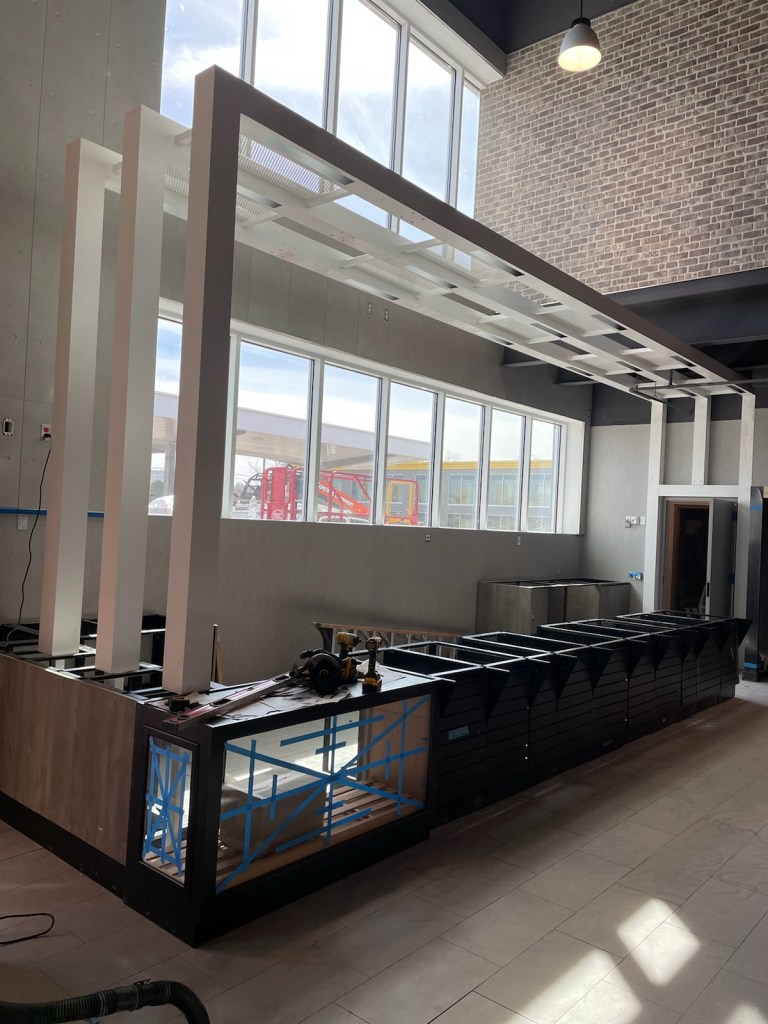
As an industry partner who spends my days helping owner/operators design store layouts, select commercial cabinetry, optimize back-of-house equipment, and build out high-impact graphics, I get a front-row seat to how these macro trends hit your physical footprint. I see the friction points that show up the moment a store tries to pivot to a food-forward model. And right now, the single biggest friction point on the horizon isn’t about selling more food. It’s about what you do with the food you don’t sell.
We’re operating against a genuinely difficult national backdrop. The most recent USDA data shows 13.7% of U.S. households, 18.3 million homes, experienced food insecurity in 2024, and that figure has been climbing since pandemic-era food assistance expansions lapsed. At the same moment, the USDA has finalized a major overhaul of the inventory rules that govern which stores can keep accepting SNAP/EBT. As a convenience store operator, you’re standing at the intersection of a worsening hunger landscape and a regulatory shift that’s going to change what your coolers look like.
Inside that collision, though, is one of the more interesting business opportunities I’ve seen in this category in years.
By deliberately aligning your store with hunger-relief programs like the NACS Foundation’s Neighborhood Nourish initiative, you can do a lot more than write a check. Done right, this kind of alignment helps you get ahead of an inventory shrink problem you’re about to inherit, unlocks a tax deduction most operators have never used, builds real community goodwill, and, this is the part that matters to your P&L, drives measurable increases in foot traffic and basket size. The industry’s own “Convenience Has Heart” framing isn’t just a slogan; it reflects something that’s already true. Eighty-eight percent of Americans consider convenience stores essential businesses, and the vast majority of stores already support some kind of charitable cause. The stores that formalize and operationalize that instinct, rather than leaving it ad hoc, are the ones that will turn it into a competitive advantage.
In this guide, I’ll walk you through exactly how to capitalize on this alignment: the regulatory landscape forcing the issue, the operational and equipment changes you need to make, the marketing plays that actually move the needle at the register, and a 30-day executive action plan to get it all running in your stores. Let’s get into it.
The Foundational Landscape
To understand why food rescue and hunger-relief partnerships have suddenly become a front-burner issue for convenience retailers, you have to start with the regulation that’s forcing your hand.
Convenience stores have long been critical access points for SNAP participants, small-format stores make up a large share of the roughly 189,000 “Criterion A” retailers nationwide that qualify for SNAP authorization through an inventory-based test rather than a sales-based one. On May 8, 2026, the USDA finalized new stocking standards for that test, with a compliance deadline of November 4, 2026. If you want to keep accepting EBT/SNAP under Criterion A, your required shelf inventory is about to more than double.
Here’s the comparison:
The old standard (in effect through November 3, 2026):
- 3 varieties in each of 4 staple food categories (dairy, grains, protein, fruits/vegetables); 12 varieties total
- 3 stocking units per variety; 36 units on the floor
- Perishables required in at least 2 of the 4 categories
The new standard (effective November 4, 2026):
- 7 varieties in each of the 4 staple food categories; 28 varieties total
- 3 stocking units per variety; 84 units on the floor at all times
- Perishables required in at least 3 of the 4 categories
Look at that shift from an equipment and design perspective for a second. You’re now required to keep meaningfully more fresh produce, dairy, and perishable protein on your shelves every single day. Since most convenience stores only receive wholesale deliveries once or twice a week, there’s a near-mathematical certainty baked into this rule: your shrink and spoilage rates are going up.
This is exactly where the NACS Foundation’s Neighborhood Nourish program becomes operationally useful rather than just a nice-to-have. The initiative unites the convenience channel around fighting hunger and reducing food waste, channeling surplus food from retailers and suppliers to local food banks and pantries. Corporate partners have already put real money behind it, Vontier Corporation, for example, donated $25,000 to Neighborhood Nourish in June 2026 to launch an activation in Raleigh, North Carolina, mobilizing more than 40 volunteers who packed 10,000 pounds of groceries into roughly 2,000 meal bags in partnership with Convoy of Hope. That’s one piece of a larger multi-year commitment the company has made to the program.
For the independent operator, plugging into this ecosystem means you stop throwing short-dated food in the dumpster and start redirecting it to families who need it. You’re converting a guaranteed operational cost, shrink, into community goodwill and, as we’ll get into later, a real tax benefit.
What You Should Be Doing
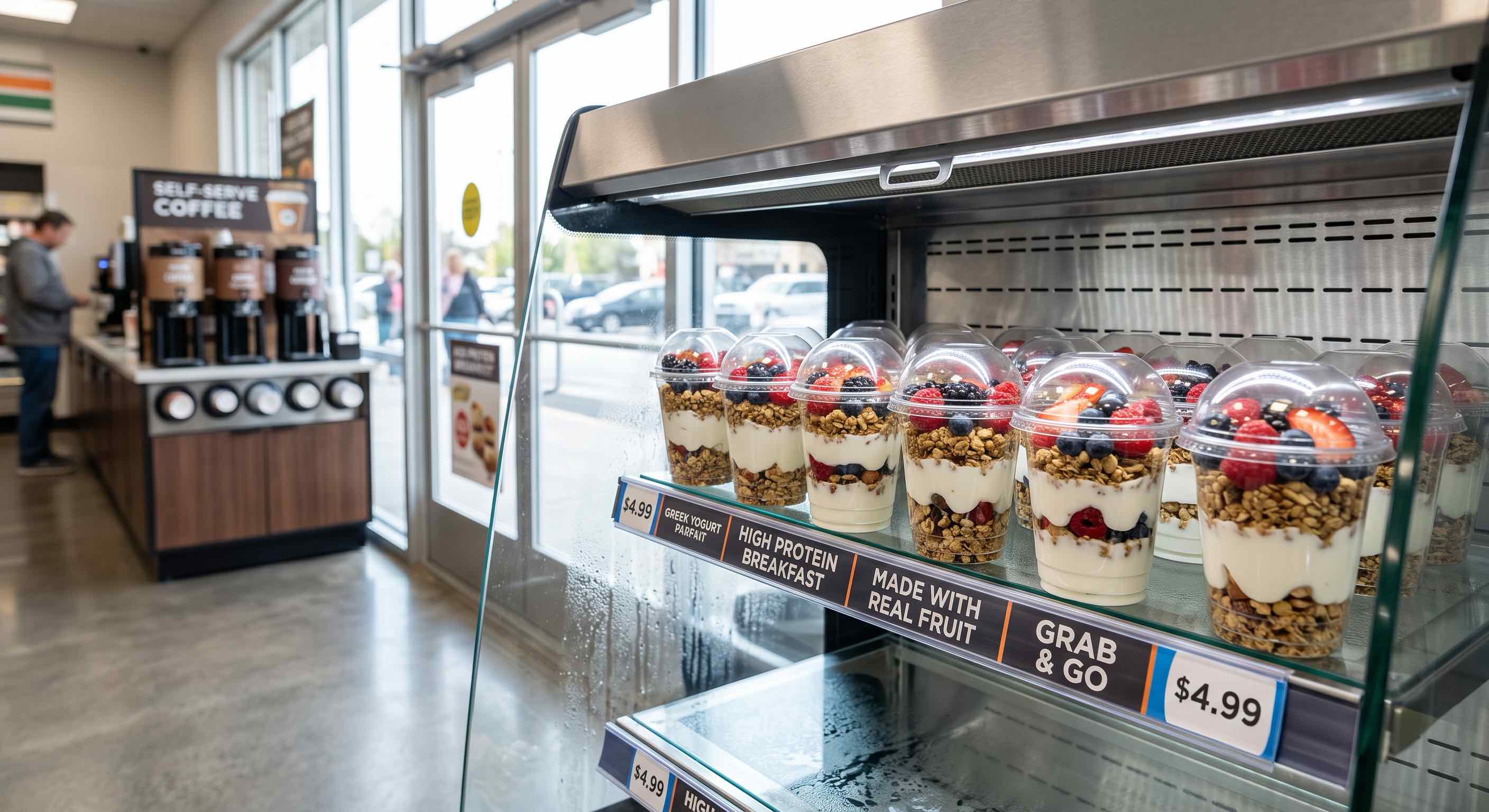
- Audit your cold vault and open-air coolers. Do you have the physical refrigeration capacity to hold 84 required SNAP items, particularly the added perishable varieties?
- Analyze your delivery schedule. Identify the specific windows where fresh inventory is most likely to age out before your next truck arrives.
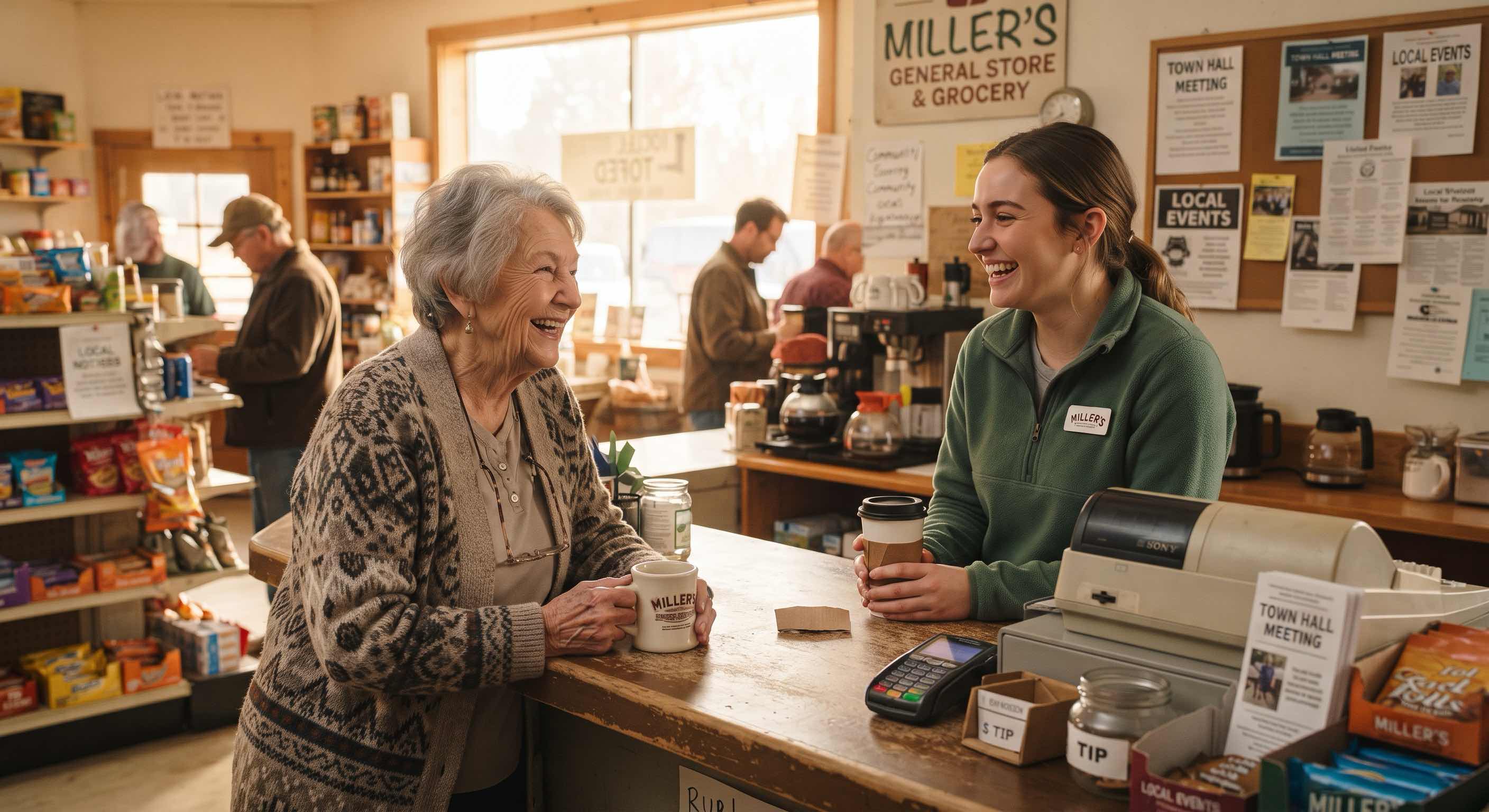
- Adopt the “community hub” mindset now, not in October. Customers are paying attention to community involvement. Treat food rescue as a core piece of your brand identity, not an afterthought bolted on to satisfy the SNAP rule.
Strategic & Operational Execution

Understanding the regulatory landscape is only half the job. The real question is: how do you actually run a food rescue program inside a 2,500- to 3,500-square-foot store without slowing down your cashiers, cluttering your backroom, or creating a food-safety liability?
It starts with picking the right local partner. You don’t need to build this infrastructure yourself, regional food rescue organizations already have the trucks, the volunteer networks, and the pickup logistics figured out. One well-documented example is the Wisconsin Food Rescue initiative, run by the Second Harvest Foodbank of Southern Wisconsin, which partners with more than 300 local food donors to move surplus food from retail shelves into pantries across 16 counties. On a smaller, hyper-local scale, an organization like WayForward Resources in Dane County, Wisconsin, which has reported distributing the equivalent of roughly 125,000 meals a month to residents, shows what a single well-run community food pantry partner can absorb. The specific organization will differ by market, but the model is consistent: find the regional food bank or rescue nonprofit already doing this work, and plug into their pickup routes rather than building your own.
From a design and equipment standpoint, you need a dedicated staging area. Short-dated donation inventory cannot get mixed in with your active retail stock or your employee break-room fridge, that’s both a food-safety problem and a bookkeeping headache. I always advise operators to carve out a specific, clearly labeled commercial reach-in cooler, or a sectioned-off zone inside the walk-in, strictly for donation staging.
The staff workflow should be dead simple: when an item hits its sell-by date but is still safe for consumption, or its packaging is cosmetically damaged but the product inside is fine, it goes straight into the staging cooler. Your partner’s volunteer network then runs a scheduled pickup route and moves that inventory to a pantry, typically within hours.
If you’re worried about legal exposure here, you can mostly set that concern aside. The federal Bill Emerson Good Samaritan Food Donation Act shields donors from civil and criminal liability when they donate “apparently wholesome” food in good faith to a nonprofit organization. That protection has been on the books since 1996 and has held up well; it’s the reason food donation programs at grocery and convenience chains have been able to scale nationally without a wave of liability litigation.
Now for the part that actually changes your bottom line: the IRC Section 170(e)(3) enhanced tax deduction.
Normally, if you throw away expired food, you can only write off its cost basis, what it cost you to make or buy it. But if you donate “apparently wholesome food” to a qualified 501(c)(3), the tax code allows an enhanced deduction. Thanks to the PATH Act of 2015, this enhanced deduction is available to all business structures, not just C-corporations, which means it applies to the LLCs and S-corps that make up most independent convenience store operations. The formula lets you deduct your cost basis plus half of the unrealized profit margin, capped at twice the cost basis.
Here’s a simple example. Say you donate a batch of prepared sandwiches that cost you $4,000 to make but would have sold at a retail fair market value of $10,000. A standard write-off gets you $4,000. Under the enhanced formula, your appreciation is $6,000 ($10,000 minus $4,000); half of that is $3,000; add it to your $4,000 cost basis and your deduction is $7,000, well under the $8,000 cap (twice your cost basis). You’ve turned a piece of inventory that was headed for the dumpster into a deduction nearly double what you’d otherwise claim.
That said, this is tax law, and your specific situation; entity structure, inventory accounting method, state rules, will affect the exact numbers. Treat the example above as illustrative, not as filing guidance.
What You Should Be Doing
- Establish a dedicated donation staging zone. Reconfigure your back-of-house layout with a specific, temperature-controlled area for rescued food, clearly signed so staff never confuse it with active retail stock.
- Identify a local rescue partner. Reach out to a regional food bank, Feeding America affiliate, or the NACS Foundation directly to find a partner who can guarantee reliable, frequent pickups.
- Bring IRC 170(e)(3) to your CPA this week. Make sure your inventory management software can actually track cost basis versus fair market value on donated goods, without that data, you can’t claim the enhanced deduction.
- Train staff on “apparently wholesome.” Make the distinction concrete: a dented box or an item one day past its sell-by date is a donation candidate; a bloated can or a broken cold chain is not.
Innovation & Profit Maximization

Once your back-of-house logistics are running smoothly, it’s time to put that community commitment to work up front, driving traffic off the forecourt, lifting Units Per Transaction (UPT), and deepening customer loyalty.
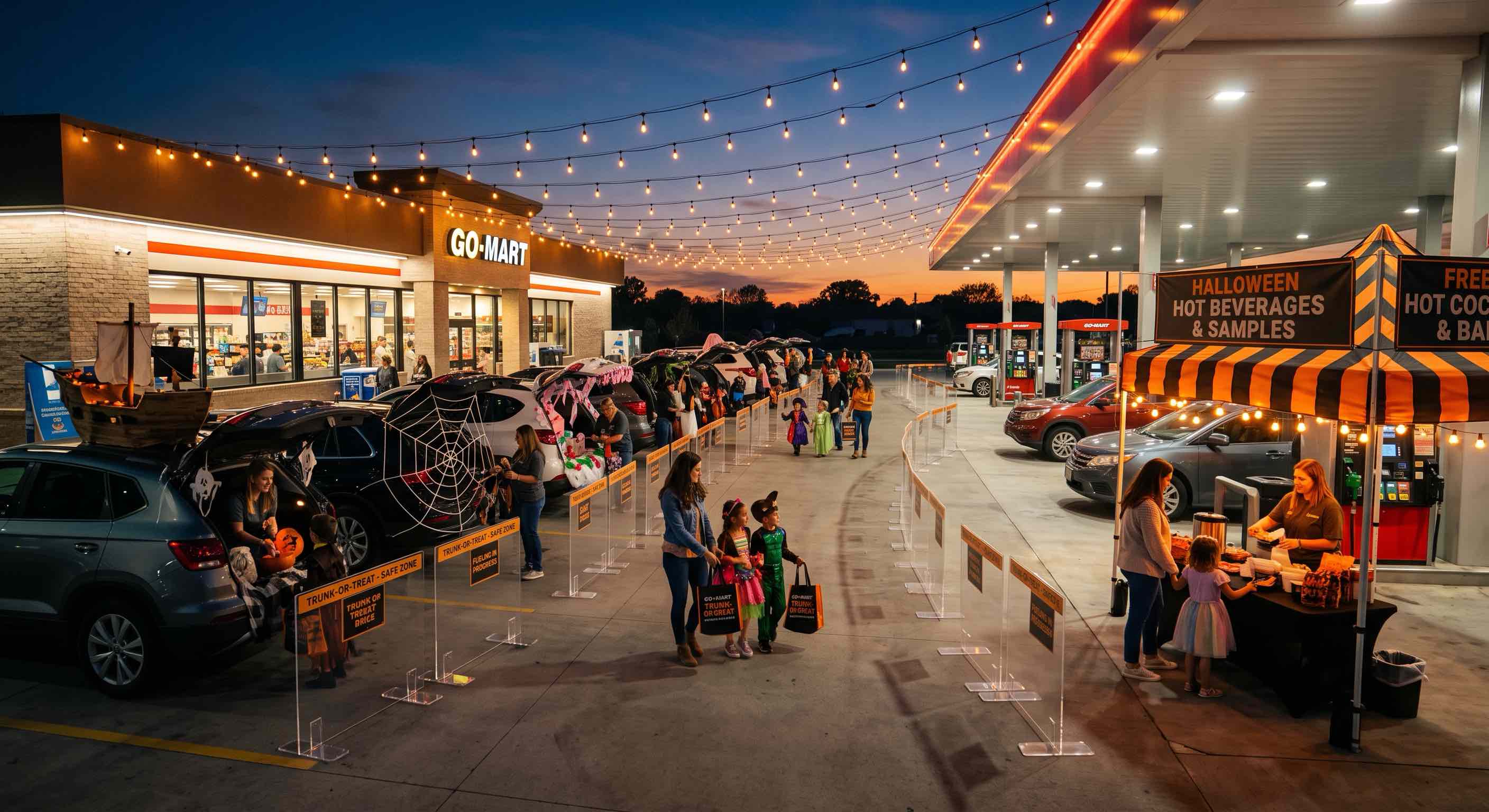
Start at the pump. Fuel is about as commoditized as retail gets, and consumers are ruthlessly price-sensitive about it. To break through that sensitivity, some operators have had success with a “Spirit Pump” wrapping one fuel dispenser in custom graphics and committing a fraction of a cent per gallon sold at that specific pump to a local food bank or Neighborhood Nourish. When a customer is deciding between your station and the one across the street at an identical price point, that emotional tie-breaker can be enough to win the fill-up, especially among the growing share of consumers who say they factor community impact into where they shop.
Once that customer is inside, the goal shifts to basket size. UPT, the actual number of items in a transaction, not just the dollar total, is the metric to watch. Point-of-purchase (POP) displays are a proven lever here: a large share of shoppers make unplanned purchases when they’re influenced by an effective in-store display.
You can use that to build cause-linked bundles. Launch a “Neighborhood Nourish Meal Deal”, bundle a high-margin dispensed beverage, a fresh sandwich, and a salty snack, and put a clean, professional POP display at the endcap or the register that says something like: “Buy this bundle, and we donate a meal to our local pantry.” You’re moving three units instead of one, pushing your highest-margin foodservice category, and giving the customer a reason to feel good about an otherwise ordinary impulse purchase.
Finally, look at your point-of-sale. “Round-Up for Charity” campaigns are a proven way to generate steady micro-donations, but speed matters enormously in a convenience store, transactions generally need to clear in 15 to 20 seconds, and any digital prompt that adds more than a couple of seconds of friction will annoy customers and slow your line.

A Customer-Facing Display (CFD) solves this by letting the POS system prompt the customer privately to round up, removing the awkward verbal ask from your cashiers entirely. Most modern POS platforms, including Gilbarco Passport and Paladin, can route those micro-donations to a non-taxable liability accounting code so they don’t inflate your reported gross revenue.
To avoid “donor fatigue” among your regulars, tie this into your loyalty program. Letting loyalty members convert unused reward points into a charitable donation clears outstanding point liabilities off your books, gives the customer a genuine feel-good moment, and tends to increase overall engagement with the app.
What You Should Be Doing
- Design and launch a Spirit Pump. Wrap one high-visibility dispenser with custom graphics tied to a hyper-local charity, and promote it on your exterior digital signage.
- Build cause-linked bundles. Work with your foodservice team to bundle three items and use clear POP signage that states the charitable impact of the purchase.
- Optimize your POS for round-up prompts. If you don’t have customer-facing screens, this is worth the upgrade. Configure the software so the donation prompt adds no more than a second or two to checkout.
- Add a points-to-charity option in your loyalty app. Send periodic push notifications showing members how many meals their donated points funded that month.
The Executive Action Plan
Strategy without execution doesn’t move your numbers. If you want to get ahead of the November 2026 SNAP changes while turning your store into a genuine community hub, you need a structured rollout. Here’s a prioritized 30-day plan.
Week 1: The Internal Audit
Walk your store with your management team and identify which coolers will house the newly required 84 SNAP items. Designate a specific, sanitary staging area in your backroom for food rescue. Call your CPA specifically about IRC Section 170(e)(3) and confirm your back-office software can track fair market value on the goods you’ll be donating.
Week 2: Secure the Local Partnership
Don’t try to build this infrastructure yourself. Reach out to the NACS Foundation about Neighborhood Nourish, or contact your regional food bank directly. Put together a simple memorandum of understanding covering pickup schedules, accepted food types, and liability protections under the Bill Emerson Act.
Week 3: Technology and POP Integration
This is where the revenue drivers come online. Work with your IT provider to configure your POS so round-up funds route to a charitable liability account rather than taxable sales. Set up your CFD prompts. In parallel, work with your graphics and design partner to print the POP materials for your bundled meal deals and your Spirit Pump wrap.
Week 4: Training and Authentic Launch
The fastest way to undermine this whole initiative is “cause washing”, aligning with a charity superficially, just for the optics. Customers notice, and the backlash from getting caught outweighs any short-term marketing benefit. Train your staff thoroughly and explain the why behind the program. A cashier who understands that yesterday’s staged donation fed a family today becomes your best brand ambassador. Launch with specific, hyper-local messaging: “Together with [Local Food Bank], we’re feeding our neighborhood.”
What You Should Be Doing
- Assign a project lead. One manager owns the 30-day rollout, start to finish.
- Test the POS prompt before launch. Run enough test transactions to confirm the round-up prompt doesn’t push you past your 15–20 second checkout benchmark.
- Commit to monthly transparency. Share concrete, specific metrics with customers, “Our customers helped rescue 500 pounds of food this month”, on social media and in your loyalty app.
The Bottom Line: Convenience Has Heart
Convenience retail in 2026 is brutally competitive. With fuel margins staying volatile and combustible tobacco volumes continuing to shrink, sustained profitability increasingly depends on winning the foodservice category and maximizing the value of every visit.
The incoming USDA SNAP regulations are going to force you to carry more perishable inventory than you ever have. You can absorb that as a straight financial hit in the form of increased spoilage and shrink, or you can build the infrastructure to redirect it. By plugging into a program like Neighborhood Nourish, you turn that same surplus food into an enhanced tax deduction that partially offsets the cost of compliance.
More importantly, leaning into the “Convenience Has Heart” philosophy answers a real and growing consumer expectation. Shoppers, particularly younger and family households, actively look for and reward businesses that visibly support their community. A Spirit Pump on your forecourt, a frictionless round-up prompt at the register, and a points-to-charity option in your loyalty app aren’t just fundraising mechanics, they’re differentiation tools that price alone can’t replicate.
As a design and equipment partner to this industry, I’ve watched stores change their entire internal culture by embracing their role as a genuine neighborhood hub. It changes how the store looks, how your employees feel about the work, and, ultimately, how your balance sheet performs.
Don’t wait until November to get caught flat-footed. Start this week: call your CPA about the tax treatment, walk your backroom to find your staging area, and reach out to a local food bank or the NACS Foundation about Neighborhood Nourish. Convenience really can have heart, and it can drive real, measurable value at the same time.
Leave a Reply