Why Your Store Design is Your Most Powerful Sales Tool
I’ve spent a lot of time in the aisles of convenience stores, and if there is one thing I’ve learned, it’s that your store is constantly talking to your customers. Long before they pick up a high-margin sandwich or a premium cold brew, they’vealready made a subconscious judgment about your brand. This “gut feeling” is triggered by your lighting, your layout, and the overall “vibe” of the space. In today’s competitive landscape, where 72% of consumers now see c-stores as viablealternatives to fast food, your physical environment isn’t just a backdrop; it is your primary differentiator.
In this seven-part series, I am going to walk you through the multidimensional world of modern c-store design. We aren’t just looking at where to shelf the chips or place the coolers; we are diving into the psychology of color, the engineering of traffic flow, and how to cater to the specific (and often conflicting) desires of Gen Z, Millennials, and Gen X. My goal is to provide you with a strategic blueprint to increase foot traffic, boost basket size, and transform “in-and-out” trips into “stay-and-spend” experiences.
The global convenience retail landscape is shifting from a secondary fuel stop to a primary, experience-driven destination. This means the physical “bones” of your store, the cabinetry, the equipment, and the graphics, must work harder than ever. We are moving into an era of “intentional shopping.” Customers aren’t just stopping because you’re on the right side of the road; they are stopping because they trust your environment. Over the next few weeks, we will explore:
- Part 2: The Sensory Experience (The science of color, lighting, and scent).
- Part 3: Spatial Engineering (Layouts and the hidden psychology of flow).
- Part 4: Generational Demands (What Gen Z, Millennials, and Gen X actually want).
- Part 5: Gender-Specific Design (Designing for safety, comfort, and efficiency).
- Part 6: The Frictionless Future (Integrating AI and tech into your physical space).
- Part 7: The Master Synthesis (Putting it all together for your bottom line).
By the end of this journey, you’ll understand how to turn your four walls into a high-performance sales engine.
The Silent Sales Manager: Why Design Dictates Dollars

In the world of retail psychology, design is often referred to as the “silent sales manager.” It performs a job that no employee can do alone: it guides the customer’s eye to high-margin items and reduces the “decision fatigue” that causes people to leave without making a purchase. When you invest in high-quality cabinetry and intentional layouts, you aren’t just “fixing up the place”, you are actively increasing your revenue per shopper.
Research consistently shows that high-quality environments allow operators to justify premium pricing. If a store feels clean, modern, and organized, a customer is far more likely to pay a little extra for a fresh salad or a specialty coffee. Conversely, a cluttered or poorly lit store breeds subconscious distrust. If the floor looks neglected, the customer assumes the food safety standards in the kitchen are neglected, too.
Furthermore, we are witnessing a “structural metamorphosis” of the convenience store industry. As fuel margins tighten and electric vehicle (EV) adoption grows, the profit center of the store is shifting toward foodservice and premium beverages. To capture those dollars, you need a store that feels like a destination rather than a chore. You need to create “dwell potential”, the reason for a customer to stay long enough to realize they are hungry, thirsty, or in need of a treat.
Engineering the “Stay-and-Spend” Mentality

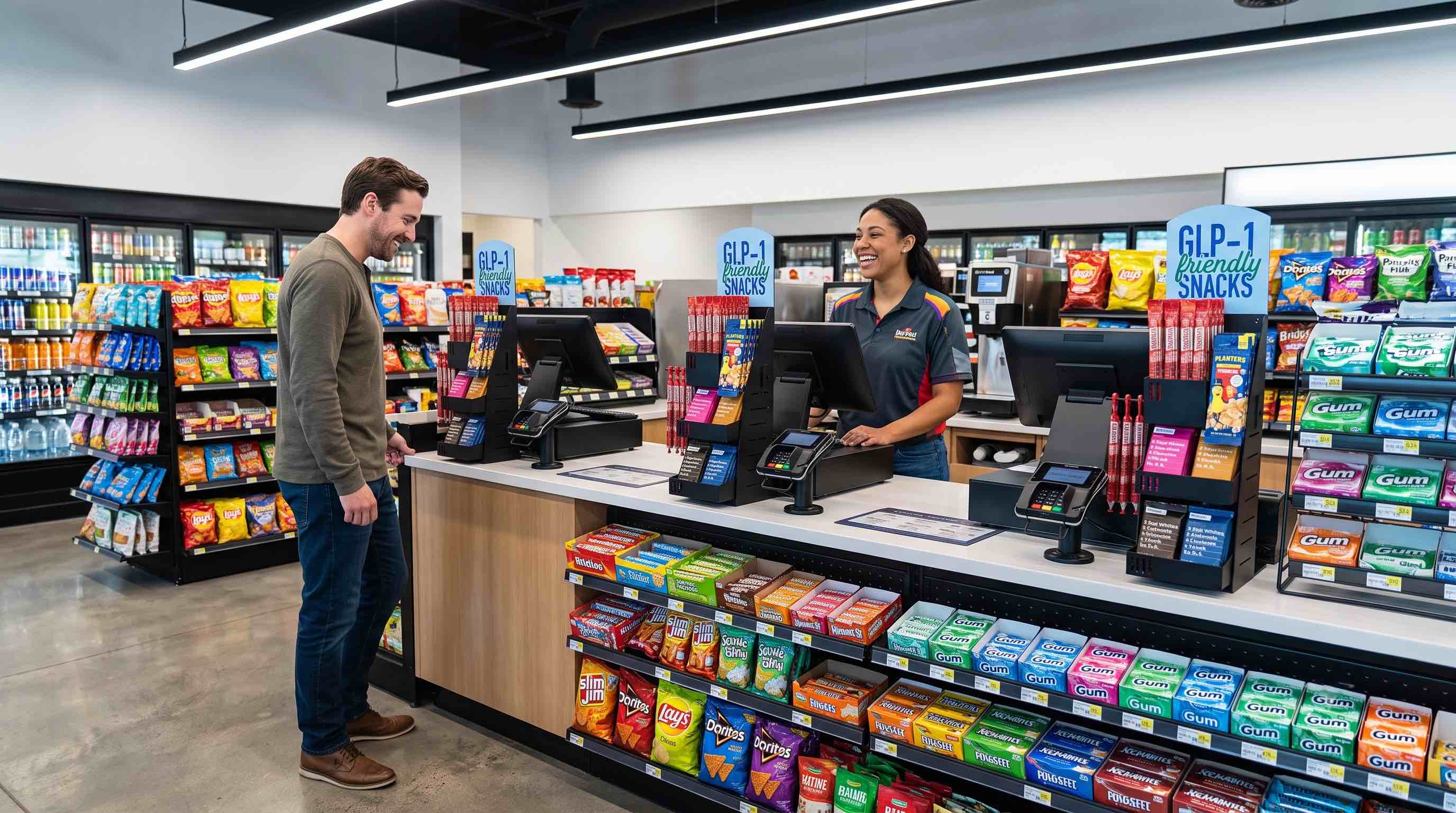
Effective design manages the transition from the “transient” mindset (I need gas/bathroom) to the “retail” mindset (I want a snack/coffee). This transition happens in the first 90 seconds of entry. If the path to the coffee carafes is blocked by stacked soda cases, or if the lighting over the fresh pastry case is dim and yellow, you’ve lost the upsell.
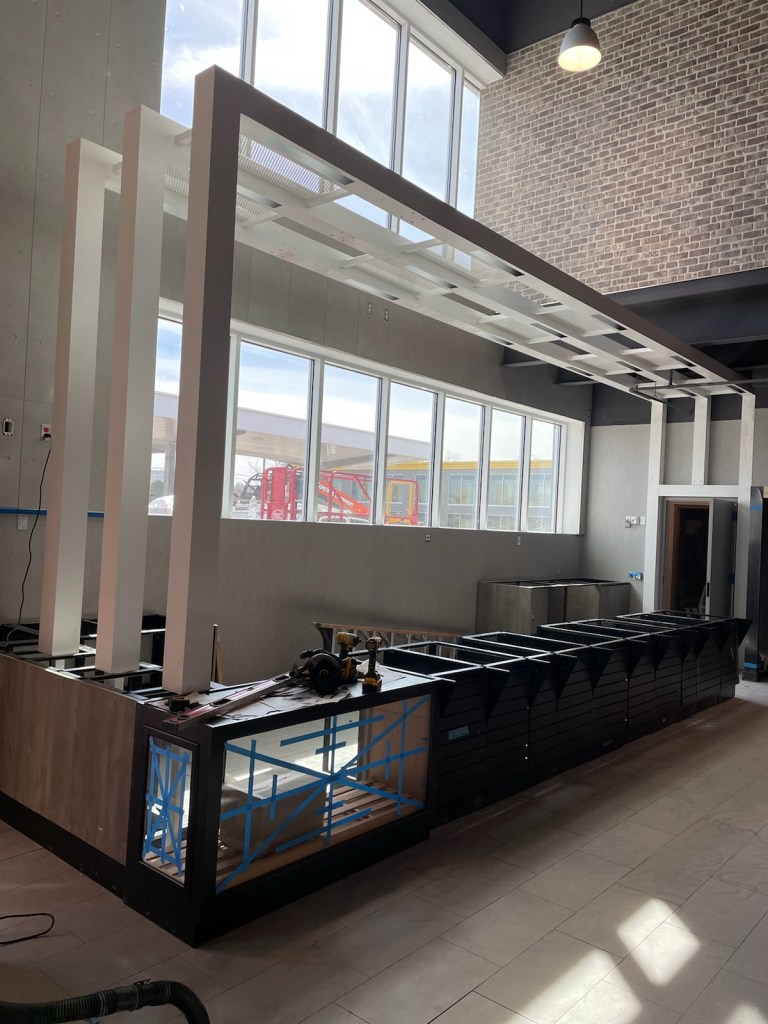
Modern cabinetry and graphics play a massive role here. High-end fixtures signal to the customer that your products are fresh and high-quality. Coherent graphics create a brand identity that fosters loyalty; people return to places where they feel comfortable and “at home.” By aligning your physical space with the expectations of the modern consumer, you aren’t just selling products, you are selling a reliable experience.
What You Should Be Doing
Auditing Your Current Environment
Before we dive into the specifics of sensory triggers and spatial flow, you need a baseline. Perform a “Fresh Eyes” audit of your location this week:
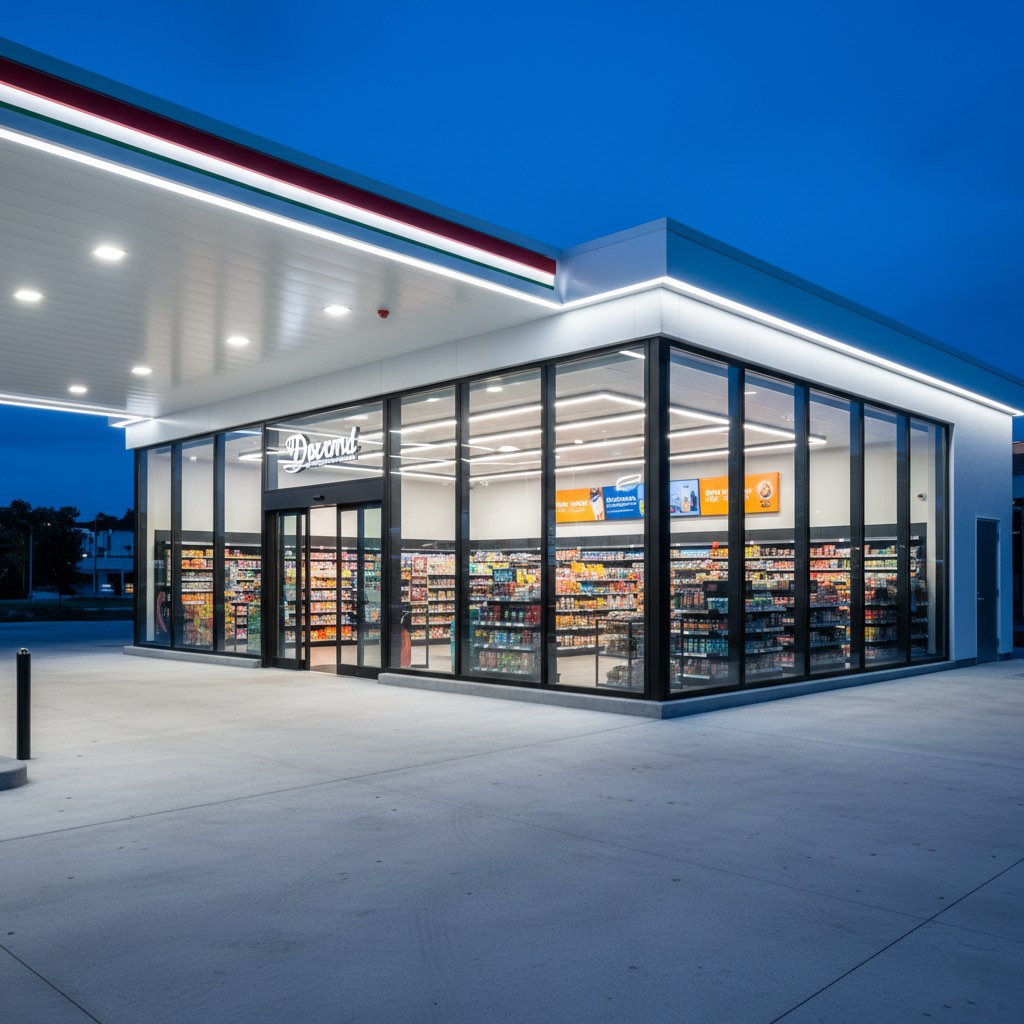
- Step outside and look back: Walk to your furthest fuel pumps and look at your storefront. Does the lighting invite you in, or does it feel like a “grungy” stop? Is your signage faded or crisp?
- Check your sightlines: Stand exactly at your front door. Can you see the back wall clearly? If your view is blocked by 72-inch high gondolas, the space will feel cramped and claustrophobic, discouraging exploration.
- Evaluate your “dwell” potential: Look at your floor plan. Do you have a designated area where a customer could comfortably wait for a car to charge or eat a fresh sandwich? If your environment is designed only for a quick exit, you are leaving money on the table.
- Review your visual consistency: Are your promotional graphics from 2018 while your beverage equipment is brand new? A lack of visual coherence creates a “fragmented” brand that shoppers find difficult to trust.
- Assess your lighting quality: Look at your fresh food sections. Is the food well-lit with high-quality bulbs that make colors pop, or is everything bathed in a sterile, flickering fluorescent glow?
The Bottom Line: Preparing for the Deep Dive
I want this series to be more than just a list of fleeting trends; I want it to be an actionable guide for your business growth. We are living through the most significant shift in convenience retail history. The margin on fuel may be the “hook,” but the margin on a freshly prepared meal or a premium beverage is where your profit truly lives. To capture those dollars, you need a store that functions as a high-end retail environment.
In our next post, we are going to dive deep into The Science of the “Vibe”: Using Sensory Psychology to Hook Your Customers. We’ll talk about why the “Color Rendering Index” (CRI) of your lighting is the secret to selling more fresh food and how the “nose-friendly” aroma of fresh coffee can significantly increase your customer’s dwell time. If you want to hook your customers within those critical first 90 seconds of entry, you won’t want to miss it.
Want the ‘Designing For Retail Revenue’ infographic in a printable PDF? Leave me a comment and I’ll reach out. Stay tuned for the rest of the series.


Leave a Reply