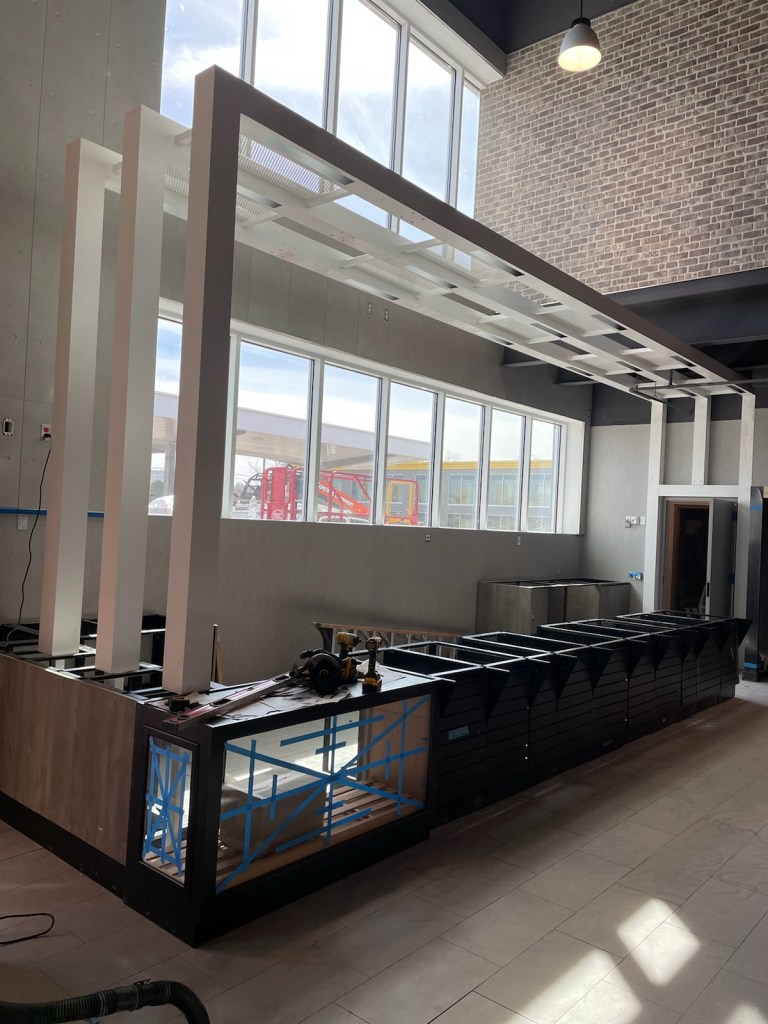

Synthesizing the Future of Convenience Retail
We have officially come full circle. Over the course of this seven-part series, we have meticulously deconstructed the structural and psychological metamorphosis of the modern convenience store. We began by acknowledging a fundamental shift: your store is no longer just a “gas station” with a side of snacks; it has evolved into a community hub and a food-forward destination.
Throughout our journey, we explored the Sensory Experience of color and light to trigger appetite and trust. We dove into the Spatial Engineering of flow, mastering the “right-turn bias” to guide shoppers. We discussed the Generational Handshake, balancing the reliability Gen X craves with the “vibe” and digital integration demanded by Gen Z. We addressed Gender-Specific Priorities, noting that safety and cleanliness are non-negotiable for female shoppers. Finally, we looked at the Frictionless Revolution, where AI and automated tech remove the “pain points” of the checkout line.
Today, in this final installment, I want to help you synthesize these individual insights into one cohesive, high-performance strategy. As someone who works daily with the cabinetry, equipment, and graphics that bring these concepts to life, I see firsthand that these aren’t just “design tips”—they are the pillars of a profitable business model for 2026. If you implement these correctly, you aren’t just selling products; you are selling an experience that respects your customer’s time and emotions.
The Master Synthesis: Experience is the New Convenience

The “convenience” of 2026 is defined by a frictionless journey. When a customer enters your store, they are subconsciously scanning for cues. If those cues are misaligned, you lose the sale before they even reach the cooler.
1. The Psychology of the Environment
Using the right color palettes and high-CRI (Color Rendering Index) lighting isn’t about aesthetics; it’s about biological triggers. Warm lighting over a bakery case or a wood-grain finish on your coffee cabinetry signals “fresh” and “artisanal” to the brain. In a world where 70% of C-store purchases are impulsive, your environment must do the selling for you.
2. Engineering the “Racetrack”
By utilizing the “right-turn bias” and a wide-open decompression zone, you guide the customer through a high-margin “racetrack.” This path should lead them past your foodservice program, your highest-margin category, before they ever hit the beverage vault. Statistics show that optimized floor plans can increase basket size by up to 15% simply by placing complementary items (like high-end snacks next to bean-to-cup coffee stations) along this natural path.
3. Safety as a Sales Driver

For women and families, safety is the primary filter for store selection. Open sightlines, bright exterior lighting, and spotless restrooms are not “maintenance tasks,” they are marketing tools. Research indicates that female shoppers are 50% more likely to return to a store specifically because of restroom cleanliness and perceived safety.
The ROI of Design: By the Numbers
When these elements work together, the impact on your bottom line is measurable and significant. Retailers who transition from a “utilitarian” gas station model to an “experiential” destination model see:
- 60% Increase in Pump-to-Store Conversion: Meaning more people getting out of their cars and walking through your doors.
- 25% Boost in Foodservice Revenue: Driven by quality cabinetry that facilitates made-to-order meals and digital signage that mirrors viral food trends.
- Higher Retention: Customers are willing to drive past three competitors to reach a store that feels “safe, fast, and fresh.”
By investing in flexible cabinetry and modern graphics, you are future-proofing your business against the tightening margins of the fuel market. You are shifting your reliance from the pump to the plate.
What You Should Be Doing
To wrap up this series, here is your “Master Checklist” to ensure your store is ready for the 2026 retail landscape:
- Perform a 90-Second Audit: Stand in your entrance today. Is your decompression zone cluttered? Does the most profitable display sit to the right? If the lighting is dim, your food won’t look fresh.
- Commit to the “18-Second Rule”: If your checkout lines consistently exceed 18-20 seconds, you are bleeding revenue to “walk-aways.” Invest in AI-powered checkouts or mobile ordering to keep the friction low.
- Eliminate “Grungy” Forever: Treat your restrooms and food prep areas as your most important brand assets. In 2026, cleanliness is the ultimate form of respect for your customer.
- Audit Your Cabinetry and Equipment: Is your current setup flexible enough to change with food trends? If you can’t swap out a modular counter or update a graphic overlay easily, your design is holding your profits hostage.
- Leverage Digital Graphics: Use your signage to tell a story. Don’t just list prices; use high-definition imagery to trigger the “hunger response” the moment a customer looks up.
The Bottom Line: Building the Heartbeat of Your Community
The convenience store is the heartbeat of the modern community. It is where the morning commute begins and where the late-night craving is satisfied. Those who focus on giving customers what they want, and what they don’t even know they want yet, are the ones who will thrive in this competitive landscape.
Your store’s design is your voice. It speaks to your customers even when your staff is busy. It tells a story of quality, safety, and speed. If that story is inconsistent or outdated, your “convenience” is actually an inconvenience. However, if you align your physical space with the psychological and technological demands of the modern shopper, you create a destination that stands the test of time.
I’ve spent this series talking about the “what” and the “why,” but the “how” starts with choosing the right partners. You don’t have to navigate this metamorphosis alone. At foodconcepts.com, we understand that the right cabinetry, equipment, and graphics are the physical foundation of these psychological strategies. We specialize in turning these “blueprints” into a physical reality that moves the needle on your ROI.
Ready to transform your footprint? If you’re ready to move from “utilitarian” to “experiential,” let’s talk. Visit us at foodconcepts.com to see how we can help you design, equip, and brand the store of the future. Let’s build the future of convenience together.

Want the ‘The Master Blueprint’ infographic in a printable PDF? Leave me a comment and I’ll reach out. Stay tuned for the rest of the series.

Leave a Reply