The 2026 Masterclass on Convenience Excellence and the Sustainability Mandate
As a design and brand partner who has spent the last decade inside the convenience sector, designing cabinetry, specifying equipment, and developing store identities, the evolution of this industry has been impossible to ignore. The shifts are no longer cyclical or cosmetic; in 2026, convenience retailers are facing a structural change in how traffic is generated, how margins are protected, and how brands earn trust. Earth Day is no longer just a date for performative social posts; it has become a symbolic deadline for making real operational change. The “Sustainability Mandate” is no longer a niche positioning strategy, it is the new baseline for staying in business in an era defined by the “Foodvenience” revolution.
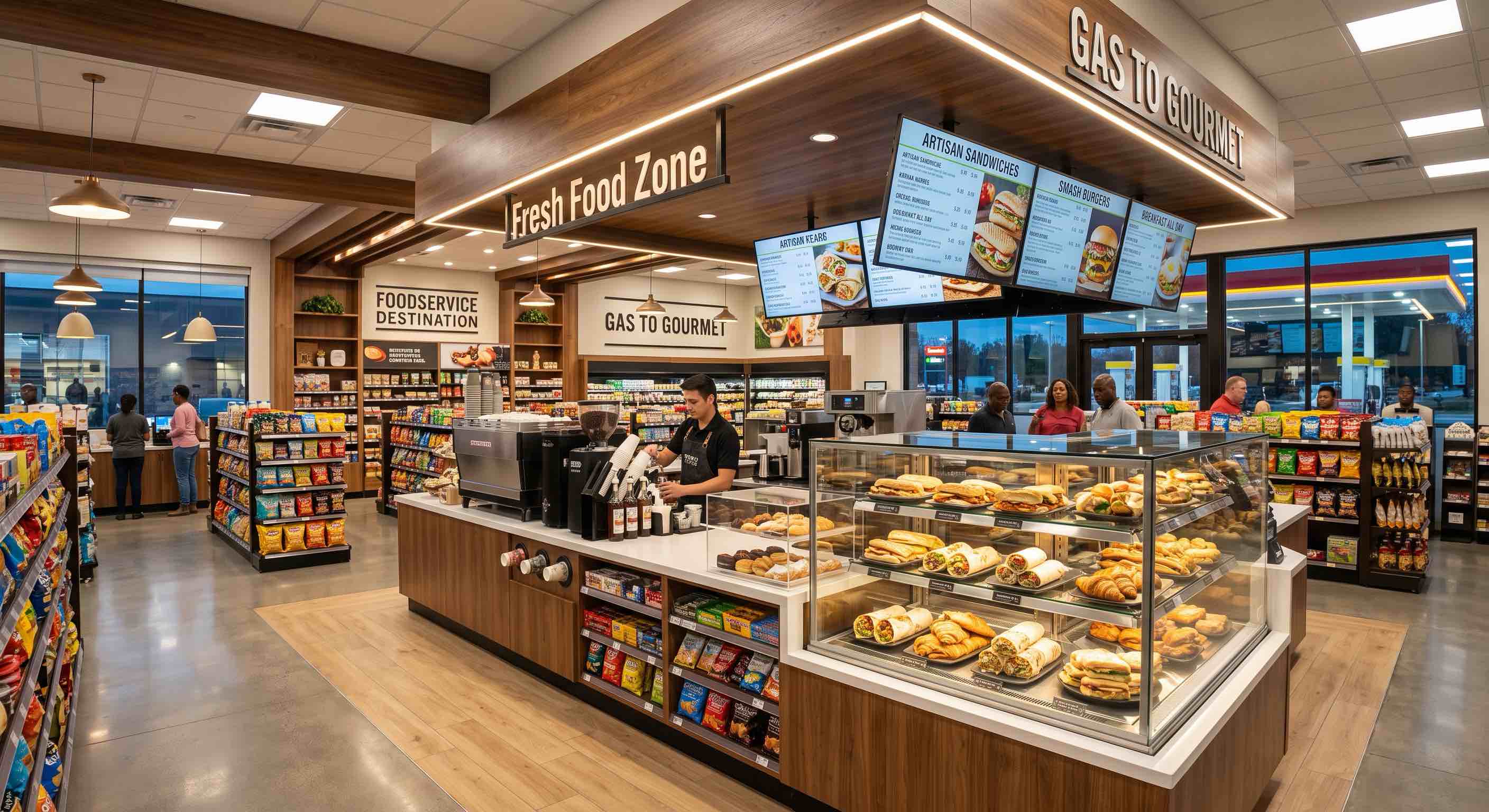
This guide speaks to you not just as a designer, but as a partner who understands the pressure on your margins and the reality of your P&L. In the first half of last year, total store transactions declined as fuel trips became harder to grow, and while volume showed some resilience, dollar sales struggled as prices dropped. National fuel margins have settled into a new normal of only a few dozen cents per gallon, but that does not replace the lost volume from fewer visits to the forecourt. Increased fuel economy and higher EV adoption mean drivers are visiting your pumps less often. To survive and thrive, operators must look inside and transition their sites from “gas stations” to “gourmet destinations” for meal occasions, on-the-go wellness, and social gatherings.
This masterclass is designed as a 12‑month strategic roadmap to guide that transition. It will show you how to capture the intentional shopper, especially Gen Z and Millennials, who command hundreds of billions in spending power and are significantly more likely to choose a store based on its social and environmental responsibility. By the end, you will have a clear, financially realistic plan to move beyond superficial greenwashing and build a high-performance, sustainability-led convenience business.
Sustainability as Survival Strategy
The foundational shifts impacting convenience retail are not temporary. The industry is entering an era of AI-driven, predictive commerce where the friction between a customer’s desire and their purchase has almost vanished. In that environment, your store cannot just be a place to buy a candy bar; it must be a brand that reflects the values, priorities, and aspirations of your community.
The primary force behind the sustainability mandate is the rise of the values-driven consumer. Gen Z and Millennials prioritize authenticity and transparency; they have a sharp radar for performative marketing and greenwashing. They do not simply want a sign that says you care, they want verifiable commitment, from the ethical sourcing of your coffee to the durability and safety of your fixtures and finishes.
Within this values-driven cohort, two high-value customer groups matter most. “Beginners” make up roughly a quarter of your frequent customers and focus on social issues, community support, and employee welfare. They want to know that your store is a good neighbor, sponsoring local schools and youth sports and treating staff fairly. “Deciders” often represent nearly half of your frequent traffic; they share those concerns but go further, scrutinizing the environmental impact of the specific products they buy. They expect their purchases to deliver maximum benefit with minimal harm, and they reward brands that prove it.
At the same time, the forecourt is undergoing a structural reset. Fuel demand is on a gradual, persistent decline, not a short-term cycle. For years, pumps have sat idle most of the day. Regaining that underused capacity requires winning “uncommitted customers” who decide where to fill up within a couple of hours of arrival and compare real-time prices across multiple locations. Most of these customers are highly price-sensitive and app-enabled. However, the dwell-time dynamics of EV charging are rewriting forecourt economics. When a driver charges for 20–40 minutes, they are actively looking for an amenity hub, café, clean restrooms, Wi-Fi, comfortable seating, rather than sitting alone in the car. This is a direct opportunity to drive inside sales and lift basket size.
Sustainability is therefore shifting from a marketing story to an operating system. In 2026, the most resilient companies are no longer asking if sustainability fits; they are embedding it to drive margin, resilience, risk reduction, and talent attraction. Green practices improve operational efficiency, reduce exposure to volatility, and make it easier to recruit and retain employees who prefer to work for a company with a credible environmental plan.
What You Should Be Doing: Foundational Alignment
- Establish your baseline: Create a simple monthly dashboard of electric, gas, and water use. Look for anomalies and trends that indicate waste, equipment failure, or maintenance needs.
- Target the Beginners: Lead with visible community-based initiatives. Sponsor local events, highlight fair scheduling and pay, and tell those stories on in-store signage and social channels.
- Address the Deciders: Offer product-level transparency. Call out clean label products, responsibly sourced ingredients, and verified certifications across your foodservice and packaged goods.
- Capture uncommitted customers: Use geotargeted, personalized digital promotions in the 1–2 hours before peak drive times to influence where drivers choose to stop.
Strategic & Operational Execution
Moving from theory to practice starts with seeing your store as a single, cohesive engine where design, equipment, and energy use are all connected. The materials and systems you choose this year will shape your maintenance costs, staff experience, and customer perception for the next decade.
High-Performance, Sustainable Cabinetry
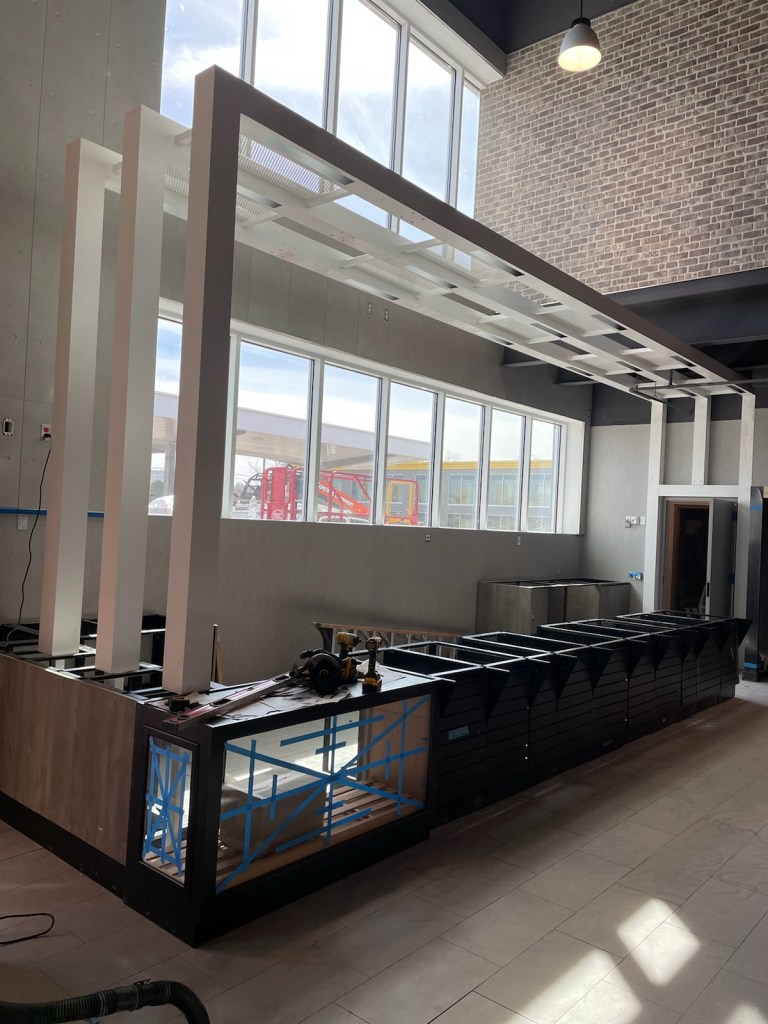
In 2026, operators cannot afford cabinetry that locks them into yesterday’s layout or fails after a few hard years of service. This is where MTF Cabinetry becomes a strategic asset instead of a sunk cost. Built on a modular platform with 3‑inch increment flexibility, MTF Cabinetry is designed specifically for the realities of convenience retail, constant resets, new equipment, evolving menus, and tight footprints.
The system’s open architecture allows tubes, wires, and data lines to run cleanly throughout the cabinetry run, making it easy to add, relocate, or upgrade equipment without tearing apart your front counter or foodservice line. Strong construction and durable materials support a 10–15 year lifecycle, which means fewer replacements, fewer disruptions, and more predictable capital planning. Because MTF can ship assembled or unassembled, you can reduce freight volume and costs, streamline installation, and cut back on the carbon impact of logistics.
Just as important, MTF Cabinetry blends seamlessly with existing fixtures. Whether you are refreshing one zone or rolling out a multi-store program, the system is versatile enough to retrofit older locations and outfit new-to-industry builds with a consistent, elevated look. That consistency is a brand advantage: a recognizable, well-organized food and beverage environment that signals quality to your guests the moment they walk in.
EV Infrastructure and Dwell Time
Your EV strategy must be tailored to how people actually use your site. Neighborhood locations that naturally support 20–40 minute visits are ideal for DC fast charging in the 50–150 kW range, enabling a “gourmet” meal occasion and meaningful basket-size growth. Highway sites increasingly rely on higher-power charging, 250 kW and above, to deliver a 15–20 minute turnaround that still creates a strong dwell window for grab-and-go meals, rest, and replenishment.
To limit upfront capital, many operators are exploring Charging-as-a-Service (CaaS) models that convert a large CapEx into a more manageable OpEx. Wherever possible, pair chargers with integrated digital screens and clear sightlines to the store, and merchandise the path from charger to entrance with strong food and beverage offers.
Smart Equipment and Energy Savings
Back-of-house technology has moved from experimental to mission-critical. Operators are prioritizing equipment that improves daily workflows and reduces waste, such as self-cleaning combi ovens, programmable induction cooktops that track usage, and connected refrigeration. Lighting alone can account for a large share of your electric costs; LED retrofits routinely cut that line item by 30–60%, often saving thousands of dollars per year per site. Refrigeration can consume a majority of a convenience store’s energy. Installing sensors and simple IoT monitoring to track temperature and performance in real time can significantly reduce electricity waste and prevent expensive food loss.
Sustainable Graphics and Brand Presentation
Signage is your first and most powerful storytelling medium from the road. In 2026, more operators are relying on aluminum composites and recycled acrylics such as 100% recycled-content materials that maintain clarity and durability. Recycled aluminum uses only a fraction of the energy required to produce new metal, and when paired with LED illumination, signage can use dramatically less power than traditional neon or fluorescent systems. Your exterior look becomes both a brand asset and a cost-control tool.
What You Should Be Doing: Strategic Execution
- Specify durable, flexible cabinetry: Standardize MTF Cabinetry across new builds and remodels to achieve a 10–15 year lifecycle, lower maintenance costs, and consistent branding.
- Optimize for RTA logistics: Choose ready-to-assemble fixtures for new builds and remodels to reduce freight volume, carbon emissions, and damage in transit.
- Audit for energy leaks: Use basic monitoring or IoT sensors on refrigeration and HVAC. Investigate sudden spikes in usage immediately to catch issues before they cause spoilage or downtime.
- Install media-ready chargers: Select EV chargers with integrated screens and tie them to your loyalty program. Promote enrollment, food bundles, and high-margin specialties directly to drivers during charge time.
Innovation & Profit Maximization
The modern convenience store is evolving into a full “food retail environment” that is rewriting the rules of quick service. By focusing on category innovation and waste reduction, your site can become a destination that customers choose intentionally, not just a last-resort stop.
The Foodservice Revolution

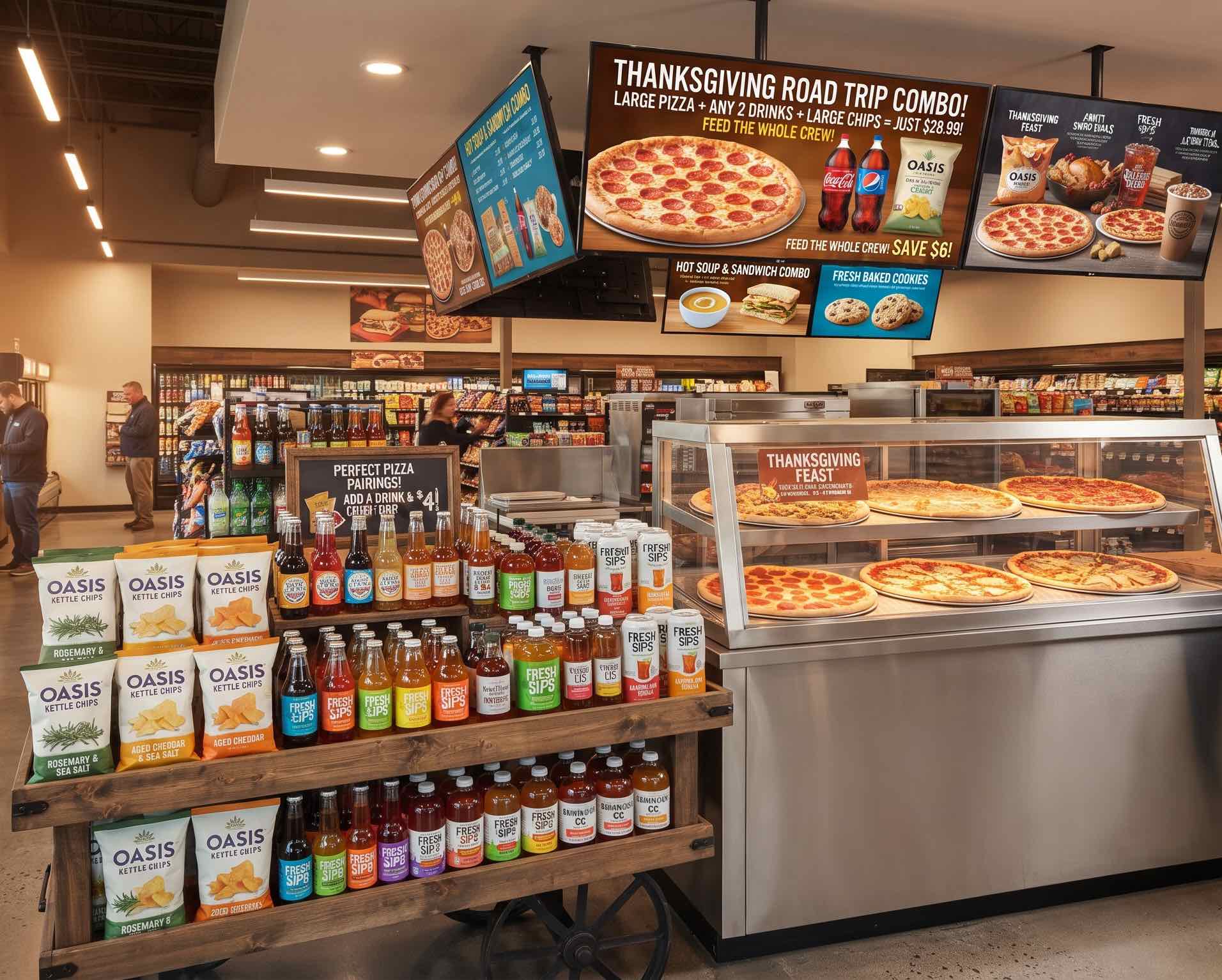
Foodservice is the new profit center. Customers who buy fresh food consistently spend far more per visit than those purchasing only legacy categories. The old stigma around “gas station food” is fading as leading operators roll out chef-inspired menus, globally influenced flavors, and visually branded food programs with distinct names and identities.
Customization is a key driver. A majority of diners are more likely to visit a location that offers customizable portions and build-your-own formats. Build-your-own pizzas, burritos, grain bowls, and tacos allow you to expand menu variety without ballooning inventory, and they support flexible portion sizes that reduce waste. Authentic plant-forward options, meals built around peas, lentils, grains, and vegetables rather than meat analogs, are gaining traction as nutrient-dense, satisfying choices in their own right.
The Functional Beverage Boom
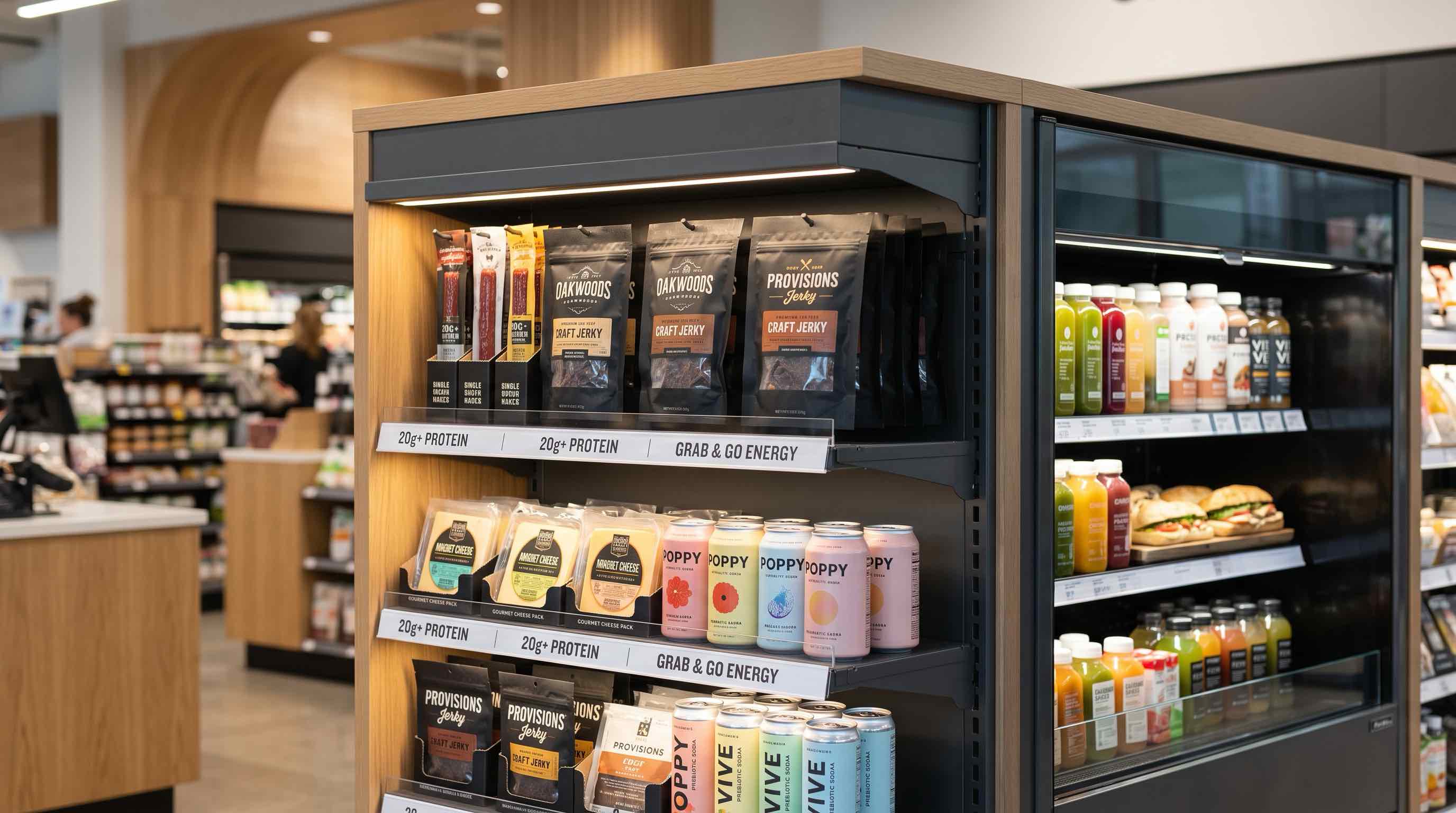
Beverages remain a massive draw, but the center of gravity is shifting toward “beverages with purpose.” Energy drinks still matter, but coolers are increasingly dedicated to:
- Gut health: Prebiotic sodas and probiotic waters positioned as “gut health hubs.”
- Functional hydration: Coconut waters, electrolyte blends, and protein-forward ready-to-drink options.
- Natural buzz: In markets where regulations permit, THC-infused beverages are growing quickly as a non-alcoholic way to relax without a traditional hangover.
- Emerging flavors: Profiles such as basil, hot honey, pistachio, and pomegranate-maple are leading innovation and can be highlighted in limited-time offers.
A clearly branded “Functional & Feel-Good” cooler door, with simple benefit callouts on shelf tags, helps shoppers understand and trade up.
Paper as a Brand Asset

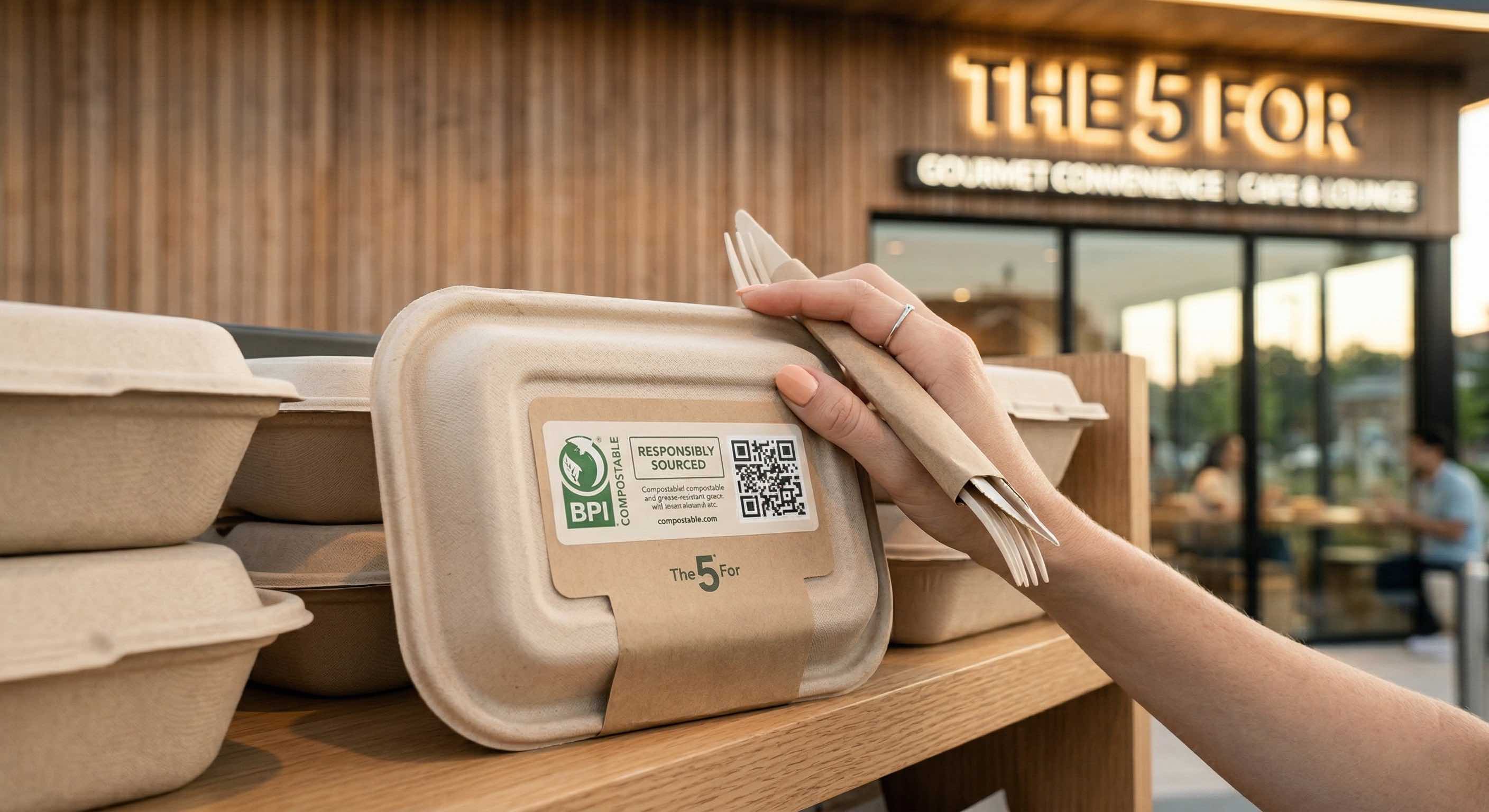
Sustainable packaging has moved from cost center to brand signal. Operators are shifting toward paper-based packaging because it is easy for consumers to understand, can reduce certain regulatory fees, and aligns with customer expectations for recyclability. High-performing, grease-resistant paper is an ideal solution for many hot and cold offerings.
Compostable to-go containers made from sugarcane bagasse, palm leaves, or molded fiber bowls with compostable lids add another layer of credibility. Displaying certifications such as “BPI Certified Compostable” on packaging builds immediate trust with Decider customers who prioritize environmental impact. Treat packaging as mobile media by printing a short sustainability message and a QR code linking to your impact story.
Technology-Enabled Waste Reduction
In a high-volume retail environment, waste is a design flaw, not an inevitability. A growing share of retailers are using data and AI to cut waste, optimize labor, and protect margin. AI-driven forecasting and replenishment systems can reduce overstock and shrink, improving both product freshness and labor efficiency.
Surplus-food marketplaces are one of the most compelling high-margin innovations for 2026. Platforms that bundle end-of-day surplus into value “surprise bags” let you recover revenue that would otherwise be written off. Case studies show that operators can reclaim tens of thousands of dollars annually while introducing the store to new customers who often return at full price.
What You Should Be Doing: Profit Maximization
- Launch customizable menus: Invest in build-your-own formats and clearly branded food programs to increase perceived value, differentiate your store, and reduce waste through flexible sizing.
- Monetize dwell time: Use digital screens at pumps and EV chargers for “pump-side ordering” tied to your app or loyalty program. Promote meal bundles, coffee, and functional beverages while customers fuel or charge.
- Partner with surplus platforms: Join a surplus-food marketplace to turn prepared food shrink into a revenue stream and a customer-acquisition channel.
- Curate functional beverages: Dedicate a cooler section to gut-health, hydration, and natural-buzz beverages, with clear labeling and education to drive trade-up.
The 12-Month Executive Roadmap
Excellence in 2026 is about disciplined execution, financial realism, and measurable business value. This 12‑month roadmap translates the four pillars into a practical sequence of quick wins and structural upgrades.
Months 1–3: Resource Efficiency (Quick Wins)
The first quarter focuses on lowering high operating costs, which many retailers identify as a top business pain point.
- Establish metrics: Analyze existing sales and utility data to set baselines for labor efficiency, order accuracy, and energy consumption. Pick a simple set of KPIs to track monthly.
- Upgrade core tech: If your POS is more than five years old, prioritize an upgrade; modern systems can generate strong returns through faster checkouts, better inventory data, and integrated loyalty.
- Execute low-cost maintenance: Clean refrigeration coils, seal obvious air leaks, and ensure tires on any fleet or delivery vehicles are properly inflated. These quick tasks generate immediate efficiency gains.
- Launch an Earth Day campaign: Use April 22 as a milestone to tell your sustainability story. Offer discounts for reusable cups, launch a “Bring Your Own Bag” policy, and publicly set one simple goal (such as reducing paper receipts).
- Switch to digital receipts: Offer app-based or emailed receipts by default. This reduces paper use and builds your customer database for future targeting and loyalty efforts.
Months 4–6: Strategic Implementation
The second quarter emphasizes category innovation, visible brand changes, and early structural upgrades.
- Convert to LED: Begin interior and exterior LED retrofits. Many stores see a 30–60% reduction in lighting energy almost immediately.
- Refresh packaging: Transition to paper-based or certified compostable packaging and print a concise sustainability message and QR code on key items. Make sure staff can explain the benefits in simple language.
- Deploy food-waste recovery: Launch your surplus-food marketplace partnership and set a revenue-recovery target for prepared food shrink.
- Implement menu engineering: Design high-margin meal bundles that pair a main item, a side, and a functional beverage. Feature them prominently on digital screens, menu boards, and at the forecourt.
Months 7–12: Infrastructure Transformation

The final half of the year is dedicated to major structural projects that future-proof your sites and deepen your brand’s sustainability story.
- Execute a cabinetry refresh: Redesign your foodservice, coffee, and beverage areas using MTF Cabinetry as your standard platform. Its strong construction and open architecture support heavy-duty commercial equipment while allowing tubes and wires to run throughout the system for power, data, and ventilation. Because MTF is modular and based on 3‑inch increments, you can fine-tune every run to your unique footprint and then replicate successful layouts across multiple locations.
- Install DC fast charging: Deploy multi-port EV chargers where appropriate and integrate them with your loyalty program to capture driver data, encourage enrollment, and convert dwell time into in-store visits.
- Digitize the back-of-house: Connect key cooking, holding, and refrigeration equipment to a central monitoring platform. Use alerts and dashboards for predictive maintenance and to protect product quality.
- Publish your impact report: At year’s end, share your progress on energy savings, waste reduction, and community impact. This can be a one-page infographic, blog post, or in-store poster, what matters is making your efforts visible and verifiable.
The Bottom Line: Turning the Mandate into ROI
In 2026, convenience retail has moved from talking about green initiatives to executing them as core business strategy. For operators, the ROI of sustainability shows up across every channel: lower energy costs, more resilient operations, higher customer loyalty, and increased foot traffic from conscious consumers who vote with their wallets.
Real-world projects demonstrate the upside. Large-format retailers that modernize with eco-efficient equipment and controls routinely cut electricity use by double-digit percentages. Independent grocers and convenience operators leveraging surplus-food platforms have recovered tens of thousands of dollars in revenue while acquiring new, loyal customers. Stores that add thoughtfully integrated EV charging see measurable lifts in traffic and total revenue when they pair charging with strong inside offers and loyalty engagement.
The future of convenience belongs to the intentional: to operators who treat waste as a design flaw, dwell time as a gift, and sustainability as a disciplined operating system. By choosing durable cabinetry, energy-efficient LED signage, connected kitchen and refrigeration technology, and innovative foodservice and beverage programs, you are not just “going green”, you are building a high-performance business model that can withstand the gradual decline of the petroleum-centric era.
Earth Day is your starting block, but the finish line is a store that runs leaner, earns more per visit, and remains deeply relevant to the 2026 convenience shopper. This is not only about the planet; it is about protecting and growing your profit.
Your next step toward excellence: This week, take a hard look at your energy and waste. Identify your three highest cost “leaks,” whether in lighting, refrigeration, labor, or packaging, and start your audit. The 2026 masterclass is in session. Let’s get to work.
Leave a comment if you would like an infographic for this post.


Leave a Reply