The 2026 Playbook for Winning the Evening Daypart with Buzzy Beverages
If you own or operate a convenience store in 2026, you’ve probably felt the ground shifting under your feet. For decades, the industry ran on a simple formula: high fuel volumes pull cars onto the forecourt, and that foot traffic drives high-margin impulse buys inside. Plateauing fuel demand, better vehicle efficiency, and the steady rise of electric vehicles have permanently broken that formula.
The numbers make the shift impossible to ignore. Total convenience industry sales reached $817.5 billion in 2025, but fuel sales actually fell 5.4% to $476.3 billion. Meanwhile, inside sales posted their 23rd consecutive year of growth, hitting a record $341.2 billion. Fuel still accounted for 65.0% of total sales dollars, yet it generated only 38.8% of gross profit dollars. Translation: the pump gets people to your lot, but it’s your store that has to make the money.
At the same time, something interesting is happening when people show up. Midday retail traffic has been sluggish, but evening and weekend nighttime visitation is growing, and average dwell time has climbed to 123 minutes. People aren’t just stopping in anymore, they’re sticking around.
That growing evening window has collided with a beverage trend I’m calling the “Buzzy Beverage Boom.” A generational shift away from alcohol, the social-media-fueled explosion of customized “dirty sodas,” rising demand for high-caffeine performance drinks, and the mainstream normalization of functional botanicals like hemp-derived THC, kava, and kratom have all combined to turn beverages into something bigger than hydration. They’ve become an experience, and, done right, a destination.
I work in convenience store cabinetry, equipment integration, design, and graphics, so I spend my days looking at how store layouts and equipment decisions actually play out on the floor: what fits in the footprint, what the electrical can support, and what your staff can realistically execute during a Friday night rush. That vantage point is what this guide draws on.
Here’s what we’ll cover:
- The Foundational Landscape: breaks down the foundational shift toward in-store profitability and why the evening daypart is your next growth lever.
- Strategic & Operational Execution: walks through the operational and equipment changes, particularly around labor, that make a buzzy beverage program actually work.
- Innovation & Profit Maximization: digs into the specific categories (dirty sodas, GLP-1-friendly options, THC beverages, botanicals) driving the profit.
- The Executive Action Plan: gives you a prioritized, 30-day action plan to get from idea to execution.
Let’s get into it.
The Foundational Landscape
Why Fuel Alone Won’t Carry You Anymore
The financial mechanics of convenience retail have flipped. In 2025, fuel accounted for nearly two-thirds of total sales dollars but delivered well under half of gross profit. On top of that, the industry averaged 45,160 transactions per store per month, a 2.7% decrease from prior years. Fewer transactions and thinner fuel margins mean the math only works if you extract more value from every customer who walks through the door.
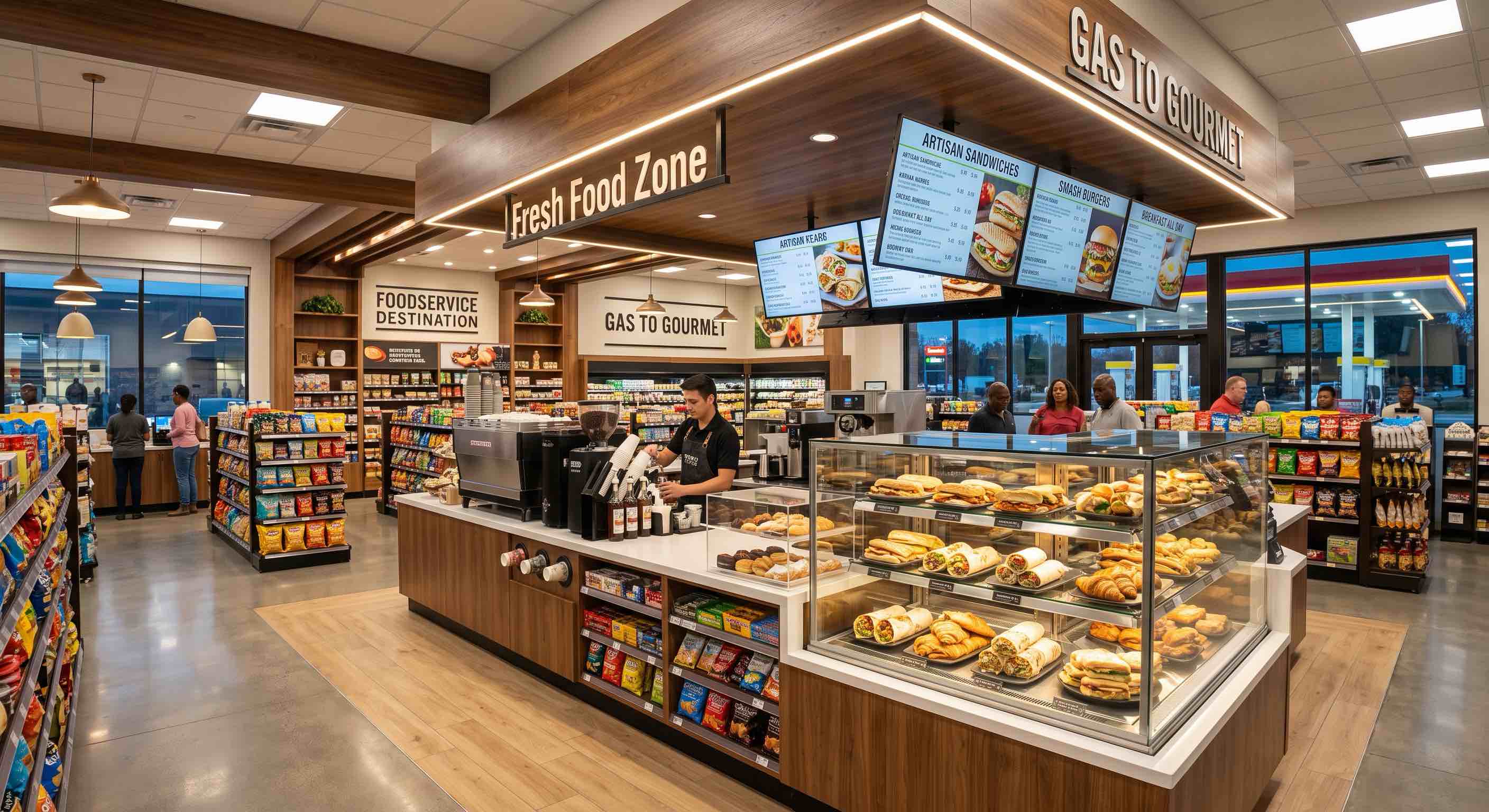
That’s where foodservice comes in. Prepared food, commissary items, and dispensed beverages have quietly become the profit engine of the industry, growing from 11.9% of in-store sales in 2005 to 28.5% in 2025. Foodservice alone now drives 38.9% of in-store gross profit dollars. If you’re not treating your foodservice and beverage program as a core business line, you’re leaving real money on the table.
The Rise of the “Third Place”

Sociologists use the term “third place” to describe a communal space distinct from home and work, traditionally the territory of bars, cafes, and diners. As traditional nightlife venues lose ground with younger consumers, that role is up for grabs.
Part of this is generational. Gen Z is leading a “sober curious” movement, drinking about 20% less alcohol than Millennials did at the same age. Younger customers are looking for community and familiarity without the chaos of a crowded bar, and non-alcoholic, functional beverages are rapidly absorbing the market share that beer and spirits used to own.
Convenience stores are naturally positioned to fill that gap. Comfortable seating, engaging graphics, and a genuinely good beverage program can turn a five-minute stop into a twenty-minute stay. And the timing lines up: the evening commute window, roughly 4:00 p.m. to 8:00 p.m., is peak time for your heaviest-frequency customers, and it’s still a relatively untapped opportunity for specialized, high-margin beverage sales.
What You Should Be Doing: The Foundational Landscape
- Shift your mindset. Stop treating your interior as a pit stop for gas and a candy bar. Start treating it as a destination in its own right.
- Audit your evening traffic. Pull your POS data and look at exactly when your evening rush happens and what those customers are buying. Notice how purchase patterns shift from morning coffee to evening indulgence.
- Evaluate your seating and ambiance. Is there room for high-top tables or a small seating area? A “third place” needs a physical reason for people to stay.
- Acknowledge the sober-curious shift. A meaningful share of your younger customers are actively looking for complex, non-alcoholic, or functional alternatives to beer and liquor. Plan to give them real cooler and counter space.
Strategic & Operational Execution
The Labor Problem You Can’t Ignore
A great beverage concept means nothing if you can’t staff it consistently. The convenience channel is dealing with brutal labor economics: hourly employee turnover runs around 130%, compared to a 76% average across broader retail. Recruiting, onboarding, and training a single hourly worker costs roughly $1,196, and replacing a store manager runs about $3,242. With 36% of new hires walking away within their first month, building your evening program around labor-intensive, barista-style prep is a real operational risk.
Why Closed-System Equipment Is the Answer
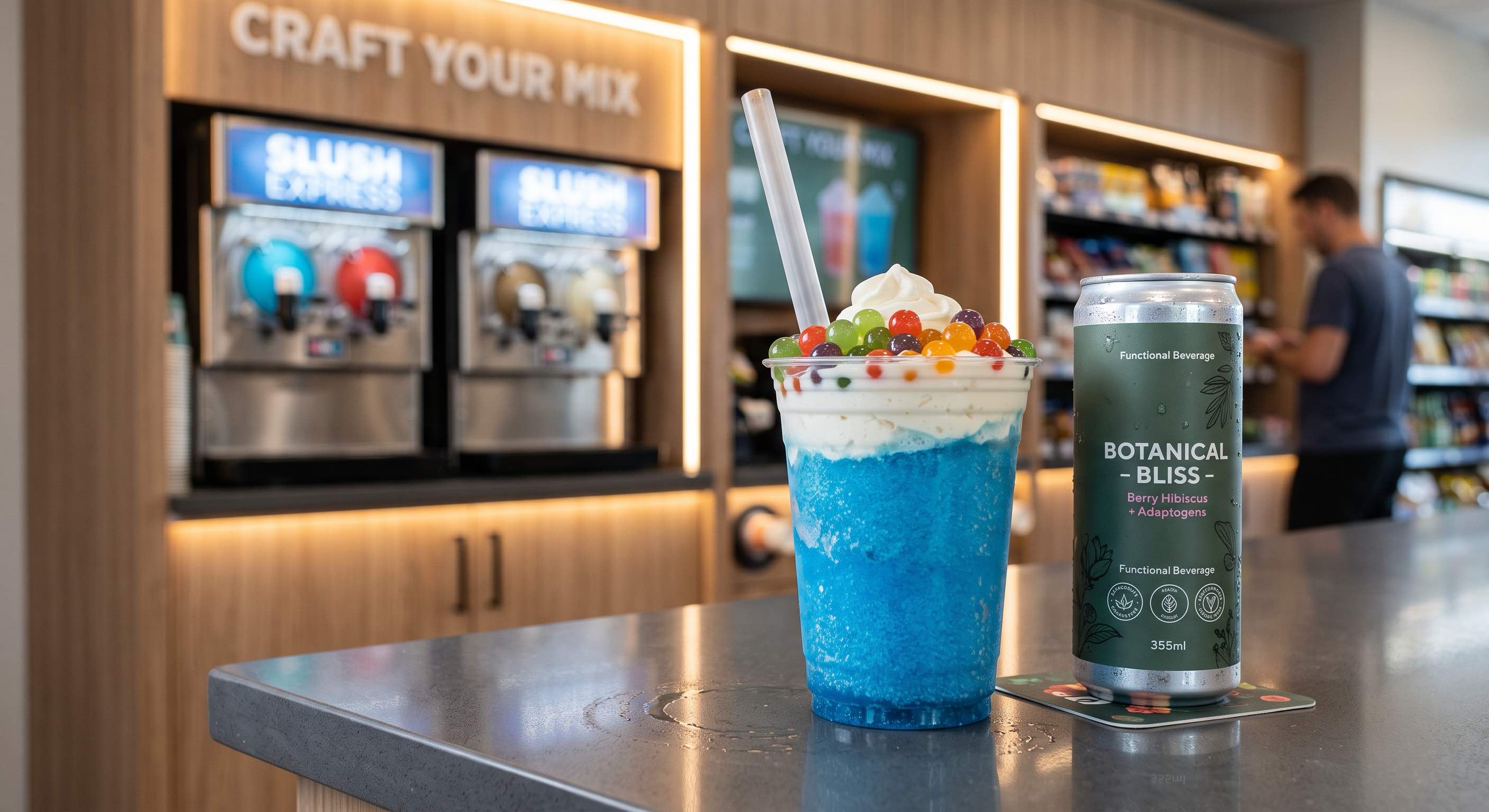
This is where equipment choice matters more than most owners realize. Closed-system Frozen Beverage Dispensers (FBDs) using Bag-in-Box (BIB) technology solve the labor problem at the source. Because the syrup and product path stay sealed, there’s no manual batch mixing and far less exposure to contamination. Unlike traditional open-bowl granita machines, these units don’t need daily teardown and cleaning, just a wipe-down and an annual preventative maintenance check. That difference alone can save meaningful labor hours every week.
The financial case is strong, too. Commercial-grade dispensers typically run $2,000 to $7,000 depending on barrel capacity and output speed, and annual utility costs (water and electricity) average just $250 to $300 on a standard 115V or 230V connection.
Because a frozen carbonated beverage is roughly 10% syrup, 40% water, and 50% CO2, the cost of goods per drink is low, typically $0.27 to $0.30 for a 16oz serving once you factor in syrup, packaging, and prorated utilities. At a retail price of $2.50 to $4.00, that puts gross margins in the 70% to 120% range. A store selling a modest 500 drinks a week at $2.50 each can cover the machine’s full capital cost in roughly 91 days.
Setting the Scene: Digital Signage and Ambiance

The physical environment matters just as much as the equipment. Automated lighting, audio, and AI-driven digital signage (platforms like 22 Miles or Crestron are common choices) let you shift the store’s feel by time of day, bright, high-energy coffee promotions in the morning, and dimmer lighting with relaxed audio and evening beverage promotions after 4:00 p.m. Getting that transition right is as much a design exercise as a technology one, since the screens, lighting, and cabinetry all need to work together rather than feel bolted on.
What You Should Be Doing: Strategic & Operational Execution
- Upgrade to closed-system FBDs. Move away from high-maintenance open-bowl machines toward Bag-in-Box dispensers that cut labor and cleaning time while keeping product consistent.
- Plan for power and utilities first. Before you order equipment, confirm your beverage counter has the right voltage (115V or 230V) and the dedicated circuits and water lines the unit needs.
- Add dynamic digital signage. Install menu boards and promotional screens you can schedule to shift automatically from morning energy to evening relaxation.
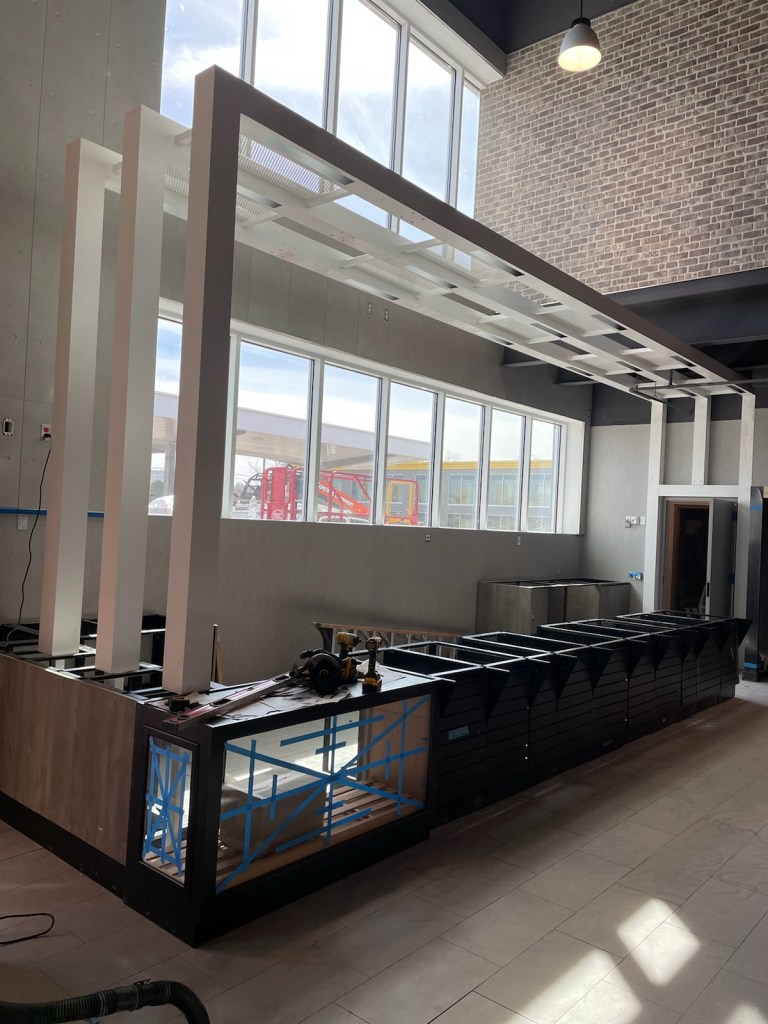
- Rethink your counter and cabinetry. Durable, easy-to-clean surfaces and cabinetry that conceals BIB syrups, CO2 tanks, and filtration lines go a long way toward a premium look and a functional workflow.
Innovation & Profit Maximization
“Buzzy” is a broad category, and understanding its parts, dirty sodas, high-caffeine drinks, and functional botanicals, is what lets you build a program that actually converts.
The Dirty Soda Boom
Dirty sodas originated in the Mountain West as a coffee-and-alcohol alternative and exploded nationally via social media. The idea is simple: take a fountain soda and layer in flavored syrups, fruit purees, and heavy or coconut cream for a highly customizable, indulgent drink. Search interest in “dirty soda” jumped 87% between 2024 and 2025, and the trend has moved naturally into frozen beverages, with operators blending frozen carbonated bases with sweet cream, gummy candies, and popping boba.
Managing the supply chain for mix-ins matters here. Products like Rich’s Soft Whip Cold Foam, for example, offer a 540-day frozen shelf life and 14 to 21 days refrigerated once thawed, which keeps spoilage risk manageable for a smaller-format store.
Building a “Sugar Ladder” for the GLP-1 Era
The category isn’t without scrutiny. A fully loaded dirty soda can carry up to 840 calories and 186 grams of sugar, the equivalent of five cans of cola. That matters more than ever given the rise of GLP-1 medications like Ozempic and Wegovy: as of mid-2026, roughly 21% of U.S. households include a current GLP-1 user, and these households report buying fewer sweet treats (61%) and salty snacks (56%) while spending more on protein, fiber, and hydration.
The fix isn’t to abandon indulgence, it’s to build a flexible “sugar ladder.” Offer a low- or zero-sugar base tier using diet sodas and sugar-free syrups (0 to 2 grams of sugar), and layer in modular, functional add-ins like protein shots, electrolyte infusions, or prebiotic syrups. That lets the same beverage bar serve an indulgence-seeking teenager and a health-conscious GLP-1 user without either feeling like an afterthought.
The Functional Botanical Category
Beyond sugar, functional botanicals are arguably the most disruptive part of this trend. Hemp-derived THC beverages are growing fast, industry projections put the global cannabis drinks market climbing from roughly $2 billion in 2023 to more than $117 billion by 2032, and NielsenIQ data shows convenience stores already outsell every retail channel except dedicated liquor stores in THC beverages.
Much of that growth comes down to nano-emulsion technology. Traditional oil-based edibles metabolize through the liver first, delaying onset by 60 to 120 minutes. Nano-emulsified beverages absorb faster through the stomach, producing a 15-to-30-minute onset and a 2-to-4-hour duration, closer to the experience of a beer or glass of wine, which makes them a natural fit for the evening daypart.
Kava (used for relaxation) and kratom (specifically the mitragynine alkaloid, used for mood and sustained energy) round out the category, contributing to a functional beverage market growing at a 14.76% compound annual rate. Brands like Mitra9 and Botanic Tonics have built strong retail distribution by positioning these drinks as a better-for-you evening wind-down option.
Tying Beverages to Foodservice
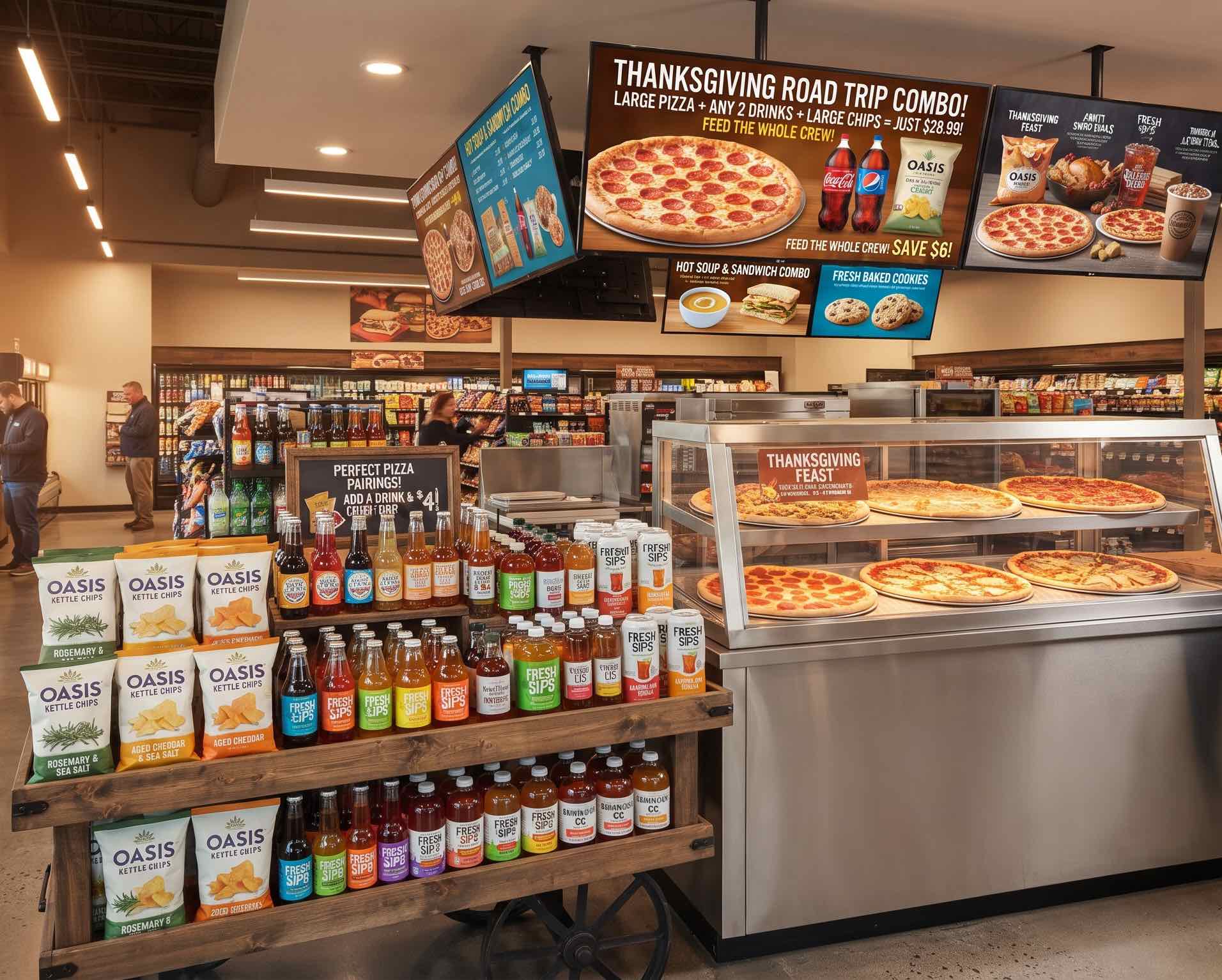
None of this works in isolation. A remarkable 73% of bundle purchases in convenience stores are anchored by a hot or prepared food item, so your beverage program should be built alongside your foodservice case, not next to it as an afterthought. If you have a Customer Data Platform (CDP), it’s also worth using it to reach fuel-only customers who never come inside, CDP-driven fuel-to-store campaigns delivered via pump screens or SMS can convert 8% to 15% of fuel-only customers into in-store buyers, especially with daypart-specific offers timed to the evening commute.
What You Should Be Doing: Innovation & Profit Maximization
- Build a customizable sugar ladder. Stock sugar-free syrups, zero-calorie bases, and protein add-ins so your frozen beverage program serves both indulgence and wellness customers.
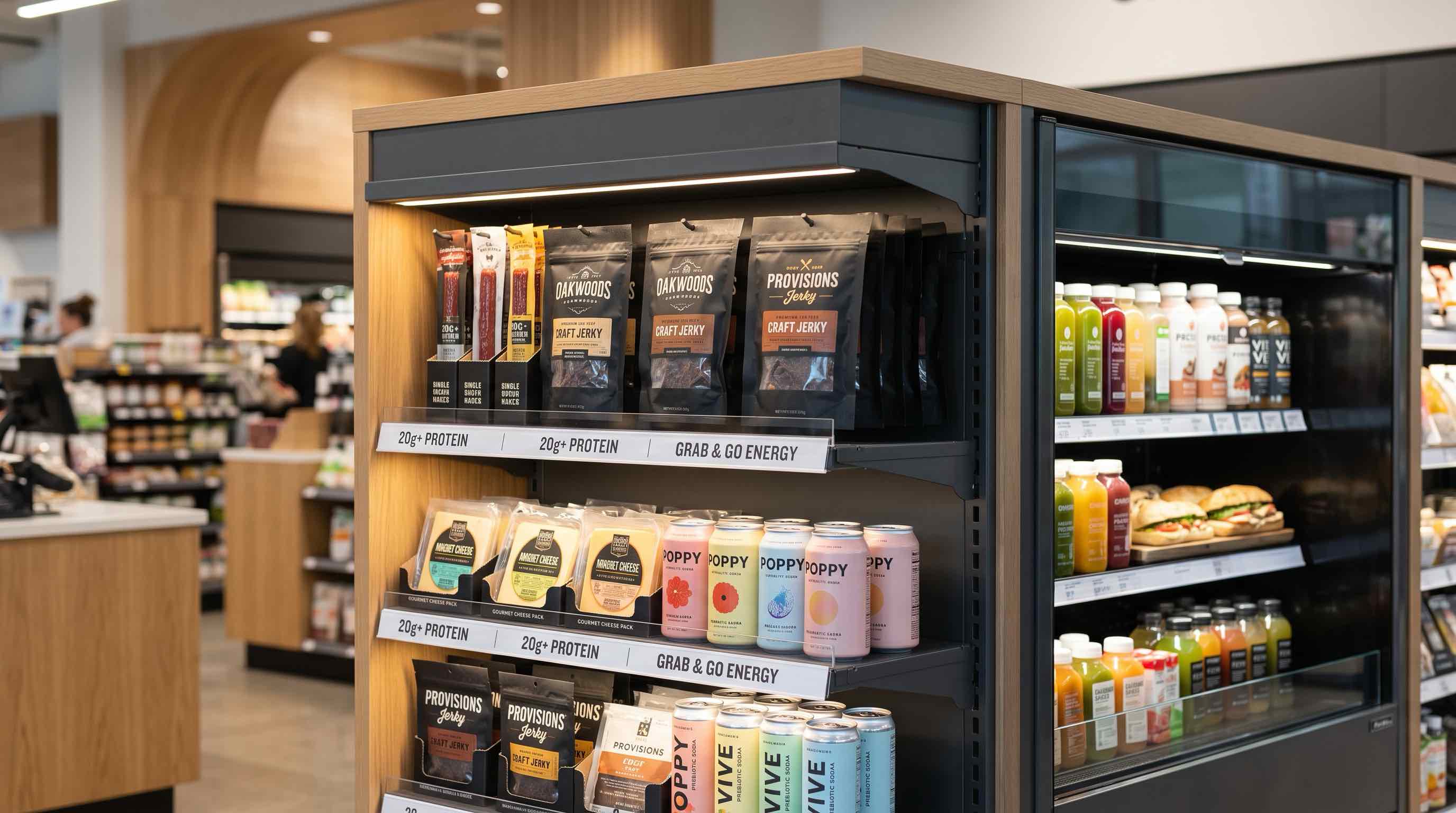
- Add nano-emulsified THC and botanicals carefully. Stock low-dose (2.5mg to 5mg) THC seltzers, kava tonics, and kratom drinks in premium cooler space, and make sure staff understand onset times well enough to explain them accurately.
- Merchandise beverages next to food. Place high-margin drinks in the sightline of your deli, pizza warmer, or roller grill, and consider fixed-price evening bundles that pair hot food with a premium beverage.
- Put your CDP to work. Stop sending generic morning coffee coupons to evening customers. Segment by daypart behavior and push targeted evening offers to the pump.
The Executive Action Plan
Positioning your store as a neighborhood third place and a seller of functional, sometimes psychoactive beverages comes with real regulatory, tax, and liability considerations. Getting this wrong invites legislative crackdowns, financial penalties, and lost community trust, so compliance has to come before merchandising. Here’s a prioritized 30-day roadmap.
Week 1: Regulatory Compliance and Risk Review
Start with local ordinances and federal guidance. The regulatory landscape around hemp-derived THC is genuinely volatile: the FDA and FTC have both moved aggressively against synthetic variants like Delta-8 and highly concentrated 7-OH, as well as products using packaging that mimics children’s snacks. Work only with brands that use naturally derived Delta-9 THC or mitragynine, clearly distinct branding, and transparent third-party Certificates of Analysis (COAs).
Check your local tax structure too, it can vary block by block. In Wisconsin, for instance, the base state sales tax is 5.0%, but the combined rate for non-exempt prepared foods and buzzy beverages reaches 5.5% in Dane County and 7.9% in the City of Milwaukee.
Finally, talk to your insurance broker. Standard commercial property policies often exclude hemp-derived products or alcohol-adjacent incidents. Confirm you have General Liability coverage (commonly $1 million per occurrence, $2 million aggregate), Liquor Liability if you sell traditional alcohol, and Directors & Officers coverage to protect leadership from mismanagement claims tied to controversial product categories.
Week 2: Equipment and Design Planning
With your legal and risk parameters set, turn to your physical space. Map out the footprint for closed-system Frozen Beverage Dispensers, confirm whether you need 115V or 230V power, and finalize cabinetry that conceals BIB syrup boxes and CO2 lines. This is also the week to select your digital signage hardware and software so it’s ready to manage daypart-specific promotions.
Week 3: Staff Training and POS Integration
Many municipalities are writing their own rules for functional botanicals, often restricting sales to buyers 21 and older, limiting floor display visibility to prevent youth access, and requiring ID verification at checkout. Integrate ID scanning directly into your POS so there’s no cashier guesswork, and train staff on the basics of how these products work so they can responsibly advise customers to “start low and go slow.”
Week 4: Marketing Launch and Loyalty Integration
In your final week, finalize your merchandising bundles, pairing new frozen beverages and botanical tonics with your best-selling prepared foods. Activate CDP-driven SMS and pump-screen messaging targeted at afternoon and evening commuters, and turn on your digital signage schedule so the store visually shifts from a morning coffee hub to a relaxed evening destination once the clock hits 4:00 p.m.
What You Should Be Doing: The Executive Action Plan
- Purge non-compliant inventory. Remove any synthetic Delta-8 or 7-OH products, along with anything using packaging that could appeal to children.
- Update your insurance. Confirm your general liability, product liability, and D&O policies explicitly cover hemp-derived beverages and expanded seating.
- Mandate ID scanning. Require a physical ID scan for THC, kava, and kratom purchases, treat them with the same rigor as tobacco and alcohol.
- Automate local tax compliance. Make sure your accounting software reflects hyper-local tax rates for your specific municipality.
The Bottom Line: Consumers Want more
The old convenience store playbook, chase fuel volume, let the pump do the marketing, just doesn’t hold up in 2026. Fuel transactions are flattening, labor costs keep climbing, and the stores that will thrive are the ones that treat their interior space as a real business, not an afterthought to the forecourt.
What makes the evening daypart such a compelling opportunity is how many trends are converging at once: longer dwell times, a generational move away from alcohol, and a genuine consumer appetite for beverages that do more than quench thirst. Layer in the operational reality that closed-system equipment can neutralize your biggest labor headache, and you have a rare case where the right move for your bottom line is also the right move for your customers.
A few things are worth keeping front of mind as you build this out. First, flexibility wins, a sugar ladder that serves both the indulgence-seeking customer and the GLP-1 household will always outperform a one-size-fits-all menu. Second, compliance isn’t optional friction; it’s what lets you sell these products at all, so get your insurance, tax, and ID-verification systems right before you get your marketing right. And third, none of this happens in a vacuum, your beverage program only works as well as the equipment, cabinetry, and layout supporting it.
If you take one thing from this guide, let it be this: start with your own POS data. Look at what’s actually happening in your store between 4:00 p.m. and 8:00 p.m. today and use that as your baseline before you invest in anything new. From there, the roadmap in The Executive Action Plan will tell you exactly what to tackle first.

Leave a Reply