Five Food Holidays, One Real Plan for Bigger Baskets
A holiday-by-holiday guide to turning National Sandwich Day, Nachos Day, Greek Yogurt Day, Pickle Day, and Parfait Day into real foot traffic, bigger baskets, and lasting loyalty, plus the equipment, merchandising, and 30-day plan to make it happen.
The Pump Isn’t Carrying Your Store Anymore
I’ll say something a lot of owner-operators already feel in their gut but haven’t quite put into numbers yet: the fuel island stopped being your business model a while ago. It’s still important. It still gets people onto your lot. But it isn’t what’s paying your bills anymore, and November is a good month to prove that to yourself.
I’ve spent years on the other side of the counter from most of you, designing custom cabinetry, specifying commercial foodservice equipment, and building the retail graphics that guide a customer’s eye from the door to the register. That means I’ve walked hundreds of store floors, watched thousands of transactions happen in real time, and seen exactly where the margin leaks out of an otherwise solid operation. More often than not, it’s not a pricing problem or a location problem. It’s an underused calendar.
Here’s the data behind that feeling. According to NACS State of the Industry figures, total inside merchandise and foodservice sales hit a record $341.2 billion in 2025, even as total fuel revenue dropped 5.4% with gas prices averaging $3.11 a gallon. At the same time, your cost side didn’t sit still. Average hourly labor climbed to $15.04, credit card swipe fees reached $21.3 billion industry-wide, and direct store operating expenses rose 4.2%. Meanwhile, average daily traffic slipped 2.7%, down to roughly 1,484 transactions per store per day.
Put plainly: fewer people are walking through your doors, and each one of them costs more to serve. That math only works in your favor if every visit does more work, a bigger basket, a higher-margin item, a second trip later in the week.
The good news is that a genuine tailwind has shown up to help you. Consumers are trading down from Quick-Service Restaurants and fast-casual chains as those menu prices keep climbing, and they’re looking for something fresh, fast, and reasonably priced to replace it. NACS consumer research backs this up directly: 75% of consumers say it’s important to build their own combination of entrée, drink, and snack rather than accept a rigid combo meal, and when people are in a hurry, they’re nearly twice as likely to grab a ready-made commissary item (35%) as they are to wait on something made to order (20%). Your store, if it’s set up right, is exactly what that customer is looking for.
November hands you five built-in reasons to make that case: National Sandwich Day (Nov. 3), National Nachos Day (Nov. 6), National Greek Yogurt Day (Nov. 9), National Pickle Day (Nov. 14), and National Parfait Day (Nov. 25). None of them require a remodel. What they do require is a clear-eyed look at your foodservice equipment, your merchandising flow, and your digital marketing, and a plan to activate all three at once instead of running five disconnected promotions.
In this guide, I’ll walk through why foodservice has become the real engine of your profitability, a practical playbook for each of the five holidays, the flavor and technology trends worth building around beyond just November, and a 30-day roadmap so none of this has to be improvised the week of.
Why Foodservice Is Carrying the Weight Now
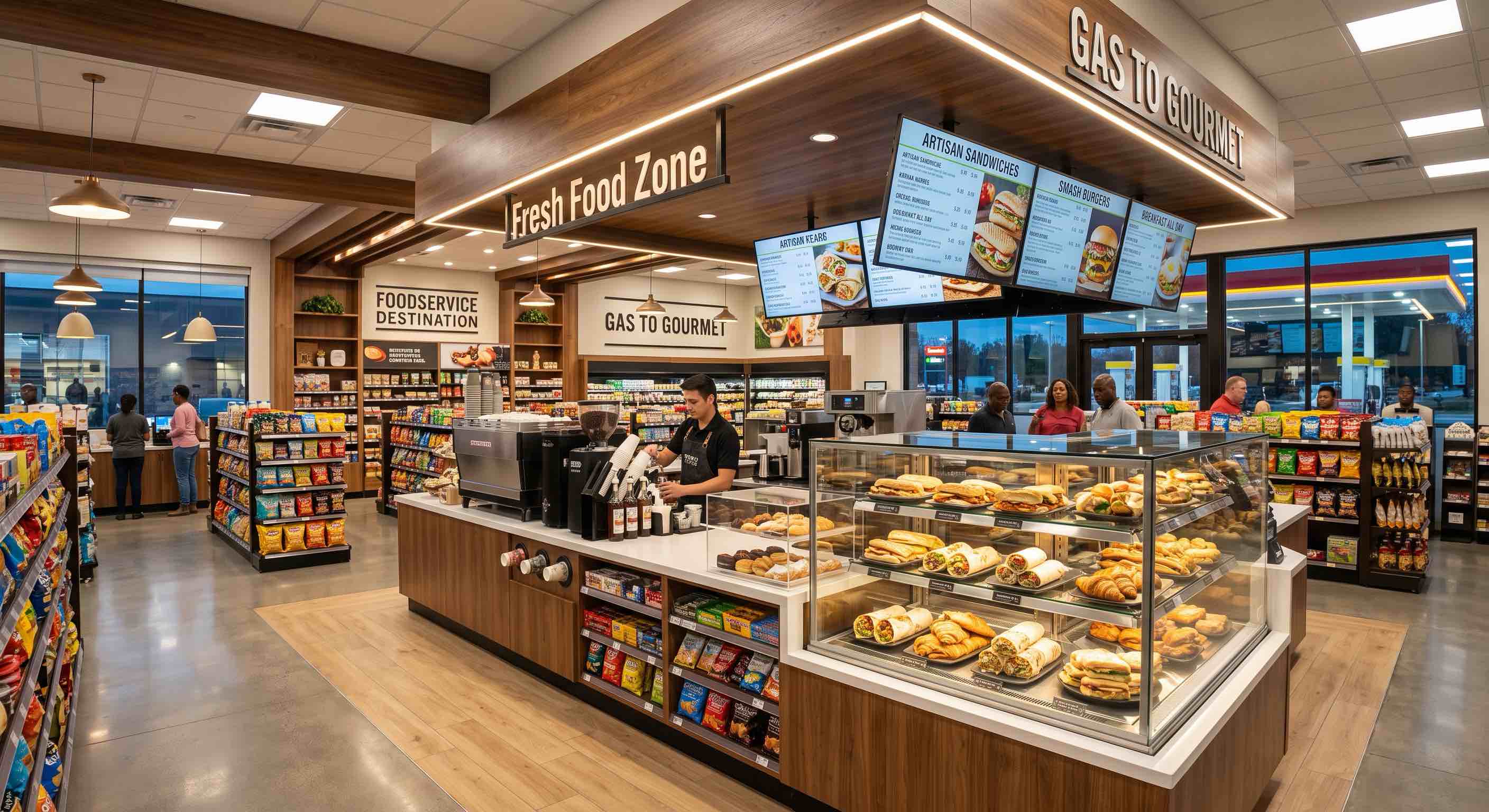
If you only remember one number from this section, make it this one: foodservice makes up 28.5% of your inside sales, but it delivers 38.9% of your inside gross profit dollars. Nothing else in your store works that hard per square foot. Packaged beverages are the next biggest driver, at 18.7% of sales and 21.2% of profit, and when you merchandise the two together deliberately, sandwich next to soda, nachos next to fountain drinks, they combine for 60.8% of your total inside gross profit. Prepared food alone, the pizzas, sandwiches, chicken, and hot snacks, accounts for 73.9% of everything foodservice rings up.
That’s the opportunity. Here’s the pressure that makes it urgent. Of the roughly 151,975 convenience stores operating in the U.S., independent operators and small chains of ten stores or fewer control 63.0% of all locations, about 95,672 stores. You’re not competing against a monolith with a single playbook; you’re competing against a landscape where most of your peers are exactly your size, working with the same labor market and the same swipe fees you are. The stores pulling ahead aren’t the ones with the biggest ad budget. They’re the ones being deliberate about their layout, their equipment, and their calendar.
That’s also where the QSR trade-down becomes real money instead of a talking point. Customers who used to default to a drive-thru are actively looking for a faster, cheaper, more customizable alternative, and a well-merchandised counter with clear bundle pricing is precisely that. A $7.99 build-your-own combo, sandwich, drink, and a side, competes directly against a fast-food value meal that’s crept past $10 in a lot of markets, and it does it with a shorter line.
That pressure looks different depending on where you sit in the market. Large chains running 500 or more locations still control 22.2% of all stores, about 33,810 of them, and mid-sized regional operators running 11 to 499 locations hold another 14.8%. Those bigger players can absorb a bad quarter with national marketing dollars and centralized purchasing power that you probably can’t match. But size cuts both ways. A mega-chain’s foodservice program is designed for consistency across a thousand locations, which means it’s rarely built around what’s actually happening in your zip code that week. You can turn your menu around in days, feature a local supplier, and change your signage overnight. That’s not a consolation prize, it’s a real, structural advantage, and November’s five holidays are a low-risk way to put it to work.
It’s also worth being honest about why speed alone doesn’t cut it anymore. Customers aren’t just choosing convenience stores because they’re nearby, they’re choosing them, or not, based on whether the stop feels worth making. A clean fuel transaction with nothing behind it inside the store is a commodity anyone can offer. A store that clearly knows what day it is, has the right item merchandised in the right spot, and makes the bundle price obvious at a glance, is doing something your closest fuel competitor almost certainly isn’t.
What You Should Be Doing
- Pull your POS reports and confirm foodservice and beverages are generating at least 60% of your gross margin dollars. If they’re not, that’s your starting point, not November.
- Price-check the nearest QSR lunch combo in your trade area and build a c-store alternative that beats it on speed and customization, not just price.
- Make sure your fresh food case and coffee station are fully stocked and lit by 6:00 AM. The early commute crowd is high-margin and creature of habit; miss that window once and you may not get a second chance with them.
- Walk your own floor the way a first-time customer would and note where foodservice and beverages are, or aren’t, visible from your front door. If you have to hunt for your own hot case, so does everyone else.
Your Holiday-by-Holiday Playbook
Each of these five dates works on its own. They work even better as a connected sequence, because each one gives you a reason to touch a different part of your store, and a different daypart, without asking your team to relearn anything new each time.

National Sandwich Day, November 3
Prepared sandwiches are the cornerstone of c-store foodservice, and Sandwich Day is your best shot all month at proving your deli counter belongs in the same conversation as the sub shop down the street.
The equipment side matters more than people expect. If your cold prep table doesn’t have a clear glass breath guard and a well-lit display, customers assume the food behind it isn’t fresh, whether that’s true or not. If your kitchen footprint doesn’t support full made-to-order assembly, lean on commissary grab-and-go cabinetry positioned right next to the order counter instead of tucked in a cooler across the store.
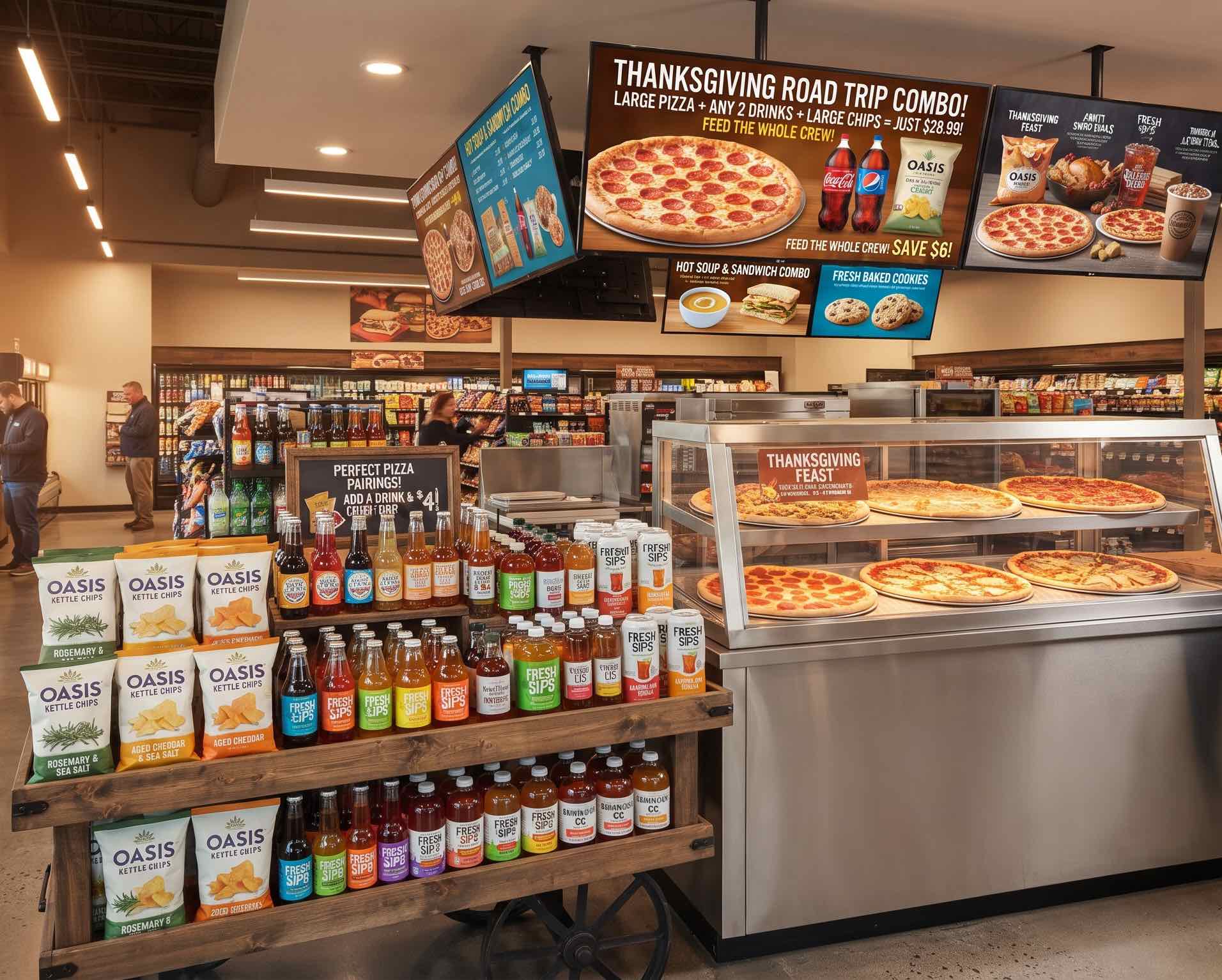
What to try: Keep it to two signature builds, say a Turkey/Swiss and a Roast Beef/Cheddar, paired with one limited-time sauce like a spicy pickle aioli. That keeps your SKU count manageable while still giving the sandwich a reason to feel special. Bundle it into a $7.99 combo with a 20-ounce bottled drink and a bag of chips, and set your POS to apply that discount automatically the moment all three scan together. NACS data shows 37.4% of customers who buy prepared food also buy a packaged beverage in the same trip, so make that beverage cooler visible from the sandwich counter, not an afterthought two aisles over.
Floor graphics do more work here than most operators give them credit for. A simple directional graphic running from your deli case to your cold vault doors closes the gap between “I bought a sandwich” and “I bought a sandwich and a drink” without a single word from your staff. It’s a five-minute install that pays for itself on day one.
What You Should Be Doing
- Build two core protein combinations plus one limited-time signature sauce, rather than expanding your sandwich menu across the board.
- Mount a cross-merchandising rack, chips and bottled drinks, directly onto or beside your deli case.
- Program your combo discount into the POS so the bundle price applies automatically at checkout.
National Nachos Day, November 6
Nachos Day targets a window most stores waste: the 2:00 to 5:00 PM stretch between lunch and dinner, when your roller grill has gone quiet and foot traffic is thinning out. That’s exactly the kind of dead zone a craveable, visually loud item is built to fix.
The margin case here is about as good as it gets in this category. Raw tortilla chips, warm cheese sauce, and shelf-stable toppings run a cost of goods between 20% and 25%, which puts your gross margin north of 75%. At a $4.99 retail price and roughly $1.25 in food cost, every tray you sell drops about $3.74 straight to your bottom line. Roller grills and hot food stations already sit in more than 85% of convenience stores, so for most of you this isn’t a new equipment purchase, it’s a better use of equipment you already own.
What to try: Upgrade your topping bar with a commercial-grade heated cheese pump, a second chili well, and stainless drop-in condiment trays if you don’t have them already. A premium topping or two, jalapeños, a smoked chili-garlic drizzle, Nashville hot honey cheese, turns a basic tray into something worth posting a photo of, and that’s free marketing.
Here’s the math worth writing on a sticky note near your POS terminal:
Retail Price: $4.99 (100.0%)
Food Cost (COGS): $1.25 ( 25.0%)
—————————————–
Gross Profit: $3.74 ( 75.0% Margin)
Multiply that $3.74 across even a modest 40 trays a day during the afternoon window, and you’re looking at roughly $150 in incremental daily margin from a category that costs you almost nothing extra in equipment.
What You Should Be Doing
- Deep-clean and recalibrate your cheese pump and hot wells before the promotion starts. A skinned-over cheese sauce kills repeat trays faster than anything else.
- Position your fountain drink station within arm’s reach of the nacho display. Dispensed beverages run 60%–70%+ margin, and the two categories sell each other.
- Use compartmentalized, portion-controlled trays so the presentation looks generous without chip overload eating your margin.
National Greek Yogurt Day, November 9
Health-conscious snacking isn’t a niche anymore, and part of what’s driving it is the widespread use of GLP-1 medications, which has pushed protein bars, nuts, seeds, and high-protein dairy up 7.9% in c-stores. NACS consumer data shows 31% of all c-store shoppers actively look for fresh, healthy options like yogurt and fruit, and that number jumps to 39% among shoppers 18 to 34 and 40% among your most frequent customers, the ones stopping in three or more times a week.
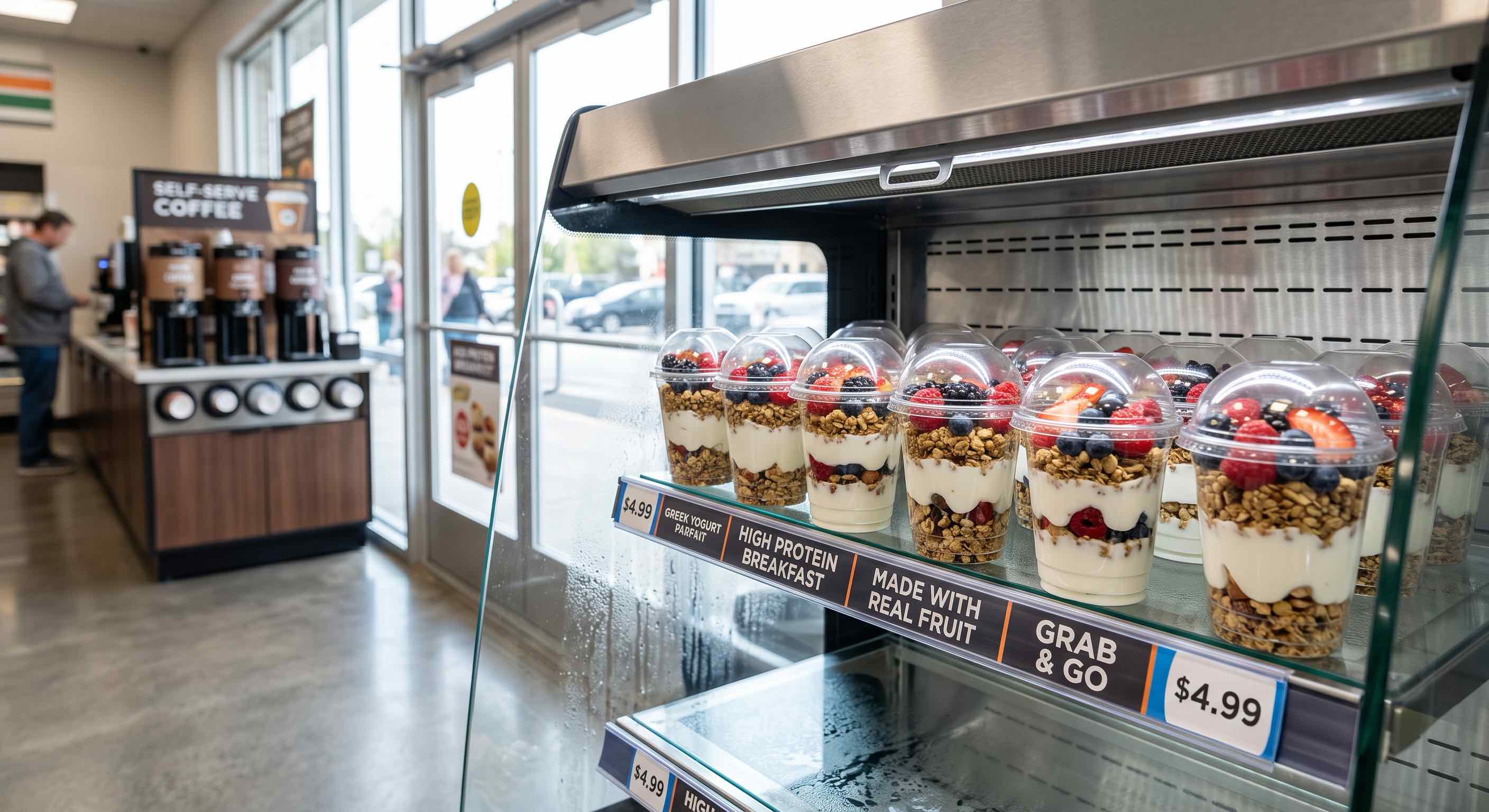
Greek Yogurt Day is your chance to make the case that “healthy” and “convenient” aren’t opposites. The idea to build around is what I’d call protein-plus-fiber: a layered yogurt cup with chia seeds, flaxseed granola, and fresh berries, merchandised in a front-of-store, open-air refrigerated cooler where it’s the first thing a health-minded customer sees.
What to try: Place yogurt cups on the top two shelves, eye level, in a cooler near your entrance or checkout line, not buried in the back with the milk. Pair it with a bean-to-cup coffee or a cold brew for a fast breakfast bundle, and use bold, simple shelf talkers, “15g Protein | 6g Fiber | Gut-Friendly Probiotics”, to close the sale before the customer has to ask.
This is also a good day to think about who’s walking in, not just what’s in the cooler. Your frequent shoppers, the ones stopping three-plus times a week, are the ones most likely to actually seek this category out. A well-merchandised yogurt case doesn’t just win a single Greek Yogurt Day transaction, it gives that habitual customer one more reason to keep choosing you over the grocery store or drive-thru on their way in.
What You Should Be Doing
- Move Greek yogurt cups to eye-level shelving in an open-air cooler near your front entrance or register.
- Build a morning bundle pairing yogurt with specialty coffee or cold brew.
- Add clear, bold nutrition signage that does the selling for you at a glance.
National Pickle Day, November 14
Pickle flavors have had a real, sustained run across fast casual, snacks, and now convenience retail, and craveability is one of the most reliable drivers of a non-fuel store visit. That makes Pickle Day less about the pickle itself and more about using it as a hook to pull someone away from the pump and through your door.
The move here is a multi-zone push rather than a single display. In your prepared food area, run a limited-time item like a Spicy Pickle Chicken Wrap or a Dill-Ranch Pulled Pork Sub. At your beverage station, feature a pickle-flavored slushie or pickle lemonade. Near the register, build a “Pickle Craze” endcap with pouched pickles, dill pickle chips, and jarred pickle dips.
What to try: Avoid prepping raw pickle ingredients in-house, it’s unnecessary labor for a limited-time item. Source pre-mixed dill pickle spreads and aiolis from your supplier that apply directly onto your existing sandwich and wrap builds. Build the endcap with real visual presence, custom graphic wraps and an acrylic dump bin, so it reads as an event rather than a shelf tag.
Don’t stop at the front door, either. A pump topper or an outdoor banner featuring your pickle LTO is one of the only ways you can market directly to someone who hasn’t decided to come inside yet. If craveability is what pulls a driver away from the pump, the message needs to reach them while they’re still standing at it.
What You Should Be Doing
- Source pre-mixed pickle spreads and aiolis instead of prepping raw ingredients in-house.
- Build a dedicated endcap display near the register with real graphic presence, not just a shelf sign.
- Extend the promotion outdoors with pump toppers and forecourt banners to catch drivers before they commit to fueling and leaving.

National Parfait Day, November 25
This one lands two days before Thanksgiving, right in the middle of one of the heaviest highway travel stretches of the year. That’s a gift if you use it: millions of people on the road that week are looking for a clean bathroom, a quick fill-up, and something portable to eat, exactly your store’s strength.
Parfait Day works because it lets you pivot by daypart instead of running one static display all day. In the morning window, 6:00 to 11:00 AM, feature a fresh Greek yogurt, honey, and fruit parfait for travelers wanting something light. In the afternoon and evening, shift toward something more indulgent, a brown sugar cinnamon toast cheesecake or chocolate-crumb parfait. That split matters: Datassential research found that 64% of c-store customers explicitly seek out indulgent options when they’re buying snacks, even as many of those same shoppers also want healthier choices earlier in the day.
What to try: Position your parfait case near the cash wrap and coffee island, where travelers are already standing and waiting. Package in clear, tall domed cups so the layers, fruit, cream, crunch, are visible before anyone opens the lid. Run a “Road-Trip Fuel Up” bundle, a $1.99 parfait with any extra-large coffee or travel mug fill, to make the add-on decision effortless.
Think of this one as a two-week window rather than a single day. Traffic builds steadily in the days leading up to Thanksgiving, so keeping the parfait case stocked and visible from November 20th through the holiday itself captures far more of that travel surge than a display that only goes up on the 25th and comes down the next morning.
What You Should Be Doing
- Place your parfait display in direct line of sight of the register and coffee station.
- Package parfaits in clear domed cups that show off the layers.
- Run a discounted parfait-plus-coffee bundle aimed squarely at travelers passing through.
Beyond the Holidays: Three Ways to Extend the Margin
A single-day promotion is a nice bump. What actually moves your quarter is using November to build habits, in your menu, your marketing, and your back office, that keep paying off after Thanksgiving.
Lean into cultured dairy across your existing equipment. Greek yogurt, kefir, cultured butter, and savory cream cheese spreads add real flavor and perceived quality without adding labor. Swap plain mayo for a dill-pickle cream cheese or garlic-herb cultured spread on your deli subs. Blend sharp cheddar with a cultured sour cream base for your nacho dip so it holds up better in a heated well. These are small supplier changes, not new stations, and they let you ride the same GLP-1-driven demand for high-protein, high-fiber, satisfying food that’s already showing up in your yogurt sales.
Get serious about your digital push notifications. Fewer than 20% of c-store transactions are currently linked to an identified customer, which means most of your fuel-only traffic is invisible to you until you fix that. A Customer Data Platform with payment token matching can recognize a card at the pump and trigger a targeted offer on the pump screen or through your app, and that kind of automated fuel-to-store campaign converts 8% to 15% of fuel-only shoppers into paying inside customers. Once you have that infrastructure, the details of the message matter more than most operators assume. Rovertown’s analysis of 78 million c-store push notifications found that short, curiosity-driven teasers outperform standard promotional blasts by 121%, messages sent during the morning (7:00–8:30 AM) or afternoon (4:00–5:30 PM) commute outperform midday sends by up to 178%, notifications with a relevant emoji drive 50% higher reaction rates, positive framing beats urgency-driven copy by 9%, and gamified offers beat flat discount announcements by 30%. Stores using at least three of those five practices see an average 17% lift in active monthly app users. If you’re not tracking that yet, it’s worth fixing before your next promotional push, not after.
Build every bundle around the same four-item architecture, and protect the margin behind it. The average c-store transaction runs under two items, which is exactly what a fixed combo is designed to fix: a core entrée, a beverage, a salty side, and a sweet treat, priced together at a number like $7.99. Convenience store POS data shows 60% of shoppers have bought a bundle before, and two-thirds of those decided to buy one before they ever walked in the door, so the offer itself is doing real work, not just the discount. Done right, that structure holds a blended margin between 68% and 74% while meaningfully growing basket size.
| Slot | Example Item |
| Core Entrée | Sub, loaded nacho tray, or roller grill item |
| Beverage | 20oz bottled drink or specialty coffee |
| Salty Side | Chips, pretzels, or protein-rich nuts |
| Sweet Treat | Parfait, fruit cup, or candy |
Every one of November’s five holidays slots directly into one of those four spots, which is exactly why running them in sequence works better than running any single one in isolation. A customer who tries the Sandwich Day combo on the 3rd already understands your bundle logic by the time Parfait Day rolls around on the 25th, and that familiarity is worth more than any individual discount.
None of that holds up, though, if your back office isn’t watching it. Use weighted average costing so your price book updates automatically when a supplier’s ingredient cost shifts, and enforce strict first-in, first-out rotation in your deli coolers to keep fresh food waste under 2.5% of category revenue. A great promotion with sloppy inventory tracking just moves your losses from one line item to another.
A 30-Day Plan to Make It Real
You don’t need to launch all five holidays at full production value in year one. What you do need is enough lead time that nothing gets improvised the morning of.
Mid-to-Late October: Supply Chain and Equipment Audit
- Place distributor orders for specialty items: pickle aiolis, chili-garlic cheese sauce, cultured dairy spreads, and parfait cups.
- Inspect and calibrate your open-air grab-and-go coolers, bean-to-cup coffee station, roller grill, and heated condiment wells.
- Pre-program your CDP and mobile push notifications for scheduled sends on November 3, 6, 11, 14, and 25.
November 1–25: Execution and Digital Engagement
- Install pump toppers, window clings, cold vault floor graphics, and register signage tied to each holiday.
- Fire curiosity-driven push notifications during the 7:00–8:30 AM morning window, using positive phrasing and emoji.
- Run twice-daily freshness checks on your refrigerated sandwich, yogurt, and parfait cases.
November 11 and 14–25: Community Tie-Ins
- On Greek Yogurt Day, offer a free yogurt cup and coffee to active-duty military, veterans, and first responders for Veterans Day.
- From the 14th through the 25th, run a register round-up campaign benefiting a local food bank heading into Thanksgiving.
- On Sandwich Day, partner with a local shelter to donate one sub for every three custom subs sold.
December 1–10: Financial and Loyalty Audit
- Pull back-office reports on actual item sales, gross margin percentage, and waste by category for each holiday.
- Review payment token data to see how many fuel-only shoppers actually converted to inside purchases.
- Check loyalty program metrics for retention lift and average ticket increase among your active members.
The Bottom Line: Ordinary Can Become Extraordinary
You don’t need a 500-store footprint or a national ad budget to make this work. What you need is the willingness to treat five ordinary calendar dates as five real reasons for a customer to choose you over the drive-thru across the street.
Here’s what this comes down to. Foodservice and beverages already generate 60.8% of your inside gross profit, and the QSR trade-down means customers are actively looking for exactly what a well-run c-store does best: fast, affordable, customizable food. National Sandwich Day gives your deli counter a reason to shine. Nachos Day fills the afternoon dead zone with a 75%-margin item. Greek Yogurt Day puts you in front of a growing health-conscious customer base. Pickle Day turns a genuine flavor trend into forecourt-to-counter foot traffic. And Parfait Day meets millions of Thanksgiving travelers exactly where they already need to stop.
None of it requires ripping out your equipment or rebuilding your layout from scratch. It requires a clear-eyed look at your cold cases, your hot wells, your endcaps, and your signage, and a plan built early enough that execution on the day itself is simple: stock it, light it, and let the display do the talking.
You don’t need to run all five of these holidays at full production value in your first year, either. Pick the two that fit your store’s traffic pattern and customer base best, put a real plan and a real budget behind them, and track your transaction count and average ticket against a normal day. That comparison tells you what’s actually working, and which holiday earns the bigger push next November.
Figure out where the fastest wins are hiding and build a plan to capture every one of these five holidays before the season gets away from you.

Leave a Reply