The 2026 Guide to Winning Halloween with One-Bite Snacks, Smart Merchandising, and Local Goodwill
I spend my weeks designing store layouts, building out cabinetry, and engineering retail displays for convenience store operators, and I can tell you the c-store floor looks different than it did even a few years ago. Walk down any snack aisle right now and you’ll see the shift for yourself: smaller packages, bolder colors, and a lot more shelf space given to things you can eat in three bites standing at the counter. The traditional three-meal routine has given way to continuous daily grazing, and Halloween sits right in the middle of that change, wrapped in orange and black.
Snacking isn’t a mid-afternoon extra anymore. For a large share of Americans, it’s simply how they eat now, and that’s driving demand for handheld, bite-sized “mini-meals” and playful treats at every hour of the day. Layer the Halloween promotional window on top of that shift, arguably the single biggest impulse-snacking event of the year, and you’ve got a real opportunity sitting in front of every independent operator reading this.
Here’s the scale of it. Convenience store foodservice sales are projected to reach $78.1 billion in 2026, with foodservice generating close to 39% of total in-store gross profit. Halloween spending nationally hit a record $13.1 billion in 2025, up from $11.6 billion the year before, and early tracking for 2026 shows shoppers moving even sooner: roughly a quarter of consumers had already bought at least one Halloween item by early August. That’s not a one-week event anymore. It’s a season, and it starts before most operators have even pulled their seasonal candy out of the back room.
Capturing that opportunity, though, means confronting a real operational challenge: brand loyalty in this channel is thin. Today’s convenience shopper is uncommitted. The average customer visits 3.2 different c-store banners every month. Their choice of store isn’t driven by attachment to a logo on a fuel sign, it’s driven by proximity, clean design, visual merchandising, product availability, and whether the store gives them a reason to walk in at all.
Here’s a simple way to think about that dynamic: low banner loyalty plus high sensitivity to friction adds up to an impulse-driven choice at the exact moment a driver pulls onto your lot. If your forecourt and entrance don’t give that driver a reason to come inside, someone else on their monthly rotation will happily take the sale.
The financial case for converting that driver is clear. Motor fuel drives roughly 71.5% of total store revenue but only about 35% of gross profit dollars. The high-margin in-store categories, specialty coffee, baked sweet goods, and seasonal confectionery, are where the real profit lives. A customer who fills up and drives away without stepping inside isn’t a completed transaction. It’s a missed one.
In this guide, I’m setting the cabinetry and fixture talk aside for a moment to walk through the bigger picture: how “one-bite” snack trends, low-labor foodservice equipment, digital loyalty tools, and community-focused marketing can work together to make your store a seasonal destination rather than just a stop for gas. By the time you finish, you’ll understand:
- Why the “Summerween” retail calendar means your Halloween floor sets should already be up, not still on order.
- Which snack, bakery, and savory categories are seeing real double-digit growth right now, and where each one belongs on your floor plan.
- How digital loyalty gamification, tiered daypart bundles, and pump-to-store offers turn an uncommitted 3.2-store shopper into a regular.
- How to responsibly host a forecourt Trunk-or-Treat that builds lasting neighborhood goodwill, not just a one-night sugar rush.
- A prioritized, phased action plan you can start executing this week.
Let’s start with the shifts reshaping convenience retail heading into this Halloween season.
The Foundational Landscape: The “Snackification” of Halloween

To compete effectively, it helps to understand the structural shifts driving how people shop. In 2026, the line between mealtime and snack time has largely disappeared. Shoppers want portable, portion-controlled indulgences that fit into unpredictable schedules, and during Halloween season that shows up as “playful eating,” a mindset built around novelty, texture, and nostalgic flavor.
Understanding these shifts is what lets an operator stop fighting consumer behavior and start building merchandising around it.
The “Snackification” Shift and Playful Eating
Snacking isn’t just a bridge between lunch and dinner for a large slice of your customer base. For many shoppers, snacks are the meal. People want something that delivers the emotional comfort of a treat along with real portability, and around Halloween that craving merges with a desire for fun, interactive food experiences.
“Playful eating” tends to show up in products with unusual textures, bold colors, and bite-sized formats: popped cheese snacks, gummy clusters, single-serve bakery bites. These items let shoppers indulge in small, low-guilt bites throughout the day. A floor plan built entirely around full-size candy bars and large chip bags is likely missing the fastest-growing impulse segment in the channel.
The 3.2-Store Dynamic and the Uncommitted Shopper
One of the more telling numbers in convenience retail reporting is that the average customer visits 3.2 different c-store brands each month. True brand loyalty is rare in this channel. Customer choice comes down to convenience, clean design, product availability, and clear visual cues.
Because shoppers are uncommitted, your seasonal merchandising and store design have to do the work the moment a driver pulls in. A forecourt without dynamic seasonal signage, or an entrance display that feels cluttered, gives that shopper every reason to fuel up and move on to the next store in their rotation. Winning that shopper over means making the walk from the pump to the door feel worthwhile.
The Extended Seasonal Calendar: “Summerween” and “Augtober”
Waiting until mid-October to set up your Halloween floor displays means you’ve likely already missed a meaningful chunk of the season. Enthusiasm for autumn holidays now stretches well into summer, giving rise to what the industry has started calling “Summerween” and “Augtober.”
National Confectioners Association data shows a large share of American shoppers begin buying and enjoying Halloween treats well before October 31 arrives, and NRF’s early 2026 tracking backs that up: about one in four consumers had already made a Halloween purchase by early August, with 42% saying fall weather itself is what triggers the first trip. Research from The Hershey Company adds another layer: 88% of shoppers say seasonal displays make shopping more enjoyable, which tends to lead to unplanned purchases, and 87% say seasonal aisles serve as a visual reminder to buy candy in the first place.
More notably, Hershey’s tracking data shows that shoppers who start buying seasonal items early make more total store trips and spend more cumulatively over the season than those who wait until October to make their first purchase. Retailers who put up seasonal displays as early as July or August tend to see stronger category growth as a result.
Here’s roughly how the season unfolds on the shelf:
- July–August (“Summerween”/”Augtober”): early seasonal displays go up, initial impulse trips happen, and early high-margin sales start building.
- September (core seasonal build): tiered daypart bundles roll out, app gamification launches, and pump-to-store conversion tactics kick in.
- October (peak traffic): Trunk-or-Treat events, high-density counter displays, and party-pack bundles drive the season’s highest volume.
Seasonal Confectionery Dynamics and Inflation
Seasonal confectionery is a $6.4 billion category growing 3–5% annually. Chocolate remains the anchor, with 82% of Halloween candy buyers intending to buy chocolate, but non-chocolate sugar candy is where the real growth is happening. Non-chocolate seasonal sales are up 41% year-over-year, driven by items like Nerds Spooky Ropes, Nerds Gummy Clusters, and Brach’s Candy Corn, which skew toward younger shoppers who gravitate to intense, texturally complex treats. Overall, 73% of households plan to buy Halloween candy, 38% plan to buy generic snacks, and 63% intend to offer non-chocolate treats.
At the same time, price sensitivity hasn’t gone away. About 43% of shoppers say inflation is changing their holiday spending, pushing them toward coupons, different stores, and lower-cost brands. Heavy candy buyers in particular are 43% more likely to lean on private-label options to stretch their budgets. That means your mix matters here: premium, branded novelty items alongside solid private-label snack options, so you’re not leaving margin on the table with either the premium or the budget-conscious shopper.
What You Should Be Doing: Foundational Alignment
- Build seasonal displays early. Get initial Halloween floor shippers and counter displays up in August to capture “Summerween” buyers. They tend to make more trips and spend more over the season.
- Expand non-chocolate assortments. Give more shelf space to non-chocolate sugar candy, gummy clusters, and sour novelty treats, which are growing at +41% year-over-year.
- Balance branded with private-label. Stock private-label snack options alongside national brands to reach the 43% of inflation-conscious buyers trading down for value.
- Design for the 3.2-banner shopper. Treat every forecourt visitor as uncommitted. Use clear window graphics, clean pathways, and bright interior displays to make the store worth walking into.
Strategic & Operational Execution: Merchandising the One-Bite Floor
Moving from landscape to execution means taking a hard look at your physical floor layout, fixtures, and product mix. Product selection is only half the equation. Where and how you display it determines whether it sells or sits.
Capturing high-margin impulse sales during Halloween season generally comes down to three things: low-labor foodservice equipment, well-placed grab-and-go bakery displays, and portable savory mini-meals positioned in high-traffic areas.
Three zones worth focusing on:
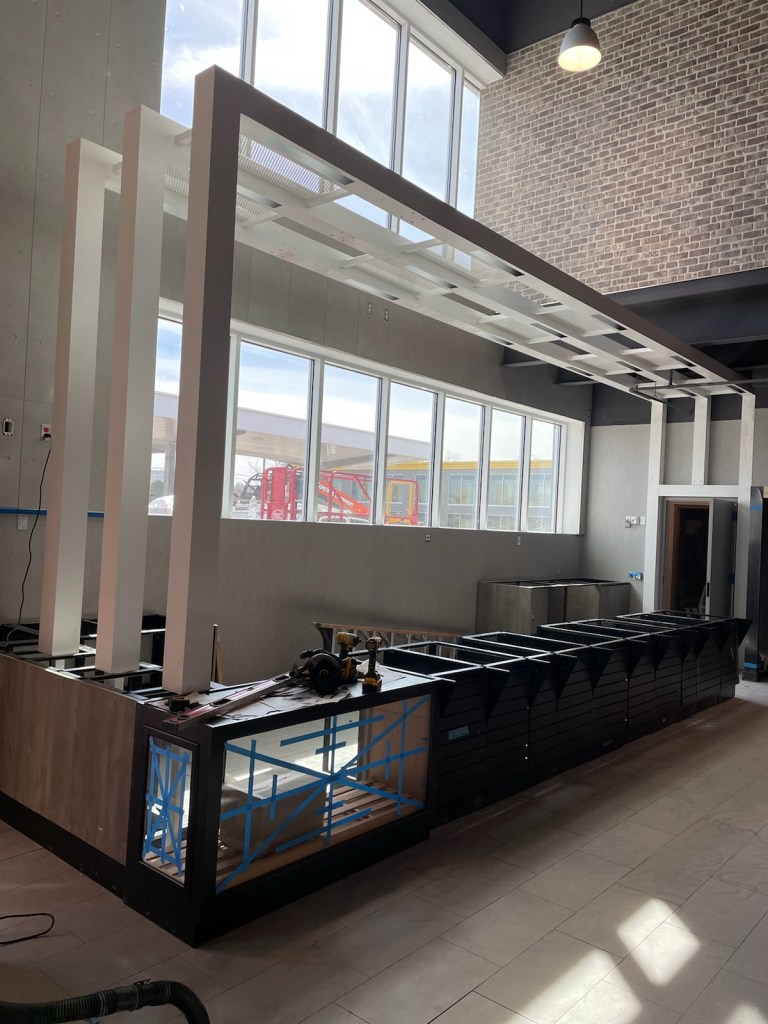
- The coffee island hub: surround hot and cold brew stations with clean display cases holding single-serve sweet goods.
- The front checkout set: use high-density display risers near the register for single-serve candies and bite-sized bars.
- Cooler and endcap sets: frame cooler doors and endcaps with savory mini-meals and better-for-you protein bites.
In-Store Bakery and Low-Labor Foodservice
In-store bakery is the third-largest impulse purchase category in convenience retail, behind confectionery and salty snacks. Convenience bakery sales are projected to grow from $23.5 billion to $26.5 billion by 2029, driven largely by single-serve formats and morning daypart pairing. Sweet baked goods alone generated $648 million in a single quarter across U.S. c-stores, and individually wrapped, single-serve items are a genuinely low-labor, low-waste way to grow that category.
Single-serve bakery products cut out the need for store-level prep, baking equipment, and waste management overhead. Products like Prairie City Bakery’s Monster Muffins and Coffee House Pound Cakes have outpaced general category growth by a wide margin. Iced Lemon Coffee House Pound Cake sales grew 53% year-over-year, and Chocolate Iced Pound Cake grew 26%.
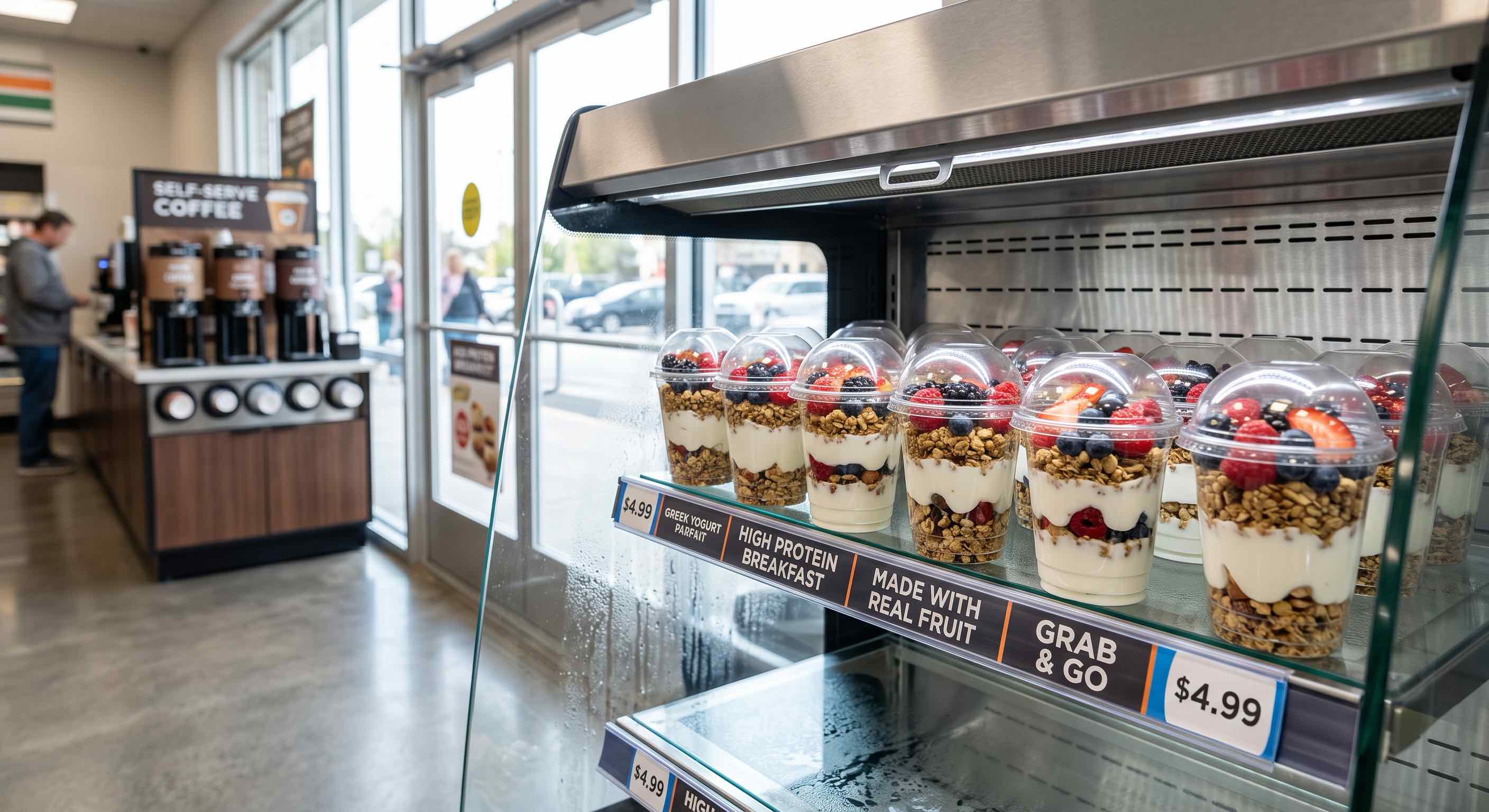
Since 66% of Americans drink coffee weekly, placing single-serve sweet goods next to your beverage stations creates a natural basket-building opportunity. Purchase data supports the placement: 33% of shoppers discover bakery items while walking the store, 26% are drawn in by packaging, 25% respond to new flavors, and 22% make the decision right at the register.
Savory Mini-Meals and Better-For-You Innovation
The “one-bite” trend extends past sweets into bite-sized savory items and reimagined comfort foods. Close to 60% of consumers say they enjoy trying new takes on familiar brands, and manufacturers have responded with portable, bite-sized formats built for multi-sensory appeal: Cheez-It Puff’d, Club Crisps in 2oz pouches, Pringles Harvest Blends, and Pop-Tarts Apple Jacks among them. One standout example: Rice Krispies Treats’ Original Homestyle 33g Bar increased size by 50% with a thicker cut and gooier texture, and saw a 25% incremental sales lift from bigger baskets and new customer trial.
At the same time, better-for-you attributes are showing up in categories that used to be purely indulgent. SPINS research shows natural and wholesome product sales in c-stores grew 5% year-over-year, while conventional product sales declined 1%. Gen Z shoppers in particular are looking for functional, high-protein snacks that let them indulge without the guilt. Products like RXBAR A.M. Dark Chocolate Peanut Butter fit that need well for morning and afternoon dayparts.
Here’s how the major segments break down by margin and placement:
| Category | Margin | Best Placement |
| Seasonal confectionery (Nerds Spooky Ropes, gummy clusters, Brach’s Candy Corn) | ~50–65% | Front register risers, entryway floor shippers |
| Single-serve sweet bakery (Monster Muffins, iced pound cakes, Ooey Gooey Butter Cake) | ~55–70% | Acrylic counter cases at the coffee bar and main checkout |
| Savory mini-meals and crisps (Cheez-It Puff’d, Club Crisps, multigrain Pringles) | ~40–50% | Eye level on salty snack gondolas and side-wing racks |
| Better-for-you mini-meals (RXBAR A.M., high-protein baked goods, wholesome grain bites) | ~45–55% | Dedicated BFY wire racks and cooler surrounds |
Merchandising Architecture: Layout That Guides the Eye

To get the most out of your square footage, your fixtures need to direct the shopper’s eye deliberately. Three zones do most of the work:
- The coffee island surround. Since coffee is a primary destination driver, pairing it with high-margin bakery items in a clean acrylic case next to the brew station lifts total basket size.
- The front checkout display set. Tiered, high-density risers on the cash wrap, positioned at eye level near the card reader, catch last-second impulse purchases.
- Endcap and side-wing racks. Modular wire racks on endcaps facing main aisles, with clear seasonal signage, pull savory mini-meals and 2oz snack pouches into view of walking traffic.
What You Should Be Doing: Operational & Equipment Execution
- Install bakery cases at coffee hubs. Place clean display cases beside coffee dispensers to pair single-serve sweet goods with morning beverages.
- Optimize checkout register risers. Use tiered counter displays on cash wraps for seasonal candies and single-serve bakery bites at point of sale.
- Lean into low-labor single-serve baked goods. Pre-packaged items like Prairie City Bakery Coffee House Pound Cakes cut labor while delivering strong growth.
- Use modular side-wing racks. Attach wire racks to endcaps to cross-merchandise 2oz savory crisps and BFY protein bars alongside beverages.
Innovation & Profit Maximization: Loyalty, Bundling, and Community
With your floor layout and product mix dialed in, the next step is maximizing basket size and converting fuel-only drivers into store shoppers. Reaching the 3.2-store shopper means connecting your physical store to digital personalization, smart daypart bundling, and genuine community engagement.
Three levers work together here:
- Digital personalization: gamified app features, targeted reward pushes, member flavor polls.
- Daypart meal bundles: tiered $3/$6/$7/$8 combos pairing coffee and sweet goods.
- Forecourt conversion mechanics: pump-topper signage, geofenced alerts, small in-store reward activations.
Mobile Personalization and Gamified Loyalty
Static signage alone won’t turn a selective shopper into a repeat one. Active loyalty members spend an average of $5 more per visit than non-members, and about 25% of convenience shoppers say loyalty program strength directly influences where they choose to shop. Strong c-store loyalty programs can deliver a meaningful return, with some operators seeing returns as high as 7x their investment.
For Halloween specifically, gamified app features can help: digital “Trick-or-Treat” scratch-offs, mystery reward multipliers, and member voting on limited-time flavors all give shoppers a reason to keep checking the app. Personalization based on purchase history, for instance, offering a $1 seasonal bakery bite when a customer buys a cold brew, can nudge shoppers toward higher-margin baskets without feeling like a hard sell.
Daypart Bundling and Forecourt-to-Store Conversion
Tiered meal bundling is one of the more reliable ways to lift basket size and drive traffic. Structured combos, a $3 breakfast sandwich-and-coffee deal, a $6 lunch tier, a $7 dinner tier, an $8 premium tier, give shoppers a clear reason to build a bigger basket rather than grab a single item.
Working low-labor, pre-packaged sweet goods or savory mini-meals into these bundles adds perceived value without adding kitchen labor or food waste. Coffee remains a $2.85 billion category and a strong traffic driver on its own, so pairing it with bakery items is one of the more natural ways to move single-item beverage buyers toward multi-item baskets.
Here’s roughly how that looks across the day:
- Morning rush (6–10 a.m.), $3–$5 tier: hot or cold brew coffee paired with a single-serve baked sweet good, like an iced pound cake. Captures morning coffee traffic with a high-margin, low-labor add-on.
- Mid-day grazing (11 a.m.–2 p.m.), $6–$7 tier: a fountain or energy drink paired with a savory mini-meal (like Club Crisps) and seasonal candy. Competes directly with QSRs for lunch traffic.
- Afternoon pick-me-up (2–5 p.m.), $4–$5 tier: a specialty cold drink with a better-for-you protein bar or premium confectionery. Targets the slower afternoon daypart and health-conscious shoppers.
- Evening gathering (5–9 p.m.), $8+ tier: a multi-serve beverage with a portable snack pouch or multi-pack bakery bites. Aimed at seasonal party prep and take-home occasions.
To convert the fuel-only customer, who represents 71.5% of sales dollars but only about 35% of profit dollars, frictionless incentives at the pump matter. Dynamic pump-topper signage and geofenced app notifications with a simple call to action, like “add a $1 spooky bakery bite to your coffee inside,” give drivers a reason to walk in rather than just fuel up and leave.
Community Goodwill: Hosting a Forecourt Trunk-or-Treat

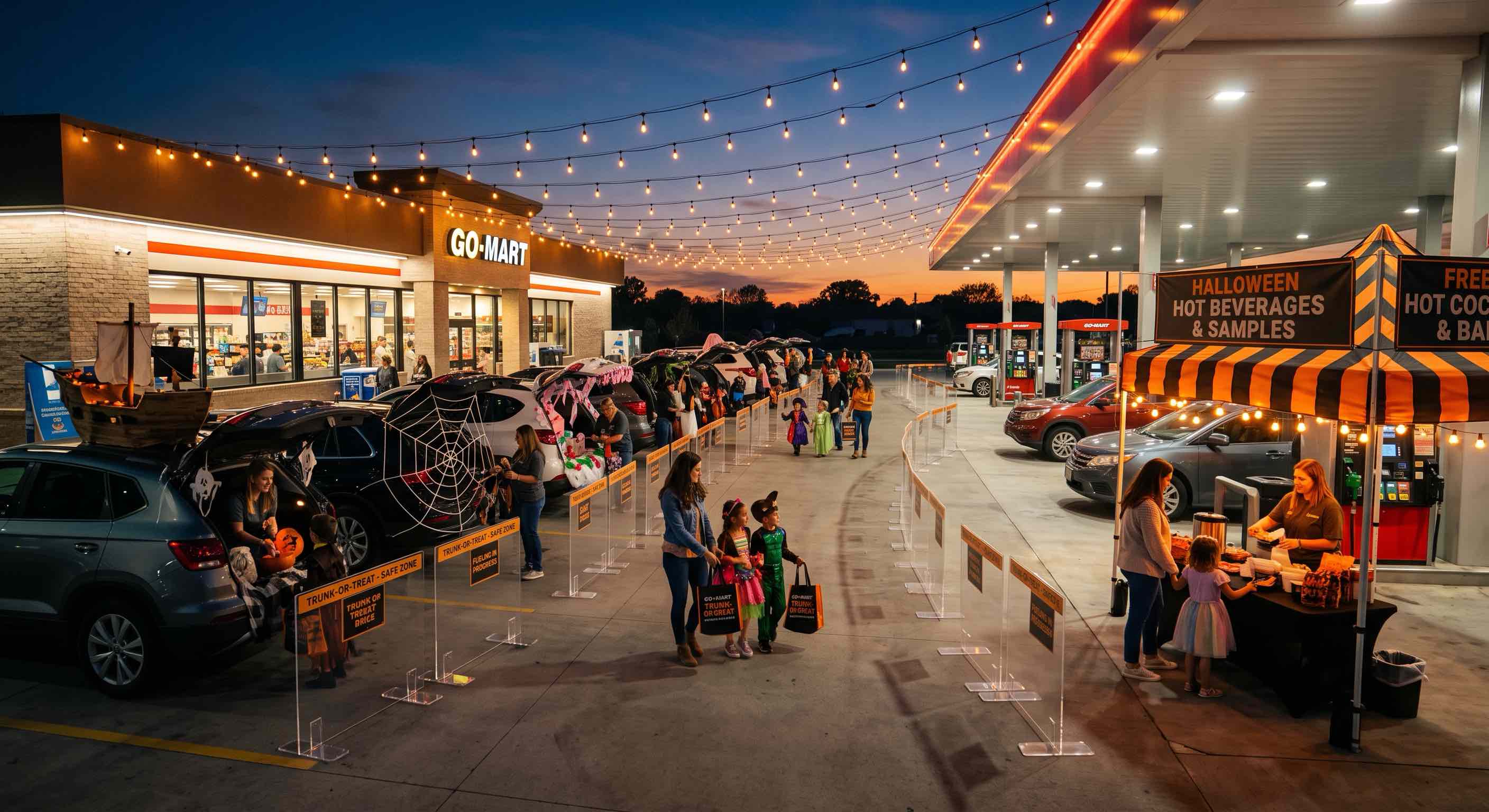
Promotions drive short-term sales, but long-term retention comes from genuine community connection. Traditional door-to-door trick-or-treating has shifted in a lot of neighborhoods, and Trunk-or-Treat events, where local organizations and businesses decorate car trunks and hand out treats in a centralized, well-lit lot, have become the go-to alternative. Search interest for these events is up roughly 45% year-over-year, which tells you families are actively looking for exactly this kind of gathering.
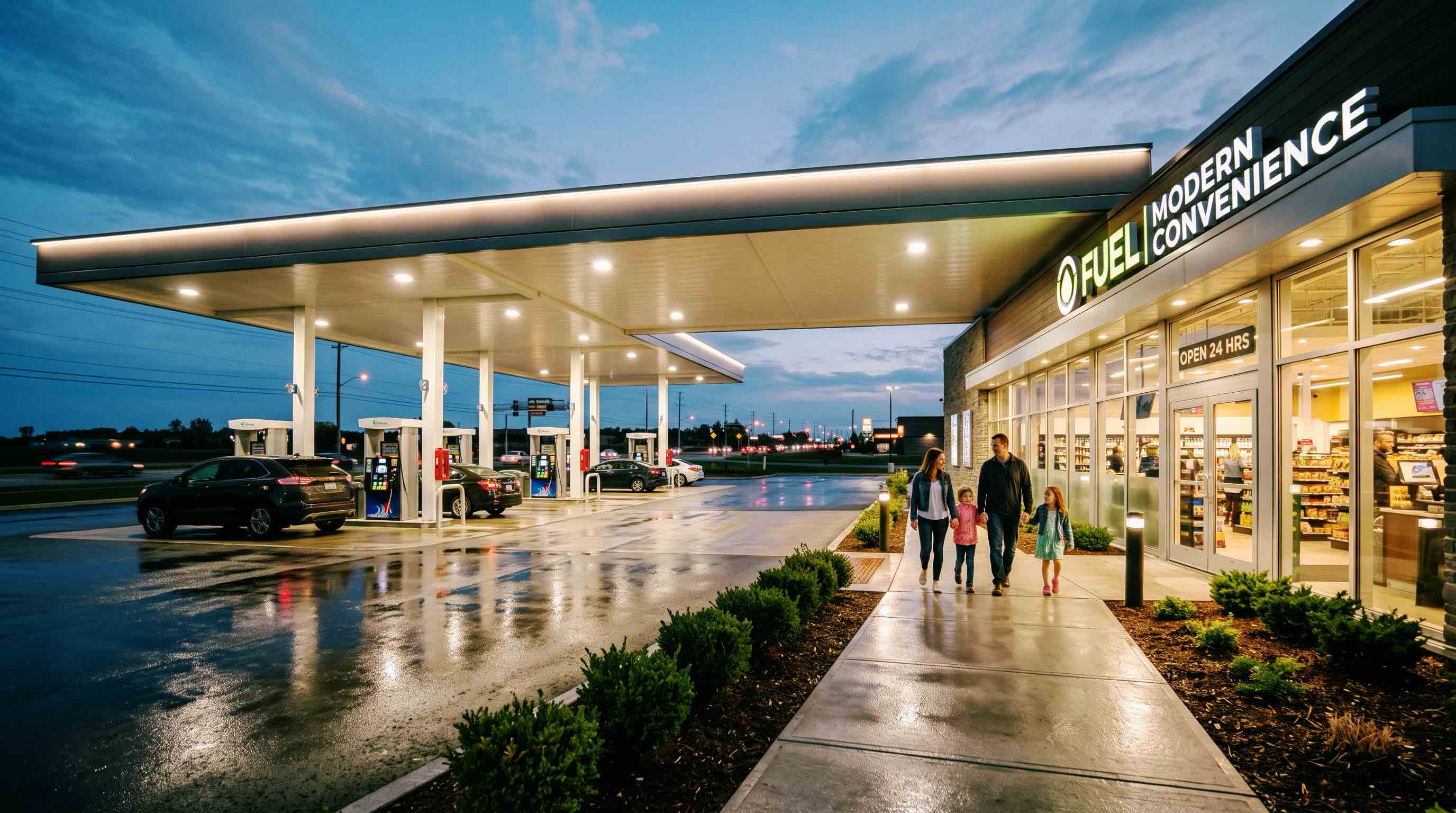
Convenience store operators are well positioned to host or anchor these events. Turning part of your forecourt into a secure community venue for an evening builds local goodwill and puts your store on the map as a neighborhood gathering spot, not just a fuel stop.
What that ecosystem looks like in practice:
- Event activation: a forecourt Trunk-or-Treat in a safe, well-lit space, with costume contests.
- Co-marketing partnerships: local schools, daycares, costume shops, and food banks.
- In-store monetization: safe trick-or-treat kits, bounce-back coupon cards, grab-and-go party bundles.
If you’re planning one, a few operational basics matter:
- Forecourt safety layout. Cordon off the event area completely from active fueling lanes, drive-through paths, and delivery routes with clear barricades and bright lighting.
- Product safety. Require all participating vehicles to hand out factory-sealed, pre-packaged candy and snacks only.
- Branded treat bags. Give families custom treat bags with your store logo and a time-limited bounce-back coupon or QR code redeemable through November.
- Exterior pop-up stations. Set up outdoor stations for hot cocoa, coffee, and cider alongside bakery samples, good hospitality that also encourages parents to step inside.
A few ways to extend that goodwill beyond a single night:
- School and youth sponsorships. Partner with nearby schools or youth groups to co-sponsor fall festivals with co-branded treat bags.
- Cross-merchant promotions. Work with local costume shops or pumpkin patches to exchange flyers and discount codes.
- Food drives. Host an autumn drive for local pantries and offer a small discount in exchange for donations.
- Charity fuel days. Donate a small portion of gas sales during Halloween week to local first responders or youth charities.
What You Should Be Doing: Revenue & Goodwill
- Add app gamification. Digital scratch-offs and reward games help engage the uncommitted, 3.2-store shopper.
- Build tiered daypart bundles. Pair low-labor bakery and savory items with coffee and afternoon drinks across $3/$6/$7/$8 tiers.
- Use pump-topper incentives. Convert fuel-only traffic with quick $1 in-store add-on offers.
- Host a forecourt Trunk-or-Treat. Partner with local schools, distribute branded treat bags, and include November bounce-back coupons.
The Executive Action Plan: Your Phased Roadmap
None of this has to happen all at once, and honestly, it shouldn’t. Here’s a phased roadmap for turning this into something you actually execute across your store footprint, rather than a list of ideas that sits in a folder until November.
Phase 1: Procurement, Layout Prep, and Early Launch
- Install early “Summerween” display sets. Get initial floor shippers and entrance displays up as soon as possible, early exposure drives cumulative spending over the whole season.
- Optimize candy and snack inventory ratios. Expand non-chocolate sugar candy (+41% YoY) alongside core chocolate, and stock private-label snacks for price-sensitive shoppers.
- Position bakery fixtures at coffee stations. Place clean, low-labor single-serve baked goods next to coffee dispensers to lift morning attach rates.
Phase 2: Digital Personalization and Bundling (September)
- Roll out tiered daypart bundles. Launch $3 breakfast, $6 lunch, $7 dinner, and $8 premium deals built around low-labor bakery and savory items.
- Activate loyalty app gamification. Launch scratch-offs, point multipliers, and flavor voting to drive repeat visits.
- Update forecourt and pump-topper signage. Install pump toppers and geofenced notifications with clear $1 add-on offers.
Phase 3: Community Events and Peak Merchandising (October)
- Execute a forecourt Trunk-or-Treat. Host a safe, cordoned event in partnership with local schools, daycares, or nonprofits.
- Run exterior pop-up sampling stations. Set up coffee, cider, and bakery sampling during peak weekend hours.
- Maximize cash-wrap merchandising. Stock checkout risers with bite-sized seasonal candies and single-serve treats.
Phase 4: Post-Holiday Conversion and Analysis (November)
- Track bounce-back coupon redemptions. Measure event ROI and use it to drive November traffic.
- Convert seasonal app users into regulars. Offer tailored post-holiday rewards to retain shoppers acquired through seasonal gamification.
What You Should Be Doing: Immediate Rollout
- Audit your physical fixtures. Check cash wrap risers, coffee island surrounds, and endcaps to confirm you have what you need for high-density merchandising.
- Order seasonal inventory and collateral. Secure non-chocolate candy, single-serve baked goods, and custom Trunk-or-Treat bags with November offers.
- Align your staff. Train associates on bundle pricing, register cross-selling, and supporting forecourt events.
The Bottom Line: There’s More Than “One-Bite” to Halloween
The 2026 convenience retail landscape is both a challenge and an opportunity. With the average shopper regularly moving across 3.2 different store banners a month, relying on fuel pumps or passive signage alone isn’t enough anymore. Today’s shopper is an uncommitted grazer looking for portion-controlled mini-meals, sensory novelty, and a genuinely easy shopping experience.
Halloween’s “one-bite” season is a real chance to turn your store into more than a fuel stop. Four things tend to matter most:
- Foundational awareness: recognizing the value of early “Summerween” displays, the growth in non-chocolate candy (+41%), and the need for private-label options for inflation-conscious shoppers.
- Strategic merchandising: using low-labor single-serve bakery fixtures at coffee stations and cash-wrap risers for savory mini-meals and bite-sized candy.
- Digital and bundling innovation: driving app engagement with gamified features, building tiered daypart bundles, and converting forecourt drivers with pump-to-store offers.
- Community goodwill: hosting a safe, well-lit Trunk-or-Treat and partnering with local schools to turn casual shoppers into regulars.
Thoughtful floor updates and clean merchandising make a real difference, and it doesn’t take a massive footprint or a full kitchen build-out to get there. Smart fixture design, low-labor foodservice, digital personalization, and genuine community involvement go a long way toward capturing the uncommitted shopper and growing basket size.
If you’re getting ready for the season, a good place to start is a walk-through of your own store. Look at your coffee station, your checkout counter, and your forecourt signage with fresh eyes, and ask whether each one is giving a driver a reason to come inside. Is your entrance display cluttered with last spring’s promotional clings, or does it say “something fun is happening here” the moment a car pulls onto the lot? Is your cash wrap doing anything for you at the point of sale, or is it just where the transaction happens to end?
Audit your layout, line up your seasonal inventory, get your loyalty app offers ready, and start planning your forecourt event now, not in mid-October. The operators who move early tend to see it pay off throughout the whole season, not just on the 31st.
Halloween only comes once a year, but the habits it builds, the customers who discover your bakery case, the families who remember your Trunk-or-Treat, the loyalty members who download your app for a scratch-off game, last well beyond November 1. Treat the season as a chance to prove to the uncommitted 3.2-store shopper that your store is worth choosing on purpose, and the payoff will show up on your P&L long after the candy aisle comes down.
Leave a Reply