and the Evolution of the Rural Convenience Store
If you’ve been paying attention to the convenience store industry over the last few years, you’ve likely felt a seismic shift beneath your feet. We’re operating in 2026, and the old rules of retail simply don’t apply anymore. For decades, the c-store model was predicated on one thing: speed. Get the customer in, get them their fuel, sell them a soda or a pack of cigarettes, and get them out.
But as an industry partner who has spent years supplying the cabinetry, foodservice equipment, design layouts, and interior graphics for some of the highest-performing locations in the country, I’m seeing a massive divergence in the market. Urban stores are doubling down on frictionless, highly transactional models, sometimes even removing seating entirely to prioritize digital orders. Meanwhile, operators in rural, suburban, and neighborhood settings are discovering a completely different path to profitability. They’re transforming their stores from simple retail outposts into the beating civic hearts of their communities.
The reality is that traditional community gathering spaces, the local diners, the neighborhood pubs, the barbershops, and the community centers, are closing at a notable rate. For operators willing to adapt, this shift presents one of the more significant business opportunities in the modern history of our industry. When a town loses its traditional gathering spaces, the local convenience store is uniquely positioned to fill that void, capturing meaningfully higher foot traffic, driving increases in basket size, and building durable customer loyalty.
In this guide, I’m going to walk you through exactly how to think about and capitalize on this shift, across four pillars:
- The Foundational Landscape: the sociological and economic trends driving this shift, and why your store is uniquely positioned to benefit.
- Strategic & Operational Execution: the design, layout, and fixture decisions that separate thriving community hubs from stores that just happen to sell gas.
- Innovation & Profit Maximization: the high-margin foodservice, beverage, and technology strategies that turn dwell time into dollars.
- The Executive Action Plan: a prioritized, 30-day roadmap to begin your store’s transformation, starting this week.
By the end of this post, you’ll understand not just why community-focused convenience stores are outperforming their transactional counterparts, but how to start making that shift in your own store, regardless of your current footprint, budget, or market size.
If you want to stop competing purely on gas margins and start building a store your community can’t imagine their week without, let’s get to work.
The Foundational Landscape
To understand why community-focused c-stores are thriving, we have to understand what our customers are actually looking for when they walk through our doors. Sociologists refer to community gathering spots as “third places“, environments that exist outside of the home (the first place) and the workplace (the second place).
The Crisis of the Disappearing Third Place
Historically, third places were the bedrock of American civic life. They were the accessible, unpretentious spots where people could grab a coffee, bump into a neighbor, and engage in low-stakes conversation. Over the last decade, a combination of economic pressure, shifting post-pandemic habits, and the rise of digital ordering has caused many of these venues to close at a rate researchers describe as historically high.
This is particularly acute in rural and non-metropolitan areas. When a third place closes in a major city, a resident can usually walk a few blocks to find another one. But when a small town loses its only diner or independent grocery store, it creates a lasting void. The community loses a primary venue for social connection, and researchers, including the U.S. Surgeon General’s 2023 advisory on loneliness and isolation, have drawn comparisons between the health impact of chronic social isolation and other well-known public health risks. Whether or not you find that comparison persuasive, the underlying trend is well documented: people have fewer casual, everyday places to gather than they did a generation ago.
Bonding vs. Bridging Social Capital
Why does this matter to you as a convenience store operator? Because human beings have an innate need for what sociologists call “bridging social capital.”
Bonding social capital is the deep connection we have with close family and friends. Bridging social capital, by contrast, is built through “weak ties”, casual, everyday interactions with people you recognize but don’t know personally, like the person pouring coffee next to you or the cashier you see three times a week. These small interactions expose us to new ideas, reduce stress, and reinforce a sense of belonging to a community.
Because everyone in town needs fuel, milk, and basic goods, your convenience store is one of the few genuine social levelers left. You attract the landowner, the local teacher, the tradesman, and the high school student, and put them in the same physical space. By simply providing an environment where these people can comfortably interact, your store can become one of the primary generators of bridging social capital in your market.
The Business Case for Being a Hub
This isn’t just a feel-good argument, it’s an economic one. Research on third places has found that “meaningful use”, generally defined as spending roughly 10 to 30 minutes interacting with others in a space, is closely tied to a person’s sense of community well-being. When customers start to view your store as a destination rather than a quick stop, your average “dwell time” increases accordingly.
Increased dwell time correlates directly with larger basket sizes, more impulse purchases, and more frequent visits. Regional players like Casey’s have built substantial businesses on a version of this premise, using made-to-order food programs to position their stores as daily destinations rather than pure fueling stops, a model worth studying regardless of your store’s size or region.
What You Should Be Doing
- Audit your mindset. Stop viewing your store as a purely transactional space. Your physical footprint is a piece of local social infrastructure, whether you’ve designed it that way or not.
- Evaluate your demographics. Understand the specific void your community is facing. Has a local diner closed recently? Is there a lack of early-morning meeting spots for local tradespeople or commuters?
- Embrace the “host” mentality. Train yourself and your management team to think of customers as guests in a “home away from home”, setting a tone that encourages them to linger rather than rush.
Strategic & Operational Execution

Understanding the theory of third places is only the first step. To actually capture the financial upside, you have to execute operationally. As someone who designs and outfits these spaces for a living, I can tell you plainly: a store’s layout dictates customer behavior. You can’t expect people to socialize if your store is designed solely for rapid egress.
Designing for Dwell Time
In urban environments, many operators are tightening aisles, removing seating, and installing banks of self-checkout kiosks to move people through faster. If you want to be a community anchor, you generally need to do the opposite. That means carving out valuable retail square footage and dedicating it to physical comfort.
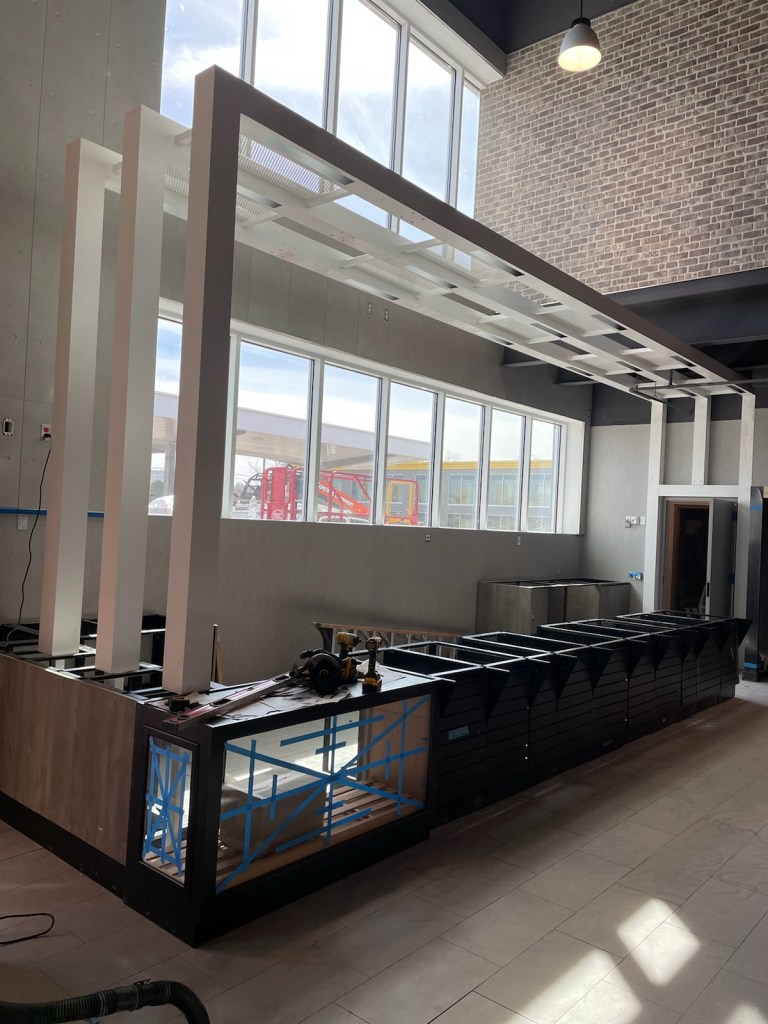
This could mean a cluster of high-top tables, a few booths, or an extended countertop near your coffee station, anything that gives customers explicit permission to sit down and shift from “shopper” to “regular.” The cabinetry and fixtures around these seating areas should feel warm and intentional, favoring wood tones or clean modern laminates over sterile, industrial metal finishes.
Lighting, Flow, and Fixtures
The physical flow of your store has to balance two different customers: the grab-and-go commuter and the person who wants to stay for thirty minutes. A practical approach is to keep high-velocity items (grab-and-go coolers, immediate snacks) near the entrance and registers, and push seating areas, fresh food counters, and premium coffee bars deeper into the store, ideally near natural light.
Lighting matters more than most operators expect. Harsh fluorescent overheads signal “get in, get out.” Layered lighting, softer, warmer fixtures over seating areas and coffee bars, creates smaller, cozier zones within the larger retail floor, even in a compact footprint.
The Community Bulletin Board
It sounds old-school, but in an era saturated with digital noise, the physical community bulletin board has genuinely made a comeback in many small-town and neighborhood stores.
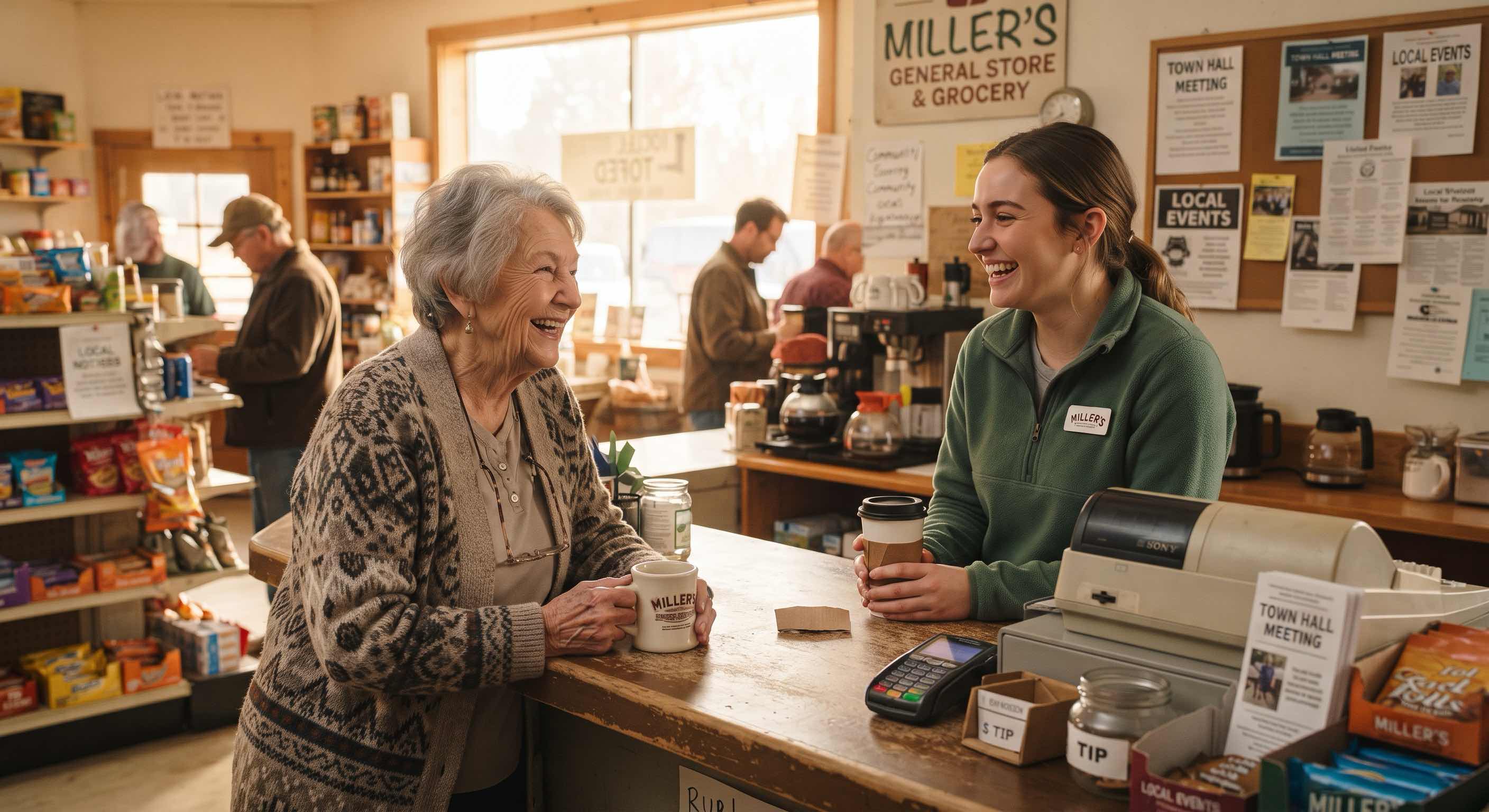
A well-lit, cleanly framed community board anchors your store in the physical reality of the neighborhood. It becomes the place people check for handyman services, school event flyers, and local fundraisers. That drives habitual foot traffic, people stopping by just to see what’s new, and most of them will pick up a coffee or a snack while they’re there.
What You Should Be Doing
- Carve out seating. Dedicate at least a small portion of your footprint to comfortable seating with clear sightlines and good lighting.
- Upgrade your finishes. Work with your design and equipment vendors to refresh the cabinetry and countertops around food and beverage stations so they read as intentional, not incidental.
- Install a bulletin board. Mount a well-built, physical community board in a high-traffic area, and actively manage it so the content stays current.
- Optimize store flow. Separate the “fast path” (commuters) from the “slow path” (hot food, seated customers) to reduce bottlenecks and frustration for both groups.
Innovation & Profit Maximization
Once you’ve established the right environment, it’s time to convert that dwell time into revenue. The longer a customer stays in your store, the more likely they are to cross into your highest-margin categories, but only if those categories are worth staying for.
The Foodservice Revolution
The days of the rolling hot dog as the pinnacle of c-store cuisine are largely over in stores that are winning on this strategy. To meaningfully replace a lost third place, you need at least one destination-worthy food offering.
Casey’s made-to-order pizza program is the most commonly cited example of this shift, it repositioned rural convenience stores as a legitimate dinner option, capturing both the breakfast and evening rush in towns that had lost their local diner. You don’t need a full pizzeria operation to benefit from the same principle. You need one signature, genuinely good fresh food item that gives people a reason to choose your store over a competitor’s.
Talk to your equipment partners about ventless fryers, rapid-cook ovens, or upgraded heated display cabinets. Whether it’s fresh-baked pastries, a solid breakfast sandwich program, or a fried chicken offering worth the drive, the food needs to be good enough on its own merits, the comfortable seating area is what turns a good purchase into a daily habit.
The Coffee Experience
Coffee is arguably the lifeblood of the modern third place: high-frequency, high-margin, and closely tied to customer perception of your whole store.
A basic drip station tucked in a dark corner undersells the opportunity. A well-designed, well-lit coffee bar with clean cabinetry and clear signage does more work than most operators expect. Bean-to-cup machines that offer specialty beverages; lattes, cappuccinos, cold brew on tap, let you compete for the customer who might otherwise spend $5–6 at a dedicated café, by offering a comparable product in a faster, more accessible setting.
Beverage, Snacking, and Local Sourcing
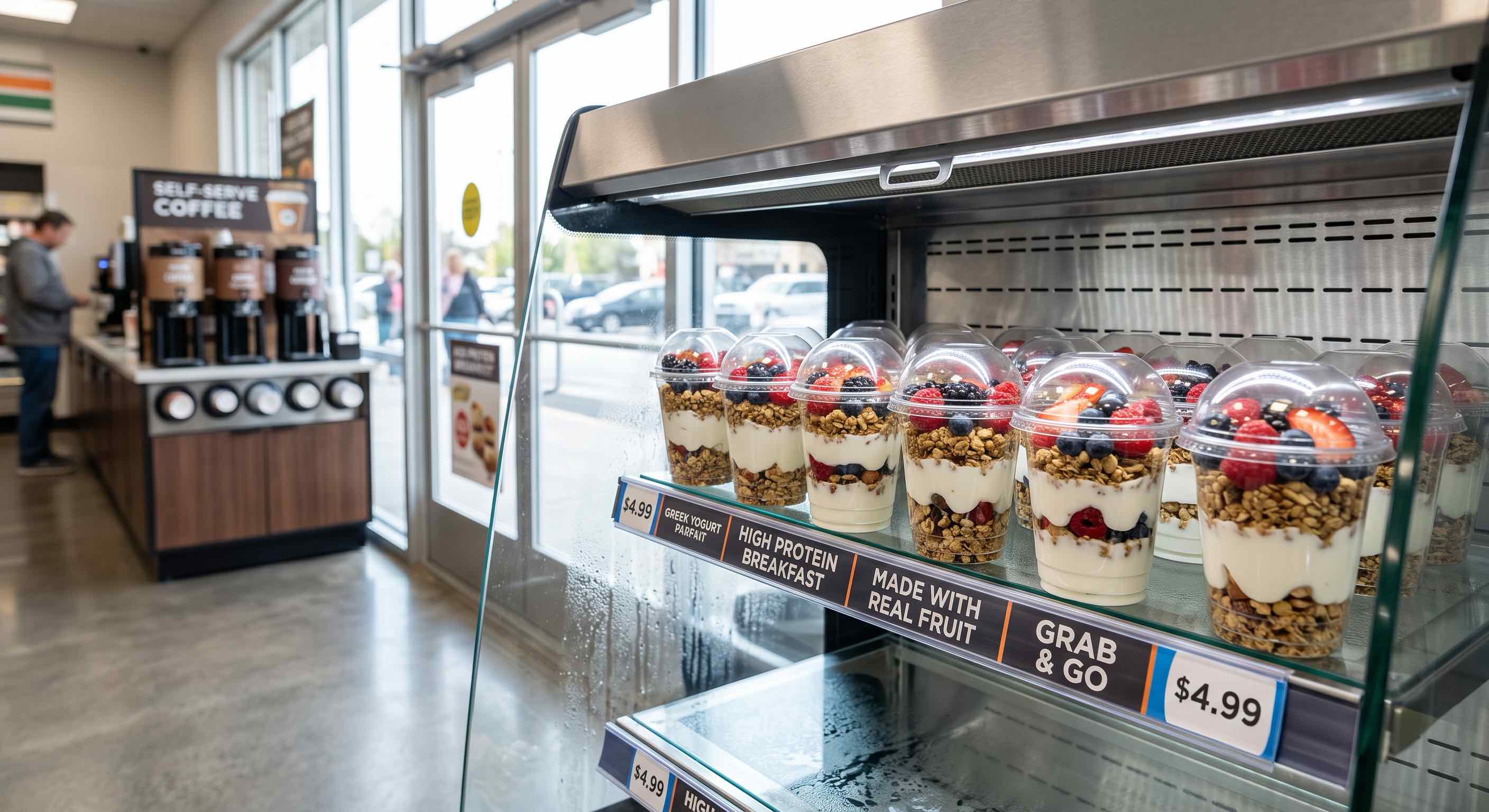
Foodservice and coffee get most of the attention, but the categories around them matter too. Better-for-you snacking (protein bars, fresh fruit cups, higher-quality grab-and-go options) has grown steadily as a category over the past several years, and it pairs naturally with a health-conscious coffee crowd. Consider a small “local” shelf or cooler section, baked goods from a nearby bakery, honey or preserves from a local producer, which reinforces the community-hub positioning in a way a purely national assortment can’t. It also gives you a low-cost story to tell on your bulletin board and in local marketing.
The Automation Paradox

The industry is currently focused on automation and “unmanned” store formats to address labor shortages and tight margins. These technologies can be genuinely efficient, but they carry a real trade-off: they reduce the human interaction that builds loyalty.
An unmanned kiosk can dispense calories efficiently, but it can’t ask a regular how their week is going. It doesn’t build bridging social capital. Use technology where it makes sense, inventory management, back-office operations, self-checkout for the pure commuter crowd, but protect the human interaction at your food counters and primary registers. Your staff are effectively the hosts of your third place; don’t automate them out of the role entirely.
What You Should Be Doing
- Launch a signature food item. Pick one fresh food category (pizza, breakfast sandwiches, fried chicken) and execute it noticeably better than anyone else within a five-mile radius.
- Elevate the coffee bar. Treat it like a small café: meticulously clean, well-stocked, and visually distinct from the rest of the store.
- Add a local or better-for-you shelf. A small, rotating selection of local or higher-quality products reinforces your community positioning at low cost.
- Balance tech with touch. Use technology to run efficient back-of-house operations, but keep friendly, engaged staff visible and available at your food and beverage counters.
- Train for hospitality. Coach employees to recognize regulars, learn names where possible, and engage in the low-key, easy conversation that defines a good third place.
The Executive Action Plan
Information is only useful if you act on it. If you’re ready to move your store from a transactional stop toward a genuine community hub, here’s a structured 30-day starting point.
Week 1: Foundation and Audit
- Days 1–3: Walk through your own front doors as if you were a first-time customer. Is the lighting welcoming? Is there anywhere to comfortably sit or stand? Does the food area look appetizing?
- Days 4–7: Talk to five to ten regulars. Ask what they feel the neighborhood is missing, and whether better seating, food, or coffee would change how often, or how long, they visit.
Week 2: Design and Equipment Strategy
- Days 8–10: Review your floor plan with your design or equipment partner. Identify underperforming aisles or dead zones that could become a seating area or an upgraded coffee bar.
- Days 11–14: Select the equipment needed to elevate your priority categories, rapid-cook ovens, bean-to-cup coffee machines, and the cabinetry needed to make those stations feel intentional and permanent rather than bolted on.
Week 3: Staffing and Culture Shift
- Days 15–18: Hold a team meeting to explain the new direction. Reframe the role: staff aren’t just running registers, they’re hosting a space the community relies on. Introduce the ideas of bridging social capital and the value of recognizing regulars.
- Days 19–21: Run hands-on training on any new equipment or beverage program. Confident, well-trained staff are essential, nothing undercuts a café-style atmosphere faster than a stressed employee fumbling through an unfamiliar machine.
Week 4: Launch and Local Integration
- Days 22–25: Install the physical signals of change, the new bulletin board, the seating area, warmer lighting, and make sure the store is spotless for launch.
- Days 26–30: Launch your new offerings with a hyper-local push. Reach out to the local high school, volunteer fire department, and nearby businesses with an introductory offer on your new coffee or food program. Once people experience the new environment firsthand, repeat visits tend to follow.
What You Should Be Doing
- Commit to the timeline. Schedule your Week 1 audit this week, not “eventually.”
- Involve your team early. The culture shift will stall if employees aren’t part of the process from the start.
- Measure your baseline now. Track foot traffic, dwell time, average basket size, and coffee sales today so you can measure real ROI a month from now.
Frequently Asked Questions
What is a “third place” in the context of a convenience store? A third place is a gathering space outside of home and work, traditionally a diner, pub, or café, where people connect through casual, low-stakes interaction. A convenience store can take on this role by adding comfortable seating, quality food and coffee, and a welcoming layout.
Do I need a large store to become a community hub? No. Many of the highest-impact changes, better lighting, a small seating cluster, a community bulletin board, an upgraded coffee station, can be implemented in a modest footprint. The goal is a few well-designed zones, not a wholesale redesign.
What’s the fastest way to start without a full renovation budget? Start with the lowest-cost, highest-visibility changes: install a physical community bulletin board, improve lighting over your existing coffee station, and train staff to engage more with regulars. These require little to no construction and can be done within your first 30 days.
How does this affect basket size and revenue? Longer dwell time is consistently associated with higher basket sizes, more impulse purchases, and more frequent visits, because customers who linger are more likely to add a coffee, snack, or food item to a purchase they’d otherwise make quickly.
Should I remove self-checkout to focus on community building? Not necessarily. Self-checkout can still serve your commuter and grab-and-go traffic efficiently. The key is making sure it doesn’t replace human interaction at your food counters and primary registers, where the relationship-building actually happens.
The Bottom Line: Social Capital
The 2026 convenience retail landscape is splitting in two directions. One path is a race toward speed, automation, and the lowest possible fuel price, a model that can work, but one that competes almost entirely on margin. The other path steps into the void left by disappearing social infrastructure and positions your store as something closer to indispensable.
Across the four pillars in this guide, the throughline is the same: understand why your customers are looking for connection, design your physical space to support it, monetize the resulting dwell time through food, coffee, and thoughtful category choices, and execute the shift deliberately rather than hoping it happens on its own.
None of this requires abandoning efficiency. You can still run a tight, well-managed operation with strong margins on fuel and grab-and-go categories. What changes is the addition of a few deliberately designed spaces and habits, a coffee bar worth lingering at, a bulletin board worth checking, staff who recognize your regulars, that turn routine visits into daily habits.
You already have the footprint and the daily traffic that most local businesses would envy. The next step is deciding which of these changes to tackle first. Start with the Week 1 audit in this guide: walk your own store as a first-time customer would, and talk to a handful of regulars about what they’d want to see. That single exercise will usually tell you more about your next investment than any industry report, including this one.
Leave a Reply