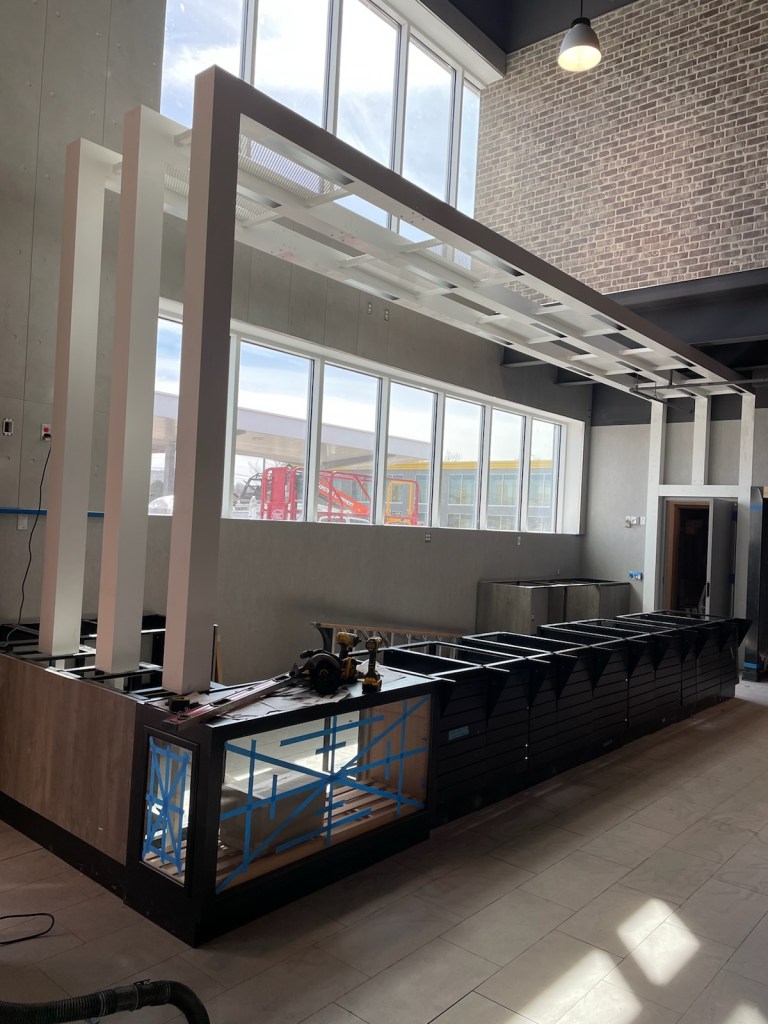
How Loyalty, Smart Store Design, and Foodservice Drive Foot Traffic, Basket Size, and a 20% Sales Lift
Every convenience store owner knows the feeling of watching a driver fill up, tap a card, and pull away without ever glancing at the front door. That customer spent money with you, but they skipped the part of your business where the real profit lives. Multiply that by hundreds of fill-ups a week, and you can see how much opportunity drives right off the lot.
I work with c-store operators on layouts, foodservice equipment, and merchandising, so I spend a lot of time watching how customers actually move through stores. What I keep noticing is that the stores winning today treat the pumps, the counter, the kitchen, and the app as one connected experience. This guide explains how that connection works and how you can build it at your own pace.
The old model is fading. For decades, fuel was a near-guaranteed pipeline of inside traffic: price competitively, turn the dispensers, and count on a steady share of drivers coming in for a fountain drink, a pack of gum, or tobacco. Today, more efficient engines, volatile wholesale prices, pay-at-the-pump habits, and a growing number of electric vehicles are weakening that link. Fuel alone can no longer carry your foot traffic.
The math makes the stakes clear. Motor fuel typically accounts for roughly 60% to 65% of a store’s revenue, yet it delivers just under 40% of gross profit dollars. Your profit lives inside, where prepared food, dispensed beverages, and packaged goods commonly earn margins from the mid-30s to well over 60%, depending on the category.
Customer behavior is shifting at the same time. Retail mobility tracking cited by Paytronix shows the average consumer now visits 3.2 different convenience store brands each month, a 17% jump year over year. Shoppers choose based on route convenience, digital offers, cleanliness, and how appealing the food looks. Loyalty to the store on the morning commute can no longer be assumed.
That shift creates a real opening for independent operators. Paytronix benchmark reporting indicates that c-stores running modern, data-driven loyalty programs see a sustained lift in overall sales of 20% or more, and enrolled members spend about 38% more per transaction than unenrolled shoppers. The same reporting found that location-aware digital ordering can add roughly $2.30 in prepared food sales to fueling transactions that previously produced no inside sale. These are industry benchmarks, not guarantees, so your results will depend on execution.
Execution is the hard part. A 20% lift will not come from a paper punch card or a static two-cents-off fuel discount. It comes from connecting your digital loyalty tools to your physical store, so that the pump, the counter, the kitchen, and the seating area all work toward the same goal: giving customers a reason to come inside, spend more, and return.
You also do not need a national chain’s budget. Many of the changes in this guide are layout adjustments, staff training, and smarter messaging, and you can phase in the larger investments as the numbers justify them. Independent operators have an advantage chains cannot copy: you are a real part of your community.
Here is what you will learn in this guide:
- The Foundational Landscape: why fuel-only thinking falls short, where a loyalty-driven sales lift comes from, and why the first four visits matter so much.
- Strategic and Operational Execution: how to connect your forecourt, POS, and kitchen, set up your cashwrap for fast loyalty checkout, and turn cashiers into enrollment advocates.
- Innovation and Profit Maximization: how to build a “third place” environment, use foodservice and beverage programs to defend margins, fund promotions with vendor scan data, and earn local goodwill.
- The Executive Action Plan: a prioritized 30-day roadmap you can start this week.
Each major strategy ends with a short “What You Should Be Doing” checklist that you can hand directly to your store manager.
The Foundational Landscape: Why Loyalty Drives the 20% Lift
Before changing anything in your store, it helps to understand the forces behind today’s foot traffic. Why do traditional models fall short, and why does a strong loyalty program move sales so much? The answers shape every decision in the rest of this guide.
The Margin Inversion: Inside Sales Carry Your Profit
The classic c-store model leaned on fuel volume to support retail margins. If you pumped enough gallons, the store was considered healthy. Today that model has inverted.
The split looks like this:
- Motor fuel: roughly 60% to 65% of revenue, but just under 40% of gross profit.
- In-store merchandise and foodservice: roughly 35% to 40% of revenue, but about 60% of gross profit.
These are broad industry averages, and your own mix will differ. Fuel margins are exposed to wholesale volatility, card swipe fees, and price-sensitive drivers. Meanwhile, more motorists pay at the dispenser and leave without ever seeing your windows.
When fuel produces less than 40% of your gross profit despite generating most of your revenue, inside conversion becomes the main lever on profitability. A 20% sales lift does not mean convincing drivers to burn 20% more gasoline. It means pulling more of them across the lot and through your doors.
Where the 20% Sales Lift Actually Comes From
When reports credit loyalty programs with a 20% or higher sales lift, operators rightly ask where the revenue originates. The answer is habit formation and spend expansion.
Paytronix data shows enrolled members spend roughly 38% more per transaction than non-enrolled walk-in shoppers. That is not a small tweak. It reflects a different relationship with your brand.
When customers know they are earning points or working toward a free beverage, price resistance softens. They add an extra item, upgrade from a medium coffee to a large, or try a warm sandwich from the grab-and-go case. Compounded across hundreds of active members over a year, that spending premium is what builds a top-line lift of this size.
The Uncommitted Customer: Understanding the 3.2-Store Shopper
Your biggest competitive threat is probably not a big-box retailer across town. It is the fact that your regulars are already splitting their spending among three or more c-store brands each month.
Picture a typical commuter. On Monday they fuel at your pumps because your price is sharp. On Tuesday they stop at a competitor for a breakfast sandwich they like better. On Thursday they pull into a third store for an energy drink because the lot is clean and the building looks modern.
This shopper is looking for value, consistency, and a better physical experience. If your store presents itself as a box of packaged snacks, you stay stuck in their rotation. A well-designed loyalty program gives them a behavioral reason to consolidate those scattered trips into one stop.
The Fourth-Visit Milestone
One of the most useful findings in Paytronix’s research concerns the retention curve in the first few visits. Across retail, fewer than half of first-time shoppers ever make a second purchase at the same brand. For an uncommitted c-store customer, a return visit is close to a coin flip.
However, the research indicates that once a customer completes a fourth visit, the likelihood of a fifth climbs to about 95%. The fourth visit is the tipping point where a visitor becomes a regular. The same research reports that customers who visit ten or more times per year can be worth many times more over their lifetime than one-time shoppers, with Paytronix citing a figure of 27 times.
This changes how you should think about rewards. Your program is not an open-ended discount fund. It is an onboarding engine designed to move a new shopper through four visits as quickly as possible.
Here is how a typical walk-in shopper compares with an enrolled loyalty member:
- Average transaction: baseline for walk-ins, and about 38% higher for members.
- Return after the first visit: under 50% for walk-ins, while members are guided back by automated reminders.
- Retention after the fourth visit: unpredictable for walk-ins, and about 95% likelihood of returning for members who reach it.
- Customer lifetime value: baseline for walk-ins, and up to 27 times higher for frequent visitors, according to Paytronix.
- Pump-to-store conversion: fuel-only checkout is common for walk-ins, while location-aware ordering can add about $2.30 in food sales per fueling transaction.
What You Should Be Doing: Audit Your Footprint and Loyalty Economics
- Calculate your forecourt conversion rate. Divide daily inside transactions by daily fueling transactions. If fewer than one in three drivers comes inside, make pump-to-store conversion your top priority.
- Compare member and non-member baskets. Pull your POS reports and note the difference in average ticket size between loyalty members and everyone else.
- Map your competitive density. List every c-store, coffee shop, and fast-food operator within three miles. That is where your 3.2-store shoppers are spending the rest of their money.
- Build a four-visit funnel. Plan messages and offers that reward a customer’s second, third, and fourth visits within their first 30 days.
Strategic and Operational Execution: Turning Forecourt Transients into Inside Shoppers
Understanding the economics is step one. Step two is aligning your technology, store layout, and team so the strategy works every day. A loyalty app cannot rescue a slow checkout or a frustrating store, so the digital and physical sides must work together.

Connecting the Tech: Forecourt Controllers and POS Integration
Your loyalty platform cannot operate in isolation. If a customer has to tap through several screens, wait for an app to load, or hand a phone to a cashier who is unsure how to scan it, the program stalls at the register.
Most modern c-store setups run on a site controller or POS ecosystem such as Verifone Commander or Gilbarco Passport. These systems tie together fuel pricing, forecourt payments, kitchen displays, and back-office accounting. Your loyalty platform should plug into that network rather than sit beside it.
When you evaluate or configure loyalty technology, confirm that it offers:
- Sub-second customer identification. Whether the shopper scans a 2D barcode on their phone or types a mobile number on the PIN pad, the lookup should happen almost instantly without interrupting the cashier’s flow.
- Two-way data communication. The POS should recognize member status, apply eligible discounts automatically, and report transaction details to your cloud database in near real time.
- Kitchen display synchronization. If a member orders a breakfast sandwich through the app while standing at the dispenser, the ticket should appear on your kitchen display immediately, so rush periods do not create bottlenecks.
What You Should Be Doing: Verify Your Technology Stack
- Ask your POS technician or software provider whether your controller supports open-architecture loyalty integration, 2D scanning, and scan-data feeds.
- Confirm your loyalty protocols and software are on current versions.
- Test a mobile-order ticket from app to kitchen display during a slow hour before you promote the feature.
Cashwrap Design: Where Loyalty Succeeds or Stalls
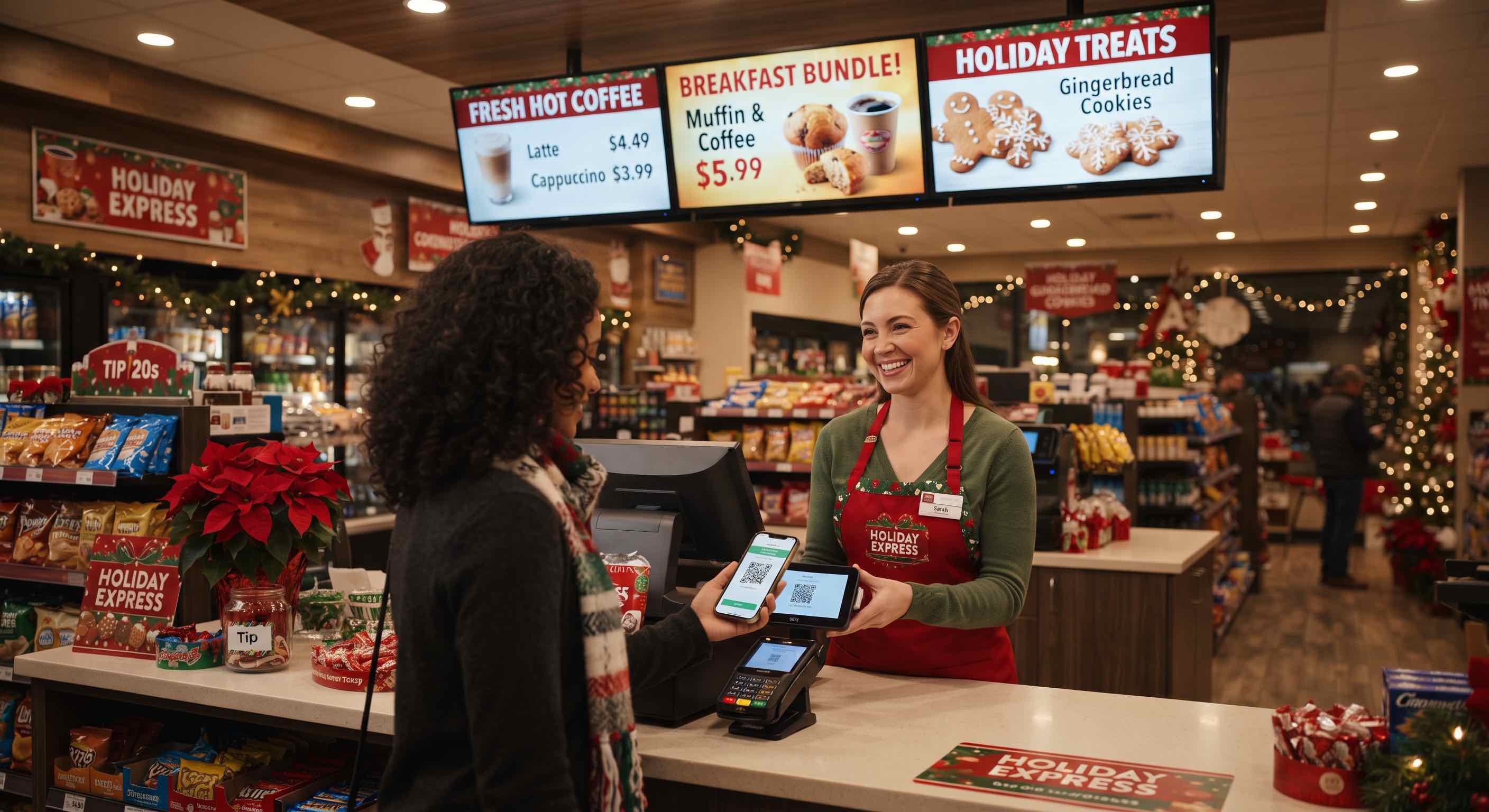
From a store design standpoint, the cashwrap is often where a loyalty program either works smoothly or falls apart. A counter cluttered with third-party displays and loose merchandise creates two problems: customers cannot tell where to scan, and cashiers feel overwhelmed.
A high-throughput counter follows a simple flow. Customers enter the queue, pass an impulse and grab-and-go merchandising zone, reach a clear checkout station, and then move to an uncluttered pickup area with a direct exit path. Every step should reduce friction.
Several design details make a measurable difference:
- Dedicated scanner landing zones. Mount customer-facing 2D scanners at a natural angle, often recessed into the counter, so shoppers can scan a phone screen without fumbling or dropping it.
- Hidden cabling. Route power and data lines through interior raceways. A tidy counter keeps transactions moving and lets cashiers focus on the customer.
- Eye-level value messaging. Place simple, high-contrast signage beside the payment terminal with a clear benefit, such as “Scan your app or enter your phone number to save 10¢ a gallon today.”
These changes are modest, but they remove the small points of friction that make customers skip the loyalty prompt.
What You Should Be Doing: Optimize Your Checkout Counter
- Run a peak-hour speed test. Time 20 consecutive transactions during your morning rush. If manual loyalty lookups or clutter push times past roughly 45 seconds, rework the counter.
- Clear the clutter. Remove loose displays and secure every cord.
- Add a fixed, customer-facing 2D scanner so cashiers do not have to handle customers’ phones.
- Post one clear benefit message at eye level beside the PIN pad.
The Pump-to-Store Bridge: Capturing the Incremental $2.30
The space between your dispensers and your front door is one of the most valuable zones on your property. Paytronix data indicates that retailers using location-aware mobile apps and digital ordering can add about $2.30 in prepared food sales per fueling transaction. While a driver is pumping, you have their attention for a few minutes.
Use that time on purpose:
- Geofenced notifications. When a registered member pulls onto your lot, send a message such as “Your favorite roast is ready. Add a breakfast sandwich and pick it up inside in three minutes.”
- Dispenser screen prompts. Feature high-margin food items on the pump screen, paired with a QR code that applies an instant fuel discount when scanned.
- Clear sightlines. Walk out to dispenser six and look at your building. Can you see a bright, welcoming food counter, or are your windows covered in faded paper signs? Clean glass and warm interior lighting give drivers a reason to walk in.
What You Should Be Doing: Build the Pump-to-Store Bridge
- Clear your front windows of old signage and confirm your food counter is visible from the pumps.
- Ask your loyalty provider whether geofenced push notifications are available and how they are configured.
- Add a pump-screen or canopy QR prompt tied to a specific food or beverage offer.
Cashier Ambassadorship: Turning Clerks into Loyalty Advocates
Even the best equipment will underperform if your team does not invite customers into the program. Too often, cashiers ask a flat question: “Are you a rewards member?” When the customer says no, the conversation ends.
Customers are focused on getting in and out, so they rarely sign up unless the benefit is clear and immediate. Compare two approaches:
- Ineffective: “Do you want to sign up for our rewards card today?”
- Effective: “Are you putting your phone number in to save $1.50 on that combo?”
The second version leads with the value, takes a few seconds, and makes saying yes easy. Training your team to deliver it consistently is one of the lowest-cost changes in this guide.
Several practices help build real ambassadors:
- Fund an enrollment incentive. Many operators pay a small bonus, such as $1.00, for each verified new sign-up. At that rate, a cashier who enrolls 15 to 20 customers in a shift earns a meaningful extra. Many retailers estimate customer acquisition costs at several dollars or more per member, so a small bonus can be efficient. Consider paying only on accounts that complete a purchase, and check with your payroll provider on how to handle the bonus.
- Teach a ten-second pitch. Lead with the immediate reward: “Type your mobile number on the pad and your coffee is 99¢ today.”
- Run friendly contests. Post a weekly sign-up leaderboard in the break room and reward top performers with gas cards, lunch credits, or schedule preferences.
What You Should Be Doing: Launch Your Cashier Enrollment Program
- Roll out a per-enrollment bonus this week and track results openly.
- Give every cashier one scripted, benefit-first pitch to practice.
- Recognize the top enrollers publicly each week.
Innovation and Profit Maximization: The Third Place, Foodservice, and Margin Defense

Once your operations run smoothly, you can focus on the categories and experiences that set you apart. This is where store design, equipment decisions, and loyalty mechanics work together to build a real competitive advantage.
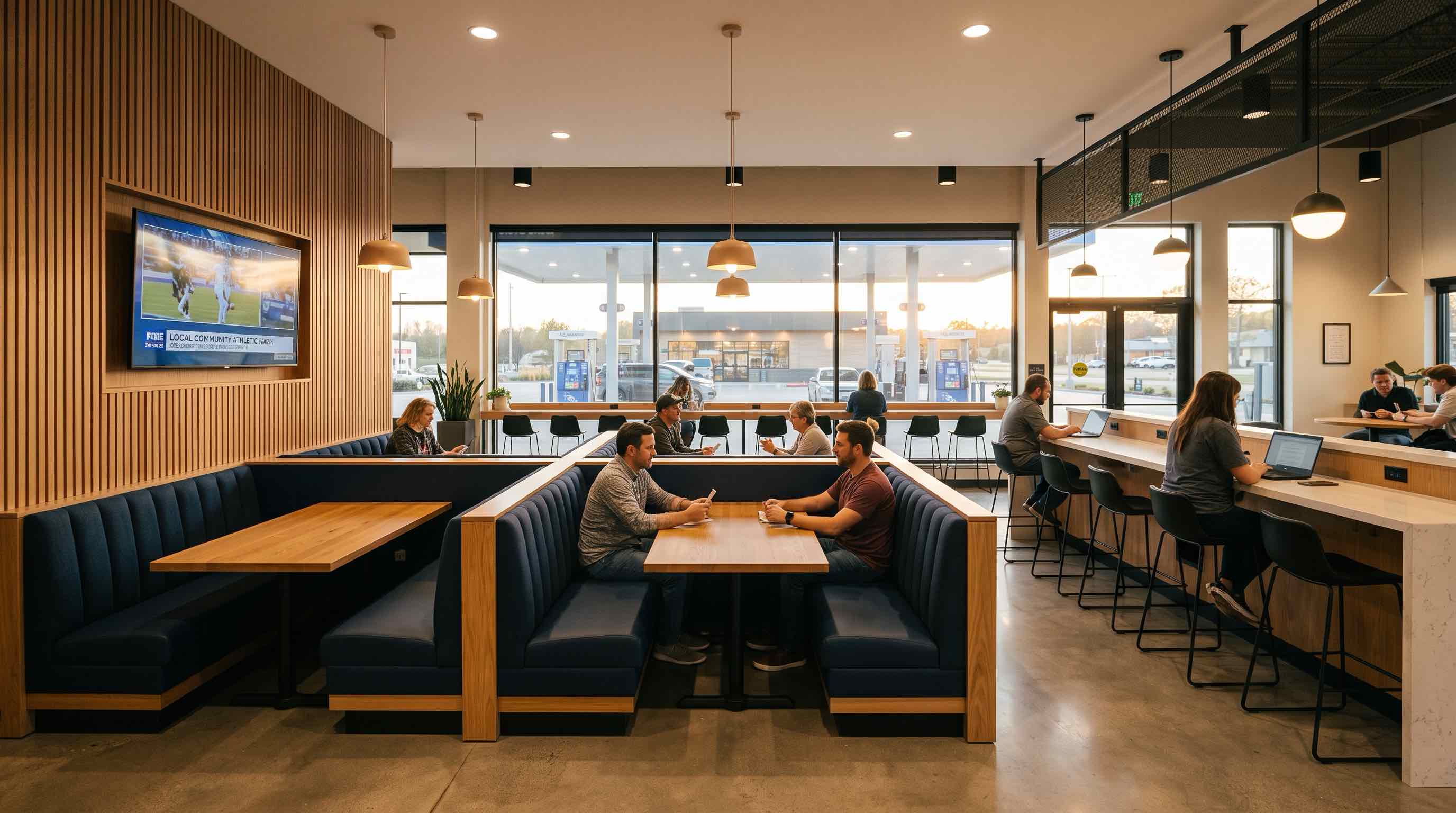
The “Third Place” Evolution: Making Your Store a Community Gathering Spot
For decades, the c-store was engineered around one goal: speed. Park, grab, pay, and leave in three or four minutes. Speed still matters, but if it is the only thing you offer, you are a commodity, and an uncommitted customer will stop at whichever store is most convenient on their route.
Leading operators are borrowing sociologist Ray Oldenburg’s idea of the “third place,” a welcoming spot distinct from home and work where people can pause and feel at ease. Paytronix reporting points to retailers pairing quality foodservice with comfortable seating, wall-mounted televisions, pet-friendly outdoor areas, and even gaming spaces. Regional brands such as Rutter’s show how dedicated seating and entertainment can turn a utilitarian stop into a neighborhood destination.
You do not need thousands of extra square feet to do this. Within a standard footprint, a few deliberate choices change how a store feels:
Here is how a traditional “in-and-out” store compares with a “third place” store:
- Lighting: harsh, cool-toned overhead lighting in a traditional store, versus warm ambient lighting and pendant fixtures in a third place.
- Seating: no seating and tight aisles in a traditional store, versus banquettes, cafe tables, or a high-top bar with charging ports.
- Type of trip: single-category trips (fuel or a drink) in a traditional store, versus multi-category trips that include food, beverage, and impulse items.
- Reason to linger: little in a traditional store, versus an outdoor patio, clean restrooms, and a welcoming atmosphere in a third place.
The reason this matters is simple. A customer who sits down with a coffee, opens your app, and then walks back to the counter for a pastry spends more than a customer who grabs a drink and leaves. Dwell time and multi-category shopping tend to rise together.
If you are planning a refresh, these design principles apply regardless of budget:
- Warm finishes. Swap stark fluorescent lighting for warmer fixtures and use wood-look laminates or similar finishes so the interior feels closer to a cafe than a highway rest stop.
- Purposeful seating. Dedicate a corner or window perimeter to built-in banquette seating or a solid-surface counter with stools, plus accessible power and USB ports.
- Outdoor space. If your lot allows, add patio tables, shade, and planters. A place for tradespeople to eat lunch or for travelers to rest their pets creates immediate local appeal.
- Spotless basics. Clean restrooms and tidy seating areas matter more than any decor. Customers will not linger anywhere that feels neglected.

What You Should Be Doing: Create a Destination Space
- Identify underused floor space, such as an overstocked bulk rack or dated corner shelving, and sketch a seating zone.
- Plan a counter with four to six stools and charging ports before you consider booths.
- Upgrade lighting first. It is often the lowest-cost change with the biggest effect on feel.
- Keep the seating area clear of overstock boxes, and make cleaning it part of every shift checklist.
Foodservice Synergy: Competing Head-to-Head with QSRs
Prepared foodservice is the engine that lifts c-store margins above those of traditional retail. Industry research indicates that roughly 85% of convenience retail customers have tried made-to-order food at a c-store, and about 72% view convenience retailers as direct alternatives to fast-food restaurants. Some research also reports higher repeat-order rates at c-stores than at legacy quick-service chains.
Your loyalty program is the bridge between fuel customers and your kitchen. Rather than using points only for generic fuel discounts, use fuel savings to encourage fresh food trial:
- Fuel-to-food rollbacks. Credit 10¢ per gallon toward the member’s next fill-up when they buy a signature made-to-order sandwich or pizza. Fresh food margins are commonly cited above 50%, so the kitchen can often cover the fuel discount and still contribute margin dollars. Run the numbers with your own food cost before you commit.
- Daypart bounce-back offers. If a member buys coffee and a breakfast sandwich at 7:00 AM, send a late-morning push such as “Need an afternoon boost? Stop back for a warm pretzel and energy drink combo for $4.99.” This turns a single-trip customer into a twice-a-day regular.
- A signature item. One well-executed, memorable item, such as a panini, a breakfast sandwich, or a regional favorite, gives people a reason to choose you over the store with the nicer sign.
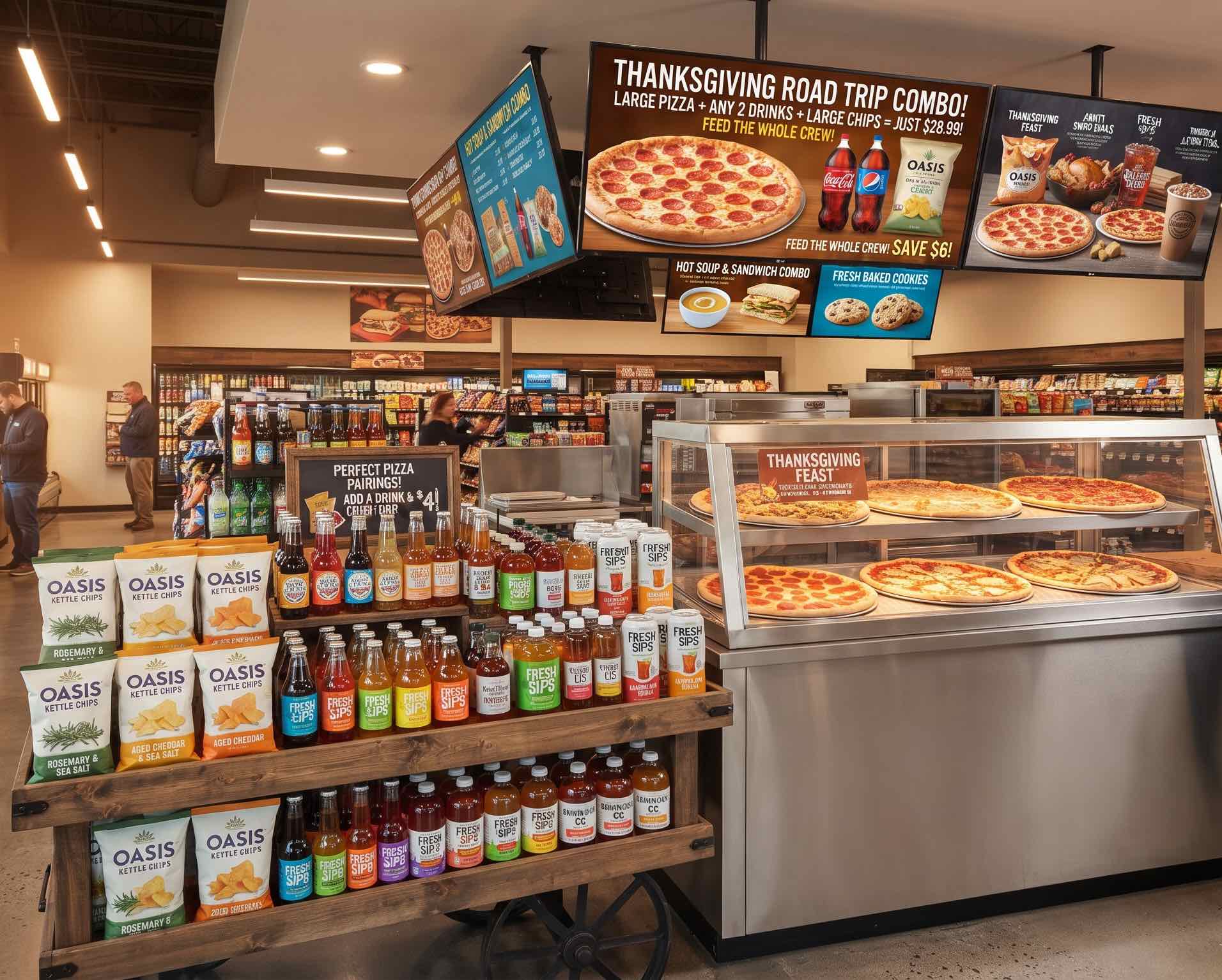
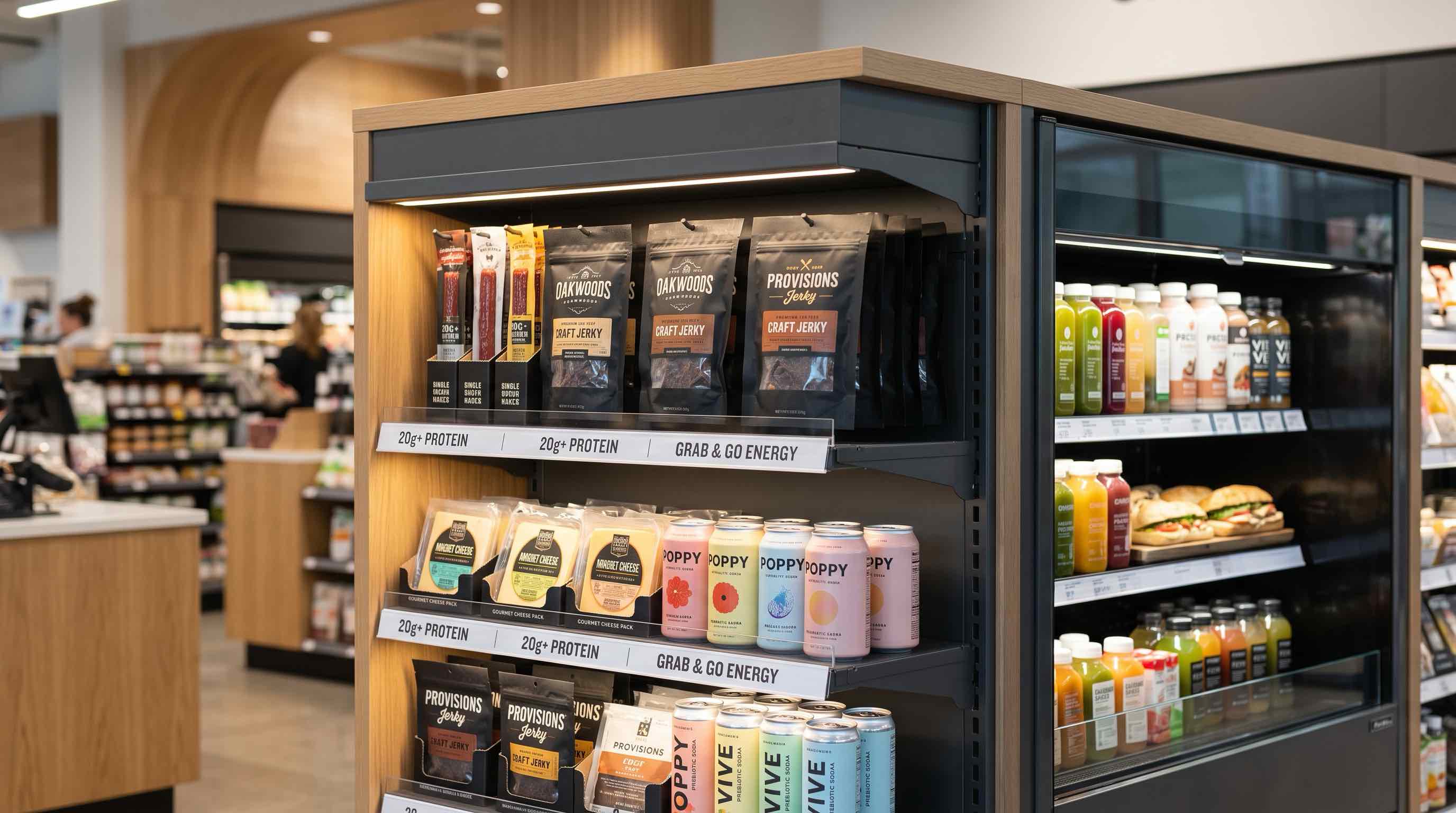
The food has to earn the repeat visit. A loyalty offer can get a customer to try your kitchen once, but consistency, speed, and presentation bring them back. Hot-case merchandising, clean cabinetry, good lighting, and clear menu graphics all shape how fresh the food looks before anyone takes a bite.
What You Should Be Doing: Link Fuel to Food
- Choose one signature food item and build your first fuel-to-food offer around it.
- Calculate the real gross margin on that item, including labor and waste, before setting the discount.
- Schedule one automated daypart message that targets your existing morning coffee customers.
- Check that your hot case and menu board are well lit, clean, and easy to read from the counter.
Dispensed Beverages and Subscription Models
Dispensed hot, iced, and frozen beverages are among the highest-margin items in the building. Operators often cite product margins around 75% or better, and they are powerful drivers of daily routine. A customer who comes in every morning for coffee is exactly the kind of regular your program is trying to create.
Subscription programs take that habit and formalize it. Circle K’s Sip & Save program is a well-known example of a monthly beverage pass in the industry, and independent operators can build a version through their own loyalty apps.
- The monthly beverage pass. Offer a subscription, for example $9.99 per month, that includes one dispensed hot coffee, iced brew, or fountain drink per day. Many operators limit the pass to one redemption per day.
- The cross-sell payoff. The beverage itself has a low product cost, so the value lies in the visits. A subscriber who comes in 20 mornings a month often adds a pastry, bottled water, or snack along the way.
To avoid a pricing mistake, test the math first. Estimate your cost per beverage, the likely redemption rate, and the average add-on purchase. Then start with a small pilot and adjust the price or limits before you promote it widely.
What You Should Be Doing: Strengthen Your Beverage Program
- Evaluate your coffee station. Aging drip pots may be limiting speed, consistency, and presentation.
- Model a pass price using your own beverage costs and expected add-on sales.
- Pilot the pass with a small group of regulars before a full launch.
- Track add-on rate per redemption so you know whether the pass is generating real profit.
Protecting Margins with Vendor-Funded Scan Data
A common concern I hear from independent owners is, “I cannot afford to give away points and discounts without hurting my margins.” That is a fair worry if you fund every offer yourself. In practice, much of modern c-store loyalty is financed through manufacturer trade spend and scan-data programs.
Here is how it works. A member buys a qualifying multi-pack promotion, such as two energy drinks for $5.00. Your POS captures the transaction data and sends it through a scan-data platform to the manufacturer. The manufacturer then reimburses you for the discount, so the member gets the deal and your margin is protected.
Beverage companies, snack distributors, and tobacco manufacturers set aside meaningful annual marketing funds for retail promotions. A few ways to put those funds to work:
- Automated scan-back reimbursements. Connect your POS and loyalty platform to the relevant scan-data programs so eligible multi-buys are submitted automatically.
- Manufacturer-funded programs for tobacco and nicotine. Many manufacturers offer scan-data incentives, but rules, participation requirements, and promotion restrictions vary by state, so confirm what is allowed before building offers.
- Vendor-funded launch specials. Distributors and manufacturers sometimes cover the product cost of new-item giveaways to encourage trial, which can give you a strong in-app offer at little or no cost to you.
Program terms differ by manufacturer and distributor, so ask your wholesale partner which programs your store qualifies for and what your POS must support.
What You Should Be Doing: Capture Vendor Funding
- Ask your distributor which scan-data programs your store is eligible to join.
- Confirm your POS can submit the required transaction data.
- Map available manufacturer promotions to your loyalty offers before you create your own.
- Review reimbursements monthly to make sure you are collecting everything you are owed.
Cultivating Hyper-Local Community Goodwill
National chains have capital, but independents have something harder to copy: they are genuinely part of the community. When you build local support into your loyalty program, routine purchases take on added meaning.
- Round-up giving. Let members round their total up to the next dollar and send the difference to a local youth league, volunteer fire company, or food bank. Show the running monthly total near the register. Check with your accountant and your charity partner on how donations are handled and reported.
- Booster-night multipliers. Designate Friday game nights as community events with double points between 4:00 PM and 7:00 PM, and donate a portion of inside sales to the school athletic department.
- Neighborhood emergency hub. During severe weather or outages, use app notifications to share inventory updates on items like ice, water, and fuel, and offer a free charging station in your seating area. The goodwill earned in those moments is hard to buy.
What You Should Be Doing: Build Local Connection
- Pick one visible local organization and make it your round-up partner.
- Put a simple running-total sign near the register.
- Add one community-night promotion to your calendar this quarter.
- Draft a short emergency-communications plan for storms and outages.
Innovation and Profit Maximization, at a Glance
- Third-place design: seating, warm finishes, and charging ports, built with millwork, lighting, and seating. The impact is longer dwell time and multi-item visits.
- Fuel-to-food bundles: fuel savings unlocked by food purchases, using your made-to-order kitchen and hot case. The impact is supported by strong fresh food margins.
- Beverage pass: a monthly subscription for daily drinks, using your coffee and fountain systems. The impact is daily traffic and add-on sales.
- Scan-data funding: manufacturer-funded multi-buys on packaged beverages, snacks, and tobacco. The impact is protected retail gross margin.
- Community giving: round-ups and booster nights, run through your loyalty app and register prompts. The impact is stronger local retention.
The Executive Action Plan: Your 30-Day Implementation Sprint
Transforming a traditional pit stop into a loyalty-driven destination can feel like a lot. You do not have to do it all at once. Breaking the work into weekly priorities lets you make steady progress and launch with confidence.
Here is the sprint at a glance:
- Week 1 (Days 1 to 7): audit technology and current performance. The owner and POS technician produce baseline metrics and a hardware checklist.
- Week 2 (Days 8 to 14): build the rewards structure and layout plan. The owner and design partner produce an approved rewards catalog and fixture plan.
- Week 3 (Days 15 to 21): train staff and stage signage. The store manager and cashiers roll out the incentive and install the signage.
- Week 4 (Days 22 to 30): launch and track results. The full team and software partner deliver an active program and a first-week report.
Week 1 (Days 1 to 7): Diagnostic Audit and Technical Verification
Start by documenting where you are today and what your technology can support.
- Confirm POS and controller compatibility. Verify that your Verifone Commander, Gilbarco Passport, or back-office system supports open-architecture loyalty integration, 2D mobile scanning, and scan-data feeds.
- Record baseline metrics. Capture current inside sales, average transaction size, foot-traffic counts, and fuel-only transaction volume so you can measure growth later.
- Review the cashwrap and queue. Watch peak morning and evening rushes for clutter, awkward cabling, or blind spots that could slow mobile scanning.
Week 2 (Days 8 to 14): Program Structure and Space Planning
With your baseline in hand, define the program and plan any physical updates.
- Finalize a simple tier structure. Let everyday purchases earn points toward high-margin items like coffee, bakery, and fresh sandwiches.
- Activate scan-back agreements. Work with suppliers so available scan-data promotions connect to your loyalty database.
- Plan seating and coffee improvements. Identify underused space and sketch a streamlined coffee counter, high-top seating bar, or fresh grab-and-go case.
Week 3 (Days 15 to 21): Training, Incentives, and Merchandising
A loyalty program depends on people, so this week is about your team and your signage.
- Introduce the cashier incentive. Hold a team meeting to explain the enrollment bonus and share simple, natural scripts.
- Install clear graphics. Place bold, easy-to-read QR signage at the dispensers, coffee station, hot case, and checkout.
- Optimize the checkout counter. Clear clutter, secure cords, and mount customer-facing 2D scanners so they are intuitive to use.
Week 4 (Days 22 to 30): Soft Launch and Behavioral Triggers
Now you open the program to customers and start learning from real data.
- Turn on automated messaging. Configure welcome notifications, birthday offers, and second-visit reminders.
- Launch the pump-to-store bridge. Activate dispenser prompts that offer a fuel rollback when customers buy fresh food or a dispensed drink inside.
- Review sign-up momentum daily. Check enrollment numbers, see which cashiers are leading, and fix small technical issues right away.
What You Should Be Doing: Execute Your 30-Day Roadmap
- Hold a weekly 20-minute check-in. Meet with your manager each Monday to review enrollments, scan data, and customer feedback.
- Test the sign-up yourself. Enroll as a customer would. The process should take under 15 seconds.
- Post results publicly. Display an enrollment leaderboard near the break area.
- Celebrate milestones. When you reach your first 500 members, recognize the team.
The Bottom Line: Make Your Store the Regular Stop
We covered a lot of ground, so let me bring it together. The economics of convenience retail have changed. Fuel is under pressure, inside foodservice and merchandise carry your profit, and the modern uncommitted customer is splitting their spending across more than three c-store brands each month.
In the Foundational Landscape section, we looked at the benchmark data behind loyalty: a sales lift of 20% or more, a roughly 38% higher spend per transaction for members, and a retention curve that jumps once a shopper reaches a fourth visit. The takeaway is that loyalty works best as an onboarding engine for new regulars, not as a blanket discount.
In the Strategic and Operational Execution section, we turned to execution. Your loyalty tools need to connect with your site controller and kitchen, your cashwrap needs to support quick scanning, and your cashiers need a simple, benefit-first pitch. The pump-to-store bridge, with its potential for about $2.30 in added food sales per fueling transaction, ties these pieces together.
In the Innovation and Profit Maximization section, we explored how the store itself supports the strategy. A warm, comfortable third-place environment extends visits. Fuel-to-food offers and beverage passes build daily habits. Vendor scan-data funding protects your margins. Community giving gives people a reason to choose a store that feels like theirs.
In the Executive Action Plan section, we organized all of it into a 30-day sprint: audit in week one, plan in week two, train and stage in week three, and launch in week four.
The central point is that loyalty is not just an app or a barcode on a phone. It is an extension of the store experience. It connects the pump to the kitchen, the counter to the shelf, and your business to your neighborhood.
When digital personalization meets a welcoming space, clean amenities, and an engaged team, you give that uncommitted customer a reason to stop driving past. You give them a reason to step away from the dispenser and make your store their regular stop.
Here is my challenge to you. Tomorrow morning, walk out to your dispensers, turn around, and look at your store the way a first-time customer would. Look past the fuel canopy. Is there an easy, inviting path to the door? Is your counter organized and ready for a quick scan? Does your seating area invite people to stay, or is it covered in overstock?
Pick one thing you can fix this week, whether that is clearing the counter, running your checkout speed test, or pulling your baseline numbers. Then talk with your POS partner, gather your team, and start your 30-day roadmap. The opportunity is within reach, and the first step costs you very little.
Leave a Reply