How to Turn January Food Holidays into Foot Traffic, Loyalty, and Sales
The convenience store business no longer runs on the pump. Industry data shows that in 2025, total U.S. convenience store in-store sales reached a record $341.2 billion, marking twenty-three consecutive years of inside sales growth. Fuel sales, by contrast, fell 5.4%, largely because prices per gallon dropped while volume stayed flat.
The profit split tells the real story. Fuel accounted for 65.0% of total sales dollars but only 38.8% of gross profit dollars. Foodservice, which includes prepared meals, commissary items, and dispensed beverages, made up just 28.5% of inside sales but produced 38.9% of gross profit.
For an owner-operator, that gap changes the job description. You are running a food and beverage destination that also happens to sell fuel. The stores that win are the ones that treat the inside of the building as the main business.
That brings us to January. Most operators treat it as a month to survive. Foot traffic dips after the holidays; wallets tighten, and winter weather keeps people home. Many stores coast, cut promotions, and wait for spring.
That habit is costly. January is not a dead zone; it is one of the most intentional shopping months of the year. Customers are resetting their routines. They are cutting back on alcohol, trying plant-based eating, hitting the gym, and, for a growing number, managing appetite with GLP-1 medications.
Those shoppers know what they want, and they are looking for quick, convenient ways to get it. A store that has the right products, in the right place, with clear signage, captures that demand.
The food calendar gives you a built-in way to do it. January includes five food holidays that fit these shopper behaviors well: National Bloody Mary Day (January 1), National Spaghetti Day (January 4), National Pie Day (January 23), National Peanut Butter Day (January 24), and National Chocolate Cake Day (January 27). Each one can anchor a limited-time offer (LTO) that gives customers a fresh reason to visit without a heavy investment.
Here is what you will learn in this post:
- The Foundational Landscape. The shopper trends reshaping January, including GLP-1 users, Dry January, Veganuary, gut health, and better-quality carbohydrates.
- Strategic and Operational Execution. How to build a promotion for each holiday, and what your layout, equipment, and staffing routines need to support it.
- Innovation and Profit Maximization. How to protect margins with smarter labor scheduling, waste reduction, and community partnerships.
- The Executive Action Plan. A prioritized 30-day roadmap you can start implementing right away.
The Foundational Landscape
Before you plan a single promotion, it helps to understand who is walking through your door in January. Today’s shopper is more purposeful, more focused on wellness, and less patient with friction than the shopper of three years ago. Four shifts matter most.
The GLP-1 Shopper: Smaller Portions, Higher Standards
The most significant shift is the widespread use of GLP-1 weight-loss medications. By early 2026, an estimated 21% of U.S. households included a current GLP-1 user. These medications suppress appetite and reduce “food noise,” the constant mental negotiation over the next snack or sugary treat.
The effect on traditional grocery is measurable. GLP-1 households spend about 5.5% less at grocery stores, cutting back on sweet and salty snacks.
For convenience stores, the picture is different. Research indicates GLP-1 users are five times more likely to shop at convenience stores than non-users. They want portion control and quick decisions. A supermarket aisle can feel overwhelming, while a well-organized c-store lets them grab a high-protein, nutrient-dense item and go.
The catch is that these shoppers are easily discouraged by clutter. If your snack aisle is chaotic, they will not browse. If it is clear and well signed, they will buy.
What You Should Be Doing: Serving the GLP-1 Shopper
- Audit your protein offerings, including Greek yogurt, premium jerky, protein bars, and nut-based snacks.
- Group high-protein items together rather than scattering them across the store.
- Offer single-serve and smaller-portion options for items you already sell.
- Use clear shelf tags, such as “20g+ Protein” or “Low Sugar Energy,” so shoppers can decide quickly.
Dry January and Veganuary: Two Challenges, Two Opportunities
Dry January and Veganuary began as internet challenges and have become reliable retail drivers. Dry January participants are often looking for better sleep and savings. Veganuary participants are driving steady demand for plant-based options, which are now a mainstream expectation rather than a niche request.
Both groups are looking for something to buy in place of what they are giving up. That makes January an ideal month to give prime space to zero-proof mixers, non-alcoholic beverages, and functional plant-based foods. These products are rarely a replacement sale. They are an incremental one.
Placement matters. If a Dry January shopper has to hunt for a zero-proof option in the back of the cooler, the sale is lost. Put these products at eye level, near the beverage or beer cave sections where the customer would otherwise be looking.
What You Should Be Doing: Capturing Dry January and Veganuary Shoppers
- Create a temporary zero-proof section with mixers, non-alcoholic beer, and functional beverages.
- Stock plant-based milks for your coffee bar and plant-based, high-protein snacks in your impulse zones.
- You do not need to remove classics. The goal is to offer a visible alternative.
- Use simple signage that names the challenge, such as “Dry January Picks” or “Plant-Based Picks.”
Gut Health and the Comeback of Cultured Dairy
Consumers are increasingly interested in gut health, and cultured dairy is benefiting. Kefir is a good example. It is a fermented drink containing a diverse mix of bacteria and yeasts, and it is also high in protein. That combination fits the January reset well.
The challenge for most stores is placement, not demand. Cultured dairy is often stocked on lower shelves where it is easy to miss. Moving kefir and probiotic yogurts to eye level in your open-air coolers can make a visible difference. Cool-toned LED lighting also helps make these products look fresh.
What You Should Be Doing: Elevating Cultured Dairy
- Move kefir and probiotic yogurts from bottom shelves to eye level.
- Check that cooler lighting is bright, clean, and cool-toned.
- Pair cultured dairy with high-protein snacks in the same grab-and-go zone.
- Keep shelves fully stocked and faced, since a thin display signals low quality.
Better Carbs: Wheat Bread Month and the Sourdough Shift
January is also recognized as Wheat Bread Month. The strict carb avoidance of the early 2000s has given way to a preference for higher-quality, more digestible carbohydrates. Whole wheat sourdough is a good example, because the natural fermentation process may improve nutrient availability and tends to produce a lower glycemic response than many standard breads.
This matters for your prepared food program. A sandwich on whole wheat sourdough carries a stronger wellness story than the same sandwich on standard white bread, and customers are willing to notice the difference.
What You Should Be Doing: Upgrading Your Bread Offering
- Transition your prepared sandwich program to whole wheat sourdough where feasible.
- If you sell packaged loaves, consider adding premium brands such as Dave’s Killer Bread or Ezekiel 4:9.
- Name the bread on your menu board and signage so customers see the upgrade.
Strategic and Operational Execution
Understanding trends is only half the job. This section covers how to execute them. Limited-time offers tied to food holidays create a natural sense of urgency. They give regular customers a reason to visit this week instead of next, and they encourage add-on purchases.
Each of the five January holidays below pairs with a specific consumer need and a specific operational requirement.

January 1: National Bloody Mary Day and the Recovery Opportunity
New Year’s Day brings a sluggish, slower-moving customer. The holiday celebrates a cocktail, but your best opportunity is non-alcoholic recovery. That lets you serve post-party shoppers and Dry January participants at the same time.
The most effective approach is bundled convenience. Build a “New Year’s Reset Kit” and place it near the register. A kit priced around $16.99 might include a hot instant noodle cup, a 20-ounce electrolyte drink, bottled water, packaged crackers, and a high-protein item such as beef jerky.
Beside it, build a small endcap with premium Bloody Mary mixers, zero-proof spirits, and hydration mix-ins such as Liquid I.V. Bundles work because they remove decisions. A tired customer wants to grab one item, not assemble a meal from five aisles.
One note on language: name the kit around wellness and recovery rather than making health claims. “Reset Kit” or “Recovery Kit” is safer than anything implying it treats intoxication.
What You Should Be Doing: New Year’s Day
- Assemble and display $16.99 reset kits next to the register.
- Use countertop acrylic bins or branded trays so the kit looks premium.
- Build a mixer and zero-proof endcap adjacent to the kits.
- Check pricing and local alcohol regulations before promoting mixers alongside alcohol.
January 4: National Spaghetti Day and the Dinner Daypart
Convenience stores do well at breakfast and afternoon snacking, but dinner is still the elusive prize. National Spaghetti Day is a low-risk way to test it. On a cold January evening, customers want a warm, hearty meal without a grocery trip or a restaurant wait.
If you have a hot food program, consider an LTO such as “Untraditional Spaghetti and Meatballs.” Using whole wheat spaghetti with a light marinara ties into the wellness theme and appeals to health-conscious shoppers. Prepared foods carry a gross margin of roughly 55%, which makes this one of the more profitable items in your January lineup.
Execution matters more than the recipe. Small-batch cooking with reliable hot-holding equipment protects quality and prevents large end-of-day waste. Cooking in smaller, more frequent batches means each customer gets fresh product, and you do not carry an overnight loss.
What You Should Be Doing: National Spaghetti Day
- Launch a limited-time spaghetti and meatballs meal at a clear price point.
- Cook in small batches timed to the 4:30 to 5:30 PM dinner rush.
- Use programmable hot-holding equipment so quality is consistent.
- Promote the meal on window graphics and your menu board by mid-afternoon.
January 23: National Pie Day and the Bakery Impulse Engine
Most people know March 14 as Pi Day. Smart operators use the same $3.14 price point for National Pie Day in January. It works well as a loyalty app acquisition tool.
One option is a whole hot pizza for $3.14, available exclusively to rewards members. Margin on the pizza itself will be thin at that price. The return comes from new loyalty sign-ups and the secondary purchases that follow, such as fountain drinks and sides.
Pie Day is also a good moment to look at your sweet bakery case. Industry data suggests that about 45% of c-store foodservice purchases are impulse buys. That makes visual presentation critical. A bakery case should be clean, well lit, and fully stocked with items such as individual fruit pies and turnovers. An empty or picked-over case discourages sales.
What You Should Be Doing: National Pie Day
- Program your POS and loyalty app for a $3.14 rewards-member offer, then test it before launch.
- Advertise the promotion with window graphics and pump toppers.
- Keep the bakery case fully stocked, clean, and well lit all day.
- Track new loyalty sign-ups and add-on purchases to measure the true return.
January 24: National Peanut Butter Day and Functional Snacking

Peanut butter is a strong functional food. It delivers healthy fats, fiber, and protein, which makes it a natural fit for GLP-1 users and shoppers who are keeping gym resolutions.
For this holiday, consolidate your high-protein peanut butter items onto a single endcap. Decision fatigue is real, especially for the GLP-1 shopper. A clean, organized display with clear macro-nutrient signage lets customers make a fast choice.
Shelf tags work like a silent salesperson. A tag reading “20g+ Protein” or “Low Sugar Energy” gives a clean-label product, such as ONE Bars, a reason to be picked up. Clear graphics also make a cluttered aisle feel organized.
What You Should Be Doing: National Peanut Butter Day
- Gather peanut butter snacks, protein bars, and nut-based items on one endcap.
- Add high-contrast shelf tags that call out protein, fiber, or sugar content.
- Keep the display uncluttered, with a limited number of clearly labeled items.
- Place a complementary item, such as a coffee or a banana, nearby for an easy add-on.
January 27: National Chocolate Cake Day and the Afternoon Restock

By late January, resolution discipline starts to fade. Customers need a small reward to get through a winter afternoon. National Chocolate Cake Day lets you offer controlled indulgence.
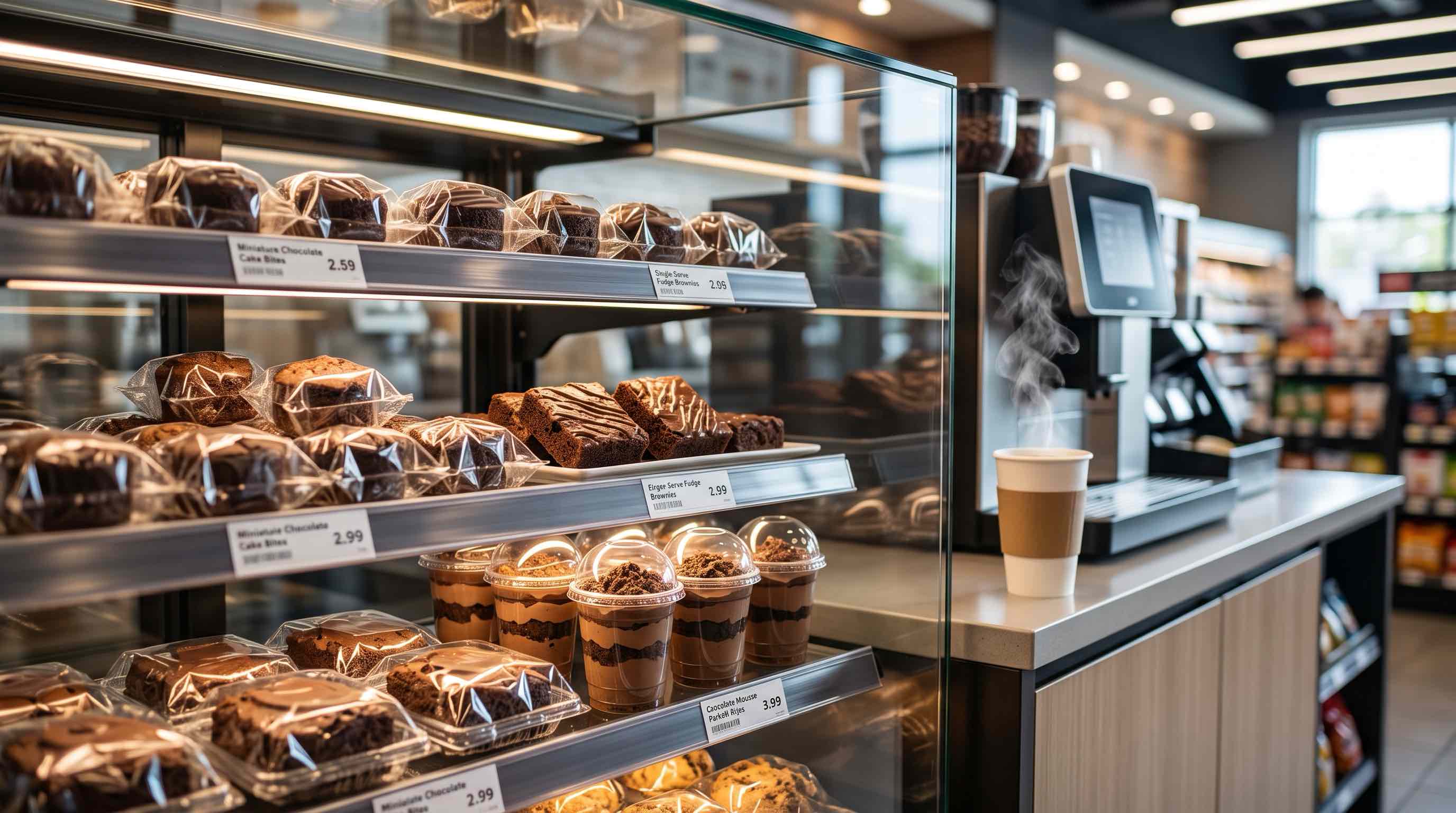
Late afternoon is among the most popular snacking dayparts in convenience. Your store needs to be at its best before it starts. Set an “afternoon restock” protocol so that shortly before 3:00 PM, your team refreshes the bakery and grab-and-go cases.
Focus on portion-controlled items such as miniature cake bites, single-serve brownies, and chocolate mousse parfaits. Place these individually wrapped treats near the coffee bar and register, where an impulse pairing is most likely.
What You Should Be Doing: National Chocolate Cake Day
- Stock single-serve and portion-controlled chocolate items.
- Make the 3:00 PM restock a documented task for your mid-day shift lead.
- Place sweets next to the coffee bar and register for pairing.
- Offer a simple coffee-plus-treat combination price.
Setting Up Your Store to Support the Calendar
Promotions only work if the store can deliver them. Before January, walk the footprint with a critical eye. Four areas deserve attention.
Endcaps and impulse zones. Choose the locations for your temporary displays early. They should be well lit, visible from the entrance, and free of clutter.
Hot-holding equipment and bakery cases. Burnt-out bulbs, uneven heating, or scratched glass undermine the quality message. Schedule maintenance before the promotions begin.
Signage. Use consistent, high-contrast graphics with clear macro-nutrient callouts. Shoppers should be able to read them in a few seconds.
Cooler layout. Reserve eye-level space for kefir, protein beverages, and zero-proof options. Review planograms against actual sales, not just habit.
What You Should Be Doing: Store Readiness
- Walk your store as a customer and note clutter, dim areas, and hard-to-find items.
- Service hot-holding units, display cases, and lighting before January.
- Standardize your signage style so promotions look intentional.
- Rework cooler planograms to give wellness items eye-level placement.
Innovation and Profit Maximization
Higher sales are valuable, but margin protection is where profitability is decided. Expanding into fresh food and bakery introduces two significant variables: labor and waste. Managing both well is what separates a good January from a great one.
The Time-Value Shift: Rethinking Labor
Historically, convenience stores ran lean labor models, with labor often around 11% of revenue. As stores become food-forward, they need trained staff to handle prep, sanitation, and service. Fast-casual restaurants typically target labor costs between 28% and 33%, and c-stores are moving gradually in that direction.
January typically sees a modest dip in transaction velocity compared with summer. That makes it a relatively low-risk time to pilot new scheduling ideas.
One option is a 4/10 compressed schedule, in which full-time employees work four 10-hour shifts and have three consecutive days off. The store stays open, but staff benefit from fewer commutes and longer rest periods. Some operators are also testing a “100-80-100” model: 100% pay for 80% of the hours, with 100% expected output.
Scheduling software can support this by forecasting demand and staffing heavily during morning and afternoon rushes while keeping coverage lean in quiet periods. If your team is rested and loyal going into summer, retention and service quality both improve. Treat any pilot as a test and review the results before expanding.
What You Should Be Doing: Labor Planning
- Identify a small group of strong full-time employees to pilot a 4/10 schedule for January.
- Explain the pilot and expectations in a team meeting before it begins.
- Use demand forecasting to match staffing to morning and afternoon peaks.
- Add anti-fatigue mats behind registers and prep areas if staff work longer shifts.
- Check state and local overtime rules before changing schedules.
Fighting Shrink: Forecasting, Markdowns, and Rotation
Prepared food and bakery margins are attractive, but spoilage can erase them quickly. A multi-layered approach to waste works best.
Forecast at the SKU level. Your back-office system should compare sales velocity with outside factors such as weather. If a January snowstorm is coming, it should signal your kitchen to reduce cold salad production and increase hot comfort foods.
Use expiration tracking. Digital tools can alert managers when packaged items are close to their dates, which allows dynamic markdowns. Discounting a premium sandwich by 30% a few hours before expiration recovers some cost and attracts budget-minded shoppers.
Rotate consistently. First-In, First-Out (FIFO) stocking should be standard practice for every frontline employee.
What You Should Be Doing: Waste Reduction
- Review production data weekly and adjust prep quantities by daypart.
- Set up automatic, phased markdowns for fresh items approaching expiration.
- Train all frontline staff on FIFO and on how to apply markdowns at the POS.
- Track waste by category so you can see which items are truly profitable.
Turning Surplus into Community Value
Even with strong forecasting, you will have some leftover food. Throwing it away means paying hauling fees and adding to landfill waste. A food rescue partnership gives that surplus a better outcome.
Local food banks and pantries often welcome safe, unsold baked goods and packaged items. In the Middleton, Wisconsin area, for example, WayForward Resources provides food to local residents facing food insecurity. Partnerships like this turn surplus into goodwill.
Consumers, particularly Millennials and Gen Z, tend to favor brands that visibly support their communities. A donation program can also provide tax benefits in some cases, though you should confirm eligibility and food-safety requirements with your tax advisor and local health department.
What You Should Be Doing: Community Partnerships
- Contact a local food pantry or shelter and ask about their intake requirements.
- Set up a regular pickup schedule, such as every other week.
- Document donations for tax and reporting purposes.
- Let customers know about the partnership through in-store signage or social posts.
The Executive Action Plan
You now have the trends, the holiday tactics, and the operational tools. This section puts them into a prioritized 30-day plan. Because January needs product and supplies in place early, start about 30 days before the new year, or sooner if your vendors need extra lead time.
Days 1–7: Assortment Audit and Supply Alignment
- Review vendor contracts and place orders for whole wheat sourdough, zero-proof mixers, and kefir.
- Evaluate your snack aisle for clean-label, high-protein options, including peanut butter products and jerky.
- Secure packaging for reset kits, such as acrylic bins or gift bags.
- Confirm lead times so nothing arrives after the promotion dates.
Days 8–14: Equipment and Merchandising
- Identify prime locations for temporary holiday endcaps and make sure they are bright and clear.
- Design and print macro-nutrient signage such as “20g+ Protein” and “High Fiber.”
- Inspect hot-holding equipment and bakery cases, and schedule repairs for any burnt-out bulbs or inconsistent heating.
- Update cooler planograms to give wellness products prime placement.
Days 15–21: Labor and Operational Training
- Finalize January schedules. If piloting a 4/10 week, meet with staff to explain expectations.
- Train mid-day managers on the 3:00 PM restock protocol and role-play the steps.
- Train all frontline employees on FIFO and on dynamic markdowns at the POS.
- Review the small-batch cooking plan for National Spaghetti Day.
Days 22–30: Marketing and Community Integration
- Program the $3.14 National Pie Day promotion into your loyalty app and POS, then test the checkout experience.
- Finalize pickup details with your food bank or charity partner.
- Deploy pump toppers, window clings, and forecourt screens that tease the holidays and your new product lines.
- Brief all staff on the holiday calendar and what to say to customers.
The Bottom Line: Make January Work for You
The convenience retail landscape is shifting quickly, and the old model of relying on fuel to carry the store is fading. To thrive, you need to think like a food and beverage destination. January gives you an inexpensive, low-risk chance to practice exactly that.
Let’s recap what we covered. In The Foundational Landscape, we looked at the shoppers behind January’s behavior. GLP-1 users want protein and portion control. Dry January and Veganuary participants are looking for alternatives. Gut-health trends are lifting cultured dairy, and customers are moving toward higher-quality carbohydrates like whole wheat sourdough.
In Strategic and Operational Execution, we mapped those insights onto five food holidays. Bloody Mary Day became a recovery-kit opportunity. Spaghetti Day became a way to test dinner. Pie Day became a loyalty acquisition tool, Peanut Butter Day a functional-snacking showcase, and Chocolate Cake Day a controlled-indulgence play supported by a disciplined afternoon restock. We also covered the endcaps, equipment, signage, and cooler layouts that make those promotions work.
In Innovation and Profit Maximization, we focused on protecting margin. January’s slower pace is a good time to pilot new labor models. Forecasting, markdowns, and FIFO rotation reduce shrink, and food rescue partnerships turn surplus into community goodwill.
The Executive Action Plan pulled it together into a 30-day roadmap, from assortment audit to marketing and community integration.
A few principles run through every section. Make the healthy choice easy to find. Keep displays clean, lit, and fully stocked. Use clear signage so shoppers can decide in seconds. Execute the basics, like the 3:00 PM restock and hot-holding maintenance, consistently. None of these require a major capital investment. They require attention and follow-through.
You also do not have to do everything at once. If five holidays feels like too much, choose two that fit your store best. A small, well-executed promotion beats a large one that is done halfway.
Your next step is simple. Walk your store floor tomorrow morning and look at it the way a January shopper would. Check your bakery case, your coolers, and your endcaps. Ask whether someone looking for a protein snack, a zero-proof drink, or a warm dinner could find it within a few seconds.
Pick one zone to improve this week. It might be a cooler shelf moved to eye level, a new set of shelf tags, or a serviced hot-holding unit. Small upgrades like these add up, and they put you in position to make January one of your strongest months instead of one of your weakest.

Leave a Reply